


Featured Weddings
Designer POV: Naming the Garden Style Bridal Bouquet Through Samantha & Maxwell's Wedding
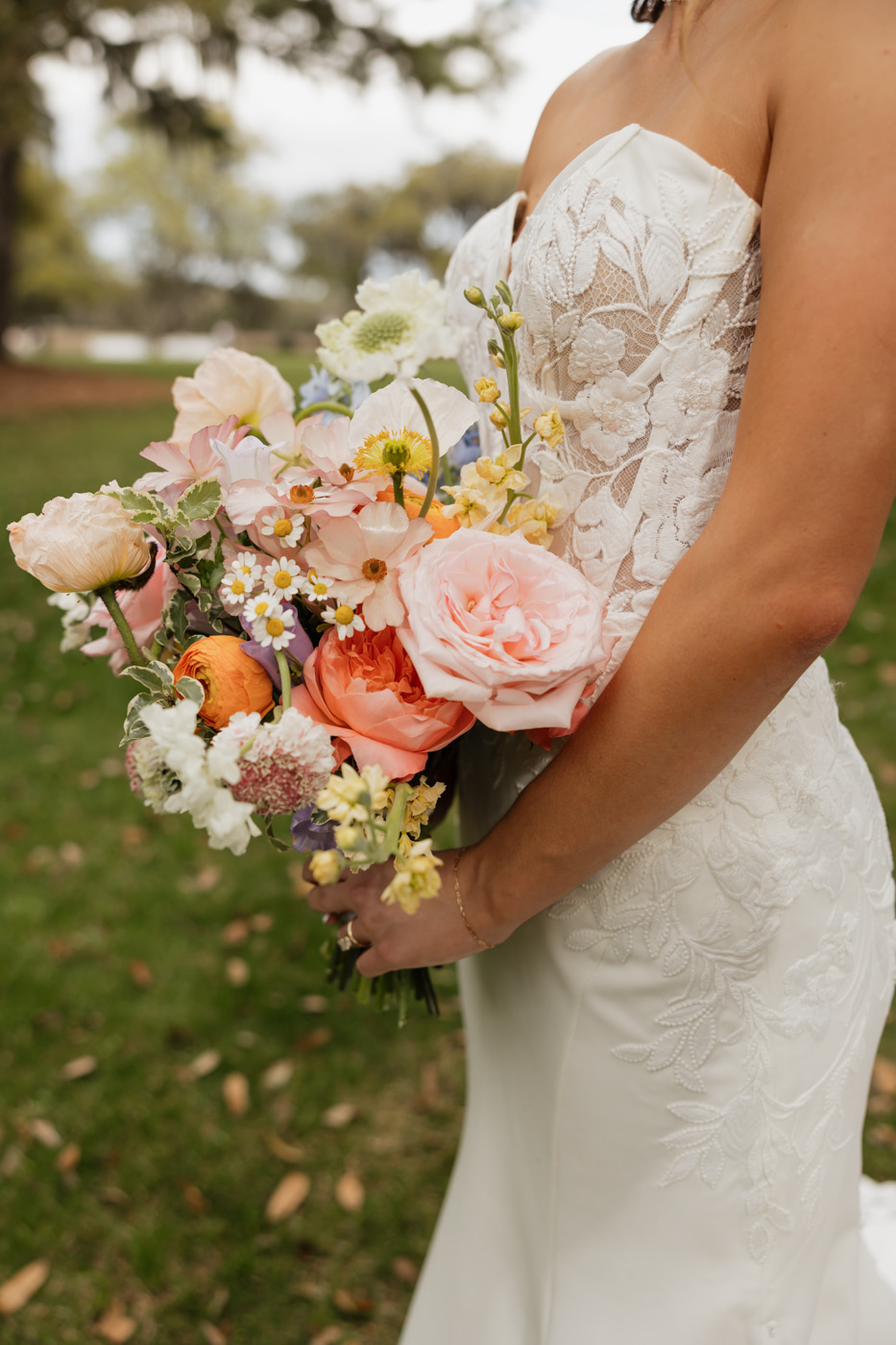
"The overall vibe of this wedding I would call lush garden style," says Michelle, a Poppy Designer.
A garden style bridal bouquet mixes big, open focal blooms with smaller wildflower-type stems, arranged loosely in a natural palette of close hues. Michelle looked at Samantha and Maxwell's Charleston wedding and explained the thinking behind each part of it, from the flowers to the table size.
What makes it lush, and what makes it garden
The name comes straight from what Michelle saw in the flowers: "It uses a lot of big beautiful high-end flowers, which is why I'm calling it lush, and the looseness of the arrangements is why I'm referring to it as garden style. The bouquets look professionally designed, while also having that homegrown element of being picked from your grandmother's garden."
Lush refers to the flowers, which are big, open focal blooms. Garden refers to the arrangement, which is loose, with stems at different heights. Premium flowers in a tight arrangement look formal. Small stems arranged loosely look natural but sparse. This style needs big blooms and a loose arrangement at the same time.
The elements of a garden style bridal bouquet
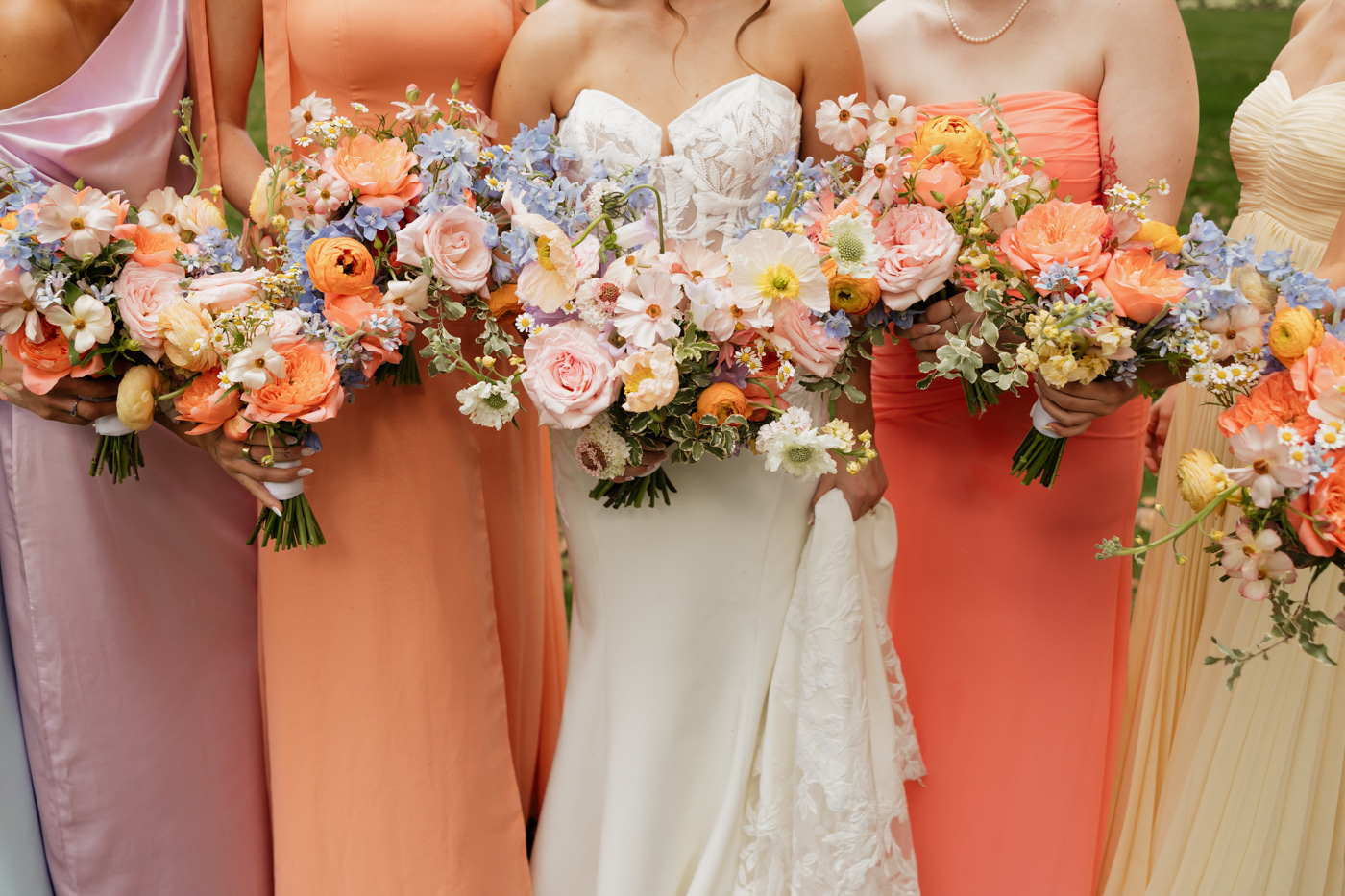
Two kinds of stems make up the look: "big, lush, open blooms like garden roses and ranunculus, mixed with smaller whimsical wildflower-type blooms like chamomile and scabiosa."
The focal blooms give the bouquet weight and fullness. The smaller stems break up the edges and keep the shape loose, so where the designer places them matters as much as which stems they are.
Bridal Bouquet Shapes Explained → shows how the garden shape compares with other bouquet styles.
The rooms it belongs in
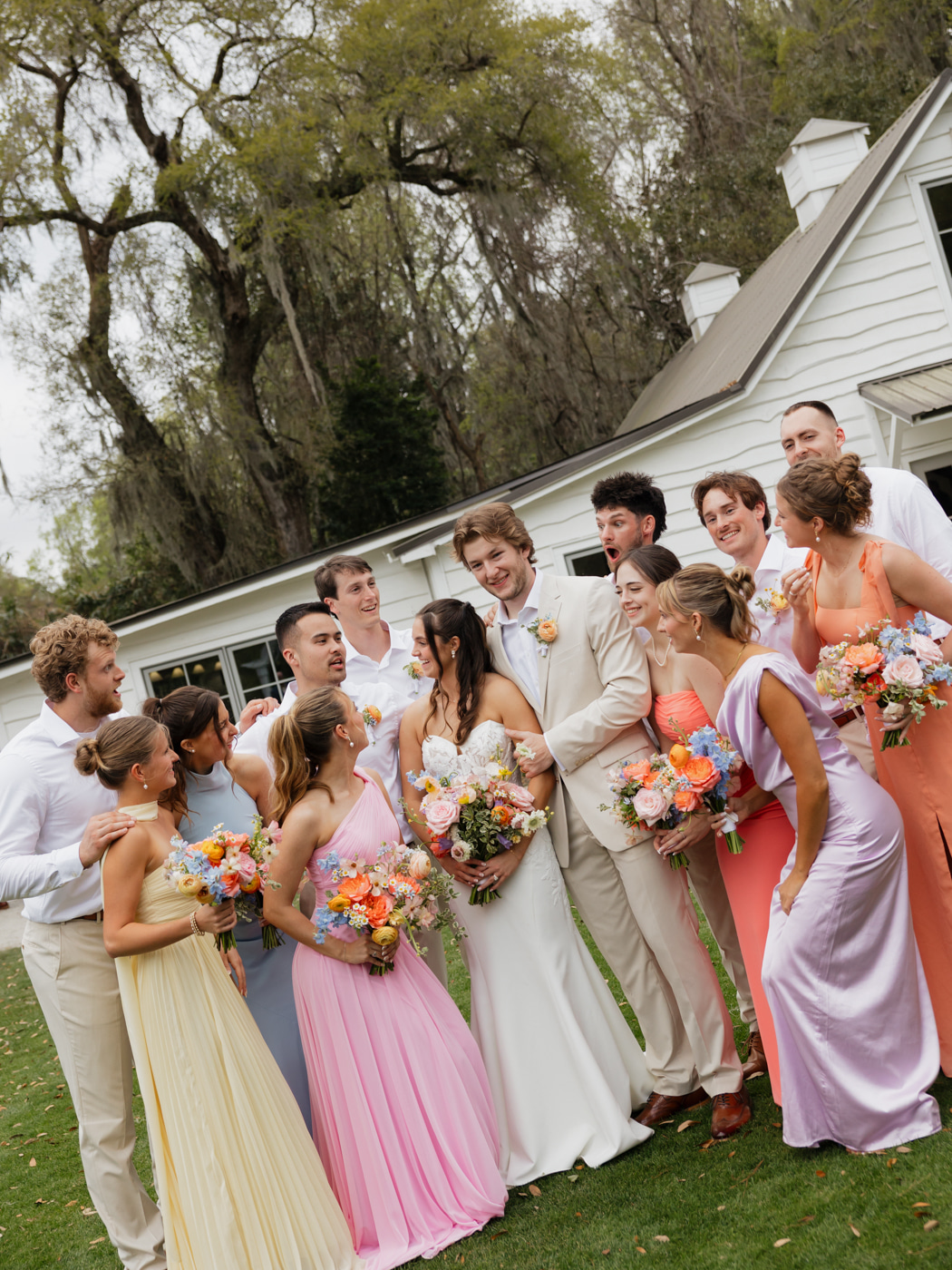
Michelle is specific about where this style works best: "My favorite venues to use this type of lush garden-style arrangement are venues that have a lot of historical details, like crown molding or beautiful French doors. This style also works really well in venues where there is a lot of beautiful landscaping and gardens already on the premises."
Samantha and Maxwell's venue, Magnolia Plantation & Gardens, fits that description, and so do many Charleston wedding venues, where historic buildings and established gardens are common. The flowers add to a garden feeling the space already has.
The same test works for any venue. If it has architectural detail or mature landscaping, the flowers have something to work with.
Keep the palette close
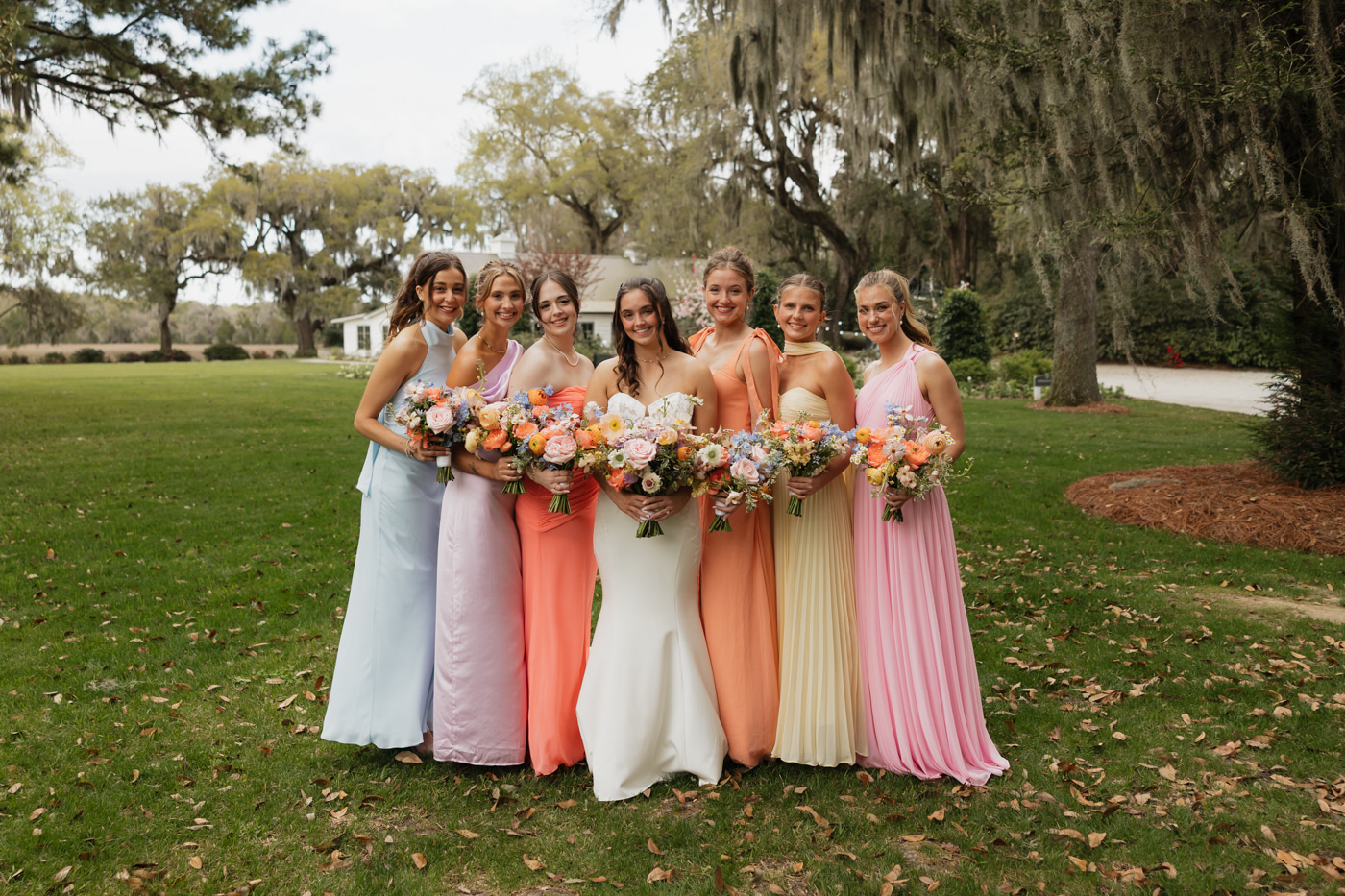
"I recommend keeping the color palette very natural," Michelle says. "I would avoid dyed flowers or fresh flowers that are painted an unnatural color. Also, I would keep the color palette close."
Samantha and Maxwell's wedding used blush, coral, and yellow, with pops of blue. In Michelle's words, "all very close hues to each other." The palette reads as intentional because nothing is jumping out of the range. Other combinations Michelle names as natural fits: whites, creams, and yellows; and more fall-leaning palettes like rust, mauve, and tan.
If your Pinterest board is pulling in the same direction, you're probably already working in the right range. Wedding Color Palettes 2026: 13 Designer Combinations → can help translate that into a full plan.
Scaling it up or down
Michelle's advice on budget:
"Larger budgets allow for more lush ceremony aisles, maybe extra design elements around the space (like larger bar arrangements or a larger show-stopping moment on your welcome table). For smaller budgets, I recommend decreasing the size of the bridesmaids' bouquets to a few beautiful stems. Also, concentrate your budget on flowers at the spots of your wedding that are going to be in the most photographs."
The style doesn't change with budget. The number of moments where it appears does. More budget lets the style appear beyond the bouquet, in a fuller ceremony aisle or at a focal point during the reception. Less budget means editing that list down and putting weight where the camera will be.
Wedding Flowers Budget: Pinterest Perfect vs Payday Reality → and From Aisle to Reception: 18 Wedding Floral Arrangement Ideas → both go deeper on how to make those calls before your design meeting.
What wider tables would have changed
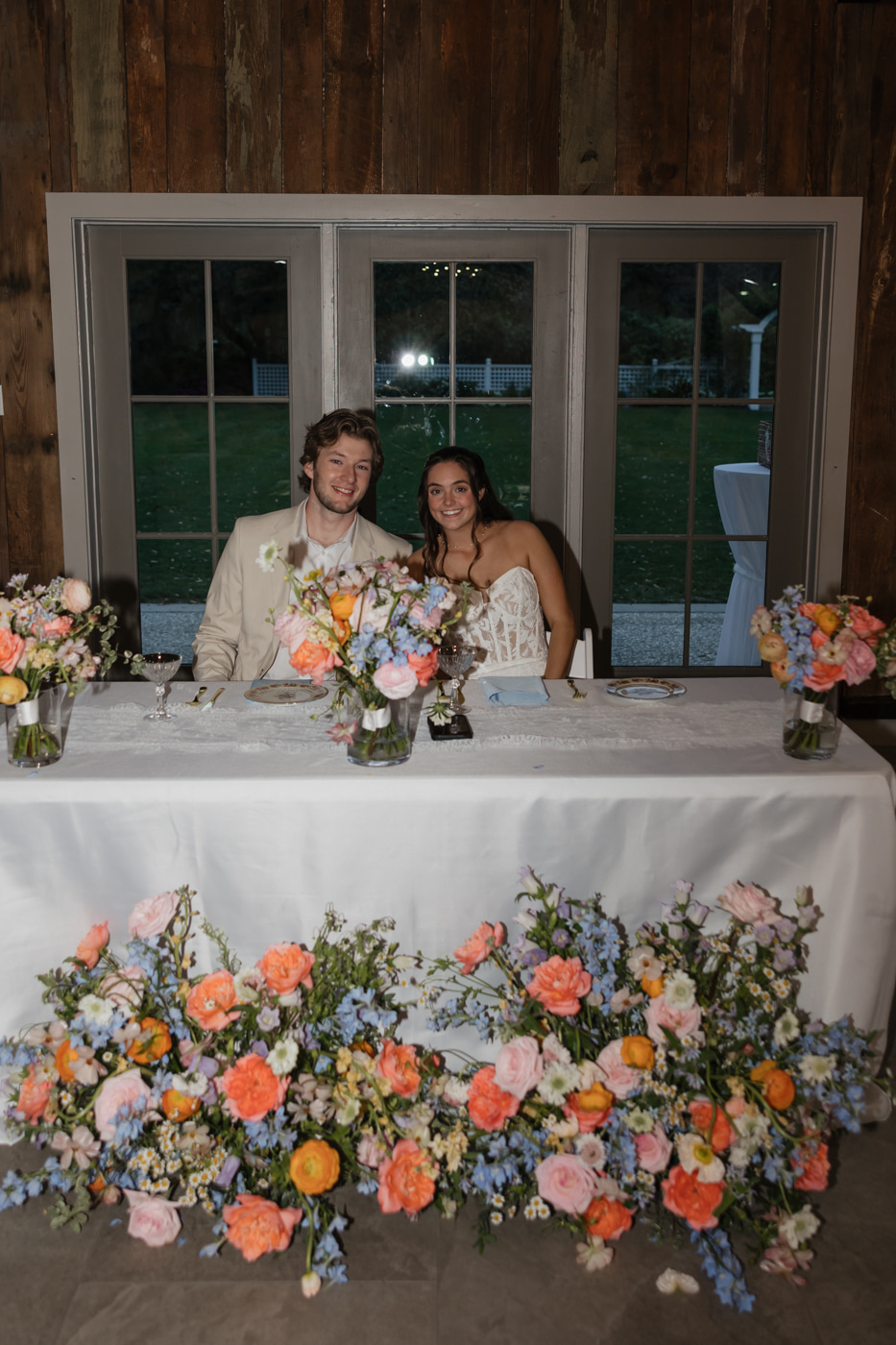
The reception tables caught Michelle's eye too.
"I see that this wedding did bud vases on their tables. The tables look pretty narrow. Maybe they had family-style food and needed to keep some space on their tables."
There's no way to confirm from the photos whether the couple served family-style food. Her guess still points to a real planning limit. Narrow tables leave less room in the center, so bud vases fit and a full garden runner doesn't.
"For another wedding that might have been able to use wider long tables, like 42-inch-wide or even 48-inch-wide long tables. Those allow for a lot more space for flowers and we would have been able to do larger compotes or longer garden-like centerpieces down the center of those tables."
If you're still deciding on table setup with your venue, ask about width. Moving from a narrow table to a 42-inch or 48-inch table changes what your designer can put in the center.
If terms like bud vase, compote, and garden runner are new to you, Wedding Floral Terminology 101 → is a useful reference before your design meeting.
If you're drawn to this look and want to see how it translates into full arrangements, Explore the Lush Garden collection →.
Vendor credits: Photography: Madison Hubbs | Planning: Alaina Rene Breaux | Venue: Magnolia Plantation & Gardens
