


Trends & Inspiration
Oxblood: The Unexpected Wedding Color Taking Over Fall Into 2027
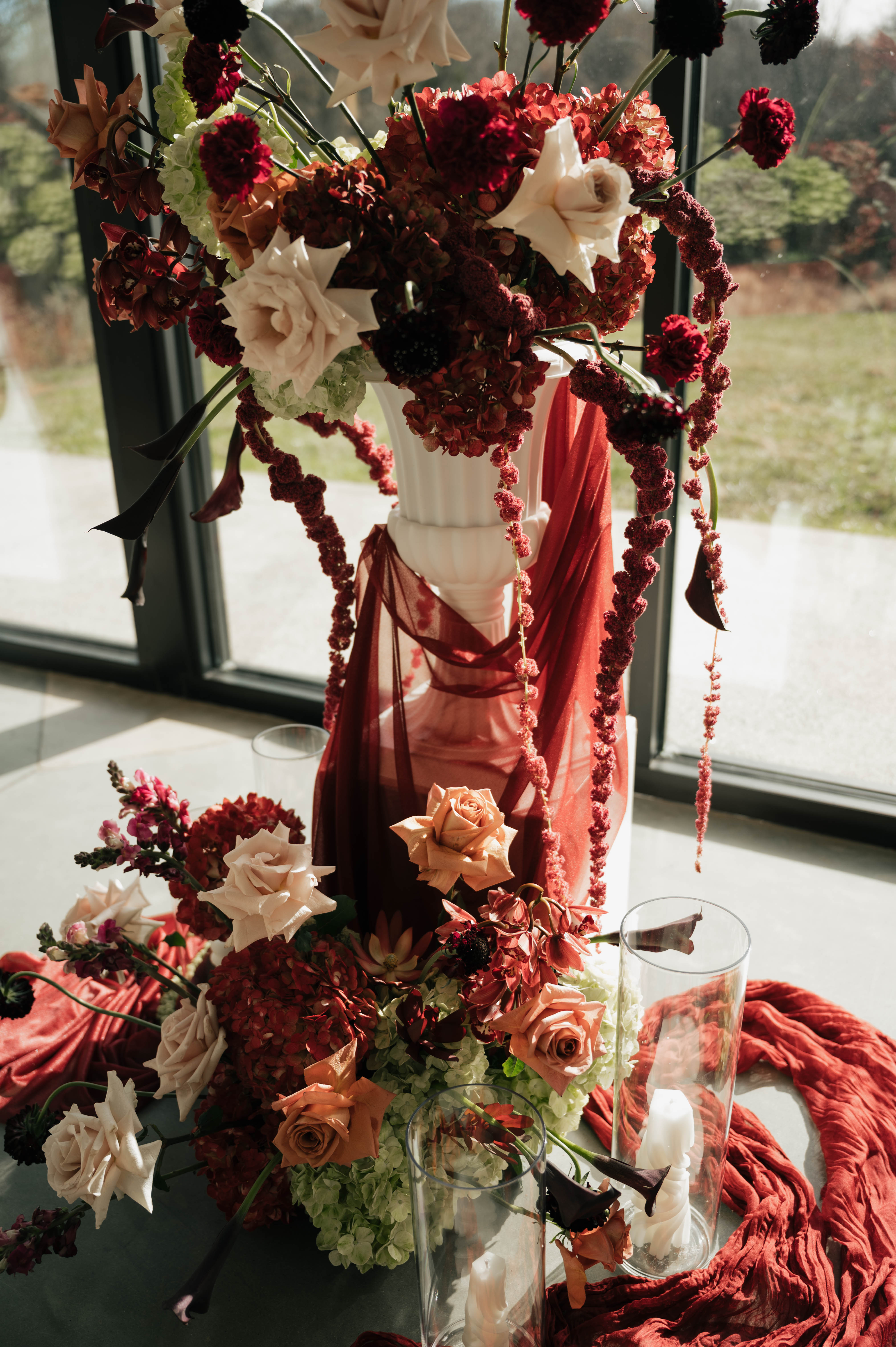
Blush had a long run. For years it's been the safe, pretty, universally approved palette choice for couples who wanted something "romantic" without taking a real design risk.
Some couples getting married in 2026 and 2027 want something different. They're looking for a color that holds depth in photos, suits almost any venue, and works from October through February without needing a seasonal pivot. That color is oxblood.
Oxblood is darker and more complex than burgundy, with a brownish undertone that makes it feel specific. In the right stems, it looks deeply saturated and photographs beautifully without washing out.
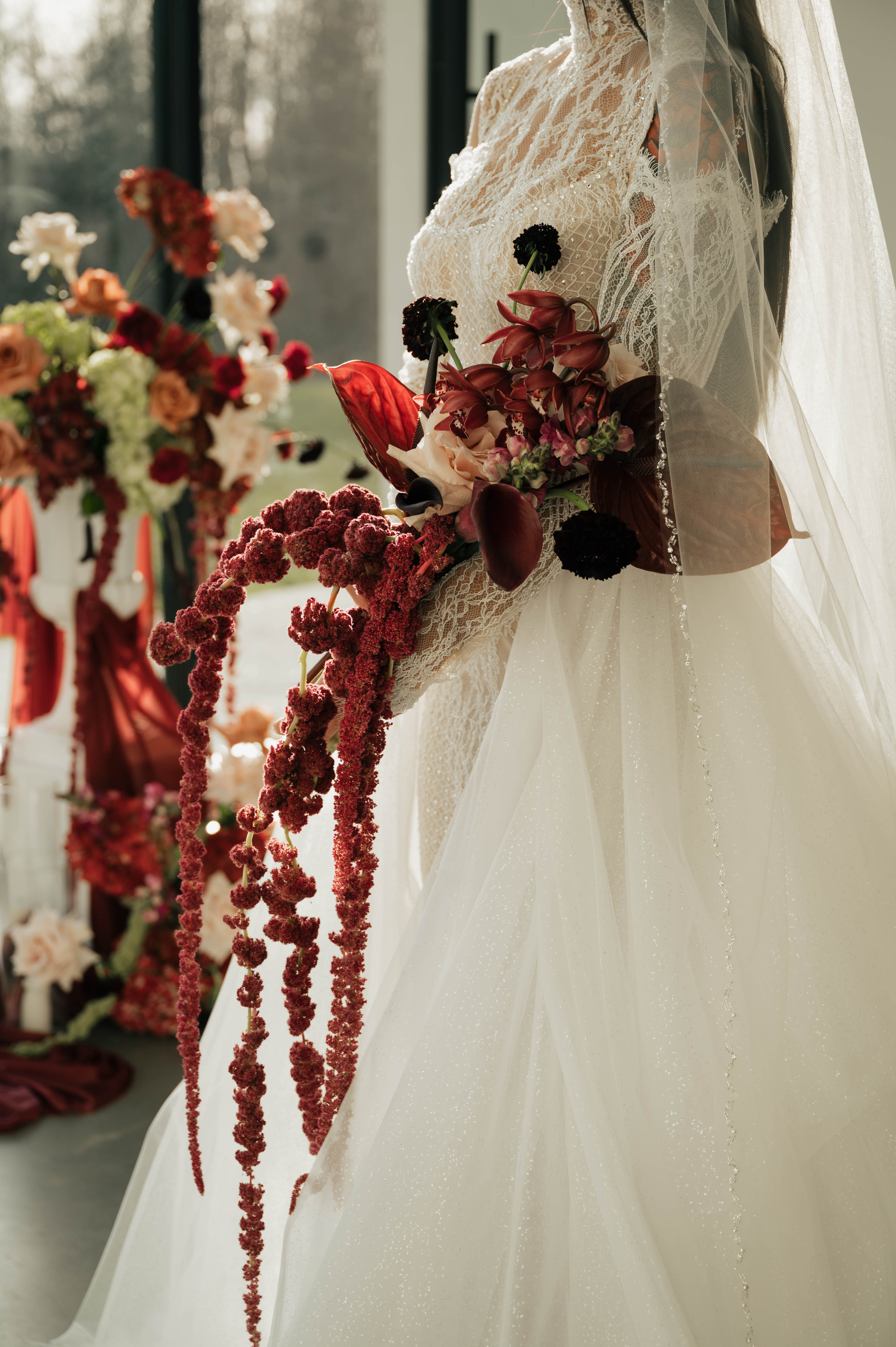
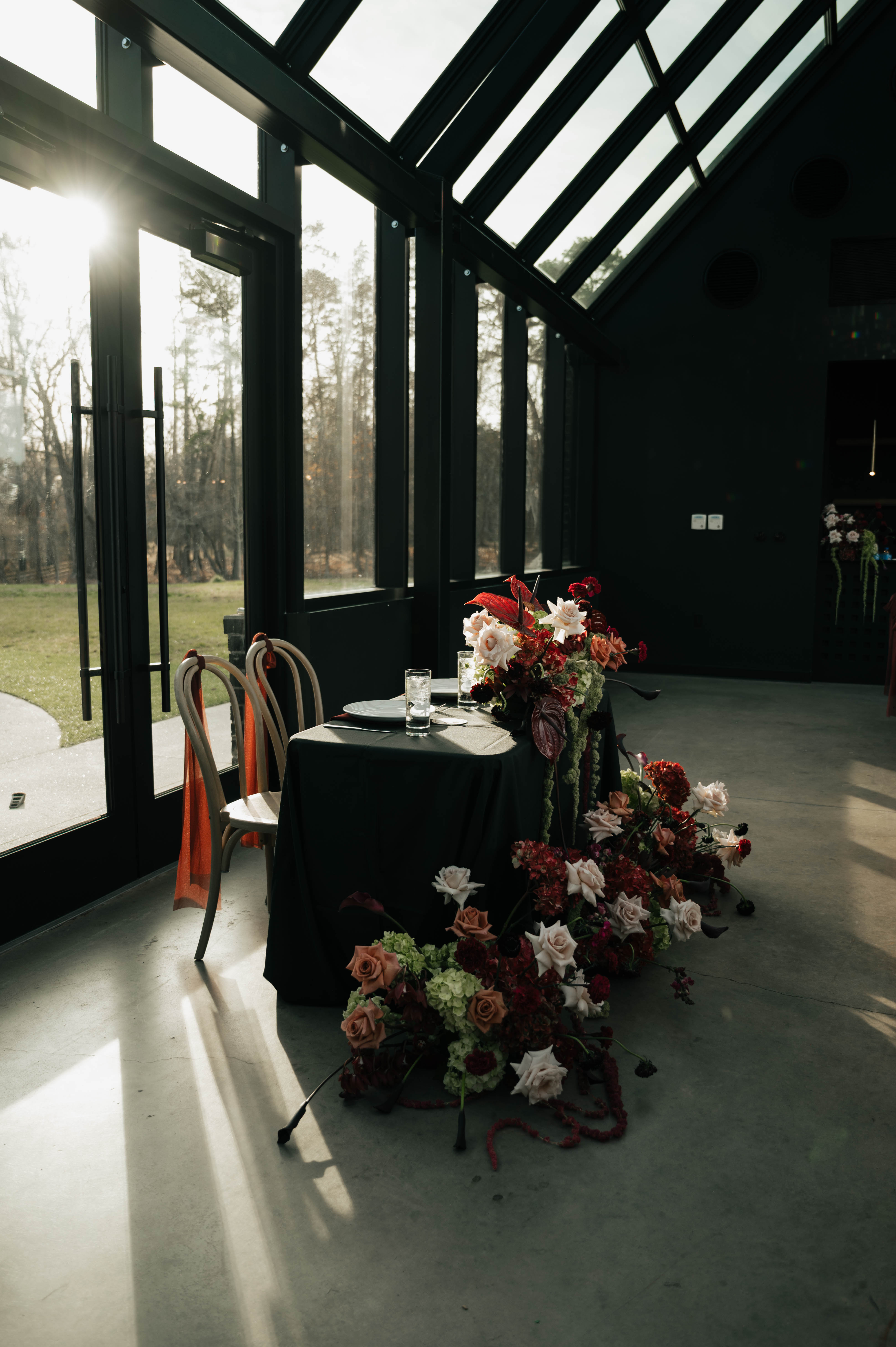
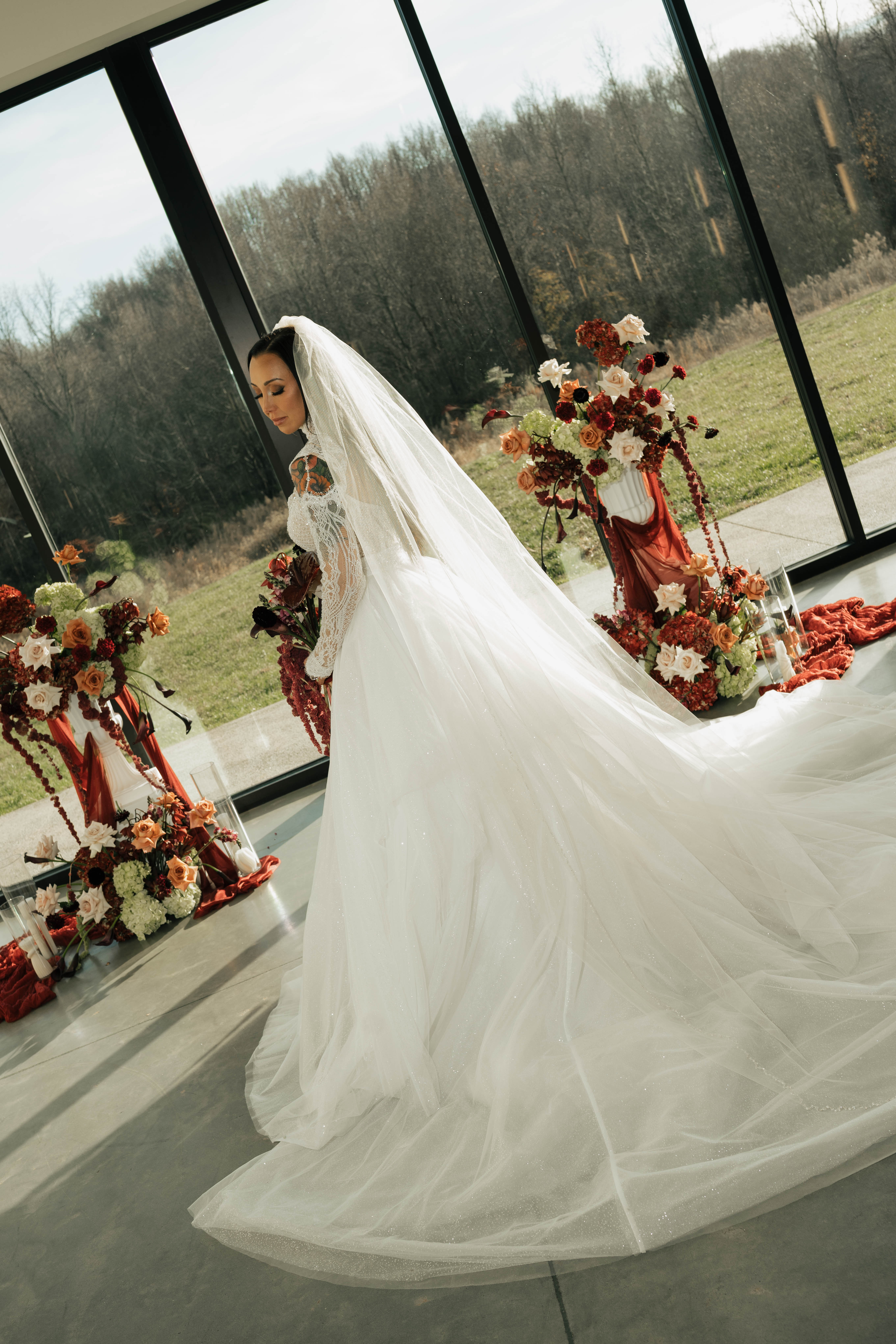
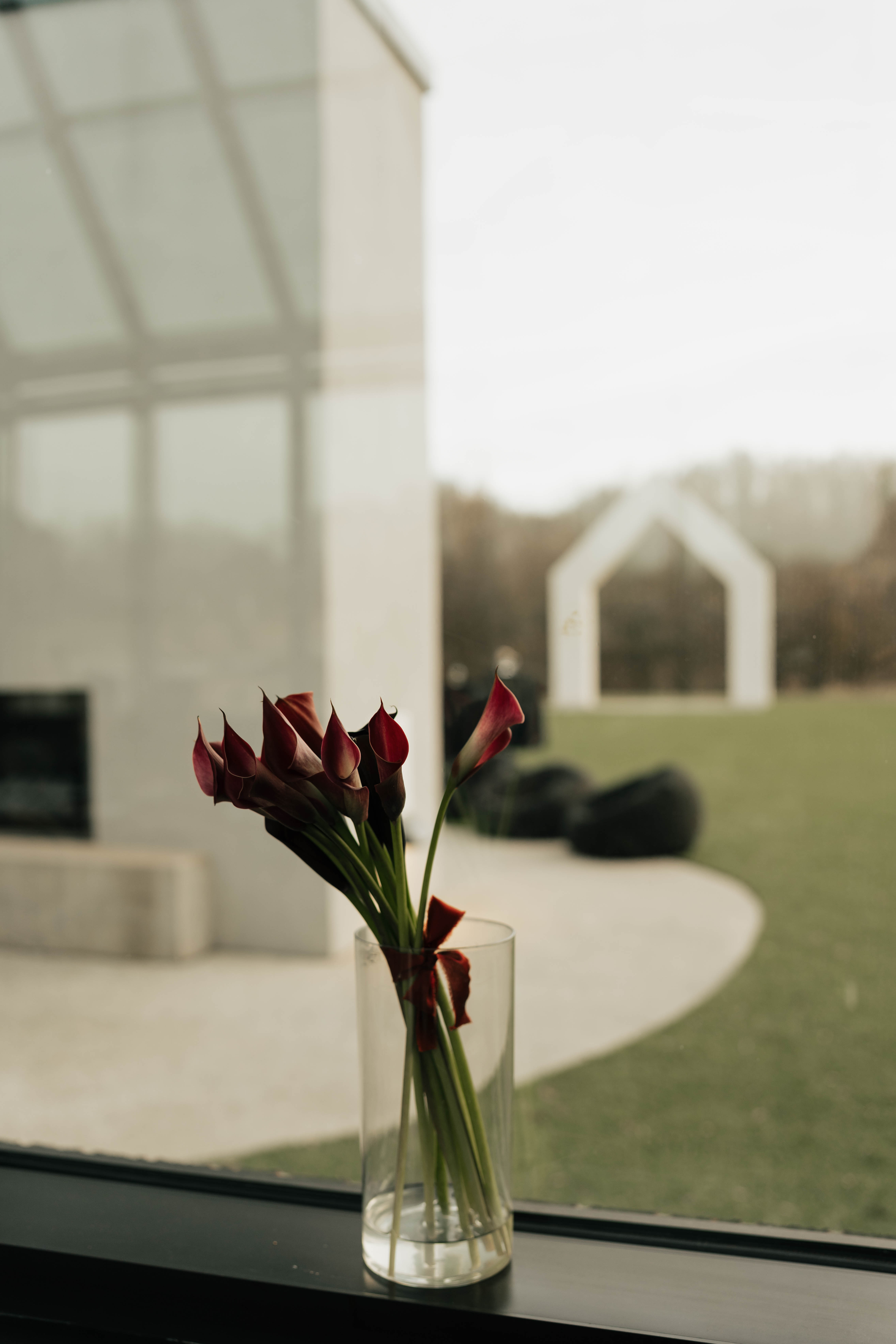
What Oxblood Actually Looks Like in Stems
Dark dahlias are the reason why this color is trending. Varieties like Arabian Night, Black Beauty, and Black Jack (near-black burgundy with warm undertones) are available through peak dahlia season and represent the full oxblood palette. A dinner plate dahlia in this range looks architectural.
Chocolate cosmos does the most atmospheric work. Naturally dark brownish-red, faintly fragrant, and smaller-headed than a dahlia, it adds texture and depth so an arrangement has real layers instead of looking one-dimensional.
Deep amaranthus, trailing and textural in dark burgundy, brings movement and weight to arrangements in a way that makes the oxblood palette feel rich. It drapes and catches light differently than any other stem in this palette.
Burgundy garden roses (particularly David Austin varieties) bring a velvety, lush quality. They photograph with real depth at this end of the color spectrum.
Black Baccara roses go further still: very dark, almost wine-colored, also photograph with a quality that few other roses match.
Forest green is a great accent for this hue. Deep eucalyptus, magnolia leaf, and dark fern balance the oxblood tones, adding contrast that keeps the palette from turning monochromatic and makes it all feel intentional.

Why Oxblood Photographs Better Than Blush
Light colors (blush, ivory, pale peach) can overexpose in bright natural light or against white backgrounds. They require precise lighting control to retain petal detail. Oxblood doesn't have that problem. The color holds in almost any lighting condition, which means your detail shots, flat lay florals, and ceremony images have built-in contrast the photography can work with.
One thing worth discussing with your photographer: very dark flowers absorb light differently than light flowers do, and your photographer should know the palette in advance to adjust exposure for detail shots.
How Oxblood Looks in Winter
In October and early November, dark dahlias and chocolate cosmos are the main characters. As dahlia season closes, garden roses, amaranthus, and burgundy hellebores become the featured stems. By December and into January, deep amaryllis varieties and burgundy ranunculus keep the oxblood tones present without any substitution.
It has a fall-forward feel in October, turns moodier through November, and settles fully into winter by December, all without borrowing from "Christmas red."
For the broader fall palette context: Fall 2026 Wedding Flowers: The Palettes, Stems, and Moods to Know Now →
Where It Works
Oxblood is one of the more venue-flexible dark palettes because the brownish undertone keeps it from feeling overly formal.
Industrial and warehouse venues pick up a moody, architectural quality against exposed brick and steel. In a barn or outdoor setting, the palette balances the warmth of wood and natural materials. Ballroom and candlelit spaces let the deep tones absorb warm light and deepen further, which is the actual design principle behind the "dark romance" framing. Even in a church or other traditional architectural setting, oxblood has depth that feels rich.
Very bright, white-walled venues, are the only settings that would require more thought because the darkness of the palette can feel abrupt against an entirely neutral background. In those spaces, the forest green in the palette softens that contrast.
For another look at how committing to a specific color palette shapes a full wedding aesthetic: Butter Yellow Weddings: Why This Is the Color of 2026 →
If oxblood is the palette you've been looking for, or close to it, the next step is seeing it in a real proposal against your specific stems and budget.