


Behind The Design
Why the Most Considered Ceremony Setups Start at the Ground
Behind The Design
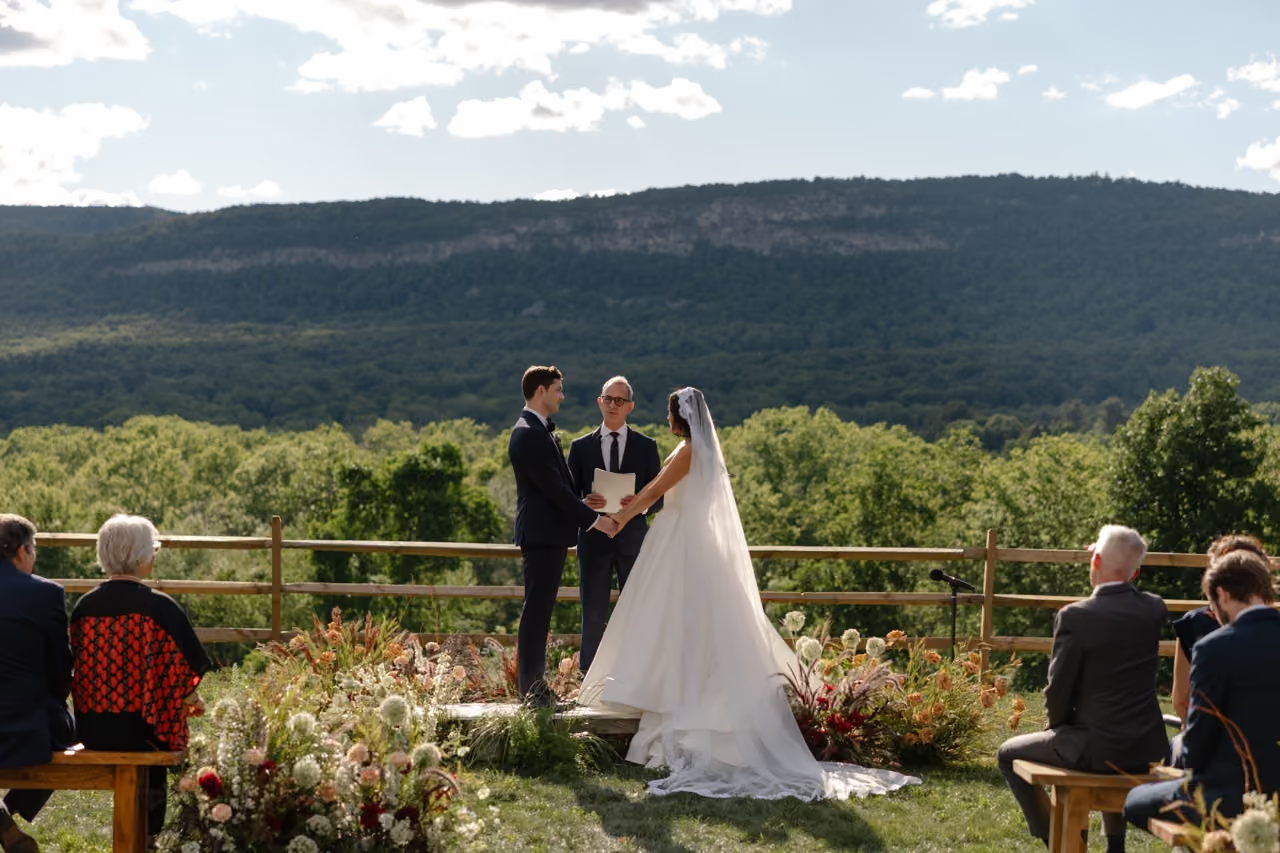
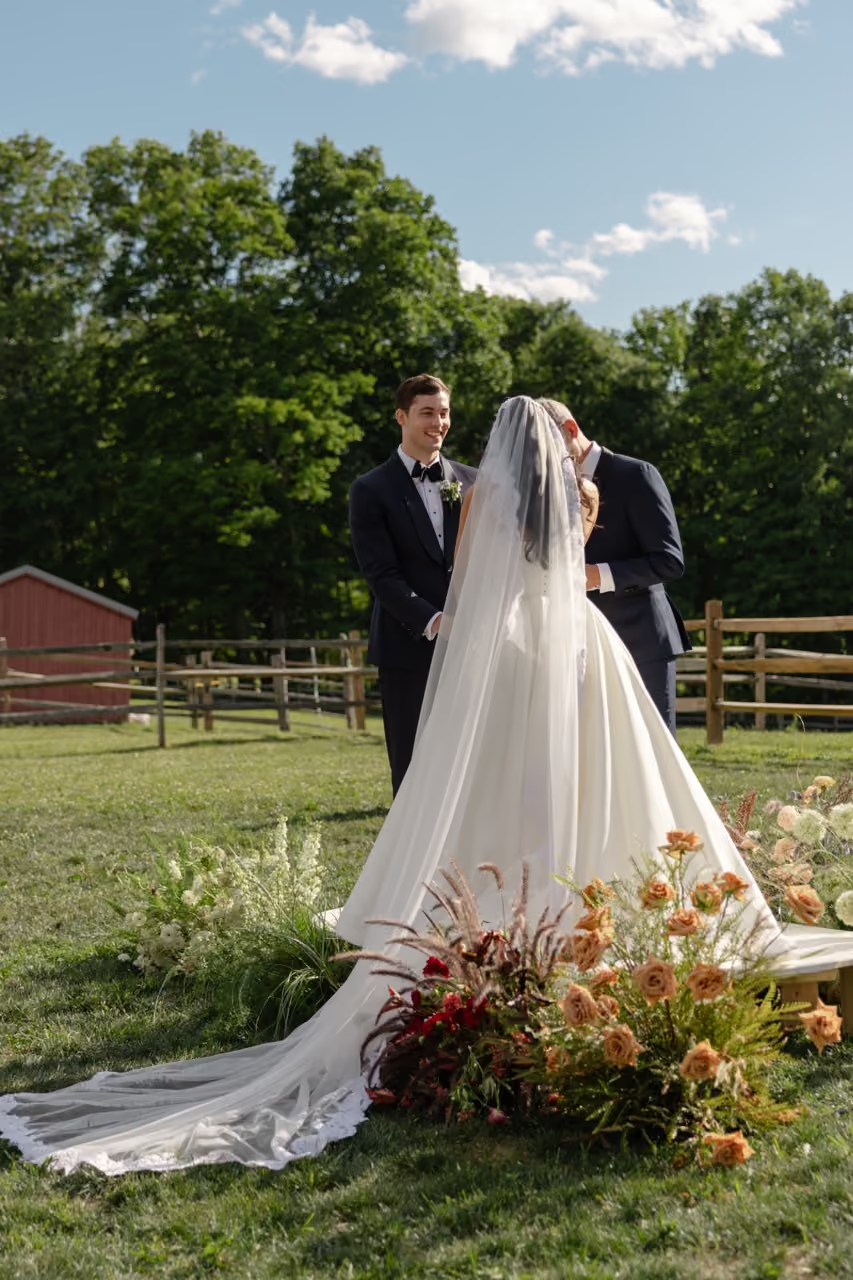
The flowers are on the ground. That's the first surprise.
Instead of an arch at the end of the aisle, the ceremony opens onto something lower and wider. Cosmos at knee height, catching the afternoon light. Ranunculus gathered near the grass in loose clusters. A ribbon of eucalyptus tracing the aisle before disappearing into the lawn. Garden roses opening as guests find their seats.
Your eye keeps moving. It takes in the whole thing before moving through it.
Why the Floor Does Something a Structure Can't
An arch does one thing really well: it marks a destination. You walk toward it, stop under it, say your vows. The visual logic is clear. The photographs are easy to compose. It's also the default — which is fine until you realize that "default" and "considered" rarely mean the same thing.
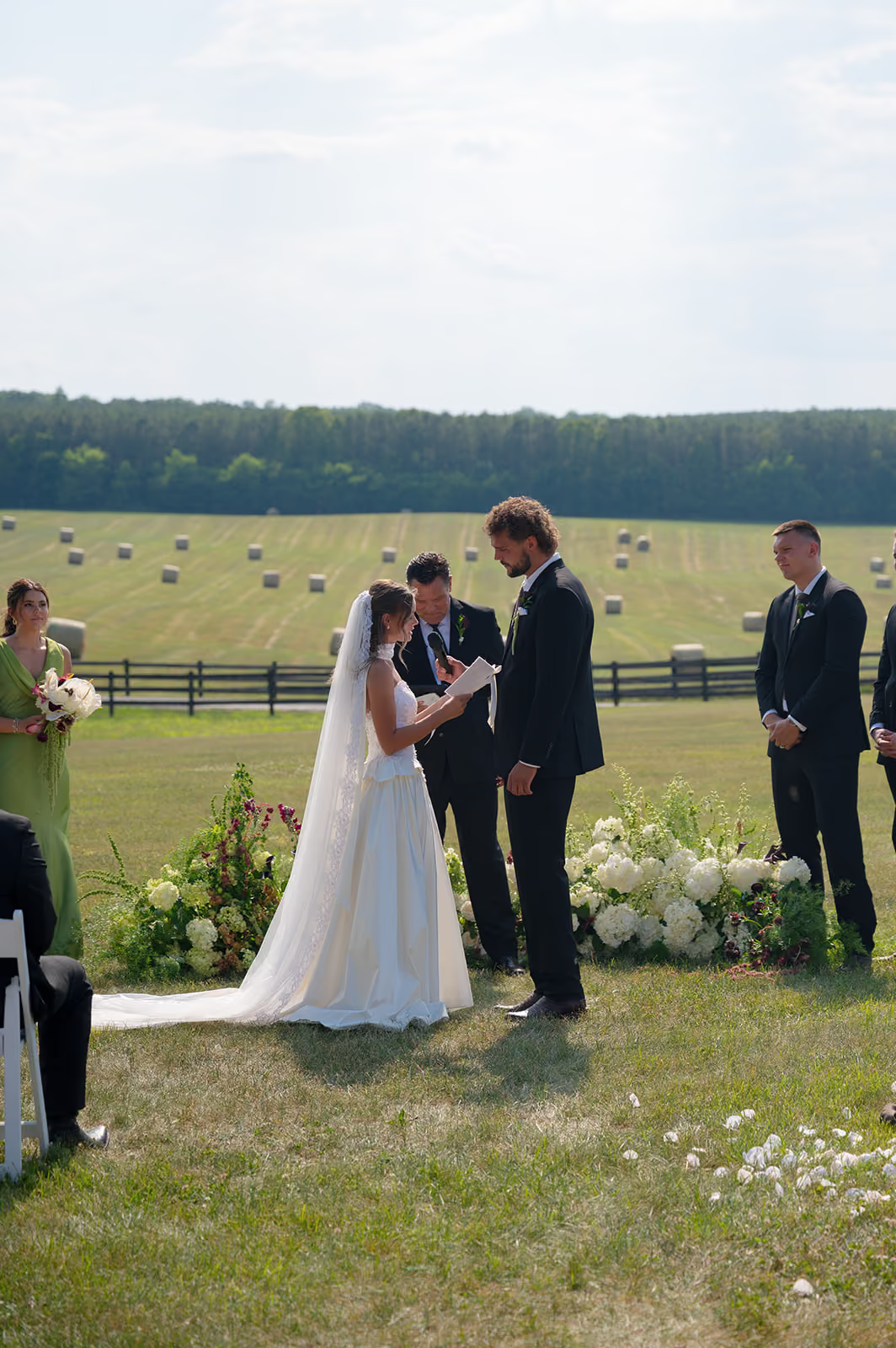
A ground meadow works differently. It doesn't create a frame — it creates a field. The flowers exist in the same plane as the people, so the installation doesn't separate the ceremony from the space around it. It extends into it. Guests aren't looking toward the flowers. They're already in them.
In outdoor light, that distinction matters more than it sounds. Summer afternoon sun moves through a row of cosmos and hits the petals from the side, making them slightly translucent. It moves across eucalyptus stems and catches on the silver underside of each leaf. None of that happens when the flowers are eight feet in the air. At ground level, the flowers catch the same light as everyone else. A garden rose that's half-open when guests arrive might be fully open by the time you walk back down the aisle.
Ground meadows are one format among several — and knowing where they sit relative to altar clusters, hanging installations, and aisle petals makes the decision easier. This overview of wedding flower arrangement formats covers the full range.
The Stems That Actually Work at Floor Level
Not every flower works at ground level. The wrong mix can make a meadow feel like an afterthought instead of an intentional design choice.
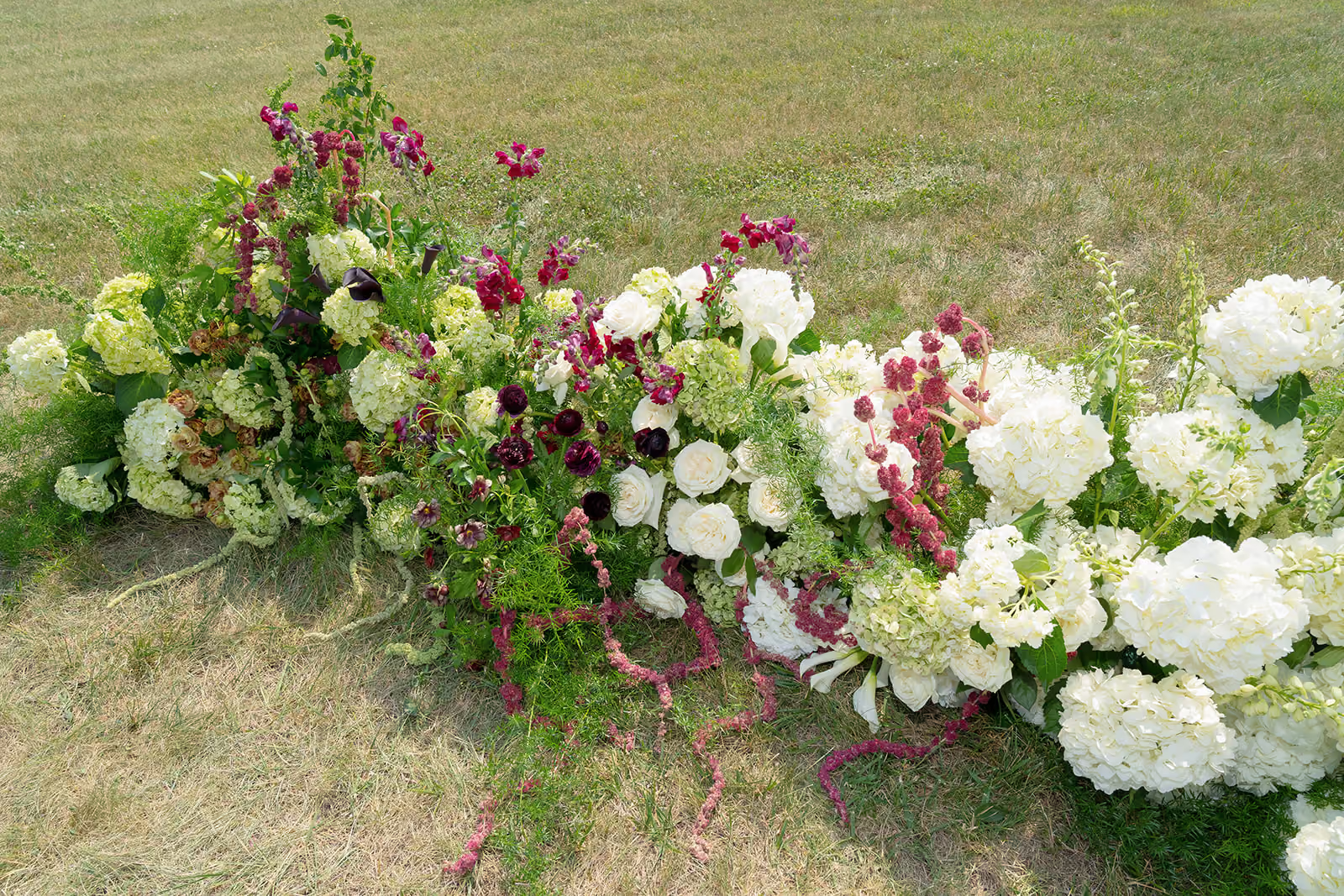
Cosmos make the strongest case for this kind of installation. They're tall enough to have presence but light enough that they move. Their petals are thin and slightly translucent — they don't read as a solid mass, they read as something growing. In July they're at their best: abundant, long-stemmed, available in white and in pinks ranging from pale blush to deep wine. They're also well suited to large installations, which matters when flowers run the length of an aisle.
Ranunculus do something different. Where cosmos add air and movement, ranunculus add density and detail. Small enough that you don't notice them from thirty feet away, but up close — as you're walking past — the layered petals have a richness that most flowers don't. They're what guests tend to notice on the way back out.
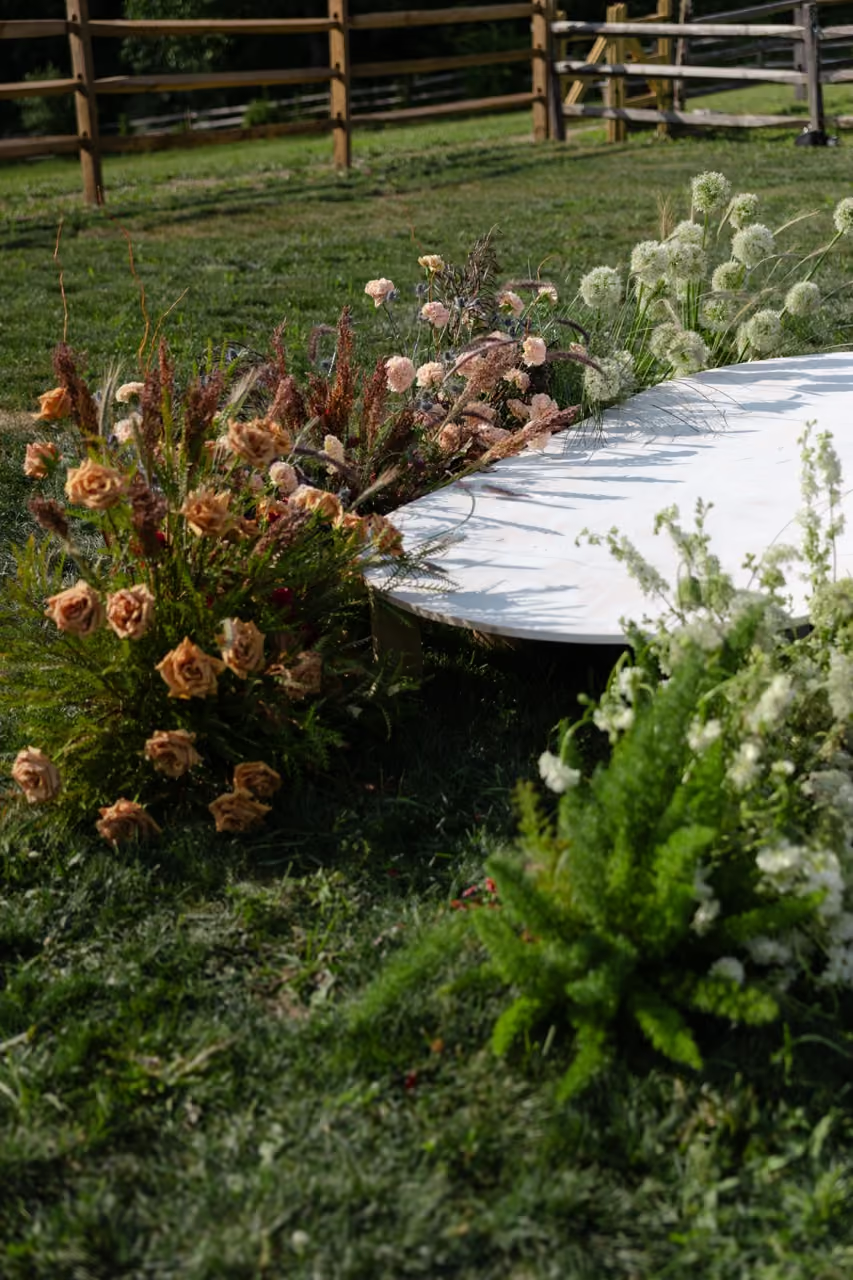
Garden roses change over the course of the day. A tight bud in the morning may be fully open by the ceremony. In a meadow installation, that shift feels natural, like part of the landscape instead of something arranged.
Eucalyptus and seasonal grasses anchor the composition without competing with it. Eucalyptus reads silver-green in outdoor light — closer in tone to the flowers than the bright green of most foliage — so it sits within the installation rather than framing it from the outside. Grasses add movement and horizontal sweep without introducing another color into the palette.
Summer is when these flowers really shine. Longer stems. Fuller blooms. Better movement. That usually helps the budget too — seasonal availability is one of the clearest levers couples have when they're trying to get more out of a fixed number. Here's more on how flower selection interacts with budget →

The Difference Between Scattered and Designed
The meadow installations that don't quite work usually share the same problems: a scale issue, a density issue, or both.
The strongest meadow installations aren't packed edge to edge with flowers.
One cluster sits close to the aisle. The next appears several feet away. Another stretches farther into the grass. Those gaps aren't empty space — they're what let each group of flowers stand on its own. Remove them and the whole look flattens.
Walk the length of the aisle and the two sides rarely mirror each other. One side may run farther down the aisle. Another might have a single large grouping while the opposite side stays quiet. That's what keeps it from feeling manufactured.
Scale is where most installations either succeed or fall short. A ground installation that runs eight feet is a decoration. One that runs thirty is a landscape — and that distinction changes everything about how the ceremony space reads. At eight feet, guests walk past the flowers. At thirty, they walk through them. The first looks and feels like an accent. The second shapes the experience of the whole aisle, from the moment guests sit down to the moment you turn around and walk back out together.
How far the flowers extend is usually the single most consequential decision in a ground meadow design: more than which flowers you choose, more than how the palette is arranged. It determines whether the installation is something people notice or something they're actually inside.
These are the decisions that come up in every ceremony design process. For a reference on the full range of ceremony elements — how meadows relate to altar clusters, aisle petals, and other installation formats — the wedding flower checklist is a useful starting point before any design conversation.
Ceremony flowers shape the experience before anyone says a word. They're the first thing guests see when they sit down, the space you walk through together, and the backdrop for every photograph that follows.
Ground meadows are one of those decisions that usually happens early — once the venue and season are set, before the rest of the ceremony design falls into place. It's worth knowing whether it's the direction you want before those conversations begin.
Explore ceremony setups across venues and styles in the Poppy look book →
See what's possible at your venue—check availability for your date →
Images by: