
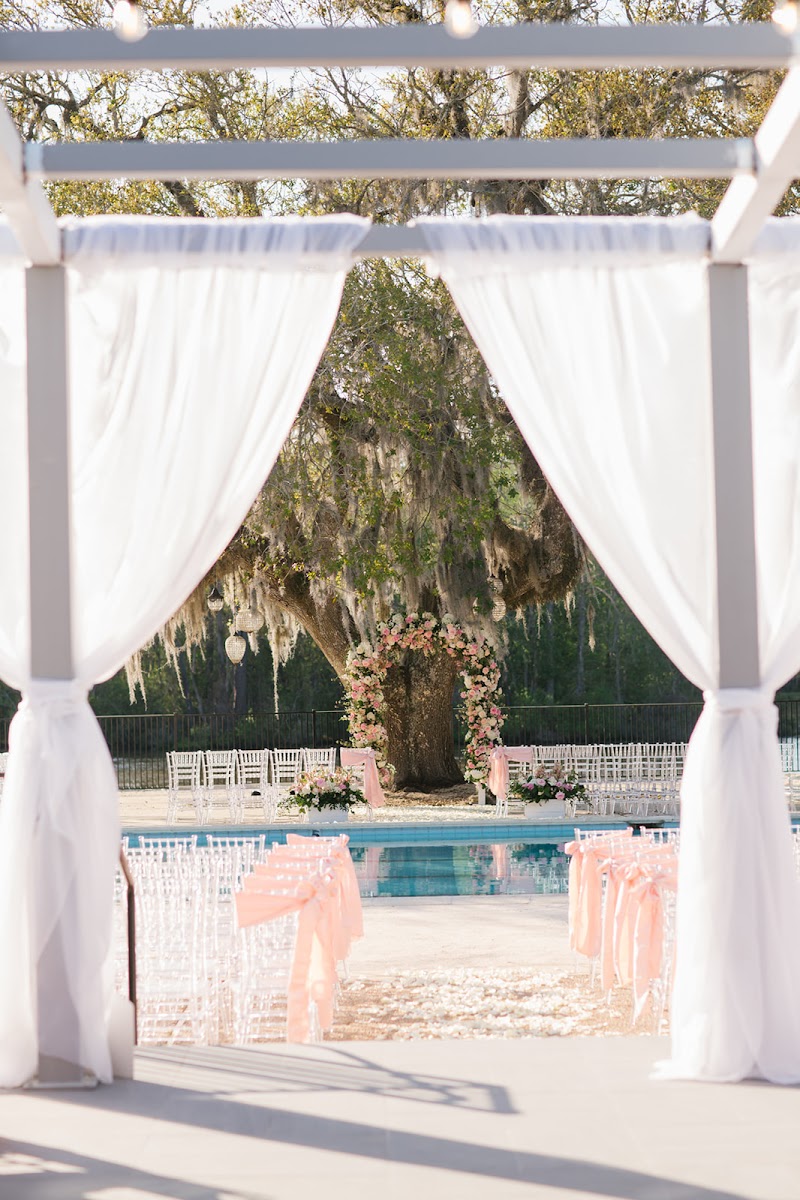
You cross Lake Pontchartrain heading north, leave the urban sprawl of New Orleans behind, and within forty-five minutes the landscape shifts to something quieter, greener, more deliberately slow. Covington announces itself not with fanfare but with oak-lined streets and historic storefronts, the kind of small downtown where people still know their florist by name. Turn onto Country Club Drive and the road curves through mature pines and azaleas until The Covington Country Club appears — a low-slung Southern establishment tucked against the eastern bank of the Tchefuncte River. The architecture is understated in that particularly Gulf South way: white columns, brick facades warmed by humidity and time, sprawling lawns that stretch toward the water. And then there is the oak tree. Not just any oak, but a centuries-old live oak with branches that spread wide and low, creating a natural cathedral that has witnessed more vows than the club’s event staff can count. The tree alone is reason enough to get married here, but the property offers more: a grand ballroom with clear sightlines and elegant simplicity, a poolside patio with cabana bar and water views, and the kind of Southern hospitality that makes vendor load-in feel less like logistics and more like a warm welcome. Poppy has received 40 inquiries for Covington Country Club weddings, and while we haven’t yet designed flowers here, we understand exactly what this venue asks of its florals: respect for tradition, sensitivity to the landscape, and blooms that can hold their own in Louisiana’s heat and humidity.
About The Covington Country Club
The Covington Country Club has anchored this stretch of the Tchefuncte River since 1954, when it opened as the Northshore’s first nine-hole golf course. Over the decades, the club expanded to a full 18-hole championship layout, added event facilities, and cultivated a reputation as a gathering place for Covington families — the kind of institution where generations celebrate milestones in the same rooms their grandparents did. It is a semi-private club, which means it operates with the polish of an exclusive venue but without the stuffiness that can sometimes accompany country club settings. The staff is accommodating, the owner has earned praise for flexibility, and the general atmosphere leans toward gracious rather than formal.
The property spans the landscape between Country Club Drive and the river, with the golf course providing an emerald backdrop for outdoor events and the main clubhouse anchoring the venue’s indoor spaces. The Ballroom, Courtyard, Cabana and Pool Patio, Dungeon Bar, and Bridal Suite each offer distinct character, but the unifying thread is a commitment to Southern elegance without pretension. The design palette throughout skews neutral — whites, creams, natural wood tones — which gives couples and their florists a blank canvas to work from. The clear acrylic chairs in the Ballroom (a detail that matters more than you might think) allow table florals to shine without visual competition, and the outdoor spaces are framed by native Louisiana plantings that shift with the seasons: azaleas in spring, crape myrtles in summer, camellias in winter.
Locationally, Covington sits about 40 miles north of New Orleans, an easy drive across the Lake Pontchartrain Causeway that transforms a metropolitan wedding into a destination weekend without requiring plane tickets. Covington’s historic downtown — just a few minutes from the club — is lined with antique shops, farm-to-table restaurants, and the kind of indie boutiques that make for excellent rehearsal dinner venues or welcome bag shopping. The broader Northshore area is known for its slower pace, its abundance of outdoor recreation (kayaking the Tchefuncte, hiking the Tammany Trace), and its thriving arts community, anchored by events like the annual Three Rivers Art Festival.
From a floral logistics perspective, Covington Country Club operates on a preferred vendor list, though reviews consistently mention the owner’s flexibility and willingness to work with outside vendors when couples make a compelling case. Liability insurance is required, which is standard for any reputable venue. Load-in access is straightforward, with ample parking near the main clubhouse and clear pathways to each event space. The club’s culinary program is helmed by Chef Clint Burns, whose contemporary Louisiana cuisine showcases local Gulf seafood, Creole-spiced meats, and seasonal produce — details that matter because a florist designing Covington Country Club wedding flowers needs to understand the overall aesthetic the couple is building. If the menu is lowcountry boil and beignet stations, your florals should echo that regional sensibility. If it is plated redfish with crawfish étouffée, perhaps your arrangements lean more refined.
Event Spaces & Floral Opportunities
Oak Tree Ceremony Site
Capacity: 300 guests
Setting: This is not a manicured garden or a manufactured backdrop. This is a live oak tree, likely planted before Louisiana was a state, with a trunk wide enough that it takes three people linking hands to encircle it and branches that arch and twist in ways no human designer could replicate. The canopy spreads forty feet in every direction, creating dappled shade and a natural ceiling that shifts with the breeze. Beneath the tree, the ground is level and grassy, bordered by azaleas and camellias that bloom in spring and winter respectively. Behind the tree, glimpses of the Tchefuncte River filter through the foliage. On a temperate April afternoon or a cool October evening, this space requires almost nothing from a decorator. The tree does the work.
Floral approach: The temptation with a tree this magnificent is to over-design, and the smarter move is restraint. We favor a single focal point: either a low floral arc positioned at the base of the tree (think garden roses in shades of blush and ivory, white ranunculus, soft-peach Juliet roses, trailing jasmine vine, and Italian ruscus, all arranged in an asymmetrical crescent that follows the tree’s natural lines) or a suspended floral installation hung from one of the lower branches (a circular wreath of smilax and white hydrangea with clusters of spray roses woven through, appearing to float behind the couple). Aisle markers should be minimal — perhaps wooden stakes topped with small posies, or simple shepherd’s hooks with hanging arrangements of white lisianthus, Queen Anne’s lace, and dusty miller. If the ceremony is in the evening, consider incorporating pillar candles in hurricane lanterns down the aisle, which photograph beautifully against the oak’s gnarled bark. The goal is to honor the tree, not compete with it. Covington Country Club wedding flowers in this space should feel discovered, not constructed — as if they grew here on their own and you simply arranged chairs around them.
Ballroom
Capacity: 265 seated, or 300 for ceremony, 250 for reception
Setting: The Ballroom is the club’s largest indoor space, a generous rectangular room with neutral walls, recessed lighting, and rows of round tables dressed with linens and those clear acrylic Chiavari chairs that have become the gold standard for elegant receptions. The ceiling is standard height (not soaring, not compressed), which means floral installations need to work within a human scale rather than aiming for cathedral drama. The room’s neutrality is its strength — there are no competing architectural features, no bold color choices, no design elements that will date poorly in photographs. It is a proper blank canvas, which makes it equally suited to a garden-inspired reception with trailing greenery and soft pastels or a modern, minimalist celebration with sculptural arrangements and moody tones.
Floral approach: In a room this size, the strategy is to create visual anchors that draw the eye and establish rhythm without overwhelming the space. We recommend a combination of tall and low centerpieces — alternating tables to create variation and ensure clear sightlines for conversation. For tall arrangements, consider clear glass cylinders (20 inches high) topped with lush garden-style compositions: Quicksand roses, Café au Lait dahlias, white butterfly ranunculus, blush astilbe, seeded eucalyptus, and trails of jasmine vine spilling over the edges. For low centerpieces, use shallow stone or ceramic compotes filled with tightly packed blooms: Patience garden roses, white lisianthus, pale peach spray roses, and silver brunia berries for texture. The clear chairs are your friend here — they allow the table florals to be the star without visual clutter. For the head table or sweetheart table, consider a long, low garland installation running the full length: smilax base with clusters of roses, hydrangea, and greenery woven through at intervals, interspersed with pillar candles in varying heights. If budget allows, a statement installation at the room’s entrance — perhaps a pair of tall pedestals flanking the doorway, overflowing with seasonal branches, white hydrangea, and trailing amaranthus — signals the transition from cocktails to dinner.
Courtyard
Capacity: 65 seated, or 125 for ceremony, 75 for cocktail reception
Setting: The Courtyard occupies a more intimate footprint than the ballroom or the oak tree site, an enclosed outdoor space bordered by brick walls, potted palms, and flowering shrubs. It reads as a European-inspired garden room — sheltered but open to sky, formal in layout but softened by greenery. The paving is likely brick or stone (typical for Gulf South courtyards), and there are established planters and garden beds that provide year-round structure. Lighting is often strung overhead or tucked into the landscaping, and the overall effect is romantic in a way that leans Continental rather than rustic. This is where you hold a small ceremony for your closest circle or host a cocktail hour that feels like a garden party in the French Quarter.
Floral approach: The Courtyard invites abundance. Because the space is smaller and more contained, you can layer florals generously without the risk of overwhelming the setting. For a ceremony here, consider a full floral arch or chuppah positioned against the courtyard’s back wall — a structure entirely covered in climbing roses, white hydrangea, café au lait dahlias, trailing amaranthus, and lush greenery like Italian ruscus and silver dollar eucalyptus. Flank the arch with a pair of large urns overflowing with the same blooms. Line the aisle with potted topiaries or tall arrangements in aged terracotta pots, creating a processional that feels like walking through a European garden. For cocktail receptions, scatter the space with bistro tables topped with small, lush arrangements in mercury glass or brass vessels — tightly packed garden roses, ranunculus, sweet peas, and herbs like rosemary or lavender for fragrance. If the Courtyard has existing planters or garden beds, consider supplementing them with additional potted florals (boxwoods, hydrangeas, flowering plants) to amplify the garden atmosphere. Overhead, if the structure allows, suspend small floral chandeliers or hanging votives to draw the eye upward and make the space feel even more enclosed and intimate.
Cabana and Pool Patio
Capacity: 65 seated, or 125 for standing reception
Setting: This is where the club’s proximity to water and the broader Gulf Coast sensibility becomes most apparent. The pool itself is a classic country club rectangle — clean lines, neutral tile, surrounded by lounge chairs and umbrella tables. The cabana structure provides shade and houses a bar, which becomes the natural gathering point during cocktail hour or an afterparty. The patio extends from the cabana toward the lawn, with views of the golf course’s fairways and, depending on the angle, glimpses of the Tchefuncte River beyond. The overall vibe is resort casual — less formal than the ballroom, more polished than the oak tree site, with a relaxed elegance that works particularly well for warm-weather celebrations or couples who want a lighter, more playful atmosphere.
Floral approach: The poolside setting calls for florals that embrace color, texture, and a hint of tropical whimsy without veering into full tiki territory. Think coastal garden rather than beach party. For table arrangements, use low bowls or compotes filled with a mix of garden roses in coral and peach tones (Vuvuzela, Free Spirit), white phalaenopsis orchids, pale yellow ranunculus, and greenery like maidenhair fern and dusty miller. If the pool will be visible during the event, consider floating floral arrangements — large blooms like dinner-plate dahlias, open garden roses, or gardenias set afloat in clear glass cylinders or hurricanes — which photograph beautifully and add an unexpected detail. The cabana bar is an ideal spot for a statement installation: a lush garland running the length of the bar, incorporating smilax, trailing jasmine, coral and peach roses, and perhaps some unexpected elements like air plants or succulents for texture. If the reception extends into the evening, incorporate lanterns, hurricane candles, or string lights to soften the space and create ambiance. The key is to keep the palette light and the arrangements airy — this is not the space for dark, moody florals or heavy, architectural installations. Covington Country Club wedding flowers here should feel breezily elegant, like something you might find at a garden party in Charleston or Savannah.
The Dungeon Bar
Capacity: 50 seated, or 80 for standing reception
Setting: The name alone tells you this is not your typical country club space. Located tee-side (which suggests it opens onto views of the golf course), the Dungeon Bar is designed as an intimate, low-lit gathering space — the kind of room where guests linger over bourbon and cigars, where the afterparty shifts from dancing to conversation, where smaller wedding parties host rehearsal dinners or welcome gatherings. The aesthetic is likely wood-paneled or brick-walled, with a well-stocked bar as the focal point and a mix of high-top tables, lounge seating, and perhaps a fireplace or other architectural detail that anchors the room. The lighting is deliberately dim, the atmosphere deliberately cozy.
Floral approach: In a space this intimate and low-lit, florals need to be either very dramatic or very subtle — there is no middle ground. For a moody, atmospheric approach, consider dark, jewel-toned arrangements: deep burgundy dahlias (Black Satin), plum-colored ranunculus, dark red garden roses (Tess, Black Baccara), accented with dark foliage like burgundy leucadendron or smoke bush. Arrange them in aged brass vessels or dark ceramic compotes, and position them on the bar top, high-top tables, and any mantels or ledges. The dark blooms will glow against candlelight and create a sense of intimacy and luxury. Alternatively, for a lighter touch, go with simple bud vases — slim glass cylinders or vintage bottles, each holding a single stem of garden rose, lisianthus, or spray rose, clustered in small groups on tables. The goal is to enhance the space without cluttering it — this is a room about conversation and connection, and the florals should support that rather than demand attention.
Bridal Suite
Setting: The Bridal Suite is a practical luxury — a dedicated space where the wedding party can prepare, touch up makeup, take a breath before walking down the aisle. It includes a full-length mirror (essential for final dress checks), a private bathroom with shower (useful for the morning-of prep), vanity seating, and a lounge area for bridesmaids to relax with mimosas and charcuterie. The design is likely clean and contemporary, with good lighting for hair and makeup, plenty of outlets for styling tools, and enough square footage that six or eight people can move comfortably without bumping into each other.
Floral approach: The Bridal Suite benefits from a single, exquisite arrangement positioned where it will feature in getting-ready photos — either on the vanity, near the full-length mirror, or on a side table by the lounge area. This is the place for your most romantic, most lush, most expensive-looking blooms: open garden roses in shades of blush and ivory (Patience, Ohara, Keira), white ranunculus, delicate sweet peas, fragrant garden roses like David Austin’s Juliet, all arranged in a low, rounded composition that looks abundant without being too large to transport. Add texture with maidenhair fern or silver brunia, and consider incorporating a ribbon that matches the bridesmaids’ dresses trailing down the side of the vessel. This arrangement will appear in dozens of photos — the bride holding her bouquet next to it, the bridesmaids toasting with champagne in front of it, the detail shots of the jewelry and shoes styled around it — so it is worth investing in quality blooms and expert design.
Wedding Flower Ideas for The Covington Country Club
Southern Garden Romance
This concept embraces the venue’s Gulf South location with a palette inspired by the historic gardens of Charleston, Savannah, and New Orleans’ Garden District. The foundation is soft and romantic: blush garden roses (Keira, Patience), ivory spray roses, white ranunculus, pale pink astilbe, and classic white hydrangea. To keep it from reading too sweet, incorporate unexpected texture: jasmine vine trailing from arrangements, Italian ruscus adding movement, dusty miller providing silvery contrast, and perhaps clusters of unripe blackberries or hypericum berries in soft green for an organic touch. Vessels should feel collected rather than matched — aged terracotta pots for aisle markers, mercury glass compotes for reception tables, whitewashed wooden boxes for the ceremony arch base. This palette works beautifully under the oak tree, where the soft colors complement the natural setting without competing with it, and in the Ballroom, where the romantic aesthetic feels timeless against the neutral backdrop. For an evening reception, add candlelight liberally — pillar candles in hurricane lanterns, votives scattered across tables — to create that warm, Southern hospitality glow.
Coastal Elegance
Louisiana sits on the Gulf Coast, and while Covington is inland, the proximity to water influences the region’s aesthetic. This concept translates that coastal sensibility into florals without resorting to seashells and starfish. The palette is airy and light: white phalaenopsis orchids, pale yellow garden roses (Patience in butter tones), soft coral ranunculus (Ranunculus cloony in coral shades), cream lisianthus, and plenty of textured greenery — maidenhair fern, seeded eucalyptus, and dusty miller. Add in elements that suggest the coast without being literal: air plants tucked into arrangements for unexpected texture, bleached driftwood pieces as bases for ceremony installations, or pale blue delphinium for a hint of water-inspired color. Vessels should be clean and modern — white ceramic, clear glass cylinders, or natural linen-wrapped pots. This design concept is ideal for the Cabana and Pool Patio, where the lighter palette complements the outdoor setting, and for spring or summer weddings when the heat calls for visually cooling colors. Consider floating arrangements in the pool itself — large open blooms set adrift in clear hurricanes for a romantic detail that photographs beautifully.
Jewel-Toned Opulence
For couples who want drama and richness, this concept leans into deep, saturated colors and luxurious blooms. The palette is jewel-toned: burgundy dahlias (Rip City, Karma Choc), deep purple lisianthus, magenta garden roses (Yves Piaget), plum-colored ranunculus, accented with unexpected pops of burnt orange (Free Spirit roses, marigolds) and softened with dusty mauve and blush tones (Quicksand roses, pink astilbe). Texture is key: add in dark foliage like burgundy leucadendron or smoke bush, privet berries for contrast, and trails of amaranthus in deep red. Vessels should be substantial and elegant — aged brass urns, dark ceramic compotes, or gold-rimmed glass cylinders. This palette is stunning in the Ballroom, where the neutral walls allow the rich colors to take center stage, and in the Dungeon Bar, where the moody tones complement the intimate, low-lit atmosphere. It is particularly striking for fall and winter weddings, when the deeper colors echo the season’s natural palette. For ceremony installations, consider a dramatic arch completely covered in these jewel-toned blooms, creating a bold focal point that photographs with incredible depth and richness.
Seasonal Considerations
Covington’s humid subtropical climate means year-round wedding possibilities, but each season brings distinct opportunities and challenges for florals. Understanding Louisiana’s weather patterns and regional bloom availability is essential for Covington Country Club wedding flowers that not only look beautiful but also hold up in the Gulf South heat and humidity.
Spring (March-May) arrives early and exuberant in Louisiana. By late March, temperatures hover in the 70s and 80s, azaleas explode in shades of pink and white throughout the club’s grounds, and the live oak’s fresh green leaves create a lighter canopy than the darker summer foliage. This is peak wedding season on the Northshore, and for good reason. Locally available blooms include Louisiana irises (in shades of purple, yellow, and white — a true native), azaleas (if your event is early enough in the season), dogwood branches, and the first roses from Texas and California growers. Spring in Covington also means the possibility of afternoon thunderstorms, so any outdoor ceremony needs a solid backup plan and florals that can be quickly relocated if needed. Opt for blooms that can handle brief exposure to rain — roses, hydrangeas, and ranunculus are surprisingly resilient, while delicate sweet peas and anemones are riskier. The oak tree site is stunning in spring, with dappled sunlight and moderate temperatures making it the ideal outdoor venue. Best months: April and early May, before the heat and humidity become oppressive.
Summer (June-August) in Covington is hot, humid, and demands respect. Temperatures regularly climb into the 90s with humidity levels that make it feel closer to 100°F. Afternoon thunderstorms are common, and the air is thick enough that you can feel it. For florals, this means choosing heat-tolerant varieties and working with your florist on logistics that protect the arrangements until the last possible moment. Orchids, tropicals (anthuriums, birds of paradise), and hardy garden roses (especially those bred for Southern climates) are your best bets. Delicate blooms like sweet peas, anemones, and tulips will not survive Louisiana summer heat. Hydration is critical — arrangements need to be in water sources until moments before placement, and outdoor installations should be set up as close to guest arrival as possible. The benefit of summer weddings is the lush, verdant backdrop — the golf course is emerald green, the surrounding foliage is full and dense, and evening ceremonies under the oak tree (starting at 6 PM or later) can be magical once the sun dips and the temperature drops slightly. Indoor spaces like the Ballroom or Dungeon Bar are safer bets for summer celebrations. Best months: Early June or late August, when temperatures are slightly more moderate than the peak of July.
Fall (September-November) is many florists’ favorite season in Louisiana. By October, the oppressive heat breaks, temperatures settle into the comfortable 70s and 80s, and the humidity becomes bearable. This is the second peak wedding season at Covington Country Club, and availability of seasonal blooms explodes: dahlias (in every color and size), chrysanthemums, marigolds (yes, elevated marigolds in burnt orange and gold), zinnias from local growers, and the first amaryllis and anemones as the season progresses. Fall foliage in Louisiana is not the fiery reds and golds of New England — it is more subtle, with sweetgum trees turning burgundy and rust, bald cypress shifting to copper, and ornamental grasses adding texture in shades of wheat and amber. For Covington Country Club wedding flowers in fall, embrace the season’s natural richness: deep burgundies, burnt oranges, golden yellows, and plenty of textured foliage. The oak tree site is particularly stunning in November, when the light is softer and the air is crisp. Best months: October and November, when weather is reliably beautiful and seasonal blooms are at their peak.
Winter (December-February) in Covington is mild compared to most of the country, but occasional cold snaps can dip temperatures into the 30s or 40s, and rain is always a possibility. The landscape is quieter — deciduous trees are bare, grass is dormant, and the golf course takes on a more muted palette. But winter has its own beauty: camellias bloom in shades of pink, white, and red throughout the club’s grounds (Louisiana is prime camellia territory), and the live oak remains evergreen, providing structure and presence even in cooler months. Winter weddings lean naturally toward indoor spaces — the Ballroom becomes particularly cozy with candlelight and lush florals. Available blooms include amaryllis (dramatic and sculptural), white phalaenopsis orchids, hellebores (if you can source them from specialty growers), ranunculus, anemones, and garden roses imported from warmer climates. The color palette can go either rich and dramatic (deep reds, burgundies, evergreen foliage) or soft and romantic (whites, creams, blush, winter greens). For outdoor ceremonies, the oak tree site is still viable on warmer winter days, but have heaters available for guests and be prepared to move indoors if weather turns. Best months: Late February, when camellias are blooming and temperatures are beginning to warm toward spring.
Poppy’s Expert Take
The oak tree is the main character. If you are having your ceremony under that magnificent live oak, your floral design needs to understand its place in the hierarchy: the tree comes first, your flowers come second. We have seen too many ceremony installations that try to compete with a centuries-old oak and lose every time. Instead, design florals that complement the tree’s natural architecture — a low, asymmetrical arrangement at its base, or a suspended installation that uses the branches as part of the composition. The goal is symbiosis, not competition. And for the love of all things beautiful, do not obscure the trunk with florals. That gnarled, muscular bark is part of what makes the space special.
Louisiana humidity is not theoretical. If you are getting married between May and September at Covington Country Club, you are dealing with Gulf South humidity that can wilt delicate blooms in under an hour. This is not the time for garden roses that open fully in heat (they will shatter before cocktail hour ends) or for tulips, sweet peas, or other cool-weather favorites. Stick with proven heat performers: phalaenopsis orchids, tropicals, hardy spray roses, hydrangeas (which actually do well in humidity), and garden roses specifically bred for Southern climates. Ask your florist about their delivery and setup timeline — in summer, arrangements should not be placed outdoors more than 30-45 minutes before guests arrive, and everything should be kept in climate-controlled spaces until the last possible moment.
The clear chairs are a floral gift. Those acrylic Chiavari chairs in the Ballroom might seem like a minor detail, but they have major implications for your table design. Unlike traditional wooden or metal chairs that create visual bulk around tables, clear chairs essentially disappear, which means your centerpieces are the primary focal point at eye level. This is permission to be generous with your floral arrangements — go taller, lusher, more dramatic than you might in a space with visually heavier chairs. It also means you can play with color more boldly, since you are not competing with chair upholstery or wood tones.
Think about the ceremony-to-reception transition. The oak tree site and the Ballroom are not adjacent, which means if you are having an outdoor ceremony and an indoor reception, your florists will not be able to simply move ceremony flowers inside during cocktail hour. Plan accordingly: either budget for separate ceremony and reception florals, or design ceremony installations that can remain outside (they will make for beautiful ambient décor during cocktail hour on the grounds) while your reception flowers are placed in the Ballroom before guests transition. Alternatively, consider doing your ceremony in the Ballroom itself — it accommodates 300 for ceremony seating — which allows you to repurpose ceremony florals immediately.
The Tchefuncte River is right there — use it. One of the club’s best features is its proximity to the river, and yet many couples overlook this in their design. For cocktail hour or photos, consider incorporating the riverfront into your plans. A small floral installation on a dock or riverbank (