
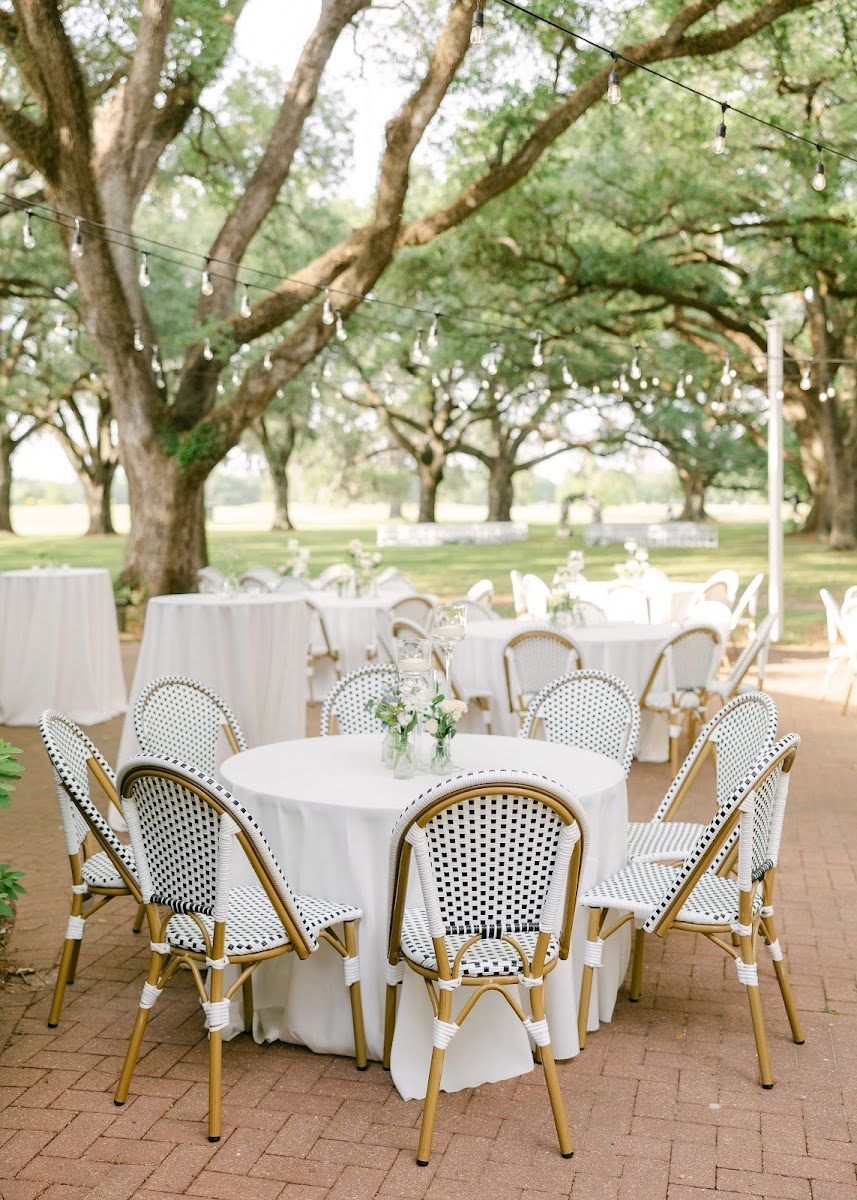
You take Magazine Street through Uptown, past the antique shops and the oyster bars, past the shotgun houses painted lavender and mint, and then the avenue opens up. On your left, Audubon Park spreads its green expanse under a canopy of live oaks so old their branches dip to the ground and rise again like the ribs of cathedral ceilings. The Audubon Clubhouse sits at the edge of this landscape, at 6975 Magazine Street, where the manicured fairways of the golf course meet the moss-draped oaks and the air smells faintly of boxwood and fresh-cut grass. The building itself is Acadian in style — white columns, wraparound porches, clean symmetry — the kind of architecture that suggests both permanence and ease. From the Veranda, you can see golfers making their way across the course in the late afternoon light, while inside, the hardwood floors gleam and the bar hums with the quiet efficiency of Dickie Brennan & Co.’s hospitality machine. This is not the French Quarter. This is Uptown elegance, garden party refinement, and Southern grace without the heavy hand. Poppy has designed Audubon Clubhouse wedding flowers for 1 couple so far, with more in the works, and each time we pull up to that wraparound porch, we feel the same thing: this is a place that knows exactly what it is.
About Audubon Clubhouse by Dickie Brennan & Co.
Audubon Clubhouse operates under the stewardship of Dickie Brennan & Co., the restaurant and catering group behind some of New Orleans’ most iconic dining experiences. That pedigree matters. This is not a clubhouse that simply rents out its dining room and wishes you well. The culinary program is exclusive and exceptional, the event coordination is meticulous, and the service staff moves through the space with the kind of attentive professionalism that allows a wedding to unfold without a single guest noticing the work behind it. The Clubhouse itself was recently renovated, updating the interiors while preserving the Acadian architectural charm that makes the building feel both historic and utterly current. Hardwood floors, neutral walls, tasteful millwork — it is a canvas that accommodates any style without imposing its own.
The venue sits within Audubon Park, one of New Orleans’ most beloved green spaces, a 350-acre park designed by John Charles Olmsted in the early 20th century. The park’s live oak trees are the defining feature of the landscape — ancient, sprawling, their branches draped with Spanish moss that sways in the humid breeze. The Audubon Park Golf Course, which provides the backdrop for much of the Clubhouse property, is equally storied, a municipal course dating back to 1898 and redesigned in 2001 by Dennis Wilkerson. The fairways are immaculate, the greens roll true, and the whole scene has the timeless quality of a Southern landscape painting. For a wedding, this setting offers something increasingly rare in New Orleans: greenery, openness, and a sense of pastoral calm within city limits.
Logistically, the Clubhouse is located in the Uptown neighborhood, roughly 15 minutes from the French Quarter and easily accessible via Magazine Street, one of New Orleans’ primary commercial corridors. The surrounding area is characterized by historic homes, Tulane and Loyola universities just blocks away, and a neighborhood culture that skews toward families, academics, and longtime New Orleanians. There is ample free parking on-site, a relief in a city where parking can be a logistical headache. For Poppy’s delivery and setup teams, the load-in is straightforward, the venue management is communicative, and the indoor-outdoor flow of the space means we can stage arrangements efficiently across multiple zones without cramping our process.
The Clubhouse offers full venue buyouts for weddings, giving couples access to the Dining Room, Clubroom, Veranda, Oak Grove ceremony site, and the option to tent the Terrace for larger receptions. Dickie Brennan & Co. provides exclusive catering and bar services, with house, premium, and specialty beverage options, and outside cake is permitted. Florists are not on a restricted vendor list, which gives Poppy the flexibility to design without navigating unnecessary approval processes. Liability insurance is handled by the venue for events, and the festoon lighting that strings across the outdoor spaces creates a warm, ambient glow that makes evening receptions feel effortlessly romantic.
Event Spaces & Floral Opportunities
Dining Room
Capacity: 75 seated, 125 reception
Setting: The Dining Room is the heart of the Clubhouse, a spacious, light-filled interior with gleaming hardwood floors, high ceilings, and large windows that overlook the golf course and oak trees. The color palette is neutral — cream walls, warm wood tones, understated elegance. The room accommodates up to 75 guests for a seated dinner or 125 for a cocktail-style reception, and the layout is flexible enough to support long banquet tables, round tables, or a mix of both. The hardwood floors photograph beautifully, especially when bathed in the golden late-afternoon light that streams through the windows, and the room’s proportions strike the right balance between intimate and airy.
Floral approach: The hardwood floors and neutral walls make this room a dream for low, lush centerpieces that spread horizontally rather than stacking vertically. We favor garden-style arrangements in aged brass compotes or matte ceramic vessels, mounding Patience garden roses, Quicksand roses, white ranunculus, and blush astilbe with trailing jasmine vine and seeded eucalyptus that spill over the edge of each vessel and onto the table itself. The effect is abundant without being towering, romantic without being precious. For couples who want more height, consider elevated arrangements on clear acrylic risers that lift the florals above sightlines, allowing conversation to flow while still making a visual statement. The bar area, housed in the former pro shop, is a natural spot for a statement installation — perhaps a large asymmetric arrangement in a stone urn, featuring white hydrangea, blush peonies (when in season), and branches of flowering quince or spirea that echo the organic shapes of the oaks outside. If the reception includes long tables, a continuous garland down the center — smilax, Italian ruscus, white O’Hara roses, and ivory lisianthus with taper candles in brass holders — creates a tablescape that feels both elevated and effortless.
Clubroom
Capacity: 40 seated, 50 reception
Setting: The Clubroom is a more intimate space, ideal for smaller gatherings, rehearsal dinners, or as a secondary lounge area during a larger wedding. The room can be combined with the Veranda to accommodate up to 75 seated or 90 for a cocktail reception, making it a versatile addition to the venue’s offerings. Like the Dining Room, the Clubroom features hardwood floors and neutral decor, but the scale is cozier, with lower ceilings and a layout that encourages conversation and connection.
Floral approach: In a smaller room, restraint is key. A single statement arrangement on a central console or bar — think a lush, organic design with Cafe au Lait dahlias, Juliet garden roses, white anemones, and trailing amaranthus in a brass or ceramic vessel — provides a focal point without overwhelming the space. For seated dinners, low arrangements in bud vases or small compotes keep the tables feeling intimate. If the Clubroom is used as a cocktail lounge, consider grouping smaller arrangements on side tables or the bar itself, creating visual interest without cluttering the space. Textural elements like dusty miller, olive branches, or eucalyptus add sophistication without competing for attention.
Veranda (Wrap-around Porch)
Capacity: 40 seated, 50 reception (or combined with Clubroom for 75 seated, 90 reception)
Setting: The Veranda is the Clubhouse’s signature architectural feature, a wraparound porch that offers views of the golf course, oak trees, and the sweeping lawns of Audubon Park. The porch is covered, making it a viable option even in the event of rain, and the festoon lighting that hangs overhead creates a warm, inviting glow as the sun sets. This is the transitional space between indoors and outdoors, the place where cocktails flow and guests linger, reluctant to move inside even when dinner is announced.
Floral approach: The Veranda calls for designs that enhance its role as a threshold space — not quite ceremony, not quite reception, but something graceful in between. Porch rail installations are ideal here: long garlands of smilax, seeded eucalyptus, and Italian ruscus, woven with clusters of white spray roses, blush lisianthus, and peach ranunculus, secured to the railings with floral wire and zip ties that remain invisible. For a more elevated look, consider urn arrangements flanking the entrances to the Veranda, overflowing with white hydrangea, Quicksand roses, and trailing jasmine that spills down the sides. If the Veranda is used for a seated dinner, low centerpieces in natural wood or stone vessels keep the focus on the view, while candles in hurricane vases add warmth and ambiance as the evening progresses. The key is to let the architecture and the landscape do the heavy lifting; the florals should accent, not announce.
Oak Grove
Setting: The Oak Grove is the outdoor ceremony site, and it is, quite simply, one of the most magical ceremony locations in New Orleans. The live oak trees create a natural canopy overhead, their branches spreading wide and dipping low, draped with Spanish moss that sways gently in the breeze. The ground is a carpet of grass, and the golf course stretches out in the background, a landscape of green punctuated by sand traps and distant flags. This is a ceremony site that requires almost no intervention — the trees provide the architecture, the moss provides the romance, and the scale of the setting makes guests feel like they are part of something ancient and timeless.
Floral approach: Under the oaks, the golden rule is restraint. The trees are the cathedral; anything we add should honor that rather than compete with it. A ceremony arch or chuppah is ideal here, but it should feel organic and asymmetric, not stiff or overly structured. We favor natural wood arches dressed with trailing greenery — smilax, Italian ruscus, olive branches — and clusters of florals at the base and corners: white O’Hara roses, blush Juliet garden roses, ivory lisianthus, and white delphinium that echo the vertical lines of the tree trunks. For couples who want something bolder, a full delphinium installation in shades of white, blush, and soft lavender creates a dreamy, cloud-like backdrop that photographs beautifully against the dark bark of the oaks. Aisle arrangements should be minimal — low urns or stone vessels at every third or fourth row, filled with the same palette as the arch, or scattered petals in white and blush that blend into the grass. The goal is to frame the couple without distracting from the extraordinary natural setting.
Terrace (Tented Option)
Capacity: Up to 250 when tented
Setting: The Terrace extends the Clubhouse’s event capacity significantly, transforming an outdoor space into a tented ballroom that can accommodate up to 250 guests. When tented, the Terrace becomes a blank canvas, with soft fabric overhead, pole structures that can be draped or left exposed, and the flexibility to incorporate custom lighting, lounge areas, and a full bar setup. The tent connects to the main Clubhouse, allowing for seamless flow between indoor and outdoor spaces.
Floral approach: A tented Terrace is an opportunity for drama. With no existing architecture to defer to, the florals become the primary design element. Hanging installations are ideal here — chandeliers constructed from smilax, eucalyptus, and clusters of white hydrangea, blush roses, and trailing amaranthus, suspended above the dance floor or the head table. For centerpieces, mix heights to create visual variety: some tables with low, lush arrangements in aged brass compotes, others with tall, elevated designs on gold stands that allow for conversation beneath. If the tent includes a lounge area, consider a large-scale floor installation — a grouping of arrangements in varying heights and vessels, featuring dramatic blooms like white peonies (in season), blush dahlias, and cascading jasmine. The tent poles can be dressed with garlands or left bare, depending on the aesthetic; for a more organic look, wrap the base of each pole with greenery and clusters of florals that appear to grow from the ground up. The key is to treat the tent as a garden room, filling the space with life and texture that makes guests forget they are under fabric.
Wild Boar Hall (Converted Bar Area)
Setting: The former pro shop has been reimagined as a bar and lounge area, a quieter space adjacent to the main Dining Room where guests can retreat from the dance floor for conversation, cocktails, or a moment of respite. The room maintains the Clubhouse’s neutral aesthetic, with hardwood floors, understated decor, and a layout that accommodates both standing and seated guests.
Floral approach: The bar is the focal point in this space, making it the ideal location for a statement floral installation. A large, lush arrangement positioned at the center of the bar — think white hydrangea, blush Juliet roses, peach ranunculus, and trailing amaranthus in a substantial stone or brass vessel — creates a focal point that draws guests in. For a more dramatic effect, consider a backbar installation, using risers to create varying heights and filling each level with smaller arrangements that cluster together to form a living wall of florals. Side tables and lounge areas can feature lower arrangements in bud vases or compotes, maintaining the room’s intimate scale while adding touches of color and texture throughout.
Wedding Flower Ideas for Audubon Clubhouse
Garden District Grace
This palette draws directly from the surrounding Uptown neighborhood — the soft pastels and lush greenery of historic New Orleans gardens. Blush Juliet garden roses, Quicksand roses, and Patience roses form the foundation, layered with white ranunculus, ivory spray roses, blush astilbe, and pale pink sweet peas. Textural foliage includes seeded eucalyptus, dusty miller, and Italian ruscus, with trailing jasmine vine adding movement and softness. Arrangements sit in aged brass compotes, soft gray ceramic vessels, and natural wood boxes that feel vintage without being overly formal. This palette works beautifully in the Dining Room, where the hardwood floors and neutral walls allow the soft colors to glow, and under the Oak Grove, where the blush tones complement the dappled light filtering through the canopy. For centerpieces, layer low, lush arrangements with taper candles in brass holders and soft silk runners in ivory or champagne. The overall effect is romantic, timeless, and quintessentially New Orleans — a garden party brought indoors.
Oak and Moss
Inspired by the live oaks themselves, this concept leans into the organic, slightly wild aesthetic of the Audubon Park landscape. The palette is green-forward with subtle pops of cream and ivory: white O’Hara roses, Polo roses, white lisianthus, and ivory hellebores, surrounded by masses of textured greenery. Think olive branches, eucalyptus in multiple varieties (seeded, silver dollar, baby blue), Italian ruscus, jasmine vine, and actual Spanish moss (ethically sourced and treated) incorporated as a textural accent. Arrangements are asymmetric and organic, appearing to grow out of their vessels rather than being tightly constructed. Use natural wood boxes, stone urns, and moss-covered bases to anchor the designs. For the ceremony arch in the Oak Grove, construct an installation that feels like an extension of the trees themselves — branches of curly willow or manzanita forming the structure, dressed with cascading greenery and clusters of white blooms that appear to emerge naturally. This palette is ideal for couples who want their florals to feel less “arranged” and more like they belong to the landscape, and it photographs beautifully against the dark bark and Spanish moss of the oaks.
Festoon Glow
Designed specifically for evening receptions under the Veranda’s festoon lighting, this palette is light, airy, and designed to catch and reflect the warm glow of string lights. Ivory and white blooms dominate: white peonies (in season), white hydrangea, Polo roses, white lisianthus, and white sweet peas, accented with the palest blush tones in Quicksand roses and O’Hara garden roses. Foliage is soft and silvery: dusty miller, silver brunia, and light eucalyptus. Arrangements are elevated on clear acrylic or gold stands, allowing the candlelight and festoon glow to pass through and around the designs rather than being blocked. Incorporate quantities of candles — tapers in gold or brass holders, votives in clear glass, pillar candles on gold trays — to amplify the lighting effect. For the Veranda rail installations, keep the palette light and airy with trailing jasmine, white spray roses, and silver foliage woven into long, loose garlands. The result is luminous and ethereal, perfect for couples who want their reception to feel like it is lit from within. This palette also works beautifully in a tented Terrace, where hanging installations can be designed to interact with custom lighting for maximum impact.
Seasonal Considerations
New Orleans operates on a different seasonal calendar than most of the country, with a humid subtropical climate that shapes both comfort and floral availability. Understanding how the seasons affect an Audubon Clubhouse wedding is essential for planning both the guest experience and the floral design.
Spring (March - May) is peak wedding season in New Orleans, and for good reason. Temperatures range from the mid-60s to the mid-80s, humidity is manageable, and the city is in full bloom. Azaleas burst into color across Uptown, camellias linger from their winter peak, and Southern magnolias begin to open their massive white blooms. For florals, spring is the season of abundance: peonies (late April through May), ranunculus, anemones, sweet peas, and garden roses are all at their peak. Audubon Park itself is spectacular in spring, with the oaks fully leafed out and the golf course an almost unreal shade of green. Outdoor ceremonies in the Oak Grove are ideal during this season, as the weather is warm but not oppressive, and guests can linger on the Veranda without wilting. The primary challenge is rain — spring thunderstorms are common in New Orleans, typically rolling through in the late afternoon. Always have a rain plan, and consider the Tank Room or Dining Room as backup ceremony locations. For florals, take advantage of the seasonal availability: peonies, sweet peas, and garden roses should be featured prominently, and local foliage like magnolia branches and smilax are plentiful and affordable.
Summer (June - August) in New Orleans is hot, humid, and challenging for both guests and florals. Temperatures regularly climb into the 90s with humidity to match, and afternoon thunderstorms are nearly guaranteed. That said, summer weddings at Audubon Clubhouse are entirely feasible with the right planning. Outdoor ceremonies should be scheduled for late afternoon or early evening, when the heat breaks slightly, and the shade of the Oak Grove becomes essential. The Veranda, with its covered porch and festoon lighting, is ideal for summer cocktail hours, as it offers protection from both sun and sudden rain. For florals, choose varieties that tolerate heat: orchids, anthuriums, tropical foliage like monstera and palm, and hearty blooms like hydrangea (though they will require constant hydration). Avoid delicate flowers like sweet peas, anemones, and garden roses with soft, thin petals, as they will wilt quickly in the heat. Instead, opt for roses with tighter, more structured blooms (Polo, Vendela), and incorporate plenty of greenery that holds up in high humidity. Transport and setup logistics become critical in summer — arrangements should be kept in climate-controlled environments until the last possible moment, and misting bottles and floral preservative are essential for maintaining hydration throughout the event.
Fall (September - November) is the other prime season for New Orleans weddings, particularly October and November when temperatures drop into the 60s and 70s and humidity finally relents. The oaks in Audubon Park are evergreen, so they remain lush and green, but the light changes — softer, more golden, perfect for photography. Fall blooms include dahlias (Cafe au Lait, Rip City), chrysanthemums, marigolds, and late-season garden roses. The weather is ideal for outdoor ceremonies and receptions, and the Terrace becomes a particularly appealing option for tented events, as guests can move comfortably between indoor and outdoor spaces. For florals, fall is the season to embrace richer tones: burgundy, rust, marigold, deep plum, and burnt orange, balanced with cream, ivory, and plenty of textured greenery. Dahlias are the star of the season, and their lush, layered petals photograph beautifully in the warm fall light. Foliage options expand to include autumn-toned branches, dried grasses, and even preserved oak leaves for couples who want to tie their florals directly to the venue’s landscape. Fall is also the season when the golf course is at its most pristine, making the views from the Veranda and Dining Room especially striking.
Winter (December - February) in New Orleans is mild by most standards, with temperatures ranging from the 40s to the 60s, though occasional cold snaps can dip into the 30s. Rain is more frequent in winter, and outdoor ceremonies become less predictable, though the Oak Grove remains a possibility on clear days with the right accommodations (blankets, heaters, contingency plans). The Clubhouse’s indoor spaces shine in winter, as the hardwood floors and festoon lighting create a warm, intimate atmosphere. For florals, winter is the season of whites, creams, and evergreens: amaryllis, white roses, ranunculus, anemones, and hellebores, accented with magnolia foliage, olive branches, and pine. Camellias are in full bloom in New Orleans during winter, and incorporating these Southern classics into arrangements creates a sense of place and seasonality. Winter is also an opportunity to incorporate non-floral elements: candles, dried grasses, preserved foliage, and even fruit like kumquats or figs can add texture and interest to arrangements. For couples planning a winter wedding, consider a color palette that feels cozy and warm — deep burgundy, hunter green, ivory, and gold — and use candles liberally throughout the space to create ambiance as daylight fades early.
Poppy’s Expert Take
Let the oaks do the talking. The live oak trees in the Oak Grove are the most extraordinary feature of this venue, and they do not need competition. We have seen couples attempt to install elaborate ceremony backdrops that obscure the trees or create visual clutter against the natural canopy, and it never improves the setting. Instead, use the trees as the architecture and add florals as accents: an organic arch at the altar, low aisle markers every few rows, perhaps petals scattered on the grass. The goal is to enhance, not replace, the cathedral the oaks have already built.
The Veranda is your cocktail hour MVP. With views of the golf course, the oaks, and the park, the Veranda is where guests will naturally congregate, and it is where they will linger longest. Invest in this space. Porch rail garlands, urn arrangements flanking the entrances, and plenty of candles as the sun sets create an atmosphere that makes guests reluctant to leave even when dinner is called. This is also the space that will appear in the most photos, as it is where guests are relaxed, holding drinks, and genuinely enjoying themselves.
Plan for rain, even in “dry” season. New Orleans weather is unpredictable, and even a 10% chance of rain can turn into a sudden downpour. The Oak Grove is magical, but it is outdoor, and it has no cover. The Clubhouse’s indoor spaces are beautiful backups, but transitions are easier when planned in advance. Discuss with your coordinator which indoor space will serve as the ceremony site if weather forces a change, and ensure your florist knows to prepare arrangements that work in either location.
Dickie Brennan’s catering is part of the package — lean into it. You cannot bring in outside catering, and honestly, you should not want to. The food and service at Audubon Clubhouse are exceptional, and the presentation is beautiful. For florals, this means coordinating with the culinary team on table layouts, ensuring centerpieces do not interfere with plated service, and designing arrangements that complement the sophistication of the meal. Dickie Brennan events feel polished and elevated; your florals should match that energy.
Summer weddings need a hydration strategy — for flowers and humans. If you are getting married between June and August, accept that heat and humidity will be factors. For florals, this means choosing varieties that tolerate high temperatures, transporting arrangements in climate-controlled vehicles, and setting up as close to the event start time as possible. For guests, it means plenty of water stations, fans if the ceremony is outdoors, and a realistic timeline that does not force people to stand in the sun for extended periods. The Clubhouse’s covered spaces and air-conditioned interiors are your friends.
The Terrace tent is worth the investment for larger weddings. If your guest count exceeds 125, the tented Terrace is the only way to accommodate everyone comfortably. The tent transforms the space into a ballroom, and it allows for dramatic floral installations — hanging arrangements, tall centerpieces, perimeter installations — that would not work in the more intimate indoor rooms. The tent also provides climate control and protection from weather, making it a smart choice for any season. Budget accordingly; a tent is an additional expense, but it is what allows Audubon Clubhouse to scale for larger celebrations.
What Poppy Couples Spend on Flowers Here
Based on Poppy’s bookings at Audubon Clubhouse, most couples invest between $3,000 and $8,000 on wedding flowers, though budgets vary based on guest count, event scale, and design complexity. The venue’s intimate size and elegant architecture mean that florals do not need to work as hard to make an impact, and thoughtful, well-placed arrangements can create a stunning aesthetic without requiring enormous volume. Here is how floral budgets typically break down across three spending tiers.
$2,500 - $4,500 | The Essentials
At this level, couples prioritize personal flowers and key focal points, focusing their budget where it matters most. This includes a bridal bouquet (garden-style with Juliet roses, ranunculus, and trailing jasmine), boutonnieres for the groom and groomsmen, bridesmaid bouquets (smaller versions of the bridal bouquet), and corsages for mothers. For the ceremony in the Oak Grove, a simple but elegant arch installation with greenery (smilax, eucalyptus, Italian ruscus) and clustered florals at the base (white O’Hara roses, blush lisianthus) provides a focal point without overwhelming the natural setting. Aisle markers are minimal — perhaps low arrangements in stone urns at the first and last rows. For the reception in the Dining Room, this budget accommodates low centerpieces for up to 10 guest tables, designed in aged brass compotes or ceramic vessels with garden roses, ranunculus, and seasonal greenery. A small arrangement for the bar area in the converted Wild Boar Hall adds a finishing touch. This tier is ideal for couples with 60-75 guests who want their florals to feel considered and elegant without requiring elaborate installations.
$4,500 - $7,000 | The Full Picture
This mid-tier budget allows for more comprehensive floral coverage across multiple spaces, with room for both ceremony and reception florals to shine. Personal flowers remain the same, but the ceremony installation expands: a fuller arch with more varied florals (white peonies in season, blush Juliet roses, white delphinium, trailing jasmine and amaranthus), aisle markers at every third row, and perhaps petals scattered along the grass aisle in the Oak Grove. The Veranda receives porch rail garlands (smilax, seeded eucalyptus, white spray roses, blush lisianthus) and a pair of urn arrangements flanking the entrance, creating a seamless transition from ceremony to cocktail hour. For the reception, this budget covers centerpieces for up to 15 tables, with