
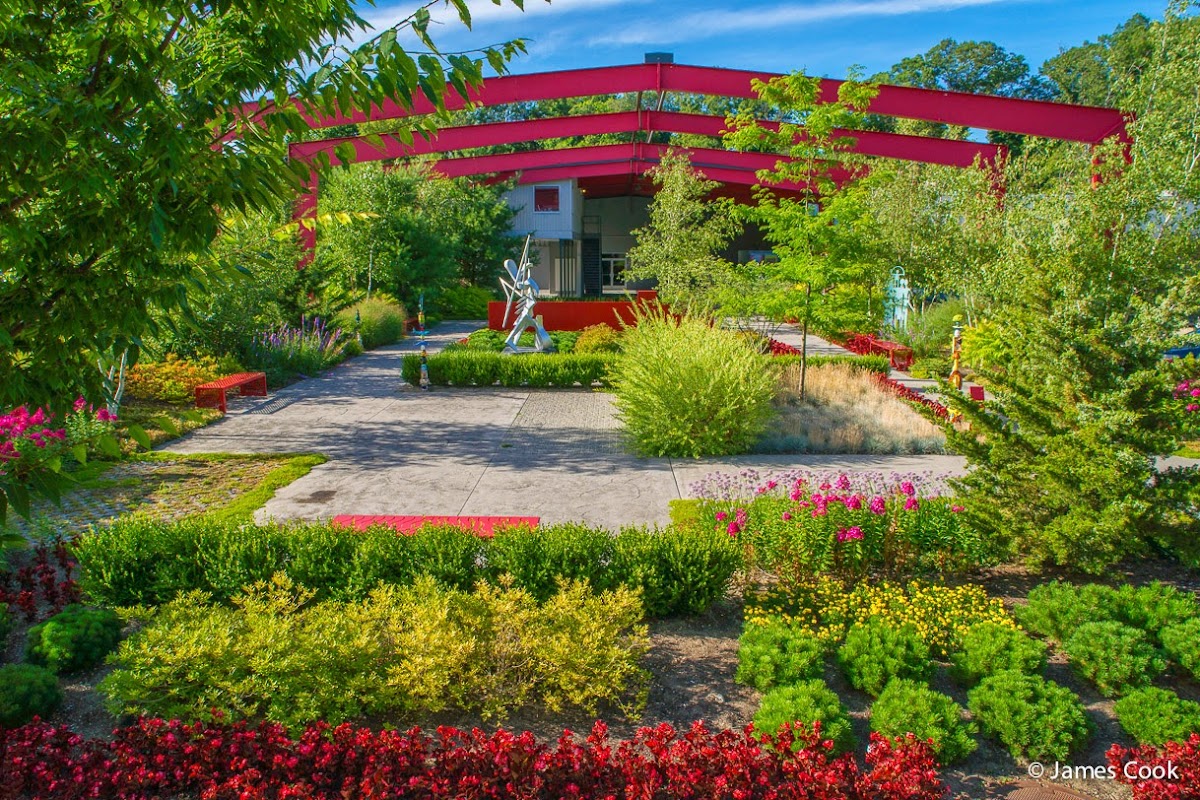
Designing flowers for the Saugatuck Center for the Arts (SCA) requires an appreciation for the tension between industrial history and coastal organicism. This is not a venue for timid, traditional rounds; the scale of the former pie factory and the boldness of the red steel beams demand architectural floral choices and a sophisticated use of negative space. We know this venue well from our analysis of its structural opportunities, particularly the way the afternoon light interacts with the Lobby’s expansive glass.
The Spaces
The Lobby
More than a transitional area, the Lobby is a hip, light-filled space with views that lean into the Saugatuck landscape. The large windows and lake breezes create a sense of openness, but the industrial finishes mean the room can feel “cool” without intentional floral warmth.
- What works: Large-scale floor installations at the base of the windows to bridge the gap between the indoors and the views outside. Use tall, airy branches (like quince or forsythia) to fill the vertical volume without blocking the light.
- Skip: Small, fussy bud vases that will disappear against the scale of the windows.
- Watch out: The lake breezes are real. Ensure any pedestal arrangements are bottom-heavy or sand-weighted to prevent tipping when the doors are open.
- Budget hero move: Focus your spend on two massive “statement” pieces at the entry or the bar, rather than thinning your budget across twenty small tables.
Pavilion and Outdoor Plaza
The Plaza is the architectural heart of the venue, defined by its signature red metal beams. This is where the industrial character of the SCA is most prominent and where the most creative floral rigging can happen.
- What works: Hanging installations. The red beams are a gift for florists, allowing for suspended greenery or floral clouds that define the “ceiling” of an outdoor reception.
- Skip: Standard shepherd’s hooks for aisles; they look too dainty against the industrial steel.
- Watch out: The red of the beams is a dominant color. Your floral palette needs to either complement it (corals, peaches, deep burgundies) or intentionally contrast it (crisp whites and deep greens).
- Budget hero move: Install a single, lush “hanging garden” over the head table using the beams, then keep guest tables low and simple with candlelight and greenery.
The Rain Garden
This is the most “natural” pocket of the venue, offering a lush, unmanicured contrast to the steel and glass. It is ideal for ceremonies that want to feel tucked away in nature.
- What works: “Growing” meadows that line the aisle. Because the ground can be uneven, floor-based arrangements in hidden containers look more organic and are more stable than pedestals.
- Skip: Rigid, symmetrical floral arches that feel too formal for a rain garden.
- Watch out: The greenery here is dense. Avoid using too much “filler” greenery in your arrangements; instead, use high-contrast blooms (white, yellow, or bright pink) so the flowers don’t get lost in the background.
Mainstage Theatre
For couples choosing a theatrical ceremony or a high-drama reception, the theatre offers professional-grade infrastructure that most venues lack.
- What works: Large-scale stage arrangements that frame the couple. Think asymmetrical “pillars” of flowers that look like they are growing out of the stage floor.
- Skip: Low centerpieces on the stage; they won’t be visible to guests in the tiered seating.
- Watch out: Theatrical lighting can change the color of your flowers. Blue-toned lights will make red roses look muddy, while warm ambers will make whites look creamier.
What Works at Saugatuck Center for the Arts
Leverage the industrial rigging. The red metal beams in the Pavilion are the venue’s greatest floral asset. Suspension is easier here than at almost any other West Michigan venue, allowing for “floating” designs that clear up table space.
Embrace the “blank slate” gallery. In the Main Gallery, the white walls and concrete floors act as a museum-style backdrop. This is the place for “artistic” floral design—think sculptural movements, minimal foliage, and bold color blocking.
Design for the lake breeze. Saugatuck’s proximity to the water means constant air movement. We recommend “movement-heavy” florals like cosmos, grasses, and ranunculus that look beautiful when they sway, rather than stiff, heavy blooms that might snap.
Use the stage lighting. If you are using the Theatre or the Lobby for your main event, work with the venue’s tech team. A simple pin-spot on a floral arrangement can make a $300 centerpiece look like a $1,000 installation.
Incorporate local coastal textures. To ground the industrial architecture in its Michigan Lakeshore setting, we like to incorporate textures like bleached driftwood, dried beach grasses, or locally foraged branches.
Budget Guide
| Tier | Investment | Floral Strategy |
|---|---|---|
| Essentials | $1,750 - $3,000 | Focus on personal flowers and a pair of high-impact floor meadows for the ceremony that can be moved to the Lobby bar. |
| Sweet Spot | $3,500 - $5,500 | Adds lush table centerpieces for the Lobby and a modest greenery installation on the Pavilion’s red beams. |
| Full Experience | $6,000 - $8,500 | Full floral coverage including a statement hanging installation in the Plaza and a transformed stage setup in the Theatre. |
| Statement | $10,000+ | Large-scale floral “walls” in the Gallery, multiple suspended installations, and premium blooms throughout all spaces. |
The Saugatuck Center for the Arts is a venue that rewards couples who think like curators, using flowers to highlight the intersection of industrial history and natural beauty.
Tips
Repurpose with a plan. The floor meadows used in the Rain Garden for the ceremony are perfect for lining the front of the stage in the Theatre or the base of the windows in the Lobby.
Check the Gallery exhibition schedule. The art on the walls of the Main Gallery changes. Ask the venue what will be on display during your month to ensure your floral palette doesn’t clash with the artwork.
Avoid drop-ceiling rigging. Indoor spaces like the Art Room or Conference Space have standard drop ceilings where hanging is impossible; keep your designs ground-based or tabletop in these areas.
Prioritize the Plaza for summer. If your event is in the warmer months, the Pavilion and Plaza are where guests will spend 80% of their time; put your floral “wow factor” there.
Consider the artificial light. Indoors, the mix of natural light from windows and artificial gallery lighting can shift colors; we recommend staying away from very muddy or “dusty” tones which can look grey under fluorescent-leaning lights.