
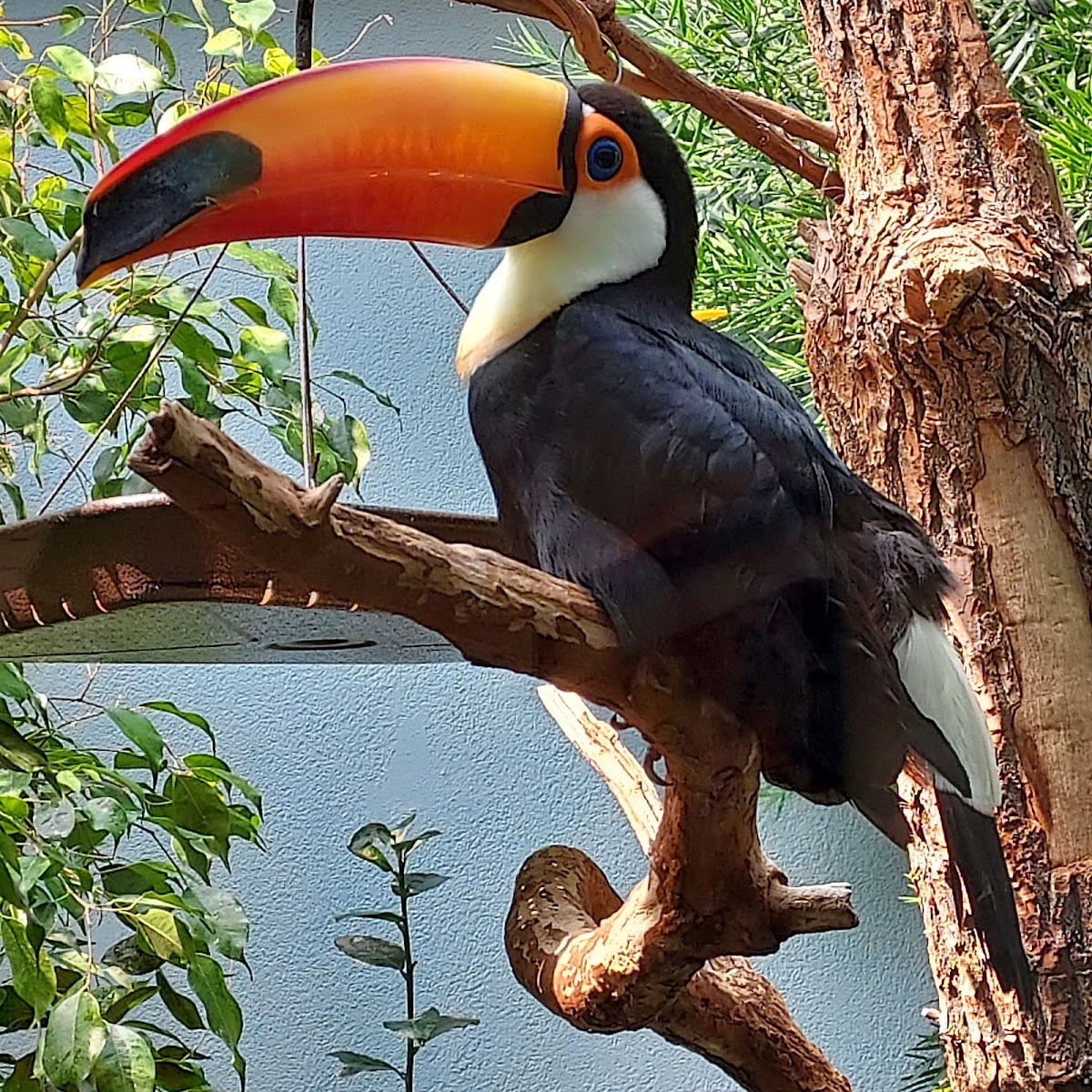
Designing for the National Aviary requires a departure from traditional “ballroom thinking” and a move toward ecological integration. We know this venue intimately, and the most successful designs here are those that acknowledge the living, breathing nature of the space while respecting the health of its permanent residents.
The Aviary is a visually saturated environment. Between the free-flying birds, the lush tropical canopy, and the historic masonry, there is very little “blank space.” Your floral strategy should be one of curated highlights—using high-impact, high-quality blooms to draw the eye to key moments like the ceremony altar or the sweetheart table.
The Spaces
First Floor Venue
This is the heart of the historic 1880 structure, offering a mix of old-world charm and open-concept flexibility. The architecture is the star here, so florals should serve to soften the stone and brick.
- What works: Large-scale, freestanding arrangements that frame the historic entryways or create a “moment” in the open floor plan.
- Skip: Delicate, tiny bud vases that will get lost in the scale of the room.
- Watch out: The floor is historic; ensure all vessels are 100% leak-proof to protect the masonry.
- Budget hero move: Two oversized, floor-based “meadow” installations at the start of the aisle that can be moved to flank the band or DJ for the reception.
The Ballroom
The Ballroom offers a more traditional Americana vibe, providing a clean palette that contrasts with the wilder habitat spaces. It is the most “standard” wedding space in the building, making it ideal for classic reception layouts.
- What works: Traditional elevated centerpieces that add height to the room without obstructing cross-table conversation.
- Skip: Overly rustic or “wild” designs that might clash with the more polished, classic decor.
- Watch out: The bar area is a major focal point; don’t forget a substantial arrangement here to tie the room together.
The Habitats (Tropical & Sloth Exhibits)
These are the most iconic spaces in the venue, but they come with the strictest design constraints. You are essentially designing within a greenhouse shared by animals.
- What works: Floral “nests” and ground-level installations that follow the natural curves of the walkways. Use bold, saturated colors (corals, magentas, deep yellows) to pop against the heavy green foliage.
- Skip: Anything hanging. Rigging is restricted to protect the birds and the integrity of the glass/mesh ceilings.
- Watch out: Strictly non-toxic and scent-neutral materials only. Birds have sensitive respiratory systems; lilies and heavily scented roses are often restricted.
- Budget hero move: Small, punchy clusters of tropical-leaning blooms (like Anthurium or Orchids) tucked into the existing rock formations.
Outdoor Garden
The outdoor space is a breath of fresh air, surrounded by the North Shore’s greenery. It is a peaceful, picturesque setting for smaller ceremonies.
- What works: A simple, two-post arch or grounded pillars that frame the natural landscape.
- Skip: Heavy fabric draping that can catch the wind and look messy in photos.
- Watch out: Pittsburgh weather is unpredictable; always have a “Plan B” floral move for the First Floor Venue.
What Works at National Aviary
- Non-toxic, scent-neutral palettes. This is a hard requirement for the safety of the animals. Focus on orchids, ranunculus, and hardy tropicals that offer visual impact without heavy pollen or fragrance.
- Ground-based installations. Since the glass ceilings make hanging installations nearly impossible, we focus on “growing” the flowers from the floor. This mimics the natural habitats and keeps the sightlines open for bird watching.
- Bold, saturated color stories. The Aviary is very green. Pastel palettes tend to disappear. To make your wedding stand out, lean into vibrant tones that can hold their own against the tropical backdrop.
- Freestanding structures. Use heavy-weighted pedestals or arches that don’t require attachment to the walls or ceiling. This respects the historic architecture and the safety of the exhibits.
- Textural greenery. Incorporating ferns, monstera, or palms into your arrangements creates a seamless transition between the venue’s living plants and your wedding flowers.
Budget Guide
| Tier | Investment | Floral Strategy |
|---|---|---|
| Essentials | $1,750 - $2,500 | Focus on personal flowers and a few high-impact “moment” pieces for the ceremony that repurpose to the reception. |
| Sweet Spot | $3,500 - $5,000 | Adds a full set of centerpieces for the Ballroom and a more substantial ceremony installation (like grounded pillars). |
| Full Experience | $5,500 - $7,500 | Includes habitat-specific accents, a lush sweetheart table display, and elevated centerpieces to fill the volume of the First Floor Venue. |
| Statement | $8,000+ | Large-scale freestanding floral walls or arches, premium tropical blooms, and comprehensive floral styling across all transition spaces. |
The National Aviary provides so much built-in botanical value that your budget can focus on “quality over quantity” to create a high-end, immersive feel.
Tips
- Prioritize animal safety. Always clear your flower list with the venue’s animal care team early in the planning process to ensure no toxic species are included.
- Mind the humidity. The habitat spaces are climate-controlled for tropical life, meaning it can be warm and humid; choose hardy blooms that won’t wilt in 20 minutes.
- Repurpose with intent. Move your ceremony floor installations to the base of the cake table or the front of the bar to maximize your investment.
- Photography timing. The natural light in the habitats is spectacular but disappears quickly after sunset; plan your floral “reveal” photos for mid-afternoon.
- No open flames. The Aviary has strict fire codes to protect the animals; use high-quality LED candles if you want a flickering glow in your reception centerpieces.