
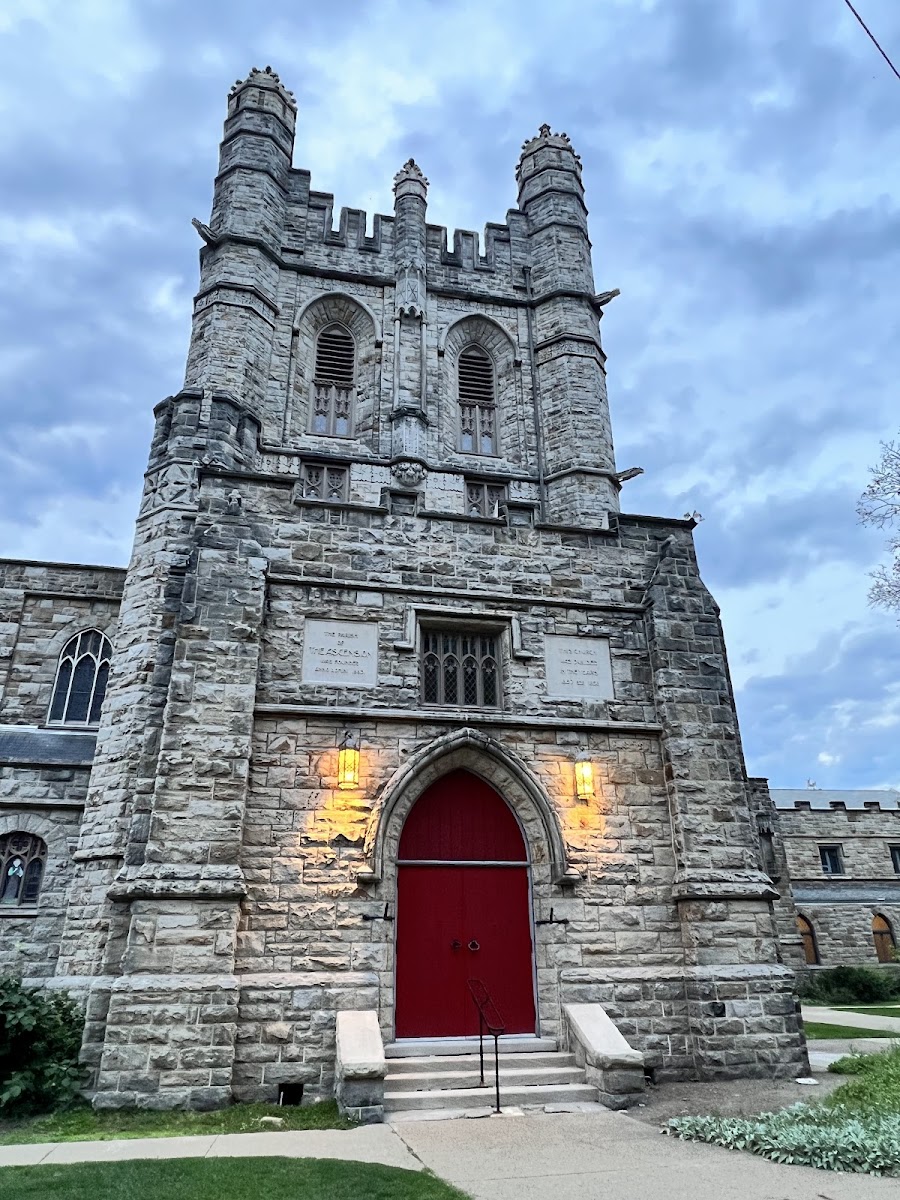
Designing for the Church of the Ascension requires an understanding of ecclesiastical scale and the weight of historic architecture. The Sanctuary is not a blank canvas; it is a commanding environment of stone, dark wood, and filtered light that will swallow timid floral gestures. To succeed here, the design must mirror the verticality of the Gothic arches and the formality of the liturgy.
The floral opportunity at this venue lies in the contrast between the heavy, permanent materials of the building and the ephemeral, soft textures of seasonal blooms. Whether you are working with the expansive aisle or the intimate outdoor courtyard, the goal is to enhance the existing grandeur without cluttering the sacred geometry of the space.
The Spaces
Sanctuary
The Sanctuary is a masterclass in Gothic Revival architecture, featuring high vaulted ceilings, arched windows, and a long, formal aisle. The primary challenge is the volume of the room. Small arrangements on the altar or at the base of pews will disappear. The dark wood of the pews and the altar area acts as a shadow box, making deep or muddy colors difficult to see.
- What works: Large-scale flanking arrangements at the altar that reach toward the height of the organ pipes. Massive, lush installations on the floor at the start of the aisle create an immediate entry statement. For the pews, use clusters of greenery and blooms with long, trailing ribbons to emphasize the length of the walk.
- Skip: Tiny bud vases or “airy” arrangements with too much negative space. They will look unfinished against the solid stone backdrop.
- Watch out: Lighting in the sanctuary is primarily artificial and subdued. Yellow-toned bulbs can make certain shades of purple or blue look muddy.
- Budget hero move: Two oversized, high-impact arrangements on pedestals at the front of the sanctuary. These draw the eye forward and provide the necessary scale for photography during the ceremony.
Courtyard
The Courtyard serves as a transitional space for guests to gather before or after the ceremony. It is a paved area with trees and permanent string lights, offering a more relaxed, European feel compared to the formal interior.
- What works: Utilizing the existing trees for delicate hanging elements or wrapping the trunks in light greenery. Small, stable arrangements for cocktail tables that can withstand a light breeze.
- Skip: Large floor installations that block the flow of foot traffic in this relatively tight space.
- Watch out: The ground is paved, meaning any installations must be self-supporting or weighted.
- Budget hero move: Greenery accents woven into the existing string light infrastructure to create a “garden” feel without the cost of heavy structures.
Grounds
The Grounds consist of the lawn and landscaping immediately surrounding the church’s stone exterior. This is often the primary location for family portraits and bridal party photos.
- What works: Ground-level “growing” arrangements that look as though they are emerging from the lawn. These provide a floral frame for outdoor photos without competing with the building’s facade.
- Skip: Elevated arrangements or pedestals that might blow over on the grass.
- Watch out: Wind exposure is light but present; ensure all containers are weighted with stone or heavy bases.
What Works at Church of the Ascension
Embrace the verticality of the architecture. The Sanctuary’s arches are its most defining feature. Floral designs should follow this lead—think tall branches, snapdragons, delphinium, and long-stemmed roses. If an arrangement is wider than it is tall, it will likely feel out of place in this specific room.
Prioritize high-contrast color palettes. Because the pews and many architectural details are dark wood, white, cream, and pale blush flowers will “pop” most effectively. If you prefer a moody palette, ensure there are enough “bridge” colors like light mauve or peach to keep the arrangements from receding into the shadows.
Focus on the aisle’s entry and exit. The transition from the exterior to the Sanctuary is a major moment. Placing significant floral markers at the back of the church (the “narthex” area) sets the tone for the entire ceremony. These can often be repurposed to the reception venue afterward.
Use non-invasive pew attachments. The historic wood is sensitive. We recommend using heavy-duty silk ribbons or specialized plastic clips that do not use adhesives or metal that could scratch the finish. Always test the “swing” of the pew decoration to ensure it won’t be knocked off by guests sitting down.
Incorporate architectural greenery. Smilax or Italian Ruscus can be used to climb the stone columns or wrap around the pulpit. This softens the hard edges of the stone and brings a sense of life into the grand, still space.
Budget Guide
| Tier | Investment | Floral Strategy |
|---|---|---|
| Essentials | $1,750 - $2,500 | Focus exclusively on the altar and the couple. Two large flanking arrangements and personal flowers. |
| Sweet Spot | $2,500 - $4,500 | Adds significant aisle decor. Every third pew features a lush cluster with ribbons, plus a statement entry piece. |
| Full Experience | $4,500 - $7,000 | Full aisle coverage, greenery accents on the stone columns, and courtyard cocktail arrangements. |
| Statement | $7,000+ | Floor-to-ceiling greenery installations, “growing” aisle meadows, and hanging installations in the courtyard. |
The Church of the Ascension is a venue that rewards bravery in scale; it is better to have two massive arrangements than ten small ones.
Tips
Coordinate with the church’s liturgical calendar. Some seasons (like Lent or Advent) may have existing decor or restrictions on floral colors—always check with the parish administrator before finalizing your palette.
Plan for a quick strike. Church weddings often have tight windows between the ceremony and the next scheduled service. Ensure your florist has a plan for rapid removal or a plan to leave the flowers as a donation to the altar guild.
Consider the stained glass light. If your ceremony is in the late afternoon, the sun may hit the stained glass and cast vibrant blues or reds onto the altar area; choose flower colors that won’t clash with this natural light show.
Repurpose with purpose. The large altar arrangements are perfect for flanking a sweetheart table or a bandstand at the reception. Ensure your florist provides the necessary labor to move these heavy pieces safely.
Weight your outdoor pieces. The courtyard and grounds are beautiful but can be wind tunnels; use heavy ceramic or stone vessels for any arrangements placed outside.