
Designing for Lakeside Reflections requires a sophisticated understanding of two distinct environments: the expansive, airy lakeside and the structured, industrial Museum. The floral opportunity here lies in bridging these two worlds—bringing the organic softness of the water’s edge into the rigid, high-ceilinged reception spaces.
The venue’s dual nature allows for a design narrative that evolves throughout the day. You can start with ethereal, wind-blown arrangements by the lake and transition into bold, architectural statements that utilize the Museum’s exposed beams. Success here is measured by how well your floral choices respect the scale of the landscape while leaning into the venue’s industrial textures.
The Spaces
Gazebo
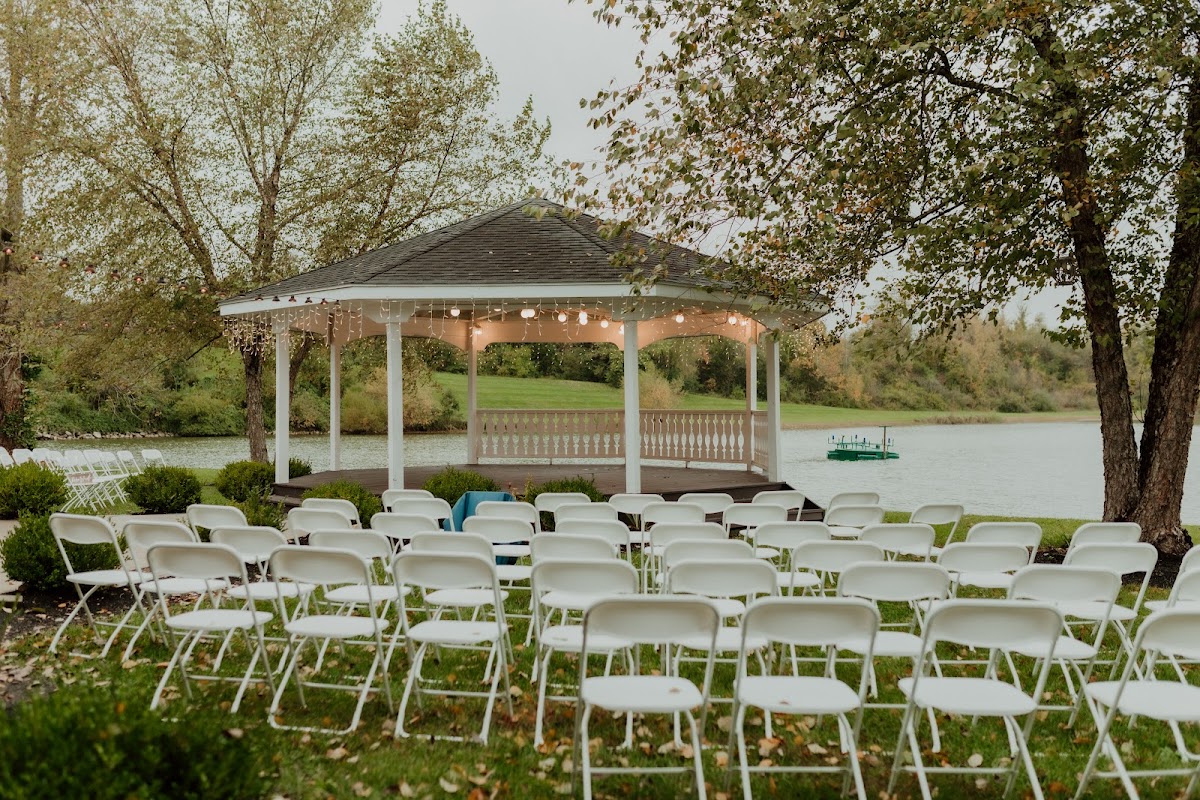
This is the quintessential lakeside ceremony spot, centered on a wooden deck that extends toward the water. The lake and its fountain provide a massive amount of visual interest, which means your florals should act as a frame rather than a focal point.
- What works: Open-style arbors or asymmetrical pillars that allow the water to remain visible. Organic, meadow-style arrangements along the aisle help ground the space against the open sky.
- Skip: Heavy, solid floral walls or dense fabrics that block the view or catch the wind like a sail.
- Watch out: Wind exposure is a real factor here. Every structure must be heavily weighted, and delicate blooms like sweet peas may struggle in a stiff breeze.
- Budget hero move: Focus all ceremony impact on two large, lush ground-level “meadows” at the foot of the gazebo. They frame the couple perfectly for photos and are easily repurposed to the reception bar or sweetheart table.
Museum
The Museum offers a complete shift in tone, featuring a rustic industrial aesthetic with brick accents and high, exposed beams. This is where you can play with verticality and texture.
- What works: Utilizing the ceiling beams for hanging greenery or floral clouds. The industrial backdrop pairs beautifully with “dirty” neutrals, dried elements, and architectural foliage like protea or monstera.
- Skip: Small, dainty centerpieces that get lost in the high-ceilinged volume of the room.
- Watch out: The lighting in the Museum is primarily artificial. Avoid dark, muddy floral palettes that might disappear once the sun goes down; lean toward whites, creams, or vibrant pops of color to maintain visibility.
- Budget hero move: Smilax or ivy crawling up one or two of the central support beams creates a massive visual impact for a fraction of the cost of a full hanging installation.
Tented Pavilion
The Pavilion serves as a middle ground, offering protection from the elements while maintaining a connection to the park-like setting.
- What works: Pole drapery combined with floral clusters and elevated centerpieces that draw the eye up into the tent’s peak.
- Skip: Low, flat arrangements that don’t address the vertical space of the tent.
- Watch out: Temperature control can be variable; ensure your florist uses a hydration source (like floral foam or water tubes) for any installations on the tent structure.
Banquet Halls
These spaces are the most traditional and formal options at the venue. They are climate-controlled and provide a clean slate for more classic design directions.
- What works: Classic tall arrangements on glass or gold stands that add height without cluttering the table.
- Skip: Overly rustic or “wild” designs that might feel out of place in the more polished, formal interior.
- Watch out: Check the linen colors provided by the venue; ensure your floral palette complements the base tones of the room.
What Works at Lakeside Reflections
Frame the fountain, don’t fight it. The lake’s fountain is a permanent fixture in your ceremony photos. Use asymmetrical floral pillars of varying heights to create a natural window around the water feature.
Embrace industrial textures. The Museum’s brick and stone are gifts for a designer. Use terracotta vessels, copper accents, or concrete-style vases to lean into the “rustic-industrial” vibe rather than trying to mask it with standard glass.
Go big on the beams. If your budget allows for one major statement, make it a hanging installation in the Museum. The height of the ceiling demands something that occupies the air space between the tables and the rafters.
Weighted organic movement. Because of the lakeside wind, “airy” designs need to be structurally sound. We use heavy metal bases hidden by lush greenery to ensure that the “wildflower” look doesn’t end up in the lake.
Color theory for artificial light. Since the reception spaces rely on interior lighting, choose a palette with high contrast. If you want a moody look, ensure there are enough bright “bridge” flowers to keep the arrangements from looking like dark blobs in professional photography.
Budget Guide
| Tier | Investment | Strategy |
|---|---|---|
| Essentials | $1,750 - $2,500 | Focus on personal flowers and a pair of impactful ceremony pillars that move to the reception. |
| Sweet Spot | $3,500 - $5,000 | Adds a mix of high and low centerpieces in the Museum and aisle decor for the Gazebo. |
| Full Experience | $5,500 - $7,500 | Includes a significant hanging installation or beam treatment in the Museum and lush gazebo florals. |
| Statement | $8,000+ | Full-scale floral transformation, including entrance installations, multiple hanging clouds, and premium blooms throughout. |
Lakeside Reflections is a venue where strategic placement of large-scale pieces provides far more value than a high volume of small, repetitive arrangements.
Tips
Account for the wind. Even on a calm day, the lake creates a micro-climate; ensure your florist is prepared with sandbags or heavy lead weights for all outdoor structures.
Plan for the flip. If you are moving ceremony pieces into the Museum or Banquet Hall, ensure your floral team has a clear path; the transition from the stone patio to the indoor spaces can be tight.
Utilize the barrels. The venue often has barrel accents available; these are perfect pedestals for large, sprawling arrangements that greet guests at the entrance.
Protect the deck. The wooden ceremony platform is a focal point; your florist should use felt pads or trays under any ground-level arrangements to prevent staining or water damage.
Coordinate with the sunset. The lake views are best at golden hour; ensure your ceremony time aligns with the best natural light to make those lakeside florals truly glow.