
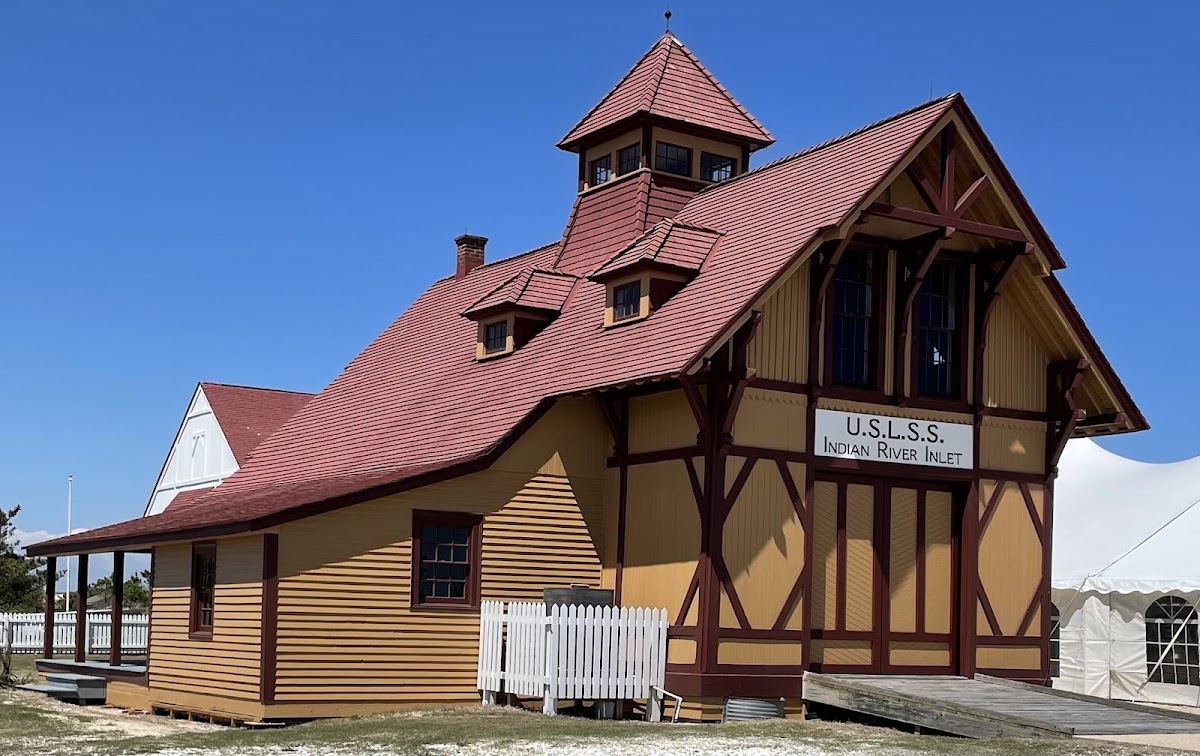
Designing for the Indian River Life-Saving Station requires a deep respect for the Atlantic horizon and the historic weight of the 1876 station house. The floral opportunity here lies in textures that can withstand the salt spray and arrangements that feel as though they grew directly from the surrounding dunes.
The Spaces
Outdoor Beach Area
This is a raw, coastal environment where the ocean is the primary guest. The sand and wind dictate every design choice, meaning structural integrity is just as important as aesthetics.
- What works: Heavy, ground-anchored floral pillars or weighted arches that can handle a 15-mph gust. Use hardy greens like ruscus or eucalyptus and focal flowers with high petal counts that won’t shred in the wind.
- Skip: Tall, top-heavy tripod stands or delicate, thin-stemmed blooms like sweet peas or cosmos that will wilt or break instantly in the salt air.
- Watch out: The sand is deep and uneven; ensure any floral structures have wide, flat bases hidden beneath the surface.
- Budget hero move: Focus your entire ceremony budget on two massive, floor-based “growing” installations at the head of the aisle rather than a full arch. This provides a more stable, modern look that doesn’t compete with the ocean view.
Tented Reception Area
The reception typically moves to a tented space featuring long farm tables. The architecture here is functional, leaving plenty of room for vertical interest.
- What works: Long, low greenery garlands or bud vase “runs” that accommodate the narrow width of farm tables. Use the tent poles as rigging points for climbing smilax to bring the ceiling height down and create intimacy.
- Skip: Massive, wide-reaching centerpieces that prevent guests from passing platters or making eye contact across the narrow tables.
- Watch out: Wind still moves through the tent; bud vases must be heavy-bottomed or secured with museum wax to prevent tipping.
- Budget hero move: Greenery on the tent poles. It provides a high-impact, “secret garden” feel for a fraction of the cost of suspended floral chandeliers.
Museum Space & Grounds
The historic station building and surrounding gravel paths offer a more structured, nostalgic vibe. This is where the maritime history of the site really shines.
- What works: Petite, monochromatic arrangements in the indoor museum space that don’t distract from the artifacts. On the porch, simple railing greenery or clusters of potted plants feel authentic to the period.
- Skip: Overly modern, geometric installations that clash with the 19th-century architecture.
- Watch out: The indoor space is tight; keep floral footprints small to allow for guest flow.
What Works at Indian River Life-Saving Station
- Dried and Bleached Textures: Incorporating pampas grass, dried palms, or bleached ruscus nods to the sun-faded environment and ensures your flowers look fresh from the first photo to the last dance.
- Monochromatic Palettes: Against the blue of the water and the tan of the dunes, a crisp white-and-green palette or a bold, single-color story (like all ochre or all sunset coral) creates a sophisticated, editorial look.
- Ground-Level Mechanics: At this venue, the higher a floral arrangement is, the more likely it is to blow over. Designing “from the ground up” with heavy bases keeps the focus on the landscape and ensures stability.
- Textural Greenery: Use varieties with waxy or silver-toned leaves, such as silver dollar eucalyptus or olive branches, which are naturally more resistant to the drying effects of coastal salt air.
- Nautical Cues: Subtly reference the maritime setting with rope-wrapped vessels or weathered wood containers that echo the station’s shingles.
Budget Guide
| Tier | Investment | Floral Strategy |
|---|---|---|
| Essentials | $1,750 - $2,500 | Personal flowers (bouquets/boutonnieres) plus a high-impact ceremony focal point that can be moved to the sweetheart table. |
| Sweet Spot | $3,000 - $4,500 | Full personal flowers, a sturdy ceremony arch, and a mix of bud vases and greenery for the reception farm tables. |
| Full Experience | $5,000 - $7,500 | Lush ceremony installations, tent pole greenery, and full low-profile centerpieces for all guest tables. |
| Statement | $8,000+ | Large-scale suspended installations in the tent, floral-heavy dune paths, and premium blooms throughout the museum and reception. |
The natural beauty of the Delaware Seashore State Park does the heavy lifting, allowing you to focus your budget on a few high-impact moments rather than trying to transform the entire landscape.
Tips
- Prioritize weight: Every outdoor vessel should be heavy ceramic, stone, or weighted with sand to combat the persistent coastal breeze.
- Repurpose with care: Moving flowers from the beach to the tent is smart, but ensure your team has a plan for the sand—vessels will need to be wiped down before being placed on reception linens.
- Embrace the “lived-in” look: Coastal weddings are inherently organic; choose floral styles that look better as they move and shift with the wind.
- Check the tide: Coordinate your ceremony floral setup time with the tide schedule to ensure your team has ample space on the sand without getting wet.
- Avoid delicate petals: Hydrangeas and gardenias will struggle in the direct sun and salt; opt for hardier garden roses or ranunculus for a similar look with more stamina.