
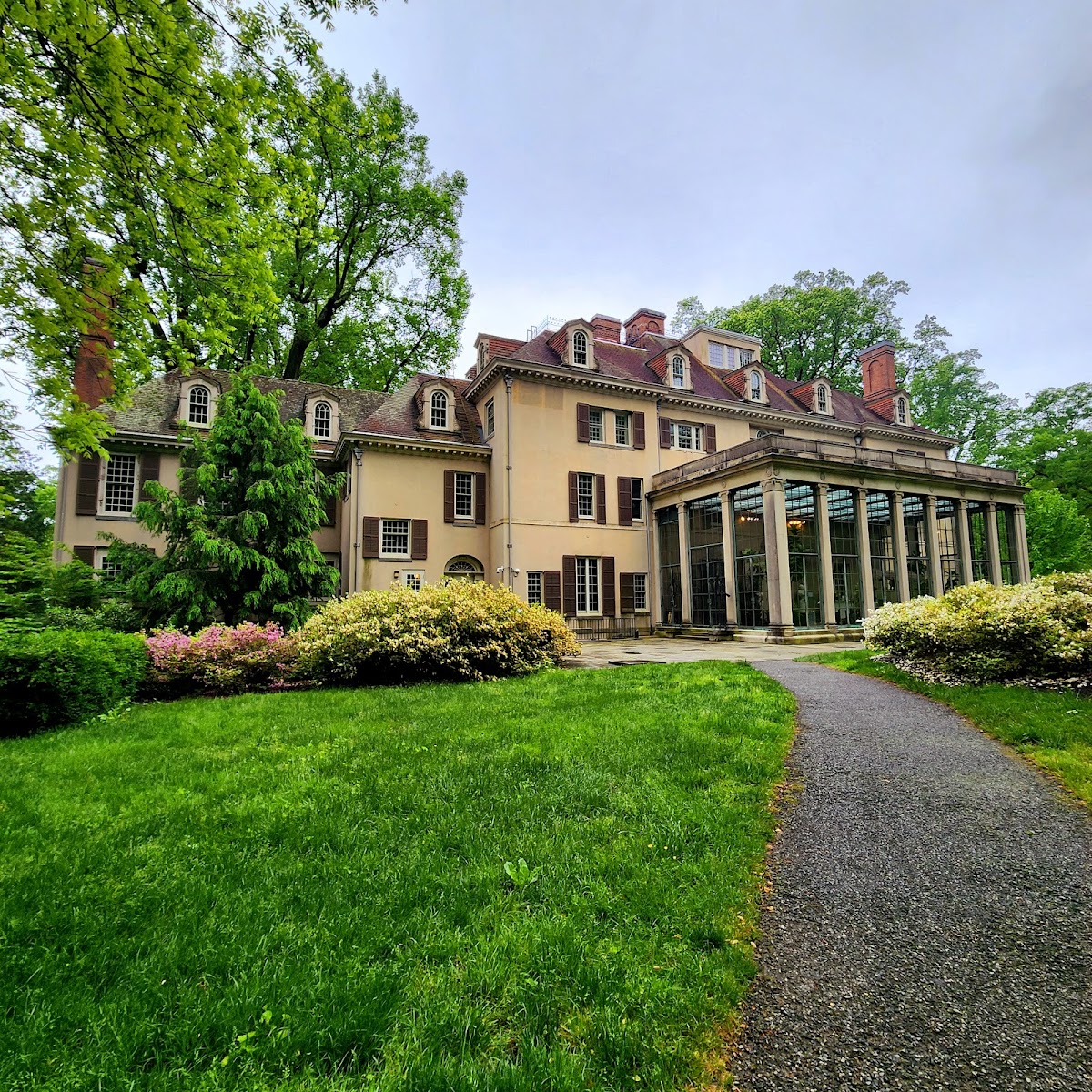
Designing for Winterthur requires a deep respect for the legacy of Henry Francis du Pont’s “wild garden” philosophy. The sheer scale of the 1,000-acre estate means that standard floral arrangements often vanish; success here lies in creating focal points that feel like an organic extension of the Brandywine Valley landscape.
The aesthetic is one of “refined nature,” where the most successful designs use texture and movement to bridge the gap between the formal museum interiors and the expansive meadows.
The Spaces
The Gardens
The gardens are a masterpiece of naturalistic design, featuring everything from formal reflecting pools to wooded hillsides. Because the backdrop is so lush, ceremony structures must be substantial enough to hold their own against 80-foot trees.
- What works: Ground-level floral nests that wrap around the base of stone steps or free-standing arches with heavy greenery bases.
- Skip: Thin, spindly metal chuppahs or arches; they look fragile and out of place in this environment.
- Watch out: Wind exposure in the open meadows can be significant. All structures must be heavily weighted.
- Budget hero move: Focus your ceremony budget on one massive “growing” installation at the altar rather than many small aisle markers that will be swallowed by the grass.
The Museum
The museum houses an unparalleled collection of American decorative arts. This is a high-preservation environment where the artifacts are the stars.
- What works: Petite, garden-style arrangements in antique-inspired vessels (pewter, brass, or aged ceramic) that nod to the historic interiors.
- Skip: Tall, modern glass trumpets or anything with a massive footprint that risks bumping into display cases or historic furniture.
- Watch out: Strict rules on water levels and “no-go” zones for floral setup to protect the collection.
- Budget hero move: Use high-impact, low-profile centerpieces that allow guests to see the architectural detail of the period rooms.
The Visitor Center and Pavilion
These spaces offer a more traditional reception environment where you can lean into larger-scale table designs.
- What works: A mix of high and low centerpieces to create visual interest across a large floor plan.
- Skip: Overly stiff, round “ball” arrangements; the venue’s soul is naturalistic, so florals should feel airy.
- Watch out: Lighting in these spaces can be more functional than atmospheric; use florals to add warmth and color.
What Works at Winterthur
- Seasonal Synchronicity: The gardens at Winterthur are famous for their specific “bloom calendar.” If you are marrying during the azalea or lilac peaks, your floral palette should complement those specific tones rather than fighting them.
- Textural Greenery: Use varieties like ferns, smilax, and moss to mimic the forest floor of the Brandywine Valley. This creates a seamless transition from the curated gardens to your personal decor.
- Heavy-Duty Mechanics: Because of the terrain—stone steps, uneven grass, and gravel paths—all floral installations must be built on stable, heavy bases.
- Framing the Architecture: Use florals to draw the eye to Winterthur’s stone masonry. A floral “crawl” up a stone balustrade or around a heavy wooden door is far more effective than a standalone pedestal.
- Antique Palettes: Muted, sophisticated color stories—think dusty mauves, buttery yellows, and deep forest greens—tend to look more “at home” here than neon or ultra-modern brights.
Budget Guide
| Tier | Investment | Floral Strategy |
|---|---|---|
| Essentials | $1,750 - $3,500 | Focus entirely on personal flowers and a single, high-impact ceremony focal point that can be repurposed to the sweetheart table. |
| Sweet Spot | $3,500 - $6,500 | Lush ceremony arch or ground nests, plus a mix of low-profile garden-style centerpieces for the reception. |
| Full Experience | $6,500 - $10,000 | Full ceremony immersion, cocktail hour accents, and elevated reception designs including bud vases for lounge areas and cake flowers. |
| Statement | $10,000+ | Large-scale installations, potentially including tree rigging, lush stair crawls, and premium blooms throughout all 1,000 acres of the experience. |
Winterthur is a venue of grand proportions; your budget should prioritize scale and placement over sheer quantity of stems.
Tips
Plan for transport time. The distance between the ceremony groves and the reception areas is significant; ensure your floral team has a clear logistics plan for moving items across the estate.
Respect the collection. If your event is inside the museum, be prepared for strict load-in windows and specific rules regarding where water-filled vessels can be placed.
Embrace the “wild” look. This is not the venue for tight, suburban-style roses; choose blooms with “wiggle” like sweet peas, ranunculus, and cosmos to match the garden’s movement.
Repurpose with intention. Move ceremony ground nests to frame the bandstand or the cake table to maximize your investment in those large-scale pieces.
Check the bloom schedule. Winterthur’s horticulture team maintains a detailed bloom map; use it to inform your color palette six months in advance.