
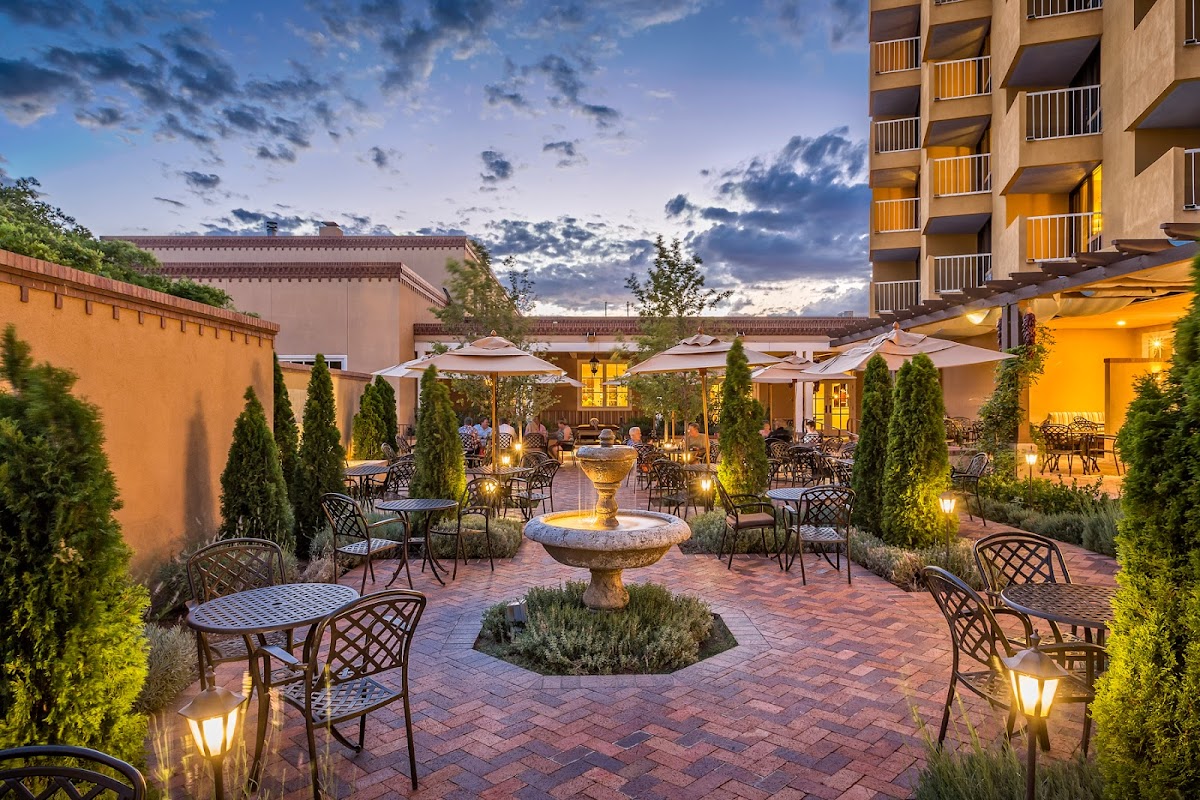
You take Rio Grande Boulevard north from the interstate, and Albuquerque’s strip of chain restaurants and big-box stores gradually gives way to something older, more textured. Adobe walls the color of desert sand appear behind cottonwood trees. The road narrows. And then, just as you round the curve into Old Town, Hotel Albuquerque at Old Town announces itself — not with glass towers or valet stands, but with the kind of architecture that looks like it’s been standing here since the Spanish colonial era, which in the case of Casa Esencia, it nearly has. The hand-plastered walls glow warm ochre in the afternoon light. Hand-stamped tin gleams through windows. And beyond the main building, you catch glimpses of something unexpected for a hotel property: actual gardens, lush and green, with fountains murmuring and roses climbing white trellises. This is not a venue trying to evoke the Southwest. This is the Southwest, distilled into 11 acres of gardens, ballrooms, and an 18th-century hacienda where wooden vigas cross overhead and the scent of piñon smoke drifts from the fireplace. Poppy hasn’t yet designed Hotel Albuquerque at Old Town wedding flowers for a celebration here, but we’ve studied this property the way a florist studies light and architecture, and we understand what makes it exceptional: the rare combination of authentic historical spaces and modern event infrastructure, all within walking distance of Old Town’s 300-year-old plaza.
About Hotel Albuquerque at Old Town
Hotel Albuquerque at Old Town occupies a distinctive position in Albuquerque’s wedding landscape. This is not a resort built to resemble historic architecture — portions of it genuinely are historic architecture. Casa Esencia, the property’s 8,000-square-foot hacienda, dates to the 18th century and features the kind of construction details you cannot replicate: ceiling vigas (rounded wooden beams) and latillas (smaller crosshatched branches) hewn from local timber, walls thick enough to keep the desert heat at bay, and an authentic corner fireplace built in the traditional Pueblo style. The hotel has preserved these elements while integrating modern amenities, creating event spaces that feel authentic without sacrificing comfort or functionality.
The property’s architectural style is best described as Pueblo Deco — a distinctive regional aesthetic that emerged in the 1920s and ’30s, blending Pueblo Revival architecture with Art Deco’s geometric patterns and decorative flourishes. You see this most dramatically in the Alvarado Ballroom, the venue’s grand centerpiece, where 22-foot ceilings soar above hand-plastered walls the color of desert clay, hand-stamped tin chandeliers cast intricate shadow patterns, and the carpet echoes traditional Navajo textile designs in rust, turquoise, and cream. The Franciscan Ballroom takes the Native American influence further with a layered geometric ceiling inspired by kiva architecture and hand-forged thunderbird wall sconces that reference petroglyphs found throughout New Mexico. These are not generic Southwestern decorations purchased from a catalog — they are thoughtfully executed architectural details that root the space in a specific cultural and historical context.
The Spanish-style gardens, which encompass 6,440 square feet of outdoor event space, represent a different facet of New Mexico’s layered history. Rose arbors, fountain courtyards, and manicured lawn courts reference the Spanish colonial period, when haciendas were built around protected interior gardens. The Victorian-style pavilion, with its vine-covered roof and hanging crystal chandeliers, adds a touch of late-19th-century romance — the era when the railroad brought prosperity and Eastern architectural influences to the Southwest. For a wedding, this means you can move your guests through distinctly different aesthetic experiences — from the formal elegance of the Alvarado Ballroom to the rustic authenticity of Casa Esencia to the garden romance of the outdoor pavilion — all within one property.
Location-wise, Hotel Albuquerque sits at 800 Rio Grande Boulevard NW, immediately adjacent to Old Town Albuquerque, the city’s original Spanish settlement dating to 1706. This is significant for several reasons. First, the neighborhood itself is walkable and charming, filled with art galleries, museums, jewelry shops, and restaurants housed in historic adobe buildings around the central plaza. Wedding guests who stay at the hotel can explore Old Town on foot, creating a full destination experience rather than just a single-night event. Second, the hotel is easily accessible from Interstate 40, making it convenient for guests traveling from Santa Fe (60 miles north), or flying into Albuquerque International Sunport (just 15 minutes away). Third, the surrounding area offers remarkable photo opportunities — from the San Felipe de Neri Church (built 1793) to the sculpture gardens at the Albuquerque Museum to the cottonwood bosque along the Rio Grande.
For Poppy’s logistics, the hotel provides several practical advantages. Vendors are permitted to access the property the evening before the event for setup, which is invaluable for complex floral installations that require time and precision. The hotel requires certificate of insurance from all vendors, which is standard practice for hotel properties. Parking is included in the venue fee, and the hotel offers shuttle and valet services for guests. Load-in at Hotel Albuquerque is straightforward, with service elevators accessing the ballroom level and ground-level access to Casa Esencia and the garden spaces. The events team coordinates vendor access and provides clear timelines, which streamlines the installation process. The hotel’s in-house catering team is exclusive, but floral designers are not restricted to an approved vendor list, giving couples freedom to work with the Albuquerque wedding florist of their choice.
One detail worth noting: the hotel holds a full liquor license and offers extensive bar service options, and their catering program includes cake cutting and service staff in the base pricing. This matters for floral design because it means bar displays, cake table arrangements, and server station florals are all within scope, and the hotel’s coordination team understands how to integrate these elements into the room layout.
Event Spaces & Floral Opportunities
Alvarado Ballroom
Capacity: 1,000 guests for a standing reception; 500-600 for a seated dinner with dance floor
Setting: The Alvarado Ballroom is Hotel Albuquerque’s statement space, and what a statement it makes. Fourteen thousand square feet of ballroom with 22-foot ceilings that create the kind of vertical drama most venues can only dream about. The hand-stamped tin chandeliers — three massive fixtures with intricate Southwest motifs — hang like sculptures, catching light from every angle. The walls are hand-plastered in a warm sand tone that shifts with the light, and the carpet, custom-designed to echo Navajo textile patterns, grounds the space in deep rust, cream, and turquoise. Historic black-and-white photographs of New Mexico landscapes line one wall, offering glimpses into the region’s past. The color palette is warm but neutral enough to accommodate virtually any floral direction, and the architectural bones are strong enough that florals can be bold without overwhelming the space.
Floral approach: Those 22-foot ceilings are both an opportunity and a challenge. Low centerpieces will feel visually lost in this volume of space, so we recommend working vertically. Tall arrangements on trumpet or pillar stands — reaching 36 to 48 inches in height — create the necessary visual weight. Imagine arrangements with structural branches as the framework (manzanita, curly willow, or even sculptural cholla cactus wood for a Southwest touch), with blooms clustered at varying heights: Café au Lait dahlias, Patience garden roses in that perfect dusty peach, apricot stock for vertical interest, and trails of jasmine vine or smilax cascading downward. Vessels should have presence — hammered copper urns that echo the tin chandeliers, or matte terracotta in organic shapes that reference Native American pottery. For couples who prefer lower centerpieces, the solution is abundance: arrangements should be lush enough to create impact when viewed from a distance, mounded with texture — think QuickSand and Cappuccino roses, bronze chrysanthemums, rust-colored celosia, and succulents in shades of sage and dusty blue. The chandeliers themselves can be softly enhanced with greenery garlands if the couple desires additional romance, though we generally advise a light touch here — the metalwork is too beautiful to obscure. The room’s entry points are prime real estate for statement installations: large-scale arrangements on pedestals flanking the entrance doors, perhaps incorporating pampas grass plumes for movement and drama. One often-overlooked opportunity: the window ledges along one wall can accommodate bud vase arrangements or small clusters of votives and florals, creating a layer of detail that rewards closer inspection.
Alvarado Pre-Function Space
Capacity: 300 for standing cocktail reception
Setting: This 14,000-square-foot space functions as the grand foyer to the Alvarado Ballroom, and it deserves to be treated as its own design moment rather than an afterthought. The space is open and airy, with high ceilings (though not quite as soaring as the ballroom) and warm, neutral walls that continue the Pueblo Deco aesthetic. This is where guests will gather for cocktails, where they will form their first impressions of your wedding’s aesthetic. The space accommodates multiple cocktail table groupings, bar stations, and lounge furniture arrangements.
Floral approach: The pre-function space calls for a different design strategy than the ballroom — you want impact, but you also want mobility, since guests will be standing, mingling, and moving through the space with drinks in hand. Cocktail tables should have low, compact arrangements that won’t topple or interfere with drinks and small plates: tight clusters of spray roses, ranunculus, and anemones in low vessels (5 to 7 inches tall maximum), with votives clustered around the base to add glow as daylight fades. For the bar stations — and there will be multiple bars for a large event — elevated displays create a focal point without crowding the bartenders’ workspace. Consider arrangements on short risers (12 to 15 inches) that lift the florals above the bar surface: loose, organic designs with movement and texture, perhaps featuring ornamental grasses like fountain grass or blue oat grass alongside dahlias, zinnias, and coppery crocosmia. If the couple is incorporating lounge furniture groupings, the coffee tables and side tables become opportunities for low, lush arrangements with a living-room sensibility — less structured, more organic, perhaps even incorporating potted succulents or cacti that guests might take home as favors. The entrance from the hotel corridor into the pre-function space is the first moment guests encounter your design, so mark it: a pair of large urns flanking the doorway, overflowing with seasonal branches, garden roses, and trailing amaranthus, immediately communicates that something special is happening beyond this threshold.
Franciscan Ballroom
Capacity: 200 for seated dinner; 250 for standing reception
Setting: The Franciscan Ballroom is the more intimate of the hotel’s two major ballrooms, spanning 3,796 square feet with a ceiling that is architectural theater. The layered geometric design, inspired by traditional kiva construction, draws the eye upward with its stepped, angular planes. Large wooden chandeliers — rustic and substantial — hang from the ceiling, and hand-forged thunderbird wall sconces reference ancient petroglyphs. The overall effect is warmer and more enveloping than the Alvarado’s grand scale, with design details that celebrate Native American artistry in a respectful, sophisticated way. This room works beautifully for couples who want the structure and climate control of an indoor space with strong Southwestern character.
Fireplace Room
Capacity: 50 for seated dinner; 70 for standing reception
Setting: At 870 square feet, the Fireplace Room is Hotel Albuquerque’s most intimate event space, and it earns its name from the focal point that dominates one wall: an authentic Southwestern corner fireplace, built in the traditional style with rounded adobe edges and a raised hearth. This is the room for rehearsal dinners, intimate wedding receptions, or post-ceremony gatherings where warmth and conversation matter more than grand gestures. The space feels like a private hacienda room, with warm lighting and cozy proportions that encourage guests to settle in and linger.
Floral approach: The fireplace mantel is your statement moment in this room, and it deserves a lush, romantic treatment. Think of this as your opportunity to create the kind of installation you might see at a European estate: an asymmetrical arrangement that cascades down one side of the mantel and spills across the hearth, built with a mix of garden roses (Keira, Patience, Juliet), flowering branches (quince or cherry in spring, crabapple in fall), jasmine or passion vine trailing downward, and plenty of textured foliage — Italian ruscus, eucalyptus, even the silvery leaves of dusty miller. If the event takes place when the fireplace is lit, keep florals to the mantel and avoid placing anything on the hearth itself; if the fireplace is not in use, the hearth becomes prime real estate for a clustered grouping of pillar candles in varying heights surrounded by loose petals and small floral accents. Guest tables should be simple and low — you don’t want anything obstructing conversation in an intimate space. Low compote arrangements or even collections of bud vases down the center of each table, each holding a single spectacular bloom (a garden rose, a ranunculus, a parrot tulip in season), create an understated elegance that feels personal rather than formal. If there are side tables or a console in the room, treat them as you would in a residential space: a small arrangement in a ceramic vessel, perhaps with a framed photo or candles, creates layers of warmth. The Fireplace Room’s intimacy means guests will notice details, so this is the place to include your most interesting botanical elements — air plants, interesting seed pods, foraged branches with lichen — that reward close inspection.
Pavilions and Gardens
Capacity: 300 for seated dinner or ceremony
Setting: Six thousand four hundred and forty square feet of outdoor event space in a lush, Spanish-style garden setting — this is Hotel Albuquerque’s secret weapon for couples who want an outdoor celebration without sacrificing infrastructure. The gardens are mature and well-maintained, with fountains providing the soothing sound of moving water, rose arbors creating natural archways, and manicured lawn courts offering flexible ceremony and reception configurations. The Victorian-style pavilion is the centerpiece: a covered structure with a vine-covered roof (already green and romantic without any enhancement) and hanging crystal chandeliers that create an unexpected touch of elegance in an outdoor setting. The gardens feel private and enclosed, protected from the outside world by walls and strategic landscaping, yet open to the New Mexico sky.
San Isidro de Capilla (Wedding Chapel)
Capacity: 156 for ceremony seating
Setting: The hotel’s 1,403-square-foot chapel is a rare amenity that transforms the logistics of wedding planning. San Isidro de Capilla is a non-denominational space designed to evoke 19th-century mission chapel architecture, with a vaulted beam ceiling, traditional pew-style seating, and warm plaster walls. Natural light filters through windows, and the proportions feel sacred without being denominationally specific. For couples who want a traditional ceremony setting followed by a ballroom reception, the chapel eliminates weather concerns and provides an intimate, reverent atmosphere.
Floral approach: Chapel florals should enhance the architecture without overwhelming the space’s inherent simplicity. The altar area is the focal point: we recommend a pair of matching arrangements flanking the altar, elevated on pedestals or columns to appropriate height (36 to 48 inches), featuring classic chapel flowers in white or soft pastels — white roses, white hydrangeas, white stock, white lilies — with plenty of greenery (Italian ruscus, plumosa fern) for fullness. The symmetry of paired arrangements honors the traditional chapel aesthetic. For aisle arrangements, small posies can be attached to the end of each pew with ribbon or twine — simple clusters of spray roses, waxflower, and eucalyptus tied with satin or organza. Alternatively, for a slightly more elevated approach, small arrangements in votive holders can be placed on shepherd’s hooks at the end of every third or fourth pew, creating visual rhythm without overwhelming the narrow aisle. The chapel’s vaulted ceiling and windows provide architectural interest that requires no floral enhancement. One strategic consideration: if the ceremony takes place in the chapel and the reception in one of the ballrooms, the altar arrangements can be designed to be easily transported and repurposed as reception focal points — perhaps flanking the entrance to the ballroom or positioned on either side of the head table. This maximizes the floral investment and ensures the ceremony blooms continue working throughout the evening.
Casa Esencia
Capacity: 150 for seated dinner; 200 for standing reception
Setting: Casa Esencia is the soul of Hotel Albuquerque. This 8,000-square-foot space began life as an 18th-century hacienda, and while it has been carefully integrated into the hotel property, it retains its historic character. Ceiling vigas and latillas (the traditional wooden beam construction) cross overhead. Hardwood floors glow with patina. The authentic corner fireplace, built in the Pueblo style, provides both visual and literal warmth. The space has been furnished with a thoughtful blend of historic and contemporary pieces — leather armchairs, rustic wooden tables, iron chandeliers — creating an atmosphere that feels like a private estate rather than a hotel venue. Casa Esencia works beautifully for couples who want intimacy and authenticity, or as a separate space for rehearsal dinners, welcome parties, or farewell brunches during a wedding weekend.
Floral approach: Casa Esencia demands a different aesthetic than the hotel’s more formal ballrooms. Here, florals should feel organic, unstructured, and gathered — as if you collected blooms from a kitchen garden and arranged them in whatever vessels were at hand. The wooden vigas can support hanging installations: imagine a cluster of small floral chandeliers (constructed from chicken wire frames filled with moss and studded with spray roses, waxflower, and trailing jasmine) suspended at varying heights above the center of the room, or a long garland of mixed greenery with clusters of blooms woven through, suspended horizontally to define the space. The fireplace mantel is a natural focal point for a substantial arrangement — loose and organic in style, incorporating desert and garden elements: pampas grass, lavender, rosemary, garden roses in soft peach and cream, scabiosa, and unexpected textural additions like artichokes or wild grasses. For guest tables, we favor mismatched vessels — terracotta pots, wooden boxes, vintage ceramic pitchers — each holding a slightly different arrangement that shares a common palette. This collected-over-time aesthetic suits the hacienda setting. Consider incorporating potted herbs (rosemary, thyme, sage) into the design; they provide fragrance, visual interest, and a connection to the region’s culinary traditions, and guests can take them home as living favors. The hardwood floors allow for creative placement of larger installations: a grouping of terracotta pots in varying sizes, each containing a different succulent or cactus specimen, clustered in a corner to create a botanical vignette. Casa Esencia’s intimate scale means every detail will be noticed and appreciated, so this is the space to include your most interesting elements — air plants attached to pieces of driftwood, vintage bottles holding single stems, handwritten plant identification tags attached to each arrangement with twine.
Wedding Flower Ideas for Hotel Albuquerque at Old Town
Desert Twilight
This palette captures the extraordinary color shifts that happen in the New Mexico sky as day transitions to night — deep purples, hot pinks, burnt oranges, and touches of gold. Start with a foundation of desert-adapted blooms: magenta and coral bougainvillea (available locally and incredibly hardy), lion’s tail with its distinctive orange blooms, purple verbena, and hot pink celosia. Layer in more cultivated varieties: Purple Majesty and Burgundy Magic dahlias, Free Spirit garden roses in that perfect coral-peach, deep purple lisianthus, and gold spray roses. For texture, incorporate pampas grass plumes (bleached or natural), dried desert grasses, and the architectural shapes of yucca leaves or agave fans. Vessels should be earthy and organic — weathered terracotta, hammered copper bowls, or even clay ollas (traditional water vessels) that reference regional pottery traditions. This palette is spectacular in Casa Esencia, where the rustic architecture can handle bold color, and equally stunning in the garden pavilion at sunset, when the florals echo the sky above.
Spanish Colonial Romance
Drawing inspiration from the Spanish colonial period and the hotel’s lush gardens, this concept centers on classic garden roses in soft, romantic hues: creams, blush pinks, soft peaches, and touches of lavender. The flower list reads like a European garden: David Austin garden roses (Patience, Juliet, Keira, Generous Gardener), quicksand roses in that perfect café au lait tone, white hydrangeas for fullness, white and blush ranunculus, soft pink lisianthus, and delicate sweet peas or stock for fragrance. Foliage should be soft and abundant: Italian ruscus, seeded eucalyptus, dusty miller for silvery accents, and jasmine or passion vine trailing romantically from arrangements. Vessels should be traditional and elegant: compotes in silver or antique brass, low ceramic bowls in cream or soft gray, or mercury glass for candlelit romance. This aesthetic is perfect for the Alvarado Ballroom’s formal elegance, the chapel’s sacred simplicity, or the garden spaces where the soft palette complements rather than competes with the roses already blooming on the arbors. For added Southwestern context, consider incorporating touches of desert olive foliage or sage — the silvery-green creates a subtle bridge between European garden romance and high desert landscape.
Pueblo Earth Tones
This design direction embraces the colors of the New Mexico landscape: rust reds, terracotta oranges, warm golds, sage greens, and touches of turquoise blue. Begin with the structural elements: dried grasses, wheat, and rye for golden tones; branches of desert olive or New Mexico olive for silvery foliage; cholla cactus wood (thoroughly dried and cleaned) for sculptural accents. Layer in blooms that echo these earth tones: sunflowers and yellow dahlias for gold; rudbeckia and orange roses (Milva, Free Spirit) for rust and terracotta; bronze and burgundy chrysanthemums for depth; touches of thistle or eryngium for unexpected blue-green. Succulents and air plants can be incorporated throughout for textural variety and a nod to desert flora. Vessels should feel handcrafted and natural: unglazed pottery, woven baskets lined for water-holding, wooden boxes, or even leather pouches suspended from iron stands for a truly unconventional approach. This palette is ideal for the Franciscan Ballroom, where the Native American-inspired architecture provides context, or for an outdoor celebration in the gardens where the natural landscape informs the design. For couples who want to incorporate turquoise (always a question with Southwestern weddings), use it sparingly as an accent: a turquoise silk ribbon wrapped around a vessel, turquoise stones clustered among succulents, or a single turquoise feather tucked into a boutonniere — enough to reference the color’s cultural significance without veering into cliché.
Seasonal Considerations
Albuquerque sits at 5,312 feet of elevation in the high desert of central New Mexico, which creates a climate unlike anywhere else in the country. The city receives over 300 days of sunshine annually, humidity rarely climbs above 30 percent, and temperature swings between day and night can be dramatic. Understanding these conditions is essential for selecting flowers that will not only survive but thrive in your Hotel Albuquerque wedding.
Spring (March through May): Spring in Albuquerque is glorious but unpredictable. March can bring late winter storms, but by April and May, the city is warming rapidly with daytime temperatures in the 60s and 70s. This is the season when the high desert blooms: wildflowers appear in the foothills, cottonwoods leaf out along the Rio Grande, and the hotel’s gardens begin their spring show. Tulips, d