
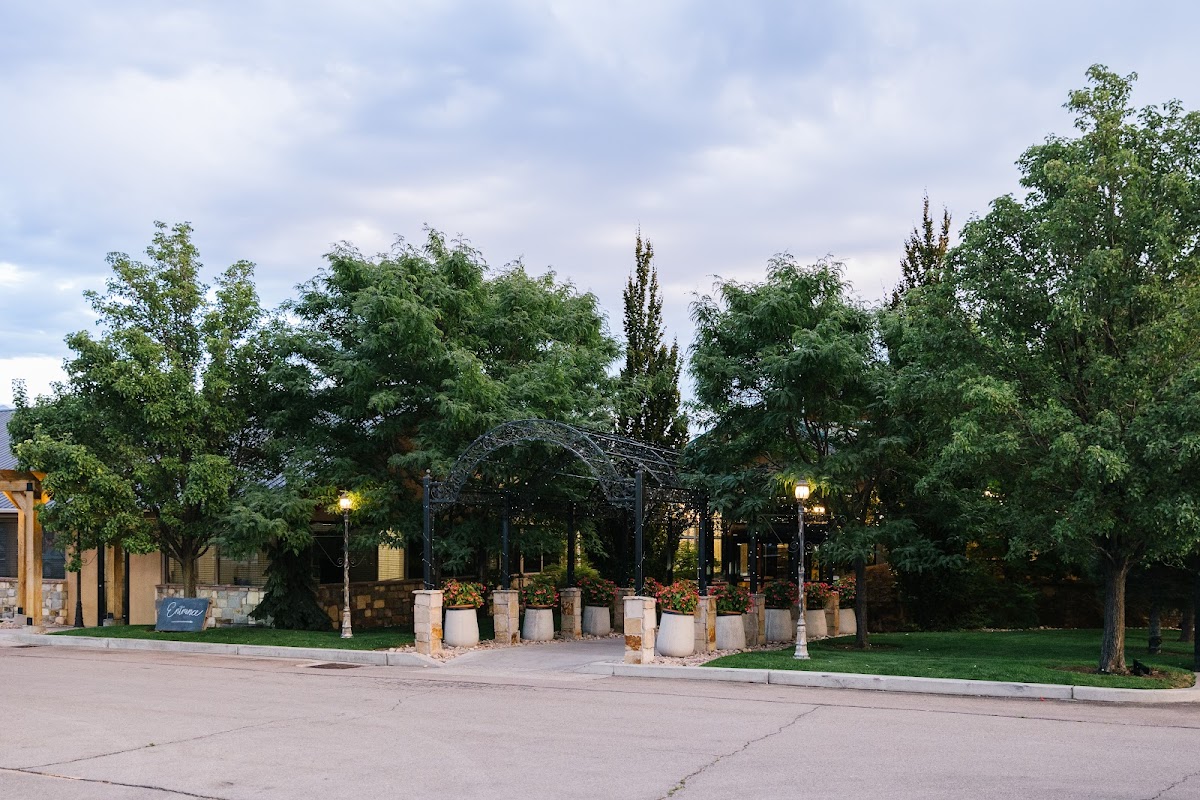
You turn off Highway 92 into a quiet Highland neighborhood, past the tidy suburban homes and ski equipment in driveways, and then the address reveals something entirely unexpected. Behind an unassuming residential facade sits a glass palace — over 10,000 square feet of atrium greenhouse rising against the Utah sky, its ceiling panels catching the light like a jewel box set down in the foothills of the Wasatch Range. Step through the entrance, and the transformation is immediate. The dry mountain air gives way to the humid embrace of a tropical conservatory. Water trickles from Tuscan-style fountains lined with marble and iron. Palm fronds arch overhead. The scent of living soil and blooming plants fills the space. This is not the high-desert landscape of northern Utah County. This is something else entirely — a Mediterranean fever dream crossed with a botanical garden, somehow thriving at 4,800 feet elevation, fifteen minutes from the tech campuses of Silicon Slopes. Couples find Highland Gardens because they want something different from the standard mountain lodge or canyon venue. They stay because the place feels like a secret, a lush escape that exists outside the expected wedding landscape of the Salt Lake Valley. Poppy has received 58 inquiries for Highland Gardens weddings, and every consultation begins with the same question: how do we design florals that honor this space without competing with it?
About Highland Gardens
Highland Gardens occupies a unique position in Utah’s wedding venue landscape. While most couples choosing to marry in Utah County gravitate toward mountain venues with panoramic views of Timpanogos or elegant ballrooms in Provo and Lehi, Highland Gardens offers something entirely different: a year-round tropical greenhouse that functions as both ceremony and reception space. The double atrium structure spans more than 10,000 square feet, with soaring glass ceilings that flood the interior with natural light regardless of season. This is a true greenhouse — not a rustic barn with some potted ferns for decoration, but a working conservatory with integrated tropical gardens, mature palms, hanging philodendrons, and ferns that have been growing in their beds for years.
The design aesthetic is an intriguing hybrid. The greenhouse bones are pure botanical garden — glass panels, steel framework, humidity controls — but the decor skews Tuscan. Marble accents appear throughout, from the fountain surrounds to decorative columns. Wrought iron details — chandeliers, gazebo frameworks, railings — add Old World romance. The effect is part Amalfi Coast villa, part Victorian conservatory, and entirely unlike anything else in the Highland-Lehi-Alpine corridor. The venue includes two distinct garden rooms, connected but visually separate, which allows for simultaneous ceremony and reception setup or provides flexibility for larger guest counts. Decorative gazebos within the greenhouse serve as natural focal points for ceremony backdrops or sweetheart table placements.
The location is practical for Utah County residents and guests traveling from the greater Salt Lake area. Highland sits between Lehi (home to much of the Silicon Slopes tech industry) and Alpine, roughly 40 minutes from downtown Salt Lake City via I-15 and Highway 92. The surrounding neighborhood is quiet and residential, with ample parking on-site. For Poppy’s delivery and setup teams, access is straightforward — the venue allows vendor entry starting at 9:00 AM on the event day, with all activity concluding by 11:00 PM. One logistical note that affects our design approach: the venue has a strict no-alcohol policy, which means Highland Gardens weddings skew toward daytime celebrations and family-friendly gatherings, and the floral design often takes on even greater importance as a key element of atmosphere and sophistication.
Highland Gardens operates with total catering flexibility — couples can hire any caterer or even self-cater using the venue’s commercial kitchen, which includes professional appliances, cookware, and serveware. The venue provides tables, chairs, linens, and even baseline centerpiece decor, though most couples working with Poppy choose to replace the included centerpieces with custom floral designs that better reflect their vision. The venue’s built-in decor elements — the fountains, the tropical plantings, the gazebos — mean that even a modest floral budget goes further here than it might in a blank-canvas ballroom. You’re enhancing rather than creating from scratch.
Event Spaces & Floral Opportunities
Main Greenhouse Reception Space
Capacity: 200 seated
Setting: The Main Greenhouse Reception Space is the showpiece of Highland Gardens — a vast, light-drenched atrium with glass ceilings that reach cathedral height at the peak. The tropical gardens are not window dressing; they’re structural elements of the room. Mature palm trees anchor corners. Ferns cascade from elevated planters. Philodendron vines trail along iron trellises. The fountains run continuously, their water features creating gentle ambient sound and visual movement throughout the space. The Tuscan decor elements — marble accents, wrought iron chandeliers, decorative columns — provide elegant punctuation against all that living green. The color palette is warm neutrals: cream marble, honey-toned ironwork, natural wood, and the infinite shades of green from the living gardens. Lighting is primarily natural during daytime events, with the glass ceiling panels diffusing Utah’s intense mountain sun into a soft, even glow that flatters skin tones and makes flowers luminous.
Floral approach: The key strategic question for Highland Gardens wedding flowers is this: where do you add, and where do you step back? The venue already provides abundant greenery, which means Poppy designs here focus on introducing color, scale, and refined florals that the existing tropical plantings cannot offer. Guest table centerpieces should be lush and garden-style but not overly leafy — you don’t need to bring more ferns when the room is full of ferns. Instead, we favor arrangements centered on blooms: full-headed garden roses (Patience, Mayra’s Rose, Keira), romantic ranunculus in blush and peach, delicate lisianthus, and trailing jasmine vine or passion vine for movement. Vessels matter enormously in this space. Polished marble compotes or aged terracotta containers echo the Tuscan aesthetic far better than clear glass cylinders, which can read too modern against the Old World ironwork. For larger installations, the indoor gazebos are prime real estate. A garland installation running the perimeter of a gazebo — constructed from smilax, Italian ruscus, and eucalyptus with clusters of Quicksand roses, white ranunculus, and blush snapdragons woven through — creates a defined ceremony or sweetheart table backdrop that feels integrated with the architecture. The water features present a delicate opportunity: floating arrangements (orchid blooms, camellia heads, or rose petals on the water’s surface) add elegance, but anything introduced to the fountains must be removed completely at evening’s end to avoid affecting the venue’s water circulation systems. We’ve found that flanking arrangements placed near but not in the fountains — large urns overflowing with tropical-leaning florals like cymbidium orchids, anthuriums, and monstera leaves — provide the visual connection without the logistical headache.
Ceremony Room
Capacity: 200 seated (ceremony configuration)
Setting: Highland Gardens provides a dedicated ceremony space separate from the main reception atrium, though it shares the same greenhouse architecture and tropical garden aesthetic. This room features its own glass ceiling, integrated garden beds with palms and tropical foliage, and a more intimate scale that focuses guest attention forward. The space includes one of the venue’s decorative gazebos, which serves as the natural focal point for the ceremony. The room’s proportions work beautifully for processionals — there’s sufficient aisle length for a meaningful walk without the football-field distance of some large ballrooms. The glass ceiling means natural light for daytime ceremonies, which is ideal for photography but requires consideration for harsh midday sun in summer months.
Floral approach: Ceremony florals at Highland Gardens should create a clear focal point that draws the eye without fighting the surrounding tropical gardens. The gazebo structure is your primary canvas. We typically recommend a full arbor installation that dresses three sides of the gazebo framework — the back wall and two supporting columns — leaving the front open for the couple and officiant. This might be a structured garland base of seeded eucalyptus, Italian ruscus, and smilax, densely layered with garden roses (Juliet, Keira, and Romantic Antike for a soft peachy-pink palette), lisianthus, ranunculus, and trailing jasmine vine that softens the edges and creates an organic, garden-gathered look. For couples wanting a more tropical approach that leans into the venue’s inherent aesthetic, we’ll incorporate orchids (phalaenopsis or cymbidium), anthuriums in blush or white, and birds of paradise for dramatic scale, paired with monstera leaves and palm fronds. Aisle treatments should be restrained — the existing tropical plantings along the aisle already provide lush greenery, so we favor either simple arrangements at every fourth or fifth row (small clusters of roses and greenery in bronze or copper stands) or a fabric aisle runner with scattered petals rather than heavy floral installations that would compete visually with the room’s built-in gardens. One often-overlooked opportunity: the ceremony room’s secondary garden beds and planters. If budget allows, adding a few tall statement arrangements in the room’s corners or near the entrance — elevated on pedestals to lift them above sightlines — creates a more immersive environment and provides beautiful framing for processional photos.
Wedding Flower Ideas for Highland Gardens
Amalfi in the Wasatch
This concept leans fully into the venue’s Tuscan design elements with a palette pulled from the sun-soaked coasts of southern Italy. Think warm terracotta, soft peach, golden yellow, and creamy white, grounded by sage green and silvery olive foliage. Flowers include Juliet garden roses (that perfect peachy-apricot), Romantic Antike roses, peach ranunculus, cream lisianthus, golden yellow spray roses, and apricot snapdragons. Foliage is Mediterranean-focused: olive branches, Italian ruscus, seeded eucalyptus, and rosemary sprigs for texture and scent. Vessels are critical to selling this look — aged terracotta pots, weathered ceramic urns in cream and sage, and bronze or copper compotes. Arrangements should feel abundant but slightly wild, as though you’ve just gathered armfuls from a Positano garden. This palette is stunning against Highland Gardens’ marble accents and warm ironwork. Use it for centerpieces in varied heights (some low and mounded, others elevated on bronze stands), a lush gazebo installation for the ceremony, and large-scale urns flanking the entrance to the reception space. The warm peachy tones photograph beautifully in the natural light flooding through the glass ceilings, and the overall effect is romantic, sun-drenched, and utterly timeless.
Tropical Elegance
For couples who want to honor Highland Gardens’ greenhouse identity without veering into tiki-party territory, this concept offers a sophisticated take on tropical florals. The palette is soft and refined: blush, white, cream, and sage, with strategic pops of coral and the deep greens of tropical foliage. Key flowers include white phalaenopsis orchids, blush anthuriums (yes, they exist, and they’re stunning), ivory garden roses (Patience, Alabaster), white ranunculus, blush lisianthus, and coral charm peonies when in season. The foliage does heavy lifting here: monstera leaves (large, dramatic, and unmistakably tropical), palm fronds (areca or kentia for elegance over tiki), philodendron leaves, and trailing pothos or jasmine vine for softness. Vessels should be clean and organic — white ceramic, natural wood boxes, or woven rattan containers that nod to tropical craft traditions without reading as beachy. This look works beautifully for a full ceremony arbor that incorporates large monstera leaves as structural elements with orchids and roses clustered at the base and trailing down, creating a lush, Eden-like backdrop. Centerpieces can mix scales: some tables get low, lush arrangements heavy on foliage with blooms clustered at the center, while others receive tall arrangements with palm fronds and monstera creating height and orchids providing the refined floral moment. The result is tropical, yes, but polished and elegant — appropriate for a formal celebration in a conservatory, not a beach reception.
English Garden Greenhouse
This concept creates beautiful tension between the venue’s tropical plantings and a decidedly English garden floral palette. It’s unexpected in the best way — very traditional British florals in a Mediterranean-Tuscan-tropical greenhouse — and the contrast is what makes it sing. The palette is classic garden romance: blush, soft lavender, white, wine-dark burgundy, and sage green. Flowers include David Austin garden roses (Juliet, Keira, and Patience), lavender lisianthus, purple stock, blush ranunculus, white anemones, burgundy dahlias (Café au Lait or Black Satin), scabiosa in both bloom and pod form, and Queen Anne’s lace for airy texture. Foliage is soft and European: dusty miller, lamb’s ear, sage, Italian ruscus, and jasmine vine. Vessels lean romantic and slightly vintage: mercury glass compotes, aged silver julep cups, blush ceramic urns, and weathered concrete bowls. The arrangements should feel loose and just-gathered, with an organic, slightly overgrown quality that recalls English cottage gardens. This look is particularly stunning at Highland Gardens because the formality of the traditional florals plays so beautifully against the wild tropical plantings of the venue — it’s cultivated meets untamed. Use it for lush, low centerpieces that guests can see over and converse across, a densely packed gazebo installation with roses, dahlias, and jasmine vine creating an English garden arbor, and statement arrangements on the venue’s decorative columns or near the fountains. The lavender and burgundy tones are rich enough to hold their own against all the green in the space, and the overall effect is deeply romantic and timelessly elegant.
Seasonal Considerations
Highland Gardens’ greenhouse structure means year-round wedding capability, but Utah County’s distinct seasons still influence floral availability, guest comfort, and design considerations.
Spring (March-May): Spring in Highland is unpredictable — warm one day, snow flurries the next, and the surrounding mountains hold their snowpack well into May. Inside the greenhouse, it’s perpetual April. Take advantage of peak spring flower availability: tulips (French and parrot varieties in peach, blush, and wine), ranunculus at their most affordable and abundant, anemones, hyacinth, and the first peonies of the season if your date falls in late May. The natural light in spring is perfect — bright but not harsh, with that clean, clear quality that makes every color luminous. Spring weddings at Highland Gardens tend to draw larger guest counts for afternoon celebrations, as the weather outside is pleasant for arrivals and departures without being scorching. One practical note: spring in Utah County means runoff and occasional flooding in low-lying areas. Confirm venue access with Highland Gardens staff if your date falls during heavy snowmelt periods, and communicate clearly with guests about parking and entry logistics. For florals, lean into the season’s abundance: use tulips generously (they’re budget-friendly in spring), incorporate flowering branches (cherry, quince, or apple) for dramatic scale, and choose soft, optimistic palettes that echo the season outside.
Summer (June-August): Summer is peak wedding season in Utah, and Highland Gardens books accordingly. The greenhouse interior is climate-controlled, though the venue’s literature notes that summer temperatures inside typically hover around 75 degrees — comfortable, but not arctic. The glass ceilings mean abundant natural light, which is glorious for photography but can create harsh shadows during midday ceremonies. If your ceremony time falls between 12:00 and 3:00 PM in July or August, discuss lighting adjustments with your photographer. Summer flower availability is robust: garden roses are at their peak, dahlias begin appearing in July, zinnias offer budget-friendly color, sunflowers provide a cheerful option for less formal celebrations, and lisianthus is abundant and affordable. The venue’s water features and humidity feel especially refreshing when it’s 95 degrees outside, which enhances the escape-to-the-Mediterranean vibe. For floral design, choose heat-tolerant varieties — garden roses over standard hybrid teas, lisianthus, orchids, and avoid delicate blooms like sweet peas or lily of the valley that wilt in warmth. Hydration is critical: we deliver Highland Gardens summer weddings with florals that have been hydrating for a minimum of 24 hours, and we often include a midday check-in if the ceremony and reception span many hours. Summer color palettes can go bold — the abundant natural light supports rich corals, vibrant yellows, and deep burgundies that might feel too intense under artificial lighting.
Autumn (September-November): Autumn is glorious in northern Utah County. The surrounding mountains ignite with color, the air turns crisp, and the light takes on that golden, slanting quality that photographers dream about. Inside Highland Gardens, the tropical plantings remain green and lush, creating a beautiful contrast with the autumn landscape visible beyond the glass. Fall flower availability shifts: dahlias are at their absolute peak in September and early October (varieties like Café au Lait, Labyrinth, and Peaches and Cream are stunning for fall weddings), garden roses remain available through October, we see chrysanthemums in sophisticated burgundy and rust tones (a far cry from grocery store mums), and seasonal accents like hypericum berries, privet berries, and fall foliage become available. This is the season to incorporate unexpected textural elements: ornamental kale (in deep purple and sage), hanging amaranthus, seed pods, dried grasses, and even small gourds or pomegranates as organic, sculptural accents in arrangements. Autumn palettes at Highland Gardens can lean into fall richness — burgundy, burnt orange, deep coral, and gold — without feeling heavy or Thanksgiving-adjacent, because the tropical greenery of the venue keeps things fresh. Late November weddings edge toward holiday territory; if your date falls near Thanksgiving, consider incorporating seasonal elements (magnolia leaves, burgundy flowers, gold accents) that nod to the timing without becoming overly festive.
Winter (December-February): Winter weddings at Highland Gardens offer something truly magical: while the Utah County landscape outside is snow-covered and dormant, you step into a lush, humid tropical garden in full bloom. The contrast is part of the appeal. Winter light through the glass ceilings is softer and more diffused than summer’s intensity, creating a romantic, almost ethereal quality. Winter flower availability shifts significantly: amaryllis (in white, red, or pink) makes a seasonal appearance, paperwhites offer budget-friendly elegance, hellebores (those moody, downward-facing blooms in burgundy, blush, and green) are at their peak, and we rely more heavily on orchids, roses, and evergreen foliage. Winter is also the season for rich, dramatic palettes: deep burgundy and wine, hunter green, ivory, and metallics (gold or copper accents in vessels and ribbon). For Highland Gardens winter weddings, consider incorporating evergreen elements that bridge the venue’s tropical greenery with the winter season — cedar, pine, or fir branches can be worked into garlands or arrangements alongside traditional florals, creating a sophisticated holiday feel without tipping into Christmas-specific territory. One practical consideration: winter weather in Highland can occasionally be severe, with snowstorms closing roads. If your wedding date falls between December and February, have a weather communication plan for guests traveling from the Salt Lake Valley or further, and consider a late morning or early afternoon start time to maximize daylight for travel.
Poppy’s Expert Take
The venue is not a blank canvas, and that’s the point. Highland Gardens comes with abundant built-in greenery and architectural features. Couples who try to cover or compete with the existing tropical gardens end up spending more while actually diminishing the space’s unique character. Our most successful Highland Gardens designs work with the venue’s tropical plantings by introducing refined florals, sophisticated color palettes, and deliberate focal points (the gazebo, the fountains, the entrance) rather than trying to transform the entire greenhouse. Let the palms and ferns do what they do, and invest your floral budget in statement moments that elevate rather than obscure.
The gazebo installation is your ceremony design priority. If budget requires choices, put your resources into a lush, full gazebo treatment for the ceremony. This architectural structure is the natural focal point of the ceremony room, and it photographs from every angle — processional shots, first kiss, recessional, family portraits. A beautifully dressed gazebo creates a ceremony backdrop that feels complete and intentional. By comparison, minimal aisle decor barely registers in photos given the venue’s existing garden beds along the aisle. A full gazebo installation (garland framework with densely clustered florals) typically runs $1,200-2,500 depending on flower choices and scale, and it’s the single most impactful ceremony investment at this venue.
Vessel choice affects the entire design’s success. More than at venues with neutral modern aesthetics, the containers you choose for Highland Gardens florals make or break the design. Clear glass cylinders and modern geometric vases fight with the venue’s Tuscan-Mediterranean style. Aged terracotta, weathered ceramic, marble compotes, bronze stands, and natural wood boxes harmonize beautifully with the marble accents and wrought iron details. This extends to ceremony installations — we use bronze or copper arbor frameworks rather than white-painted wood, which reads too farmhouse-rustic for this space. If you’re working with a florist who typically does modern minimalist work, make sure they understand Highland Gardens’ specific aesthetic and have access to appropriate vessels.
Water feature florals need a clear removal plan. The running fountains are beautiful and create lovely opportunities for floating florals or surrounding arrangements. However, anything introduced to the water itself must be completely removed by evening’s end — the venue’s water circulation system cannot handle flower petals or foliage debris. If you want floating elements (and they do photograph beautifully), confirm with your florist that removal is included in the setup/teardown plan. We’ve found that arrangements placed near but not in the fountains often create a similar visual effect with zero logistical complications: large urns or elevated arrangements positioned adjacent to fountains show in photos as though they’re part of the water feature without requiring removal from the water itself.
Daytime celebrations photograph better here. Highland Gardens’ glass ceiling structure means natural light is the primary lighting source, and it’s gorgeous — soft, even, and flattering. Evening weddings rely heavily on the venue’s installed lighting and any additional uplighting you bring in, and the space can feel darker than expected once the sun sets, particularly in winter months when sunset arrives by 5:00 PM. If your reception extends into evening, discuss uplighting with your venue coordinator or lighting vendor to ensure the tropical gardens and your florals remain visible and well-lit. For purely daytime celebrations (ceremony at 1:00 PM, reception ending by 5:00 PM), the natural light is so good that even modest floral arrangements look spectacular in photos.
The no-alcohol policy shapes the entire event tone. This isn’t directly a floral consideration, but it affects how couples approach Highland Gardens weddings. Without alcohol service, receptions tend to be shorter, more family-focused, and often scheduled earlier in the day (luncheon receptions or afternoon tea-style celebrations). This influences floral design — there’s less emphasis on dramatic nighttime ambiance and more focus on creating a refined, sophisticated daytime aesthetic. It also means your florals are often the primary luxury element guests experience (along with food), so couples tend to allocate more budget to floral design than they might at venues where bar service and late-night dancing are the main event. Embrace this: beautiful florals, natural light, and a lush garden setting create a sophisticated celebration that doesn’t rely on alcohol to feel special.
Load-in access is residential-adjacent. Highland Gardens sits in a quiet Highland neighborhood, and while there’s on-site parking, vendors arrive through residential streets. For Poppy’s delivery teams, this means careful scheduling to avoid blocking driveways and respectful volume levels during setup. The venue allows vendor access starting at 9:00 AM, which is generous, but getting large floral installations (especially a full gazebo arbor or multiple statement arrangements) requires 3-4 hours minimum. If your ceremony starts before 1:00 PM, discuss load-in timing carefully with your florist to ensure adequate setup time. The venue’s 11:00 PM end time means takedown happens on the same evening, which is standard but worth noting if you’re comparing to venues that allow overnight installation or next-day cleanup.
What Poppy Couples Spend on Flowers Here
Because Highland Gardens comes with extensive built-in greenery and architectural interest, floral budgets here can be more focused than at blank-canvas ballrooms that require total transformation. We’ve observed three typical investment levels based on the 58 Highland Gardens inquiries Poppy has received.
$2,500 - $4,000 | The Focused Approach
This budget tier prioritizes the highest-impact floral moments while allowing the venue’s existing tropical gardens to provide the foundational greenery. Typically includes: a ceremony gazebo installation (partial, dressing two sides rather than three, with garland base and clustered florals), minimal aisle decor (perhaps arrangements at the front two rows only or a petal-scattered aisle runner), bridal bouquet and three to four bridesmaid bouquets, boutonnieres for the groom and groomsmen, and reception centerpieces for guest tables in a single size and style (low, garden-style arrangements in terracotta or ceramic containers, emphasizing blooms rather than heavy greenery). This approach works beautifully for couples who appreciate Highland Gardens’ existing aesthetic and want their florals to add refined color and romance without overwhelming the space. At this level, we typically recommend choosing one statement palette (perhaps the Amalfi in the Wasatch concept with peachy roses and olive branches) and applying it consistently across all floral elements for a cohesive look. Guest counts around 100-125 fit comfortably in this tier.
$4,000 - $6,500 | The Complete Vision
This mid-tier budget allows for comprehensive floral coverage across ceremony and reception spaces with elevated design and more variety. Typically includes: a full ceremony gazebo installation (three-sided garland with dense floral clusters), aisle markers or arrangements at alternating rows, bridal party florals (bridal bouquet, four to six bridesmaid bouquets, boutonnieres), reception centerpieces in varied heights (mix of low arrangements and elevated designs on bronze or copper stands to create visual interest), a large statement arrangement for the entrance or escort card table, and smaller accent arrangements for the bar area, cake table, or restrooms. This budget also allows for more sophisticated flower choices — David Austin garden roses, premium dahlias in fall, orchids for tropical elegance concepts — and more complex installations. Many couples in this tier choose to add floral accents to the water features (large urns flanking fountains) or incorporate hanging installations if the venue permits. This range comfortably accommodates guest counts of 125-175 and allows your florist to create distinct looks for ceremony versus reception while maintaining design cohesion.
$6,500+ | The Immersive Garden
Couples investing at this level are creating a fully realized floral environment that transforms Highland Gardens into their specific vision while honoring the venue’s character. This budget typically includes: a dramatic, fully dressed ceremony gazebo with extensive garland work and cascading floral clusters, substantial aisle decor (arrangements at every row or an aisle installation that creates a floral pathway), elevated bridal party florals (larger bouquets with premium blooms, perhaps corsages for mothers), reception centerpieces in multiple sizes and styles across all tables, multiple large-scale statement arrangements (entrance focal piece, bar arrangement, cake table installation, lounge area accents), potential hanging installations or ceiling treatments if structurally possible, and often ceremony-to-reception floral repurposing where large ceremony pieces (gazebo corner arrangements, aisle arrangements) are relocated to the reception space during flip time. At this level, we’re also incorporating specialty elements: unusual flower varieties, extensive garden roses, dramatic tropical foliage like large monstera or palm fronds, and vessels that become part of the overall design story (perhaps all arrangements in a collection of vintage ceramic or a cohesive family of bronze containers). This tier supports guest counts of 175-200 and creates the immersive, breath-taking floral environments that become central to the wedding’s visual identity and social media presence.