
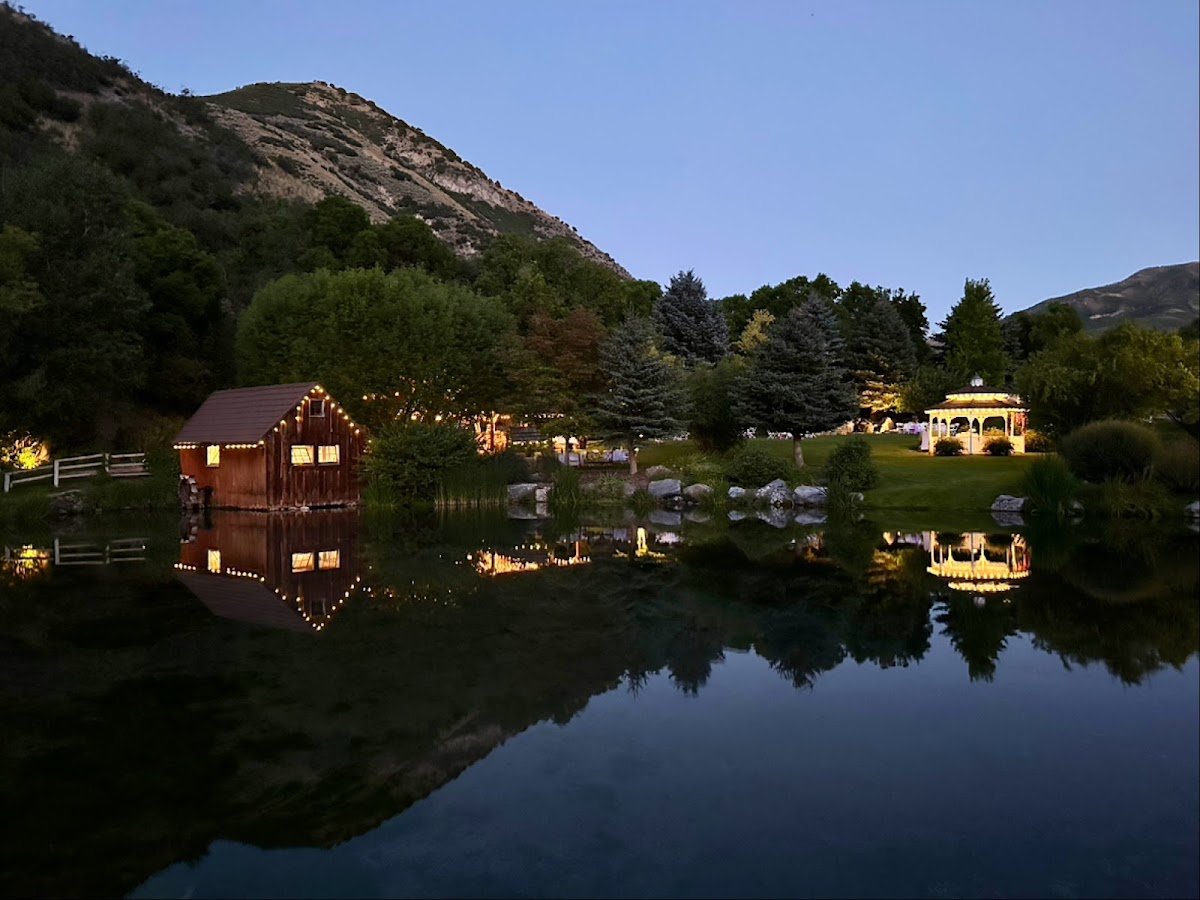
You know you’ve left the ordinary world behind when your GPS signal drops. The drive up Provo Canyon on US-189 traces the Provo River as it carves through granite cliffs, the road narrowing as you pass Vivian Park and turn onto South Fork Road. The pavement becomes gravel. Cell service vanishes. And then, tucked into a tree-filled valley where three spring-fed ponds reflect the Wasatch peaks overhead, Conrad Ranch reveals itself — not with fanfare, but with the kind of quiet beauty that makes you want to whisper. A historic water wheel turns slowly beside the powerhouse, the same way it has for a century. A waterfall murmurs somewhere beyond the trees. The ranch feels less like a venue and more like a secret someone decided to share. This is a centennial family homestead that has opened its gates for weddings, and the distinction matters. Nothing here is contrived. The ponds were not dug for aesthetic purposes. The gazebo sits where it does because that spot, at that angle, frames the mountains just so. For couples planning Conrad Ranch wedding flowers, the challenge is not filling empty space but knowing when to step back and let the landscape speak.
About Conrad Ranch
Conrad Ranch is a working family property that has been in the Conrad family for over a hundred years, situated in the South Fork area of Provo Canyon at an elevation where the air is noticeably thinner and cooler than the valley floor below. The ranch encompasses open pastures, dense groves of cottonwood and maple, and the three natural spring-fed ponds that give the property its distinctive character. This is not manicured wine country elegance or polished barn venue perfection — this is Utah mountain country in its most authentic form, where the water is cold and clear, the grass grows wild in places, and the sound of the creek running through the property is the only background noise you’ll hear. There are no neighbors. No traffic sounds. Just the wind moving through the canyon and the occasional call of a red-tailed hawk overhead.
The venue’s architecture is modest and functional — wood buildings with stone accents that feel more like homestead structures than event facilities. The indoor reception hall features two substantial stone fireplaces, dark wood tables that look like they’ve been here for decades, and a wooden dance floor that’s been worn smooth by countless gatherings. There is nothing trendy about it, which is precisely the point. The outdoor pavilion is post-and-beam construction with a pitched roof and Edison-style string lights strung overhead, open on all sides to the canyon breeze. The ceremony gazebo is a simple octagonal structure positioned near one of the ponds, and the historic water wheel on the powerhouse building — a functioning relic from the ranch’s agricultural past — has become the property’s most photographed feature.
Logistically, Conrad Ranch sits approximately 15-20 minutes from downtown Provo and Orem, making it accessible for guests staying in Utah Valley while feeling completely removed from civilization. The venue operates with a 10 PM sound curfew due to canyon acoustics and neighboring properties further up the canyon. There is no cell service on the property, which couples either love (forced digital detox for guests) or find challenging (coordinate everything in advance). For Poppy’s delivery and setup teams, access is straightforward once you’re on the property — the gravel road is well-maintained, and there is ample space near both the indoor hall and outdoor pavilion for load-in. The venue provides tables, chairs, and linens in black, brown, ivory, navy, and white. They have a warming kitchen but no cooking facilities, and they maintain strict policies about ground stakes (approval required for any arch or signage placement), alcohol (prohibited entirely on the property), and cleanup (pack out everything you bring in).
The venue requires all vendors to carry liability insurance and to coordinate with the ranch management about setup locations and timing. Early-arriving vendors will be asked to wait until the contracted time begins. Because this is a family homestead rather than a corporate event facility, there is a personal quality to the vendor relationships here — respect the land, follow the rules, and the Conrad family will work with you seamlessly. Poppy has received inquiries from couples planning weddings at Conrad Ranch, and while we have not yet designed florals here, the property’s emphasis on natural beauty and minimal intervention aligns perfectly with our design philosophy.
Event Spaces & Floral Opportunities
Indoor Reception Hall
Capacity: 100 seated for formal dinner, up to 350 for cocktail-style reception
Setting: The indoor reception hall is the ranch’s main event facility — a spacious room with a vaulted ceiling, exposed wooden beams, and two commanding stone fireplaces that anchor opposite ends of the space. The wood tables are substantial and dark-stained, the kind that look better with simple runners and low centerpieces than with elaborate linens. A wooden dance floor occupies the center of the room, polished from use but retaining its rustic character. Large windows line one wall, and a side patio opens directly to the lawn and pond views. The overall aesthetic is mountain lodge meets family gathering space — warm, unpretentious, and built for celebration rather than display.
Floral approach: The two stone fireplaces are your primary design opportunities in this space, and they deserve substantial installations. We recommend asymmetrical mantle arrangements that cascade down one side — think clusters of Café au Lait dahlias, Quicksand roses, chocolate cosmos, and trails of jasmine vine and Italian ruscus that spill over the stone. For fall weddings, add branches of turning maple or oak foliage. The stone provides a neutral, textured backdrop that makes jewel tones particularly striking — burgundy, burnt orange, deep plum, and hunter green all photograph beautifully against the gray-brown stone. Table centerpieces should stay low and organic, no more than ten inches tall, so conversation flows easily. We favor wooden boxes or ceramic vessels in earth tones filled with garden-style arrangements: ranunculus, spray roses, scabiosa, and textured foliage like eucalyptus and sword fern. For the side patio, consider potted arrangements of ornamental grasses or seasonal branches in galvanized buckets to create a visual transition from indoor to outdoor. Avoid anything too precious or delicate — this room calls for florals with presence and texture, arrangements that look like they were gathered from the surrounding canyon rather than ordered from a catalog.
Outdoor Pavilion
Capacity: Flexible depending on setup
Setting: The outdoor pavilion is a covered, open-air structure with a pitched roof supported by substantial wooden posts and beams. Edison-style string lights are permanently installed overhead, creating a warm glow as daylight fades. The floor is poured concrete, the sides are entirely open to the surrounding landscape, and the overall effect is breezy and romantic without feeling formal. This is where most couples hold their reception dinner and dancing, taking advantage of the mountain air and the view of the ponds and pastures beyond.
Floral approach: With built-in string lighting and open sides that frame the natural landscape, the pavilion needs florals that enhance rather than dominate. The wooden beams are ideal for garland installations — imagine 40-foot runners of smilax, silver dollar eucalyptus, and seeded eucalyptus with clusters of blooms inserted every few feet: white ranunculus, blush spray roses, and burgundy scabiosa. If the couple wants more drama, suspend floral chandeliers at varying heights using clear fishing line — chicken wire spheres covered in greenery and studded with garden roses and stock. For tables beneath the pavilion, keep centerpieces medium-height (12-16 inches) since there’s no need to preserve sightlines to windows or views — guests are surrounded by the landscape on all sides. Use a mix of vessel heights and styles for visual interest: some arrangements in tall glass cylinders, others in low wooden boxes, creating rhythm along the table rows. Because the pavilion is covered, florals are protected from direct sun and wind, which extends their longevity — a real advantage for multi-hour receptions. The key is to complement the string lights rather than compete with them: choose blooms with texture and depth that will catch the warm light as evening falls.
Outdoor Ceremony Area
Capacity: 300+ guests
Setting: This is where Conrad Ranch truly shines. The property offers multiple ceremony site options, each with its own character: the gazebo positioned beside the largest pond, the waterfall area where spring water cascades over rocks, the bridge that crosses between ponds, or any number of spots beneath the cottonwood grove with the Wasatch peaks as backdrop. The gazebo is a simple white octagonal structure with a peaked roof, already adorned with glass globe lights that catch the sunlight. The ponds are mirror-still on calm days, reflecting clouds and mountains. The waterfall provides both sound and movement. The trees create natural overhead canopy and dappled shade. This is Utah mountain landscape at its most photogenic, and the ceremony location choice will significantly shape your floral needs.
Floral approach: If you’re using the gazebo, treat it as a found structure that needs softening rather than decorating. Garlands of greenery — Italian ruscus, eucalyptus, and trailing jasmine vine — can be draped along the railings and roof edges, with focal clusters of blooms at the entry points: garden roses (Patience, Charity, Juliet), lisianthus, and ranunculus in soft peach, ivory, and blush tones. Avoid anything too structured or symmetrical; let the garlands follow the lines of the gazebo organically. For waterfall ceremonies, less is more — the drama is already there. A simple pair of arrangements flanking the ceremony site, perhaps in tall urns on natural wood pedestals, is sufficient: blooms that echo the water’s movement like delphinium, larkspur, and trailing amaranthus. If you’re marrying pond-side, consider low arrangements placed on the bank, visible from guest seating but not obstructing the water view, or floating floral installations — grapewood wreaths covered in greenery and floating candles. For aisle markers, we prefer shepherd’s hooks with simple tied bundles of flowers and ribbon rather than ground stakes (which require venue approval and are difficult in the rocky soil). Beneath the cottonwood trees, your primary design element is the tree canopy itself — consider hanging simple glass orbs with single stem blooms (spray roses, ranunculus) from lower branches along the aisle path, creating a magical overhead element without blocking the mountain views beyond.
Bridal Suite
Capacity: Designed for bridal party preparation
Setting: A spacious upstairs room with natural light and room for hair and makeup stations, dress hanging, and the inevitable chaos of six women getting ready simultaneously. This is a functional space rather than a decorative one, but it photographs frequently during the getting-ready portion of the day.
Floral approach: A single statement arrangement is all you need here — something substantial enough to show up in photos but compact enough not to take up valuable counter space. We recommend a low, lush arrangement in a ceramic or wooden vessel: garden roses, ranunculus, tweedia, and scabiosa in colors that complement the bridesmaid dresses. Place it where it will appear in mirror shots and detail photos: near the dress, on a windowsill, or on whatever surface the photographer has designated for rings and shoes. Consider adding a small wrapped bundle of herbs (lavender, rosemary) for the bridesmaids to tuck into their bouquets or hair — a fragrant, personal detail that costs almost nothing but photographs beautifully.
Groom’s Room
Capacity: Designed for groom’s party preparation
Setting: Located downstairs at the end of the building, this is a simpler space than the bridal suite — somewhere for groomsmen to hang suits, tie bow ties, and pour whiskey while pretending they’re not nervous. The room serves its purpose without pretense.
Floral approach: Most grooms don’t want flowers in their space, but a boutonniere bar is a different story. Set up a simple station with a wooden tray or cutting board holding the pinned boutonnieres, along with a small instructional card showing how to attach them properly (or better yet, have someone from the bridal party or a vendor demonstrate). The boutonnieres themselves should be simple and sturdy: a single spray rose or ranunculus with a sprig of olive or eucalyptus, wrapped in twine or leather cord rather than satin ribbon. If you want to add a touch of florals to the room itself, consider a small arrangement of succulents in a wooden box or a few stems in a whiskey bottle — something masculine and low-key that won’t read as fussy.
Wedding Flower Ideas for Conrad Ranch
Canyon Wildflower
This concept embraces the native Utah mountain landscape with a palette drawn from high-elevation meadows and canyon floors. Start with a base of wildflower-inspired blooms: yarrow (in yellow, peach, and white), scabiosa (burgundy and deep purple), rudbeckia, and wild aster. Add textured foliage that feels foraged rather than formal: sword fern, seeded eucalyptus, olive branches, and wild grasses. For structure, include garden roses (Julia Child, Golden Celebration) and ranunculus in warm yellow and burnt orange tones. Vessel choices should reinforce the organic aesthetic: weathered wood boxes, ceramic crocks in earth tones, or galvanized buckets that nod to the ranch’s agricultural heritage. This palette is particularly stunning at the waterfall ceremony site or beneath the cottonwood grove, where it feels like a natural extension of the surrounding landscape rather than an imposed decoration. The key is controlled wildness — arrangements that appear casually gathered but are actually carefully composed for balance and movement.
Blue Sage & Stone
Inspired by the gray-blue palette of sagebrush, stone, and mountain shadows, this concept uses a more refined color story while maintaining organic texture. The foundation is dusty blue and silver: dusty miller, eucalyptus (both seeded and silver dollar varieties), and blue thistle. Layer in soft gray-blue delphinium, white ranunculus, ivory garden roses (Patience, Playa Blanca), and blush astilbe for movement and softness. Accents of deeper plum (scabiosa, anemone) prevent the palette from feeling too monochromatic. Arrange in stone-colored ceramic vessels or cement compotes that echo the fireplace stone in the indoor reception hall. This palette works beautifully for daytime ceremonies at the pond, where the blue tones reflect in the water, and for evening receptions under the pavilion string lights, where the silvery elements catch and reflect the warm glow. It’s sophisticated without being stuffy, natural without being predictable.
Autumn Homestead
For fall weddings, lean into the ranch’s centennial history with a palette that feels rooted in harvest season and family gatherings. The star blooms are Café au Lait and Cinnamon dahlias (those enormous, show-stopping varieties in cream and rust tones), paired with burnt orange roses (Free Spirit, Tycoon), burgundy ranunculus, and chocolate cosmos for depth. Add textural elements that reference the agricultural landscape: wheat stalks, ornamental millet, branches of crabapple or viburnum berries, and turning maple foliage. Vessels should feel substantial and heirloom: copper urns, wooden dough bowls, or aged brass compotes. This is not a modern, minimalist autumn palette — it’s rich, abundant, and celebratory in the way a harvest feast should be. The arrangements work beautifully on the fireplace mantles in the indoor hall, where the warm tones complement the stone and wood, and as substantial centerpieces beneath the pavilion, where they hold their own against the expansive mountain views. Include ornamental pumpkins and gourds in the table design for additional harvest references. This concept says: we are celebrating abundance, family, and the land that sustains us.
Seasonal Considerations
The Wasatch Mountain climate creates distinct seasons with significant implications for outdoor weddings and floral design at Conrad Ranch’s 5,000+ foot elevation.
Spring (April-June): Spring arrives late in Provo Canyon, often not fully settling until mid-May when the cottonwoods finally leaf out and the mountain snowpack has mostly melted. Early spring (April into early May) can be unpredictable — snow flurries are not impossible, and nighttime temperatures regularly drop into the 30s. Late spring (late May through June) is glorious: the canyon greens up dramatically, the spring runoff fills the ponds and waterfall, and wildflowers begin blooming in the meadows. This is prime time for locally-grown tulips, ranunculus, anemones, and early peonies. For Conrad Ranch wedding flowers in spring, choose hardy blooms that can tolerate temperature fluctuations, and plan for backup heating if your reception extends past sunset. The advantage: the landscape is at its most vibrant green, and you’ll have the waterfall at peak flow for ceremony backdrops. Best months are late May and early June, when warm days and cool nights create ideal conditions and the property shows off its full spring beauty.
Summer (July-September): Summer in Provo Canyon is sublime — warm days (typically 75-85°F), cool nights, low humidity, and seemingly endless daylight hours. The ponds are perfect for reflection photos, the cottonwood canopy provides natural shade, and outdoor ceremonies are reliably comfortable. This is peak wedding season for good reason, and also peak season for floral availability: garden roses, dahlias, zinnias, sunflowers, cosmos, and locally-grown sweet peas are abundant. The challenge with summer Conrad Ranch weddings is the 10 PM sound curfew, which means your reception needs to wind down before you’ve fully taken advantage of the long summer twilight. For florals, summer heat is rarely an issue at this elevation — even the warmest days cool down by evening — but anything placed in direct afternoon sun (ceremony arrangements, cocktail hour florals) should be kept in water until the last possible moment. August can bring brief afternoon thunderstorms that roll through quickly; have a rain plan for ceremony setup. Best months are July and early September, when weather is most reliable and the mountain light is particularly beautiful.
Fall (Late September-November): Fall is arguably the most beautiful season at Conrad Ranch. The cottonwoods and maples turn brilliant gold and crimson, the air becomes crisp and clear, and the mountain views achieve that particular clarity that only comes with autumn light. September can still be warm; October brings cooler temperatures and the peak of foliage color; November edges toward winter and is risky for snow. Fall florals are abundant and affordable: dahlias are at their peak (and Utah-grown dahlias are exceptional), chrysanthemums, asters, and sunflowers are readily available, and seasonal foliage can be incorporated directly from the property (with permission). For autumn Conrad Ranch wedding flowers, embrace the warm color palette: burnt orange, burgundy, rust, and gold tones that echo the changing leaves. The challenge is temperature — October evenings can drop into the 40s quickly after sunset, so outdoor receptions will need heating, and some guests will need to access the indoor hall. The advantage: the property looks like it’s on fire with color, and your photos will be spectacular. Best months are late September and October, with early November possible if you’re willing to gamble on weather.
Winter (December-March): Winter weddings at Conrad Ranch are rare but magical for couples who embrace the season. The canyon gets snow — sometimes substantial amounts — and the property transforms into a white wonderland. The ponds may freeze, the waterfall becomes a sculpture of ice, and the evergreens on the hillsides stand out against the snow. Indoor-only weddings are the only realistic option, with the reception hall’s two fireplaces providing warmth and ambiance. Winter floral availability is more limited and expensive (imported blooms predominate), but evergreens, winter berries, amaryllis, and hellebores are available and appropriate. The stone fireplaces become even more important as focal points, and arrangements heavy with evergreen boughs, pine cones, and winter berries feel perfectly suited to the season. The challenges are access (the gravel road may be snow-packed), cold (guests will need to stay mostly indoors), and early sunset (winter light is gone by 5 PM). The advantages: you’ll likely have the venue to yourselves (few couples brave winter canyon weddings), and the snow-covered landscape is breathtaking for photos. Best months are late March (as winter transitions to spring) or early December (when fresh snow is likely but roads are still manageable and holiday spirit is in the air).
Poppy’s Expert Take
Know the no-cell-service reality. Conrad Ranch has zero cell reception, which means all vendor coordination needs to happen before you arrive or via the venue’s landline. Create a detailed timeline with specific meeting points and times, share physical maps of the property with your team, and designate one person with access to the venue’s phone as the point of contact. For Poppy’s delivery, this means confirming exact setup locations, load-in times, and placement instructions in advance — we can’t text the coordinator to ask where the ceremony arch should go when we’re standing there with a cart full of flowers. It also means couples should inform their guests in advance; nothing causes panic like 200 people arriving in a canyon with no ability to call for help if they’re lost.
Respect the alcohol prohibition. Unlike most wedding venues, Conrad Ranch prohibits all alcohol on the property — no exceptions for champagne toasts, no secret flasks, no “we’ll just be discreet about it.” This is non-negotiable and comes from the family’s personal values and the property’s location. For floral designers, this doesn’t directly impact our work, but it does shape the overall vibe of the event. Without alcohol, receptions tend to be shorter, more family-focused, and end earlier — which means your ceremony and cocktail hour florals are proportionally more important since that’s when guests are most attentive and present. Consider investing more heavily in ceremony installations and entrance arrangements that make a strong first impression.
The 10 PM curfew is firm. Canyon acoustics carry sound surprisingly far, and the 10 PM sound ordinance is enforced. This means amplified music, toasts, and announcements need to conclude by 10 PM sharp, and most couples aim to finish closer to 9:30 to allow for cleanup. For florals, this timeline impacts decision-making: if your reception is only running from 6-10 PM, you may not need as many dinner table arrangements (people will be dancing or socializing) but should invest more in cocktail hour and lounge area florals. Also consider that setup time is compressed — you’re not staging florals at 2 PM for a 9 PM send-off. Everything needs to be installed, photographed, and ready to perform for a shorter window.
Use the water features strategically. The three ponds, waterfall, and bridge are the property’s signature elements, and nearly every couple wants photos at one or more of these locations. Work with your florist to create floral moments at these spots specifically: a pair of urns flanking the bridge for processional entry, low arrangements at the pond’s edge for ceremony backdrop, or a single statement piece near the waterfall that appears in portraits. These don’t need to be large installations — the water does most of the work — but a small floral marker makes these spots feel intentional rather than accidental. Also ask your photographer which water feature has the best light at your ceremony time and design for that specific location.
The fireplace mantles deserve your investment. Inside the reception hall, the two stone fireplaces are the most prominent architectural features and the natural focal points. Skimping on these installations makes the whole room feel unfinished. We recommend substantial garlands or asymmetrical cascading arrangements that spill over one side of the mantle, using seasonal branches, textured greenery, and focal blooms that read from across the room. These arrangements anchor the entire space and serve as backdrops for speeches, cake cutting, and other key moments. Budget $400-600 per mantle for a full, lush installation — it’s a splurge that pays off in both photos and in-person impact.
Embrace the ranch aesthetic rather than fight it. Conrad Ranch is not a refined estate, a modern gallery, or a romantic vineyard — it’s a working homestead with a century of history, and your florals should honor that identity. Delicate, perfectly-manicured arrangements in crystal vases will look out of place here. Opt instead for organic, textured designs in wooden boxes, ceramic crocks, or galvanized vessels that feel connected to the agricultural landscape. Include elements like wheat, wild grasses, or foraged branches that reference the surrounding canyon. The goal is to make guests feel like your wedding grew naturally from this place rather than being imported from somewhere else.
Plan for limited load-in logistics. While the venue has good access once you’re on the property, the single gravel road and limited staging areas mean vendors need to coordinate carefully. Poppy typically loads in ceremony flowers first (while ceremony musicians and officiant are also arriving), then transitions to cocktail/reception areas while the ceremony is happening. If you have multiple floral installations (ceremony arch, reception centerpieces, fireplace garlands, cocktail arrangements), communicate with your florist about sequencing and whether you need additional hands for a faster setup. The venue doesn’t have a prep space or refrigeration for florals, so everything arrives ready to install, which requires more advance preparation than venues with on-site storage.
What Poppy Couples Spend on Flowers Here
While we’re still awaiting our first completed Conrad Ranch wedding, based on the venue’s aesthetic, spaces, and the Salt Lake City market, here’s how we’d structure floral investment for this property:
$2,800 - $4,200 | The Canyon Essentials
This tier covers the critical floral moments without excessive elaboration. Start with personal flowers: a substantial bridal bouquet ($275-350) in garden-style with premium blooms and textured greenery, bridesmaid bouquets ($150-200 each for four attendants), and boutonnieres ($30-40 each for six groomsmen and fathers). For the ceremony, choose your focal location — if it’s the gazebo, invest in a garland installation with focal bloom clusters ($600-800); if it’s the waterfall or pond-side, opt for a pair of elevated urn arrangements flanking the ceremony site ($350-450 per urn). Aisle markers can be simple tied bundles on shepherd’s hooks ($45-60 each for 8-10 markers). Reception centerpieces are low, garden-style arrangements in wooden boxes or ceramic vessels ($120-160 each for 10-12 tables), with one of the fireplace mantles receiving a substantial installation ($400-500). Add a small bridal suite arrangement ($75) and bar/cocktail table accents ($100-150). This budget creates a beautiful wedding that feels appropriate to the venue without attempting to floralize every corner. The emphasis is on quality over quantity, with investments focused where guests spend the most time.
$4,500 - $6,800 | The Full Picture
This mid-tier budget allows for fuller installations and additional floral moments throughout the property. Personal flowers expand to include premium varieties (David Austin garden roses, specialty dahlias) and larger, more textured bouquets ($350-450 for bride, $200-250 for bridesmaids). Ceremony florals become more substantial: a fully-dressed gazebo with lush garlands and suspended arrangements ($1,200-1,500), or multiple ceremony site installations if you’re using both the gazebo and the bridge as processional entry point. Add more elaborate aisle markers or low arrangements flanking the aisle ($75-100 each). Reception florals include centerpieces for all tables in varied heights — mix low arrangements ($150-180) with some elevated designs on risers ($250-300) for visual interest. Both fireplace mantles receive full installations ($500-600 each), creating symmetrical focal points in the reception hall. The outdoor pavilion gets garlands along the beams ($800-1,200 depending on length) and hanging installations or floral chandeliers ($200-300 each for 2-3). Add cocktail hour arrangements, a substantial bar arrangement, cake florals, and possibly floating floral installations in the pond for photos. This tier creates a fully-realized floral vision where every space feels thoughtfully designed.
$7,200+ | The Mountain Estate
For couples who want Conrad Ranch to feel like a fully-transformed mountain estate, this investment covers elaborate installations and exceptional blooms throughout. Personal flowers feature premium garden roses, imported ranunculus, specialty dahlias, and heirloom varieties in oversized, gallery-worthy bouquets ($500-650 for bride, $275-350 for bridesmaids). Ceremony design is ambitious: the gazebo receives a complete floral treatment with dense garlands, cascading installations, and suspended floral chandeliers, plus both the bridge entrance and the ceremony site get substantial arrangements ($2,500-3,500 total). Add an elaborate guestbook table arrangement, cocktail hour installations at multiple water features, and possibly floating wreaths in the pond. Reception florals are abundant: statement centerpieces for all tables ($200-400 each depending on size and height), with specialty vessels and premium blooms. Both fireplace mantles receive museum-quality installations ($700-900 each) with imported foliage, premium blooms, and cascading elements. The outdoor pavilion gets extensive garland work (40+ feet at $30-40 per foot), multiple hanging installations, and possibly vertical floral walls or pillars at the pavilion entrance. Add elaborate cake florals, restroom arrangements, and possibly floral installations for the getting-ready spaces. This budget allows for the kind of abundant, over-the-top floral design typically associated with estate weddings, but adapted to Conrad Ranch’s rustic mountain setting. The result is spectacular and cohesive, with every corner of the