
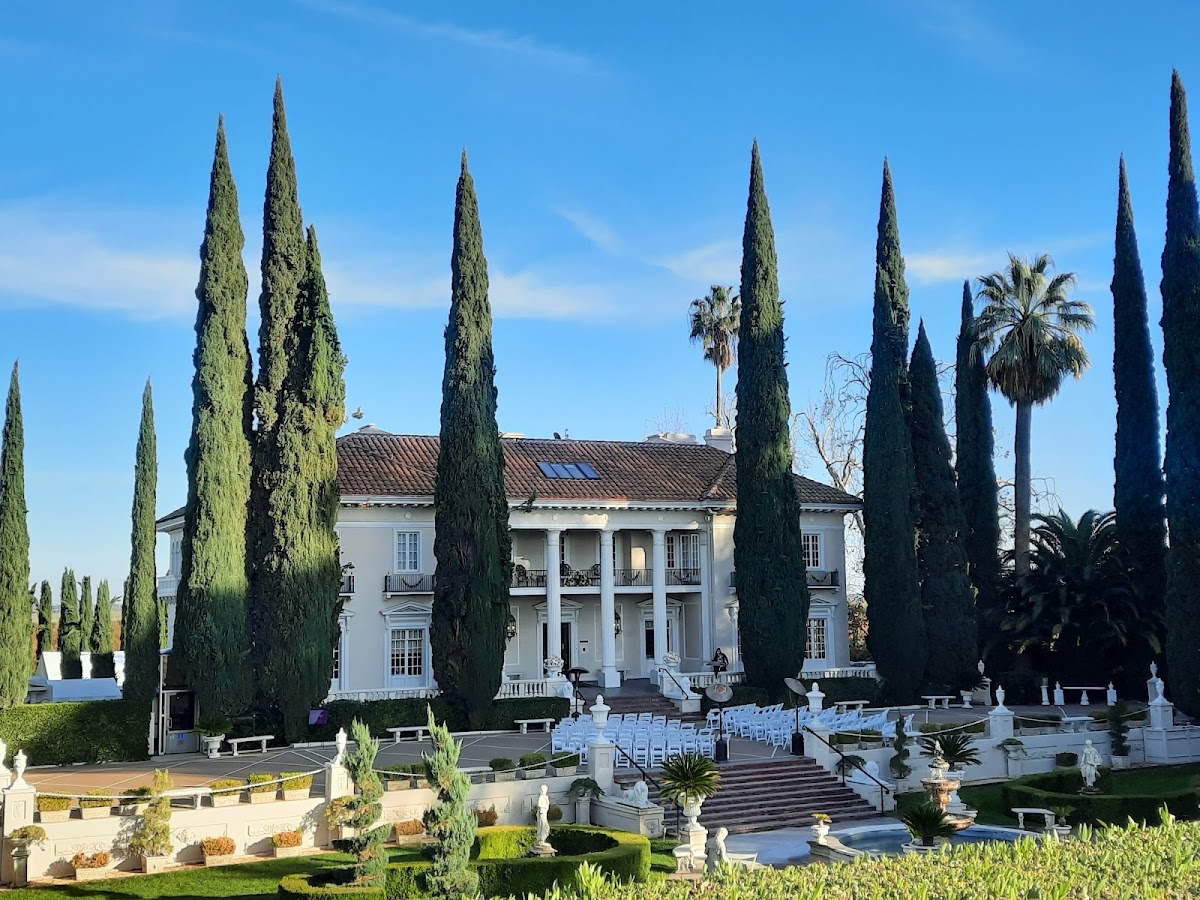
Designing for Grand Island Mansion requires a shift in perspective regarding scale. This is a property of massive architectural proportions; the white columns, expansive lawns, and the four-story facade act as a dominant visual anchor that can easily dwarf standard-sized arrangements. We know this venue intimately, and our approach focuses on creating floral moments that feel as permanent and intentional as the estate’s marble fireplaces and handmade tile work.
The primary design challenge here is the lack of rigging points for suspended installations in the historic rooms. To create drama, we look to the ground and the architecture. By utilizing the columns as natural supports and the grand staircase as a canvas for movement, you can achieve a high-end, editorial look that respects the mansion’s Renaissance-era opulence without fighting against its structural limitations.
The Spaces
Italian Statuary Garden
This is the quintessential Grand Island ceremony spot, framed by palms and the mansion’s front porch. The scale of the building is the most important factor to consider here.
- What works: Large-scale ground meadows that flank the aisle or the gazebo base. These provide a lush foreground for photography without blocking the view of the fountain or the statues.
- Skip: Thin, spindly pedestals. They look fragile and out of place against the massive stone and ironwork of the garden.
- Watch out: The Delta breeze can pick up in the afternoon. Any freestanding structures must be heavily weighted or staked into the lawn.
- Budget hero move: Focus your entire ceremony budget on the wrought iron gazebo. A single, lush asymmetrical installation on the structure creates a more powerful focal point than multiple smaller arrangements scattered throughout the garden.
Colonnade Room
This indoor space feels like a private Italian villa, with white columns and high-contrast architectural details.
- What works: Column wraps. Using the existing pillars to support “growing” floral installations is the most effective way to add height and romance to the room.
- Skip: Tall, narrow trumpet vases. They often compete with the columns rather than complementing them.
- Watch out: The room’s layout can feel tight with maximum guest counts. Ensure floor installations are tucked close to the column bases to maintain clear walkways.
- Budget hero move: A statement floral installation on the primary marble fireplace mantel. It serves as a natural backdrop for the sweetheart table and anchors the entire room.
Grand Ballroom
The ballroom is rich with period furnishings and dark wood, offering a more formal, traditional reception atmosphere.
- What works: Low, lush centerpieces with a focus on color and texture. Because the ceilings are standard height, keeping the arrangements below eye level encourages conversation and feels more intimate.
- Skip: Hanging “clouds” or ceiling installations. There are no safe rigging points in the historic plaster, and the ceiling height doesn’t allow for the necessary clearance.
- Watch out: The dark wood paneling can “absorb” deep colors like burgundy or navy. Use lighter tones or high-contrast whites and creams to ensure your flowers pop.
- Budget hero move: Repurpose your ceremony ground meadows to the base of the band stage or the cake table. The ballroom’s neutral flooring makes these installations stand out.
What Works at Grand Island Mansion
Architectural framing. Instead of trying to hide the mansion’s features, use flowers to frame the doorways, columns, and fireplaces. Symmetrical placements feel most authentic to this formal estate.
The “Climbing” aesthetic. Since hanging is restricted, we use columns and the grand staircase to create vertical movement. This mimics the look of a garden that has naturally reclaimed the stone.
High-contrast palettes. The venue is largely white and neutral on the exterior and rich wood on the interior. Bold colors or crisp whites with deep greenery work best to define the space.
Ground-level impact. On the South Lawn and in the gardens, floor-based arrangements provide the best ROI. They feel grounded and substantial enough to hold their own against the mansion backdrop.
Staircase drama. The Grand Staircase is one of the most photographed spots on the property. A lush, cascading garland here is a high-impact way to welcome guests and create a “wow” moment for your entrance.
Budget Guide
| Tier | Investment | Floral Strategy |
|---|---|---|
| Essentials | $1,750 - $3,200 | Personal flowers and a focused focal point for the gazebo. Simple, elegant bud vases for the ballroom tables. |
| Sweet Spot | $3,500 - $5,500 | Includes a lush gazebo installation, staircase accents, and medium-scale centerpieces that complement the mansion’s scale. |
| Full Experience | $6,000 - $9,000 | Column-integrated designs in the Colonnade Room, full staircase garlands, and substantial ceremony meadows that repurpose to the reception. |
| Statement | $10,000+ | Full-scale floral transformations, including multi-mantel designs, extensive column work, and premium blooms throughout all public estate rooms. |
The character of Grand Island Mansion is rooted in historic opulence, so your budget should prioritize a few large, “mansion-scale” moments over many small, disconnected pieces.
Tips
Leverage the gazebo. The iron structure is a gift for floral designers; it allows for heavy installations that would require expensive custom rigging at other venues.
Plan for the Delta heat. If you are getting married in the summer, choose hardy varieties like roses, carnations, or tropicals for the outdoor garden; the Sacramento Delta sun can be intense.
Repurpose with purpose. The walk from the Statuary Garden to the Ballroom is short; have your team move aisle markers to the fireplaces or the bar area during the cocktail hour.
Check the column width. If you want column wraps, ensure your designer has the specific measurements; the columns vary in circumference between the interior and exterior.
Respect the history. The mansion features many original finishes; ensure all floral installations use water-tight containers to protect the historic wood and marble surfaces.