
You know you’ve left Miami behind when the nurseries start appearing. Mile after mile of them, as Florida’s Turnpike gives way to SW 214th Avenue — wholesale greenhouses and tropical plant operations that supply half the country’s orchids and palms. The landscape flattens, opens up. This is Homestead country, agricultural and unhurried, where the air smells like turned earth and citrus blossoms instead of salt water. And then, between the farm stands and the sprawling nursery operations, Gran Paraiso Gardens announces itself: ten thousand square feet of manicured turf, ancient oak trees spreading their arms wide, Italian cypress standing at attention like sentries, and — the moment you round the corner past the main lawn — a twenty-foot waterfall cascading over moss-covered stone, the sound carrying across the property like a promise. Behind it all, the Glass Barn rises like something conjured from a design magazine, its transparent walls reflecting the gardens and sky, modern and ethereal at once. This is not the Miami of South Beach or Brickell. This is something quieter, greener, more deliberate. Poppy has designed Gran Paraiso Gardens wedding flowers for 3 celebrations here, and each time, we’ve been reminded that sometimes the most sophisticated choice is to step away from the city entirely and let the land do the talking.
About Gran Paraiso Gardens
Gran Paraiso Gardens sits at 22801 SW 214th Avenue in South Miami-Dade’s Homestead area, approximately 35 to 40 minutes from downtown Miami and Miami International Airport via Florida’s Turnpike. This family-owned property has been cultivated over years into a purpose-built wedding destination that manages the rare feat of feeling both lush and curated, tropical and refined. The surrounding area is defined by its agricultural heritage — this is nursery and farm country, where wholesale growers tend acres of orchids, bromeliads, and ornamental palms, and where roadside stands sell mangoes, avocados, and lychees by the flat. It gives the venue an authenticity that hard-to-reach destination properties sometimes lack. You are not pretending to be in the tropics. You are in them, surrounded by the working landscape that produces South Florida’s botanical abundance.
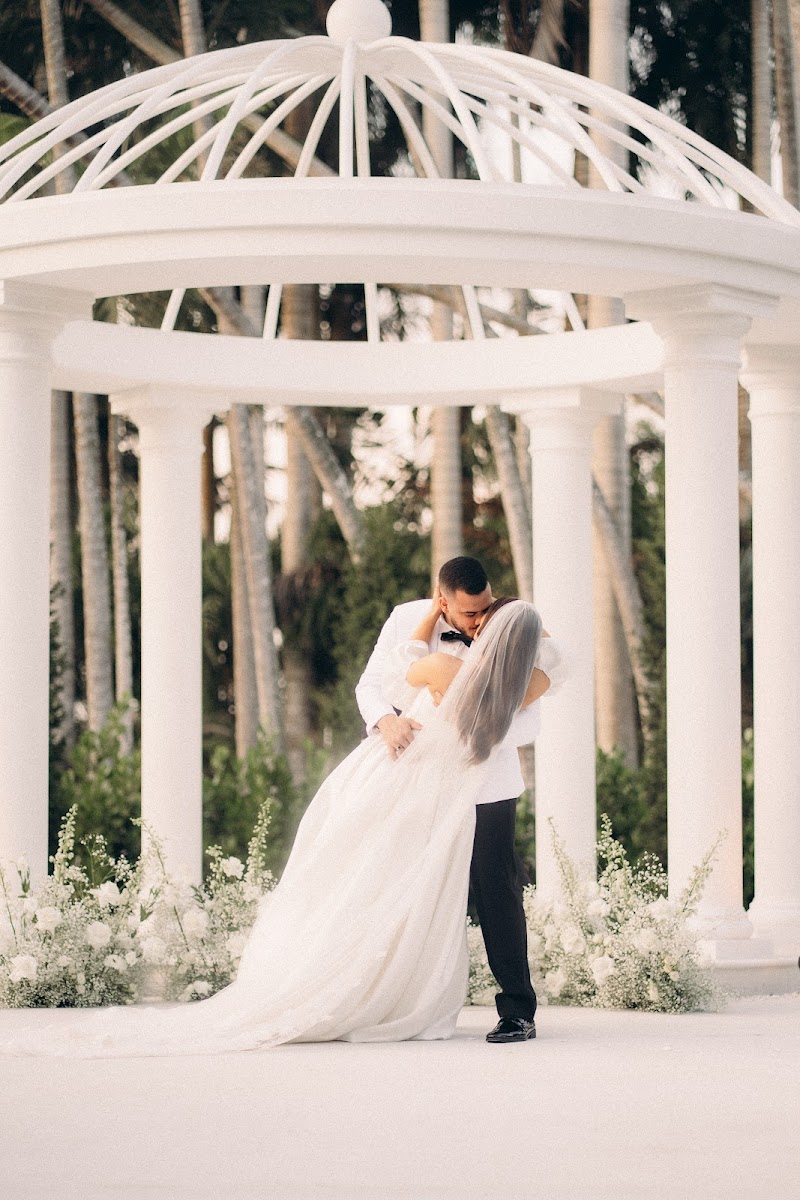
The property itself unfolds across multiple garden zones, each with distinct character. The Main Lawn stretches over 10,000 square feet of manicured turf anchored by mature oak trees whose canopies provide natural shade and architectural heft. Italian cypress trees punctuate the space vertically, adding formality and structure. A glorietta-style gazebo — the kind with an open, latticed roof and columns — sits at the ceremony site, providing a built-in focal point that can be dressed minimally or abundantly depending on your vision. The concrete aisle is a practical detail in a climate where ground conditions can shift quickly with afternoon rain. Nearby, the Waterfall Ceremony Area offers a more dramatic, intimate setting with a twenty-foot cascade as backdrop, its ambient sound creating natural white noise that both soothes and occasionally challenges your sound engineer (more on that later).
But the property’s true showpiece is the Glass Barn Reception Hall, a 5,000 to 6,000 square foot climate-controlled structure wrapped entirely in glass. This is not a greenhouse aesthetic — it is sleek, modern, deliberately designed to showcase the gardens from every angle while protecting guests and florals from South Florida’s heat and humidity. Floor-to-ceiling glass walls provide 360-degree views, and the space is equipped with a top-tier sound system, professional lighting rig, built-in bar area, and — most striking of all — full-room projection mapping that can transform the walls, ceiling, and even the floor into immersive visual environments. We have seen it project everything from underwater coral reefs to starry night skies to custom monograms and family crests. As a Miami wedding florist designing Gran Paraiso Gardens wedding flowers, this projection technology is both an opportunity and a consideration. The right lighting can make garden roses glow like lanterns. The wrong lighting can turn blush florals gray or make ivory look jaundiced. Coordination with the venue’s AV team is essential.
Logistically, Gran Paraiso Gardens operates with the exclusivity of a private estate — they host only one wedding per day, which means no rushed timelines, no competing events in adjacent spaces, and no vendor traffic jams. Load-in access is straightforward, with ample parking for vendor vehicles (the property accommodates 80+ cars on-site, with valet and shuttle services available for guests). The venue provides in-house catering with multiple service styles (plated, family-style, buffet, stations) and an in-house bar program starting at $38 per person. Importantly for Poppy, florists are not restricted to an approved vendor list, which allows us to bring our full design capabilities to the property. The event timeline typically runs from 1:00 PM access for bridesmaids and vendors through a 10:00 PM conclusion, with all guests exiting by 10:30 PM — a firm timeline that requires careful planning for setup and breakdown.
The venue does require outside vendors to carry liability insurance, a standard practice that Poppy maintains as a matter of course. One delightful detail: Gran Paraiso Gardens is dog-friendly with pre-approval, allowing couples to include their pets in the ceremony and photos (though not under the roof or near food service areas, and always on leash held by a non-couple member). It is the kind of thoughtful policy that signals a venue willing to accommodate the personal details that make a wedding feel truly yours.
Event Spaces & Floral Opportunities
Glass Barn Reception Hall
Capacity: 250 seated
Setting: Step through the glass doors and the first thing you notice is light. It pours in from every direction, filtered through transparent walls that erase the boundary between indoor and outdoor. The Glass Barn is a glasshouse in the truest sense — a fully enclosed, climate-controlled structure where the gardens remain visible from every seat, where the palm fronds and oak branches press against the windows like they are trying to join the party. The ceiling rises to accommodate the projection mapping system, which can wash the entire space in color, pattern, or imagery, transforming the room from a garden pavilion into an underwater grotto or a starlit conservatory with the flick of a switch. The built-in bar anchors one end of the space, sleek and modern with room for multiple bartenders and decorative displays. Motorized shades can be lowered if the afternoon sun becomes too intense, though most couples prefer to leave them open and let the natural light do its work. The acoustics are excellent, thanks to the sound system, and the air conditioning is robust enough to keep 250 guests comfortable even in the peak of Miami summer.
Floral approach: The Glass Barn’s transparency means your Gran Paraiso Gardens wedding flowers are visible from every angle — not just from inside the room, but from outside looking in. This is not a space for arrangements with an ugly back side or filler-heavy designs. Everything must be finished 360 degrees. We favor elevated centerpieces on clear acrylic or glass risers that lift florals above sightlines, allowing guests to see both the arrangements and the gardens beyond. Consider towering designs with tropical foliage like monstera leaves, split-leaf philodendron, and areca palm fronds as structure, punctuated with high-impact blooms: white phalaenopsis orchids cascading down, coral-pink anthurium, magenta dendrobium orchids, and clusters of ginger flowers for fragrance. For a softer approach, elevated arrangements of garden roses (Patience, Quicksand, Juliet), blush ranunculus, ivory lisianthus, and trailing jasmine vine create romance without blocking views. The built-in bar is ideal for a statement installation — imagine a lush runner of smilax, Italian ruscus, and seeded eucalyptus punctuated with café au lait dahlias, white majolica spray roses, and pops of hypericum berries. The projection mapping is the wild card. Request a color preview from the venue’s AV team before finalizing your floral palette. Cool blue projections will make warm-toned flowers look muddy; warm amber lighting can turn white florals cream or peach. If the couple plans immersive projections, consider keeping centerpieces more monochromatic (all white, all greenery, all burgundy) so they read as sculptural elements rather than competing color stories. For couples embracing the technology, coordinate your floral colors with the projection palette — if they are projecting a sunset, echo it with coral charm peonies, apricot roses, and burnt orange dahlias. If they are projecting an underwater scene, use blue-toned hydrangeas, white anemones, and sea holly for a marine garden effect.
Main Lawn Ceremony Area
Capacity: 250+ guests
Setting: The Main Lawn is everything you want from a South Florida garden ceremony: expansive, verdant, framed by mature trees that provide dappled shade and a sense of permanence. The turf is immaculate, manicured to country club standards, and the concrete aisle ensures even the highest heels will not sink into soft ground. The glorietta-style gazebo sits at the ceremony focal point, its white-painted columns and open-lattice roof providing structure without enclosing the space. Italian cypress trees stand tall in the background, adding vertical lines and Mediterranean elegance, while the spreading oaks soften the perimeter. Depending on the time of day, the light shifts dramatically — mid-morning brings bright, even illumination; late afternoon casts long golden shadows; and sunset bathes the lawn in that particular South Florida amber glow that makes everything look like it has been dipped in honey.
Floral approach: The gazebo is your primary canvas here, and the question is always how much to add versus how much to let the structure speak for itself. For maximum impact, we drape the columns with lush garlands of smilax, plumosa fern, and Italian ruscus, then weave in clusters of blooms every eighteen inches — garden roses (Keira, Romantic Antike), white hydrangea, blush stock, and trailing amaranthus for movement. At the base of each column, arrange large urns overflowing with tropical foliage, white phalaenopsis orchids, birds of paradise, and coral ginger flowers. For a more restrained approach, concentrate florals at the top of the gazebo where the columns meet the roof — a lush crown of greenery and blooms that draws the eye upward without obscuring the structure. The concrete aisle can be lined with arrangements in two ways: either tall arrangements on pedestals every six feet (giving guests clear sightlines between), or low clusters every three feet (abundant but not obstructive). We particularly love using white ceramic urns or natural stone vessels filled with tropical greenery — monstera, ti leaf, variegated ginger — anchored with statement blooms like king protea, anthuriums in coral or red, and white dendrobium orchid sprays. The oak trees provide an opportunity for hanging installations if the couple desires — lanterns, floral pomanders, or simple ribbon streamers that move with the breeze. One practical note: South Florida sun is intense, and while the oak canopy provides some shade, heat-sensitive flowers like ranunculus and anemones will struggle in afternoon ceremonies. If the ceremony is scheduled after 3:00 PM in summer months, stick with bulletproof tropicals: orchids, ginger, heliconia, and foliage-heavy designs that can tolerate the heat until guests arrive.
Waterfall Ceremony Area
Capacity: 150 seated
Setting: The Waterfall Ceremony Area is theatrical in the best way. A twenty-foot cascade of water tumbles over stacked stone, creating a constant, soothing rush of sound and a fine mist that hangs in the air, cooling the immediate area by several degrees. The stone is naturally textured, covered in moss and ferns, and the water pools at the base before circulating back up through hidden pumps. Ambient lighting washes the waterfall in the evening, turning it from a daytime garden feature into a nighttime focal point that glows. The space is intimate by design — 3,500 square feet accommodates 150 guests comfortably without feeling crowded, and the natural soundscape created by the water gives the ceremony a meditative quality. For couples who want drama and a sense of being transported somewhere remote and lush, this is the space.
Floral approach: The waterfall is the star, and Gran Paraiso Gardens wedding flowers here should enhance rather than compete. The key is to treat the waterfall itself as the backdrop and frame it rather than obscure it. We position the ceremony arch slightly forward of the waterfall, allowing the cascade to remain visible behind the couple. The arch itself should be organic and asymmetrical — think wild garden, not formal symmetry. We build it with structural tropical foliage: banana leaves, split-leaf philodendron, areca palm fronds, and ti leaves in burgundy and green. Into this base, we nestle high-impact blooms: white phalaenopsis orchids, fuchsia dendrobium sprays, coral ginger, pink anthuriums, and clusters of heliconia for that unmistakable tropical punch. Passion vine and jasmine can trail down one side, softening the edges. If the couple prefers a more romantic, garden-style look, substitute the tropical blooms for garden roses (Constance, Keira), blush peonies when in season, white hydrangeas, and coral charm peonies, while keeping the lush greenery base. The aisle can be lined sparingly — the waterfall’s mist and natural moisture mean flowers here stay fresher longer than elsewhere on the property. Low arrangements every six feet, using moisture-loving blooms like hydrangeas, ferns, and ivy, echo the tropical setting. One important technical note: the sound of the waterfall, while beautiful, can interfere with microphone audio. Coordinate with the sound engineer to ensure wireless mics are tested in this space, and consider positioning speakers strategically so vows are audible throughout. For floral installations, avoid placing arrangements directly in the water flow or mist zone — even tropicals have their limits, and we’ve learned that orchids may be moisture-tolerant but they do not appreciate being continuously drenched.
Covered Pergola Cocktail Space
Capacity: Flexible, approximately 75-100 guests standing
Setting: The Covered Pergola offers 1,700 square feet of shaded outdoor space ideal for cocktail hour, lounge seating, or late-night desserts and coffee. The structure is open-air but roofed, with clean lines and neutral wood tones. It provides protection from sun and light rain without feeling enclosed, and the overhead beams are perfect for hanging installations. The space flows naturally from the Main Lawn and connects visually to the Glass Barn, making it ideal for transitional moments in the event timeline. The venue can configure it with high cocktail tables, lounge furniture, or a mix of both, depending on the couple’s vision.
Floral approach: The overhead structure is too good an opportunity to waste. We install hanging elements that transform the pergola into a floating garden. Floral chandeliers are the most dramatic option — circular or linear frames wrapped in smilax, jasmine, and eucalyptus, with cascading orchids (white phalaenopsis or purple dendrobium), roses (Juliet, Quicksand), and trailing amaranthus. For a more organic look, we suspend clusters of greenery at varying heights — bundles of eucalyptus, olive branches, and Italian ruscus tied with natural jute, interspersed with small bud vases holding single blooms. On the cocktail tables below, keep arrangements low and compact so guests can set down drinks and small plates. We favor hurricane vases filled with floating orchid blooms and submerged ti leaves, or small ceramic vessels overflowing with roses, spray roses (Majolica, White Mikado), and textured greenery. If the cocktail hour is during daylight, these arrangements can be simpler; if it transitions into evening, consider adding votives and taper candles in brass holders to create ambient light that plays against the floral textures. One logistical advantage of this space: it is covered, which means setup can happen earlier in the day without concern about afternoon sun wilting delicate blooms. This is where we often place the more temperature-sensitive flowers — ranunculus, anemones, sweet peas — that would struggle on the open lawn but thrive in the pergola’s shade.
Bridal Suite
Setting: The Bridal Suite is designed for function and comfort, with ample space for hair and makeup stations, hanging garment storage, and seating for the bridal party. Large mirrors and good natural light make it ideal for getting-ready photos, and the room is climate-controlled to keep everyone comfortable during prep.
Floral approach: A single statement arrangement on the main vanity or dressing table is all this space needs. We create something textural and romantic that photographs beautifully: a low, lush design in a ceramic or stone vessel featuring garden roses (Patience, Keira, Romantic Antike), ranunculus in blush and peach, lisianthus, and delicate filler like astilbe or tweedia. Add touches of jasmine or passion vine trailing over the edge of the vessel for movement. This arrangement doubles as a photo prop for detail shots — the bride’s jewelry, perfume, invitation suite, and shoes arranged around the florals. If the bride is carrying a heavily scented bouquet, we place it in water here so she can enjoy the fragrance while getting ready.
Groom’s Den
Setting: The Groom’s Den offers a more masculine space for the groom and groomsmen to prepare, with seating, storage, and a private atmosphere.
Floral approach: Keep it simple and architectural. A small arrangement featuring structural elements — protea, leucadendron, succulents, or air plants — in a modern concrete or ceramic vessel. Add textured greenery like seeded eucalyptus, olive branches, or dusty miller for softness without reading too floral. This is also where we stage the boutonnieres, keeping them in water until the photographer is ready for detail shots.
Wedding Flower Ideas for Gran Paraiso Gardens
Tropical Modernist
This is for the couple who wants to embrace the Miami setting without veering into tiki territory. The palette is sophisticated tropical: coral, fuchsia, white, and deep green. Blooms include coral-pink anthuriums, fuchsia dendrobium orchids, white phalaenopsis orchids, ginger flowers, and birds of paradise, all set against a base of architectural foliage — monstera leaves, split-leaf philodendron, ti leaves in green and burgundy, and banana leaf. Vessels are sleek and modern: tall white ceramic cylinders, low rectangular planters, matte black cubes. In the Glass Barn, create elevated centerpieces on clear acrylic risers that appear to float, each one featuring a single large monstera leaf as backdrop with a tight cluster of orchids and anthurium at the base. At the waterfall ceremony, build an asymmetrical arch that is all about shape and structure rather than dense florals. For the Main Lawn, line the aisle with tall arrangements on white pedestals, each one a sculptural composition that reads more like living art than traditional floral design. This concept works beautifully with the projection mapping in the Glass Barn — coordinate with coral and turquoise projections for a Miami Vice-meets-modern-bride effect that feels fresh rather than retro.
Garden Romance
For couples who love the tropical setting but want a softer, more romantic floral story. The palette is blush, peach, ivory, and soft green. Garden roses are the foundation — Patience, Keira, Juliet, Quicksand, and Romantic Antike — supplemented with blush ranunculus, ivory lisianthus, peach stock, white hydrangea, and coral charm peonies when in season (January through March in Miami). Greenery includes jasmine vine, smilax, Italian ruscus, and eucalyptus in silver-dollar and seeded varieties. Vessels are romantic and varied: antique brass urns, blush-toned ceramic compotes, mercury glass, and natural stone. In the Glass Barn, design low, lush centerpieces that sprawl across the table like an English garden border — roses, ranunculus, and jasmine cascading over the edges of the vessel. For the Main Lawn ceremony, drape the glorietta gazebo in jasmine-heavy garlands, weaving in clusters of garden roses and hydrangea, and line the aisle with low, abundant arrangements in stone urns. At the waterfall, create a lush, asymmetrical arch that is all about texture and movement, with roses, hydrangeas, and trailing jasmine that moves with the mist. This concept reads timeless in photos and translates beautifully from ceremony to reception. If the couple is using projection mapping, request soft, warm lighting — peachy sunset tones or soft white — that enhances rather than overpowers the blush palette.
Bold Botanicals
This concept is for the couple who wants maximum impact and is not afraid of color. The palette is vibrant and varied: fuchsia, orange, burgundy, chartreuse, and deep purple. Blooms include fuchsia bougainvillea, orange ginger flowers, burgundy dahlias (Black Beauty, Rip City), purple lisianthus, hot pink roses (Pink Floyd), and chartreuse bells of Ireland. Foliage is equally bold: variegated ginger leaves, croton in orange and red, burgundy ti leaves, and bright green aspidistra. Vessels are eclectic: hand-painted Mexican ceramic, bright blue talavera pottery, hammered copper, and natural woven baskets. In the Glass Barn, create tablescapes that are layered and abundant — runners of mixed greenery down the table with clusters of bold blooms in varied vessels at different heights. For the waterfall ceremony, build an arch that is wild and overgrown, almost jungle-like, with vines trailing into the water and blooms bursting out at unexpected angles. On the Main Lawn, line the aisle with low, densely packed arrangements in bright ceramic pots that feel more like an artisan market than a traditional wedding. This concept works for the couple who wants their Gran Paraiso Gardens wedding to feel like a celebration of color and life, unfiltered and unapologetic. Coordinate with the projection mapping for maximum effect — jewel-tone projections or vibrant tropical sunset imagery that amplifies the floral palette.
Seasonal Considerations
Miami’s subtropical climate means florals are possible year-round, but the seasons bring distinct weather patterns and bloom availability that shape what works best.
Winter (December-February): This is Miami’s dry season and peak wedding season for good reason. Temperatures range from the mid-60s to mid-70s Fahrenheit, humidity is lower, and rain is rare. Outdoor ceremonies on the Main Lawn or at the waterfall are virtually guaranteed perfect weather. This is also when northern blooms are most reliably available — peonies arrive from California and South America (especially coral charm and Sarah Bernhardt), ranunculus and anemones are at peak freshness, and tulips can be sourced for couples who want them. Local Florida growers are harvesting citrus blossoms, which add incredible fragrance. For Gran Paraiso Gardens wedding flowers in winter, you have the widest palette available. Consider incorporating seasonal elements like kumquats on the branch, citrus blossoms, and cool-weather blooms like hellebores and sweet peas. December weddings can include subtle holiday touches — white amaryllis, evergreen foliage, and winter berries — without feeling overly Christmas-themed. February edges into early spring, making it ideal for peony lovers.
Spring (March-May): Spring in Miami is warm and increasingly humid as the season progresses. March and early April are still comfortable, with temperatures in the 70s to low 80s, but by May, the heat is building and afternoon thunderstorms become more frequent. This is the transition period when northern spring blooms overlap with tropical availability. Peonies are still available through March, and roses, ranunculus, and lisianthus are abundant. Local tropical blooms — orchids, ginger, heliconia — are thriving. For outdoor ceremonies, we recommend morning or late afternoon timing to avoid peak heat. The Main Lawn’s oak trees provide crucial shade during this season. In the Glass Barn, the climate control becomes essential — even heat-tolerant flowers will last longer and look fresher in the air-conditioned space. Design-wise, spring is the season to embrace both worlds: mix romantic garden roses with architectural tropical foliage, or create centerpieces that pair blush peonies with coral ginger flowers for a distinctly Miami take on spring.
Fall (September-November): Fall in Miami is still technically hurricane season through November, though the risk decreases as the season progresses. Temperatures begin to moderate in October and November, dropping from the 80s into the 70s, and humidity becomes less oppressive. September weddings require weather contingency plans, but by October and November, conditions are increasingly favorable. Florally, fall brings a shift back toward wider availability of temperate blooms — dahlias are at their peak (café au lait, Rip City, Black Beauty), roses are abundant, and autumn-specific blooms like chrysanthemums and sunflowers are available for couples who want seasonal touches. November is particularly lovely as it bridges tropical Miami and more traditional fall aesthetics. You can design with burgundy dahlias, rust-toned roses, and deep foliage while still incorporating tropical elements like monstera leaves and ginger flowers. For Gran Paraiso Gardens wedding flowers in fall, consider rich, warm palettes — terracotta, burnt orange, deep plum, and gold — that feel autumnal without requiring traditionally fall blooms. The Glass Barn can be styled with projection mapping that echoes fall themes (amber lighting, leaf patterns), while the outdoor spaces benefit from the cooler, more comfortable weather for guests.
Poppy’s Expert Take
Coordinate with the projection mapping early. The Glass Barn’s 360-degree projection system is stunning, but it will directly affect how your florals photograph and how they read to guests in person. Request a meeting or video call with the venue’s AV team at least two months before your wedding to see examples of the projection options. Bring your florist into this conversation. If the couple is planning immersive projections with cool tones (blues, purples, whites), warm-toned flowers like coral and peach will appear muddy or gray under that lighting. Conversely, warm projections (amber, orange, pink) can make white florals look cream or yellow. The best approach is to either choose a projection palette that complements your floral colors, or opt for projections that stay neutral (starlight, monograms, subtle patterns) so the florals remain true to color. We have had the most success with monochromatic floral palettes (all white, all greenery, all burgundy) when projections are bold and colorful, allowing the flowers to act as sculptural elements rather than competing color stories.
Use the waterfall’s moisture to your advantage, but know its limits. The mist from the twenty-foot waterfall creates a microclimate that is cooler and more humid than the rest of the property. This is excellent news for flowers that thrive in moisture — hydrangeas, ferns, orchids, and tropical foliage will last longer and look fresher here than they would on the open lawn. However, continuous direct mist will eventually damage even tropicals. When designing the ceremony arch or arrangements near the waterfall, position them adjacent to the cascade rather than directly in the spray zone. We typically place the arch three to four feet forward of the waterfall, allowing the water to remain visible as backdrop without soaking the florals. Also, be aware that the waterfall’s sound, while atmospheric, can interfere with ceremony audio. Work with the sound engineer to position speakers strategically, and recommend wireless mics for anyone speaking. For the floral designer, this means keeping arrangements away from speaker placements to avoid audio feedback or vibration that could topple unstable designs.
Embrace tropicals, but do not feel limited to them. Gran Paraiso Gardens is in Miami, and it is tempting to default entirely to tropical blooms, but the Glass Barn’s climate control opens up your options significantly. We have successfully used peonies, ranunculus, anemones, sweet peas, and garden roses in the Glass Barn even during summer months, because the air conditioning protects them. The key is compartmentalizing your floral plan: use bulletproof tropicals (orchids, anthuriums, ginger, monstera, ti leaf) for outdoor installations — ceremony, cocktail hour, any areas exposed to heat — and reserve the more delicate, temperate blooms for the Glass Barn reception. This approach gives you the best of both worlds: the lush, tropical garden vibe outdoors and the soft, romantic florals many couples envision for their reception tables. Just ensure your florist schedules delivery and setup carefully, keeping delicate blooms in