
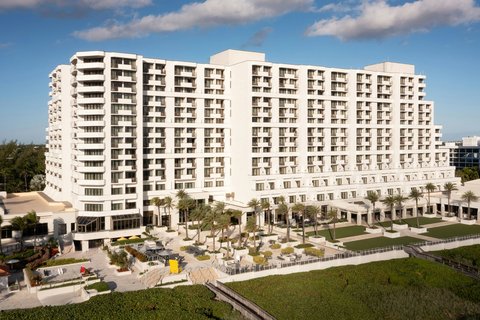
You turn off A1A onto Holiday Drive, leaving the high-rises and commercial sprawl behind, and within moments the landscape shifts. Palm trees line the private drive. Manicured tropical gardens unfold. And then the resort appears — low-rise, Mediterranean-inspired architecture spread across sixteen acres, all of it facing the Atlantic. This is not Fort Lauderdale’s Spring Break beachfront. This is Harbor Beach, the quieter, more refined enclave where the city keeps its best-kept secret: a quarter-mile of private sand, the largest stretch of private beach in South Florida, where sea turtles nest in season and the only soundtrack is waves. The Fort Lauderdale Marriott Harbor Beach Resort & Spa sits on this privileged strip of coastline like a guest who has been here long enough to relax entirely. Through the lobby’s arched windows, you catch your first glimpse of the Ocean Ballroom’s floor-to-ceiling glass wall, and beyond it, the turquoise expanse of the Atlantic stretching to the horizon. Poppy has received 144 inquiries from couples planning Fort Lauderdale Marriott Harbor Beach Resort & Spa weddings — drawn, no doubt, by the rare combination of oceanfront ceremony sites, grand ballrooms with water views, and the kind of full-service resort infrastructure that can handle a 50-person rehearsal dinner or a 1,200-guest reception with equal grace.
About Fort Lauderdale Marriott Harbor Beach Resort & Spa
The Fort Lauderdale Marriott Harbor Beach Resort & Spa opened in 1984 on what was then one of the last undeveloped stretches of beachfront in Fort Lauderdale proper. The Harbor Beach neighborhood had long been an exclusive residential enclave, and the resort was designed to fit that aesthetic — elegant but not showy, sophisticated without being stuffy, tropical in the best sense of the word. The architecture borrows from Old Florida and Mediterranean traditions: low-slung buildings with terracotta roofs, open-air terraces with white columns and coral stone pavers, lushly landscaped courtyards filled with royal palms, hibiscus, and bird-of-paradise. It does not try to be Miami. It is decidedly Fort Lauderdale — a bit more laid-back, a bit more family-friendly, a place where you can get married barefoot on the beach in the afternoon and host a black-tie reception in a grand ballroom that same evening without anyone batting an eye.
The resort sits on sixteen secluded acres with direct access to a quarter-mile of private beach — 200,000 square feet of pristine sand where the only footprints belong to guests, resort staff, and the occasional loggerhead sea turtle making her way up the dune to nest. This is a working beach in the ecological sense. From March 1st through October 31st, it is nesting season, and the resort adheres to strict lighting protocols to protect the turtles. (More on that later, as it affects evening events in the Ocean Ballroom.) Beyond the beach, the property includes multiple pools, a full-service spa, six restaurants and lounges, and 650 guest rooms, making it ideal for destination weddings where out-of-town guests need accommodations and activities for an entire weekend.
Logistically, the resort is approximately ten minutes from Fort Lauderdale-Hollywood International Airport, making arrivals seamless for guests flying in from across the country. The location also offers easy access to Fort Lauderdale’s downtown, Las Olas Boulevard shopping and dining, and the Intracoastal Waterway — useful for couples planning welcome dinners or post-wedding brunches off-property. For Poppy’s delivery and setup teams, access to the resort is straightforward via Holiday Drive, with dedicated loading areas near each ballroom and terrace. The events team at the Marriott is highly experienced, managing hundreds of weddings annually, and they are accustomed to coordinating with outside floral vendors. Certificate of Liability Insurance is required for all vendors, a standard protocol for resort properties of this caliber. The resort requires use of their exclusive in-house catering and Encore as the exclusive audiovisual, lighting, rigging, and power provider, though floral design is open to outside vendors — which is where Poppy comes in.
Event Spaces & Floral Opportunities
Ocean Ballroom
Capacity: 1,200 seated (theater), 900 reception, or 1,100 banquet
Setting: The Ocean Ballroom is the resort’s crown jewel, and it earns that designation through one defining feature: eighty feet of floor-to-ceiling windows overlooking the Atlantic. The wall of glass runs the entire length of the ballroom’s eastern side, framing an uninterrupted view of the beach, the surf, and the horizon line where water meets sky. The room itself is 10,000 square feet with high ceilings, neutral beige and cream walls, and modern chandeliers with a geometric design that reads contemporary without feeling cold. The flooring is neutral carpet, easily covered with a custom floor wrap if desired. The space can be divided into smaller configurations using airwalls, though most weddings take the room in its full glory. The adjacent pre-function area offers additional space for cocktails or a dessert display. This is a ballroom that does not need to apologize for being indoors — the windows bring the outdoors in, and the light, especially in the late afternoon, is extraordinary.
Floral approach: The rule here is simple: do not obstruct the windows. Your guests did not come to Fort Lauderdale to stare at a ten-foot centerpiece. They came for the ocean. We recommend low, lush table arrangements — think six-to-eight-inch compotes filled with white phalaenopsis orchids, Polo roses, white lisianthus, and trailing jasmine vine, all in a tight, cloud-like composition that sits well below the sightline. Alternately, very tall arrangements on forty-inch clear glass risers work beautifully, lifting florals above eye level entirely and creating drama without blocking views. The ceremony setup within the ballroom benefits from a clean, structural arch or chuppah positioned in front of the windows — we favor driftwood or birch frames wrapped in smilax, plumosa fern, and clusters of white and ivory blooms (garden roses, ranunculus, stock) that frame the couple without competing with the ocean backdrop. For the entrance to the ballroom, a pair of large-scale floral installations on pedestals — overflowing with monstera leaves, white anthurium, dendrobium orchids, and trailing amaranthus — signals the transition from cocktails to dinner. Keep in mind that during turtle nesting season (March 1–October 31), the window shades must be closed by 9:00 PM, which dramatically changes the room’s atmosphere. If your reception runs late into the evening during these months, plan your floral color palette and lighting accordingly, as the room will shift from naturally lit to artificially illuminated halfway through the event.
Grand Ballroom
Capacity: 1,800 seated (theater or reception), 1,200 banquet
Setting: The Grand Ballroom is the resort’s largest indoor event space at 14,900 square feet, designed to accommodate truly grand celebrations. The room has high ceilings with recessed lighting, neutral taupe walls, and plush carpeting in coordinating tones. Unlike the Ocean Ballroom, this space does not have windows, which makes it a blank canvas — entirely dependent on lighting, draping, and floral design to establish mood and atmosphere. The ballroom can be divided into smaller sections using airwalls if needed, though it shines when used at full capacity. For couples planning a wedding with 400+ guests, this is the room that can handle the scale without feeling cramped.
Floral approach: A windowless ballroom is both a challenge and an opportunity. Without natural views to lean on, florals become the primary visual anchor. We recommend going bold with elevated designs — tall centerpieces on forty-inch gold or acrylic risers, filled with a mix of white hydrangea, Quicksand roses, white delphinium, and cascading white phalaenopsis orchids. Alternating table heights creates visual rhythm across the room. Consider a statement installation at the entrance — a twelve-foot floral wall or a pair of oversized arrangements flanking the doorway, dense with greenery (monstera, philodendron, palms) and punctuated with birds of paradise, ginger, and white anthuriums for a tropical, architectural look. Lighting is critical in this space; work with the Encore team to uplift floral installations and wash the walls in soft amber or blush tones that complement your palette. For the head table or sweetheart table, a long, low garland running the full length — smilax, eucalyptus, white roses, and ranunculus with pillar candles interspersed — creates an intimate focal point within the vast room.
Caribbean Ballroom
Capacity: 700 seated (theater), 580 banquet, or 1,000 reception
Setting: The Caribbean Ballroom is the middle option in terms of size, offering 8,030 square feet of flexible event space. Like the Grand Ballroom, this is an interior space without windows, but its slightly smaller footprint makes it feel more intimate and easier to decorate cohesively. The room features neutral beige walls, recessed lighting, and the same plush neutral carpeting found throughout the resort’s event spaces. It can be divided into smaller configurations if needed, making it versatile for weddings that want separate cocktail and dinner areas or for events that need a dedicated dance floor zone.
Floral approach: The Caribbean Ballroom benefits from a cohesive floral narrative that carries throughout the space. For a tropical-inspired celebration (fitting, given the room’s name), we recommend using bold, saturated colors — fuchsia and orange mokara orchids, hot pink ginger, yellow oncidium orchids, and deep green ti leaves arranged in low, wide bowls that feel organic and lush. Pair these with tall branches — curly willow or manzanita — for height and structure. Alternatively, a soft, romantic palette works equally well here: blush Juliet garden roses, white lisianthus, pale pink astilbe, and trailing silver-dollar eucalyptus in antique brass compotes create a timeless, elegant look that photographs beautifully under the room’s controlled lighting. For the ceremony setup, consider a circular or semi-circular floral installation on the floor — a low ring of blooms and greenery that guests can gather around, creating an intimate, in-the-round feeling even in a larger ballroom.
Oceanview Terrace
Capacity: 700 seated (banquet), 1,000 reception
Setting: The Oceanview Terrace is the resort’s premier outdoor reception space, spanning 14,751 square feet of coral stone pavers with panoramic views of the Atlantic and the resort’s lushly landscaped tropical gardens. The terrace sits adjacent to the Ocean Ballroom, allowing for seamless indoor/outdoor flow, and features modern white pergolas, built-in planters overflowing with bougainvillea and palms, and ambient lighting strung overhead. The space is open to the elements but offers some coverage under the pergolas. Sea breezes are constant, which is delightful for guests but requires wind-conscious floral design. The views here are expansive — water to the east, tropical greenery to the west — and the natural beauty of the setting does much of the decorative work for you.
Floral approach: On the Oceanview Terrace, the existing landscape is your co-designer. The built-in planters are filled with vibrant tropical plants, so your floral palette should either complement or contrast intentionally. For a coastal, neutral approach, stick to whites, creams, and soft greens: white hydrangea, ivory Polo roses, white dendrobium orchids, and seeded eucalyptus in whitewashed wooden boxes or coral stone vessels that echo the terrace pavers. The effect is clean, sophisticated, and allows the ocean view to remain the star. For a more vibrant, tropical approach, embrace the boldness: birds of paradise, orange and fuchsia mokara orchids, yellow pin cushion protea, and monstera leaves in low, wide arrangements that won’t tip in the breeze. Ceremony florals on this terrace should be minimal — a driftwood arch with organic asymmetrical floral clusters (one side heavier than the other, as if wind-swept) and scattered aisle markers, weighted with sand or discreet stakes. Table arrangements must be heavy and stable; use low, dense designs with foam bases and sufficient water sources, and avoid tall, top-heavy structures that will topple in wind gusts. Candles should be enclosed in hurricane glass. For evening receptions, coordinate with the resort’s lighting team to uplight the surrounding palms and wash the pergolas in warm amber tones that enhance your floral palette.
Private Beach
Capacity: 800 seated
Setting: This is the reason many couples choose this resort: a quarter-mile of private, pristine beach — the largest private beach in South Florida. Two hundred thousand square feet of fine, pale sand, flanked by native dunes planted with sea oats and railroad vines. During turtle nesting season (March 1–October 31), the beach is monitored by conservation staff, and any nests are marked and protected. The Atlantic provides the backdrop, with waves rolling in and the horizon stretching endlessly. There is no structure here, no gazebo, no built-in altar — just sand, sky, and water. It is elemental and breathtaking. Weather dependency is real; the resort makes weather calls four hours before events (eight hours for beach events), and indoor relocation is required if wind exceeds 20 mph, rain chance is over 30%, or heat index exceeds 95°F. Plan accordingly, and always have the Ocean Ballroom or Oceanview Terrace as your backup.
Floral approach: Beach ceremonies demand a light touch and wind-resistant designs. Forget tall, delicate arrangements — they will not survive. Instead, focus on low, structural installations: a driftwood or bamboo arch, asymmetrical and organic in shape, adorned with blooms that can tolerate heat, sun, and salt air. White phalaenopsis orchids (surprisingly hardy), white roses with thick petals (Polo, Vendela), white dendrobium orchids, and greenery like Italian ruscus, myrtle, and seeded eucalyptus all perform well in beach conditions. Secure everything with floral wire and zip ties; this is not the time for delicate mechanics. For the aisle, we recommend clusters of blooms placed every few rows rather than a continuous runner (which will blow away). Each cluster should be anchored in a weighted container — we use whitewashed wooden boxes filled with sand and foam, sunk slightly into the beach for stability. Alternatively, shepherd’s hooks driven deep into the sand with hanging lanterns and small floral pomanders create a romantic, wind-safe aisle marker. Avoid dark-colored containers (they will bake in the sun and cook your flowers) and avoid any design that requires constant water access during the ceremony. Setup happens as close to the ceremony time as possible — typically within two hours — to minimize sun exposure. Post-ceremony, remove all floral materials immediately; the resort’s environmental policies and respect for nesting turtles require a leave-no-trace approach. For couples who want something memorable, consider a post-ceremony petal toss using biodegradable, locally sourced petals (check with the resort for approval), or a simple, elegant moment where the bride and groom release a single floating floral wreath into the surf as a symbol of their union — romantic, photogenic, and environmentally gentle.
Coconut Terrace
Capacity: 100 seated (banquet), 200 reception
Setting: A smaller outdoor terrace at 817 square feet, the Coconut Terrace is tucked into the resort’s tropical landscaping with views of the gardens rather than the ocean. It features the same coral stone pavers and overhead string lighting as the larger terraces, with a more intimate, enclosed feeling. Ideal for cocktail hours, rehearsal dinners, or welcome receptions for smaller weddings.
Floral approach: The Coconut Terrace’s smaller scale calls for appropriately sized floral designs that feel abundant without overwhelming the space. We recommend low, lush arrangements in tropical-inspired vessels — ceramic planters in seafoam or coral tones filled with white anthuriums, pink ginger, orange mokara orchids, and ti leaves. These sit beautifully on cocktail tables and feel cohesive with the surrounding tropical landscaping. For a seated dinner, consider a long farm table with a continuous garland runner — smilax, monstera leaves, and clusters of blooms at intervals — that creates a sense of abundance while keeping the table surface functional for dining.
Sunrise Terrace
Capacity: 100 seated (banquet), 200 reception
Setting: Slightly larger than the Coconut Terrace at 1,085 square feet, the Sunrise Terrace offers a similar intimate, garden-facing atmosphere. The name suggests morning events, though it is available throughout the day. The terrace has a slightly more open layout, making it versatile for different event configurations.
Floral approach: For a sunrise-themed rehearsal dinner or welcome event, embrace a palette inspired by dawn: soft peach, coral, butter yellow, and cream. Peach Juliet garden roses, coral ranunculus, yellow spray roses, and white lisianthus in low, romantic arrangements create a warm, inviting atmosphere. Use weathered terra-cotta pots or ceramic vessels in warm earth tones to complement the coral stone pavers. For receptions, the same wind-conscious principles apply as on the Oceanview Terrace — keep designs low and weighted, and avoid tall, top-heavy structures.
Dunes Terrace
Capacity: 150 seated (banquet), 200 reception
Setting: The largest of the smaller terraces at 1,428 square feet, the Dunes Terrace is often used for corporate events but works beautifully for wedding-related celebrations. The terrace has views of the resort’s landscaped grounds and offers a slightly more private, enclosed feeling than the larger oceanfront spaces.
Floral approach: For a relaxed welcome dinner or post-wedding brunch, the Dunes Terrace lends itself to a more casual, organic floral style. Think market-style arrangements in mason jars or galvanized metal buckets filled with locally available blooms — sunflowers, zinnias, dahlias, and wildflowers in warm, cheerful tones. For evening events, elevate the approach slightly with garden roses, eucalyptus, and romantic candlelight in hurricane glass vessels, creating an intimate, bistro-like atmosphere.
Wedding Flower Ideas for Fort Lauderdale Marriott Harbor Beach Resort & Spa
Ocean Breeze Elegance
This palette is inspired by the soft, ethereal light of morning on the Atlantic and the pale, sun-bleached colors of the beach. White and cream blooms form the foundation: Polo roses, white ranunculus, white lisianthus, ivory garden roses (Patience, Quicksand), and white phalaenopsis orchids. We add texture with trailing jasmine vine, seeded eucalyptus, silver-dollar eucalyptus, and dusty miller for a soft, silvery-green accent. Accents of pale blue (delphinium, tweedia) and blush (Sweet Avalanche spray roses, blush astilbe) add subtle dimension without overpowering the airy, coastal feeling. Vessels are whitewashed wood boxes, clear glass cylinders, and coral stone compotes that echo the terrace pavers. This concept works beautifully in the Ocean Ballroom, where the soft palette complements the water views, and on the Oceanview Terrace, where the neutral tones allow the ocean and sky to remain the focal point. For a beach ceremony, this palette translates into a clean, romantic driftwood arch with asymmetrical clusters of white blooms and trailing greenery. The overall effect is sophisticated, timeless, and deeply connected to the coastal setting — a celebration that feels as if it belongs to this stretch of sand and sky.
Tropical Luxe
For couples who want to lean into the South Florida location with confidence and vibrancy, Tropical Luxe delivers bold, saturated color and lush, architectural forms. The palette draws from the resort’s existing landscape: hot pink and fuchsia (celosia, ginger, hot pink garden roses, fuchsia mokara orchids), bright orange (orange roses, orange mokara orchids, orange pin cushion protea), and sunny yellow (yellow oncidium orchids, yellow spray roses). We balance the intensity with deep green foliage — monstera leaves, split philodendron, banana leaves, ti leaves — and add texture with birds of paradise and anthurium for structure and drama. Vessels are modern and clean-lined — glossy white ceramic, high-gloss black lacquer, or natural woven baskets for a more organic touch. This concept thrives in the Grand Ballroom or Caribbean Ballroom, where the lack of windows allows the florals to become the primary visual focus and where dramatic uplighting can enhance the vivid colors. For a cocktail reception on the Coconut or Sunrise Terrace, this palette feels joyful and celebratory, embracing the tropical setting without irony or apology. Avoid this concept on the beach itself — the colors will compete with the natural environment — but for indoor or terrace receptions, it is bold, memorable, and unapologetically tropical.
Sunset Romance
The sky over the Atlantic at sunset shifts through a spectrum of warm tones — coral, peach, blush, mauve, amber — and this palette captures that ephemeral beauty. Coral Juliet garden roses, peach Juliet garden roses, peach ranunculus, coral peonies (when in season), apricot stock, and blush astilbe form the soft, romantic foundation. We add depth with mauve and dusty rose tones: Quicksand roses, Amnesia roses, mauve lisianthus, and mauve scabiosa. For structure, we incorporate amber and rust accents: dried palm spears spray-painted in metallic copper, rust-colored leucadendron, and bunny tail grass in its natural soft tan. Greenery is muted and silvery — seeded eucalyptus, Italian ruscus, dusty miller — to avoid competing with the warm tones. Vessels are aged brass compotes, copper geometric holders, and terra-cotta pots with a weathered patina. This palette is luminous in the Ocean Ballroom during golden hour, when the natural light through the windows intensifies the warm tones and makes the arrangements appear to glow. It also works beautifully on the Oceanview Terrace for an evening reception, where the actual sunset provides a living backdrop that your florals echo and enhance. For ceremony florals, a driftwood or bamboo arch with asymmetrical clusters of these warm blooms, backlit by the setting sun, creates a moment your guests will not forget. Sunset Romance is romantic without being overly sweet, warm without being gaudy, and deeply connected to the specific beauty of this coastline at the most magical hour of the day.
Seasonal Considerations
Fort Lauderdale enjoys a subtropical climate with warm temperatures year-round, but the seasons bring distinct differences in weather, bloom availability, and event considerations.
Winter (December–February): This is peak wedding season in South Florida, and for good reason. Daytime temperatures range from the mid-70s to low 80s, humidity is at its lowest, and rain is rare. Evenings cool to the comfortable 60s, making outdoor receptions on the Oceanview Terrace or beach ceremonies genuinely pleasant for guests in formal attire. Winter is the dry season, which means consistent, sunny weather and minimal concern about sudden thunderstorms. Floral availability is excellent — garden roses, ranunculus, anemones, peonies (via import), and tulips are all at their peak. Locally grown tropicals like orchids, ginger, and heliconias are available year-round but are especially vibrant during the cooler months when they are not stressed by heat. The trade-off: this is the most expensive and competitive season, so book your wedding date and floral designer well in advance. December weddings benefit from the holiday ambiance, with the resort often decorated in elegant seasonal décor that can complement your floral palette. February edges toward spring, with slightly warmer temperatures and the first hints of increased humidity.
Spring (March–May): Spring in Fort Lauderdale is a transitional season, bridging the dry winter and the wet summer. March and early April still feel like an extension of winter’s ideal weather — warm, sunny, and relatively dry — making them popular wedding months. By late April and into May, temperatures climb into the mid-to-high 80s, and humidity begins to increase. Afternoon thunderstorms become more common, though they are typically brief and localized. May marks the beginning of turtle nesting season on May 1st (the resort observes March 1st as the start to be conservative), which means the Ocean Ballroom windows must be shaded after 9:00 PM for evening events. Plan your timeline accordingly if you want to take advantage of the natural light. Spring blooms are abundant: peonies are at their peak in April and early May, sweet peas are available, and local tropicals are thriving. Spring also brings the possibility of Saharan dust events, when fine dust particles from Africa drift across the Atlantic and create hazy skies — usually temporary, lasting a day or two, but something to be aware of for outdoor photography. For beach ceremonies, spring is still excellent, though have a weather contingency plan for late-season events when rain chances increase.
Summer (June–August): Summer is the off-season for South Florida weddings, but it has its advantages for couples willing to embrace the heat. Temperatures are hot — high 80s to low 90s with high humidity — and afternoon thunderstorms are nearly daily occurrences, typically rolling in between 2:00 and 5:00 PM and clearing within an hour. This weather pattern makes morning or late-evening events more comfortable than midday celebrations. The trade-off for the weather is pricing: summer is the resort’s lowest-rate season, and floral costs may be lower as well due to decreased demand. However, some blooms do not perform well in extreme heat and humidity — garden roses, for instance, can wilt quickly in South Florida summer conditions unless kept in climate-controlled environments until the last possible moment. Hardier tropicals (orchids, ginger, anthurium, heliconias) are ideal for summer events. Hurricane season officially runs June 1st through November 30th, with peak activity in August and September. While direct hits are rare, tropical storms and hurricanes do require monitoring and contingency planning. The resort has well-established protocols for weather events, and event insurance is highly recommended. Summer also overlaps entirely with turtle nesting season, so the Ocean Ballroom lighting restrictions apply. For couples planning summer weddings, embrace the season: opt for indoor spaces with strong air conditioning (Grand Ballroom, Caribbean Ballroom), use tropicals that thrive in heat, and plan for morning or evening events to avoid the peak heat and storm hours.
Fall (September–November): Fall is a complex season in Fort Lauderdale. September and early October remain firmly in the hot, humid, stormy summer pattern, with peak hurricane risk in September. By mid-to-late October, the weather begins to shift toward the drier, cooler patterns of winter, and by November, conditions are excellent — daytime temperatures in the low-to-mid 80s, lower humidity, and decreasing rain chances. November is a sweet spot for couples seeking near-perfect weather at slightly lower rates than the peak winter season. Turtle nesting season officially ends October 31st, so November events in the Ocean Ballroom can keep the windows open for the full evening. Fall blooms include dahlias (spectacular in September and October), sunflowers, zinnias, and the first shipments of autumn garden roses. By late November, you can access early winter blooms like amaryllis and anemones. Fall weddings on the beach are possible in November, but exercise caution in September and October due to storm risk. The Oceanview Terrace is a safer choice, as it allows for quicker relocation to indoor spaces if weather deteriorates. For couples drawn to fall wedding traditions but living in South Florida, November offers the opportunity to incorporate autumnal color palettes (rust, amber, burgundy) in a tropical setting — an unexpected but visually stunning combination.
Poppy’s Expert Take
Understand the turtle nesting protocol. From March 1st through October 31st, the Fort Lauderdale coastline is active nesting habitat for loggerhead, green, and leatherback sea turtles, all protected species. The resort takes this responsibility seriously, and so should you. The Ocean Ballroom’s window shades must be closed by 9:00 PM during nesting season to prevent artificial light from disorienting hatchlings. If you are planning a spring, summer, or early fall wedding with a reception in the Ocean Ballroom, design your timeline so that the most visually important moments — grand entrance, first dance, toasts — happen before 9:00 PM while the windows are still open and the ocean view is visible. Once the shades close, the room’s atmosphere changes significantly, becoming more like a traditional ballroom. Your floral design should be beautiful enough to stand on its own without the view, which means investing in strong installations, thoughtful lighting, and a cohesive color palette that photographs well under artificial light. Beach ceremonies during nesting season must also adhere to leave-no-trace principles — all floral materials, structures, and décor must be removed immediately after the ceremony, with no materials left overnight that could interfere with turtle activity.
Respect the wind on outdoor spaces. South Florida’s Atlantic coastline is breezy by nature, and the Oceanview Terrace and Private Beach