
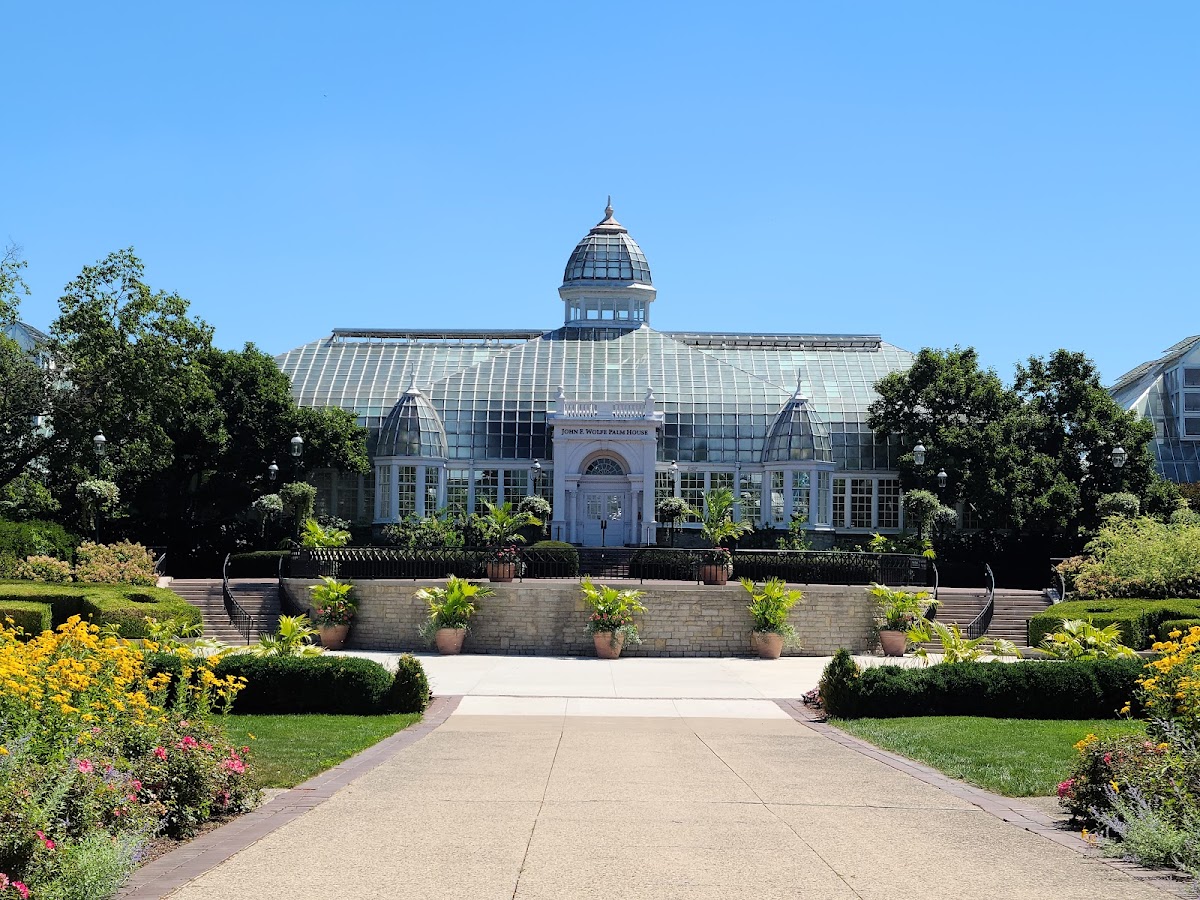
Designing for Franklin Park Conservatory is an exercise in environmental adaptation. Unlike standard ballrooms, this venue offers a series of distinct micro-climates, from the humid, soaring heights of the Victorian Palm House to the textured, historic wood of the Wells Barn. We know this venue well from our work here, and we approach each space as a unique design challenge that must respect the existing botanical collections.
The primary floral opportunity at the Conservatory is to bridge the gap between the permanent tropical displays and your personal aesthetic. Because the venue provides a high baseline of greenery, your budget is best spent on color-focused focal points and structural installations that draw the eye to the venue’s unique architectural heights.
The Spaces
The Wells Barn
This is the venue’s most versatile space for high-impact design. The 200-year-old timber frame offers a massive scale that can easily swallow small arrangements.
- What works: Hanging installations. The exposed beams are robust and perfectly positioned for greenery canopies or floral clouds over the dance floor.
- Skip: Thin, spindly tall centerpieces. The scale of the barn requires “heft” in the arrangements to feel intentional.
- Watch out: The setup window is notoriously tight (two hours). Complex rigging must be pre-built or highly streamlined to be completed in time.
- Budget hero move: A single, lush greenery installation on the central beam paired with simple, textured bud vases on the tables.
John F. Wolfe Palm House
Currently under renovation until 2027, this remains the most iconic space in Columbus. It is a Victorian glass cathedral where the architecture is the star.
- What works: Floor-based “meadows” that appear to grow from the slate floors. This keeps sightlines open to the 60-foot glass ceilings.
- Skip: Overly structured, formal pedestals. The Palm House is organic and wild; your flowers should mimic that movement.
- Watch out: There is no air conditioning. Heat-sensitive blooms like hydrangeas or sweet peas will struggle in the summer months.
- Budget hero move: Focus all ceremony florals on the fountain base. It creates a 360-degree impact that transitions perfectly to the reception.
Garden Pavilion
This space is a modern contrast to the historic conservatory. The black-framed glass walls and hardwood floors provide a clean, industrial-chic backdrop.
- What works: Modern, monochromatic palettes. The black frames look incredible against crisp whites or deep, moody burgundies.
- Skip: “Shabby chic” or overly rustic elements. The Pavilion’s lines are too sharp for burlap or mason jars.
- Watch out: The tinted glass walls can alter the way colors appear during the “golden hour.” Test your palette against cool-toned light.
- Budget hero move: A dramatic floor-to-ceiling floral pillar at the entrance to define the transition from the gardens to the interior.
Grand Atrium
A large, transitionary space often used for receptions, defined by its slate floors and plant-draped pillars.
- What works: Using the Chihuly art as a color guide. Incorporating similar jewel tones into your centerpieces creates a cohesive, high-end museum feel.
- Skip: Adding more greenery to the pillars. They are already draped; adding more often looks cluttered rather than lush.
- Watch out: This space is open to the public during the day. Installation must be swift and contained.
- Budget hero move: Elevated centerpieces on glass stands to mimic the transparency and height of the surrounding glass architecture.
What Works at Franklin Park Conservatory
Chihuly-inspired palettes. The permanent glass art is a major visual driver. Lean into bold, saturated colors like cobalt, amber, and magenta to make your florals pop against the green backdrop.
Structural verticality. Whether it is the rafters in the Barn or the glass heights of the Pavilion, use vertical space. Suspended elements are the most effective way to fill these large volumes.
Textural “Edible” accents. For weddings at the Wells Barn, incorporating herbs like rosemary or mint and textural elements like kale or berries pays homage to the adjacent Community Garden.
Architectural framing. Use floor installations to frame the circular stone openings in the Wells Barn Garden or the base of the Palm House fountain.
Resilient tropicals. In the non-climate-controlled glass houses, use hardy tropicals (anthurium, orchids, monstera) that thrive in humidity and heat.
Budget Guide
| Tier | Investment | Floral Strategy |
|---|---|---|
| Essentials | $1,750 - $3,200 | Personal flowers and high-impact bud vases for the Barn or Atrium. A focused ceremony focal point. |
| Sweet Spot | $3,500 - $5,500 | Lush ceremony meadows that repurpose to the sweetheart table, plus modest greenery accents on the Barn beams. |
| Full Experience | $6,000 - $9,000 | Full rafter installations in the Barn or a series of elevated centerpieces in the Pavilion. Extensive aisle decor. |
| Statement | $10,000+ | Floor-to-ceiling floral pillars, custom Chihuly-inspired color installations, and premium blooms throughout all transition spaces. |
The character of the Conservatory is defined by its botanical diversity; your budget should prioritize designs that feel like a curated extension of the existing gardens.
Tips
The two-hour setup is real. Ensure your floral team has enough hands to execute your vision within the venue’s strict pre-event window.
Prioritize repurposing. Arrangements from the Wells Barn Garden ceremony can easily move to the Barn fireplace or the base of the head table.
Respect the glass. In the Pavilion and Palm House, the “view” is the gardens; avoid tall, wide arrangements that block the sunset or the surrounding greenery.
Heat management. If your wedding is in a glass house during July or August, opt for orchids, tropical foliage, and woodier stems that won’t wilt.
Coordinate with the art. Ask the venue which Chihuly pieces will be on display during your date and share those colors with your designer early.