
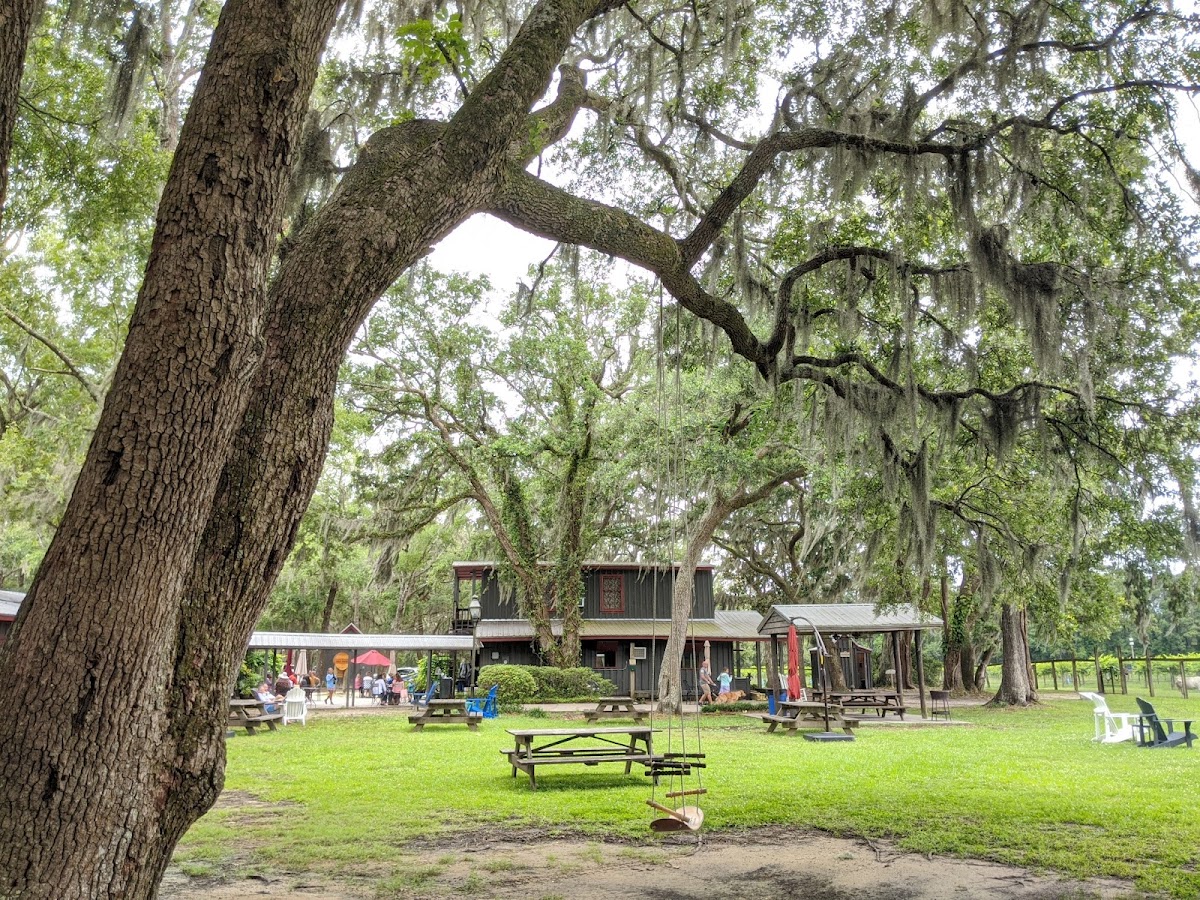
Deep Water Vineyard demands a design approach that respects the untamed texture of the Lowcountry while providing enough structural weight to withstand the island breeze. The visual interest here is built into the landscape—the silver sweep of Spanish moss and the geometry of the vines—meaning floral installations should focus on creating intentional focal points rather than trying to fill every corner.
The Spaces
Vineyard Ceremony Space
This is an expansive, open site where the sky and the grapevines do the heavy lifting. The primary focal point is typically a wooden arbor or arch placed at the head of the rows. Because there is no protection from the wind, any installation here must be mechanically sound and heavily weighted.
- What works: Large-scale, asymmetrical arbor installs that look like they are growing up from the vineyard floor. Ground-level “meadow” pieces are excellent for defining the aisle without blocking the view of the vines.
- Skip: Tall, thin pedestal arrangements. The wind exposure on Wadmalaw Island is unforgiving, and top-heavy designs on narrow bases are a liability.
- Watch out: The ground is grass and can be uneven. Ensure all rentals and floral structures have wide, stable footprints.
- Budget hero move: Focus 80% of the ceremony budget on a lush, high-impact arbor installation. The vineyard provides enough atmosphere that you don’t need heavy aisle decor to make it feel finished.
Covered Pavilion
The pavilion is a transition from the organic vineyard to a more industrial-rustic aesthetic. With its concrete floors, corrugated metal roof, and heavy wooden beams, it provides a blank canvas for reception design. The height of the rafters is the most significant asset in this space.
- What works: Long, lush greenery garlands or “clouds” suspended from the beams. Since the pavilion uses long farm tables, narrow but textural centerpieces work best to allow room for family-style service.
- Skip: Small, delicate bud vases as the only decor. The scale of the pavilion will swallow them. If using bud vases, cluster them in groups of five or seven to create visual weight.
- Watch out: The open sides mean the wind still moves through this space. Centerpieces should be low-profile or weighted to prevent tipping.
- Budget hero move: Greenery-heavy beam installations. Smilax or Nagi foliage can cover a lot of distance for a lower cost than full floral installs, creating a canopy effect that makes the pavilion feel intimate.
Grams & Gramps Garden
This space has a more intimate, whimsical feel than the open vineyard. It is characterized by mature trees and wooden fencing, offering a softer backdrop for smaller ceremonies or cocktail hours.
- What works: Floral garlands draped over the garden gate and petite arrangements tucked into the nooks of the trees.
- Skip: Rigid, formal structures. This space feels “found” and natural; overly manicured floral shapes will feel out of place.
- Watch out: Lighting can be dappled and dark under the tree canopy. Use brighter blooms (whites, creams, or pale yellows) to ensure the flowers pop in photography.
What Works at Deep Water Vineyard
- Designing with Spanish Moss: Do not try to hide the moss. Use it as a secondary foliage. Deep greens and creamy whites look sophisticated against the silver-grey of the oaks.
- Wind-Resistant Mechanics: Every outdoor arrangement should be designed with “low centers of gravity.” Use heavy stone or ceramic vessels rather than light plastic or glass.
- Farm Table Logic: The venue’s farm tables are beautiful but narrow. Use elevated “bridges” or low, sprawling compotes to maximize table space for glassware and plates.
- Texture Over Form: Incorporate dried elements, grasses, or local greenery like Palmetto to lean into the coastal farm aesthetic.
- Verticality in the Pavilion: Use the rigging points in the pavilion to draw the eye up. A single, massive floral installation over the dance floor or head table often has more impact than twenty small centerpieces.
Budget Guide
| Tier | Investment | Floral Strategy |
|---|---|---|
| Essentials | $1,750 - $3,000 | Personal flowers and a concentrated arbor installation. Minimalist greenery for the pavilion tables. |
| Sweet Spot | $3,500 - $5,500 | Full arbor design, aisle markers repurposed to the pavilion, and a mix of compotes and bud vases on farm tables. |
| Full Experience | $6,000 - $9,000 | Lush arbor, garden gate florals, and a significant hanging greenery installation in the pavilion. Full floral centerpieces for all tables. |
| Statement | $10,000+ | Floor-to-ceiling floral “growth” on the pavilion beams, immersive ceremony meadow, and premium blooms throughout. |
The natural character of Wadmalaw Island means you are paying for the view; your floral budget should be used to frame it, not replace it.
Tips
- Repurpose with intention: Move your ceremony arbor florals or aisle meadows to the front of the band stage or the base of the pavilion beams for the reception.
- Avoid “Floating” Centerpieces: On long farm tables, use a runner or a series of connected arrangements so the decor feels grounded rather than like isolated islands.
- Consider the heat: If marrying in the summer, choose hardy blooms like protea, orchids, or tropicals that won’t wilt in the South Carolina humidity.
- Check the tide and wind: Wadmalaw is coastal; the breeze picks up in the late afternoon, so ensure all installations are secured by 3:00 PM.
- Embrace the gravel: Use sturdy, flat-bottomed containers for any arrangements sitting on the pathways to prevent wobbling.