
The first thing you hear is the creek. Before you see the ceremony platform, before the cypress trees reveal themselves through the canopy, there is water running over stone. You turn off Highway 71 west of Austin, wind through Lake Travis country where the hills begin their earnest climb, and then Paleface Ranch Road drops you into a ravine that feels older than the city you just left behind. The trees here are not decorative. They are ancient — five hundred years of growth, their massive trunks wider than most ceremony arches, their roots knotted into the creek banks like exposed veins. And suspended between two of these giants, twenty feet above the spring-fed water, is the ceremony platform that has made Cypress Valley Event Center legendary among couples looking for something genuinely extraordinary. This is not a venue that apologizes for being difficult to categorize. It is part treehouse retreat, part event center, part Hill Country hideaway, and entirely unlike anywhere else you will get married in Texas. Poppy has designed Cypress Valley Event Center wedding flowers for 1 celebration here so far, and what we learned immediately is that this venue does not need florals to compete — it needs florals to collaborate with a landscape that is already doing most of the work.
About Cypress Valley Event Center
Cypress Valley Event Center occupies 87 acres in Spicewood, Texas, roughly 30 miles west of downtown Austin along the quieter stretches of Lake Travis. This is not the party side of the lake. This is the side where the roads narrow, where you pass horse ranches and old stone fences, where the Hill Country begins to assert itself in earnest with limestone outcroppings and dense cedar breaks. The property sits in a natural ravine carved by a spring-fed creek, and the topography matters — it creates natural amphitheater seating, shelters the site from wind, and produces the kind of acoustics where a guitar played on the ceremony platform can be heard clearly by every guest without amplification.
The centerpiece is the Arboreal I-do ceremony platform, a suspended wooden deck built between two 500-year-old bald cypress trees. These are not the kind of trees you plant for a wedding venue. These are trees that were mature when Texas was still part of Mexico, and they dwarf everything around them. The platform sits high enough that you are essentially getting married in the canopy, with dappled light filtering through the leaves and the creek running audibly below. It is accessed by a series of staircases and walkways that wind through the ravine, turning the walk to the ceremony into a processional experience in itself. Guests are seated in the natural stone amphitheater carved into the hillside, looking down at the platform — an unusual perspective that makes the ceremony feel both intimate and theatrical.
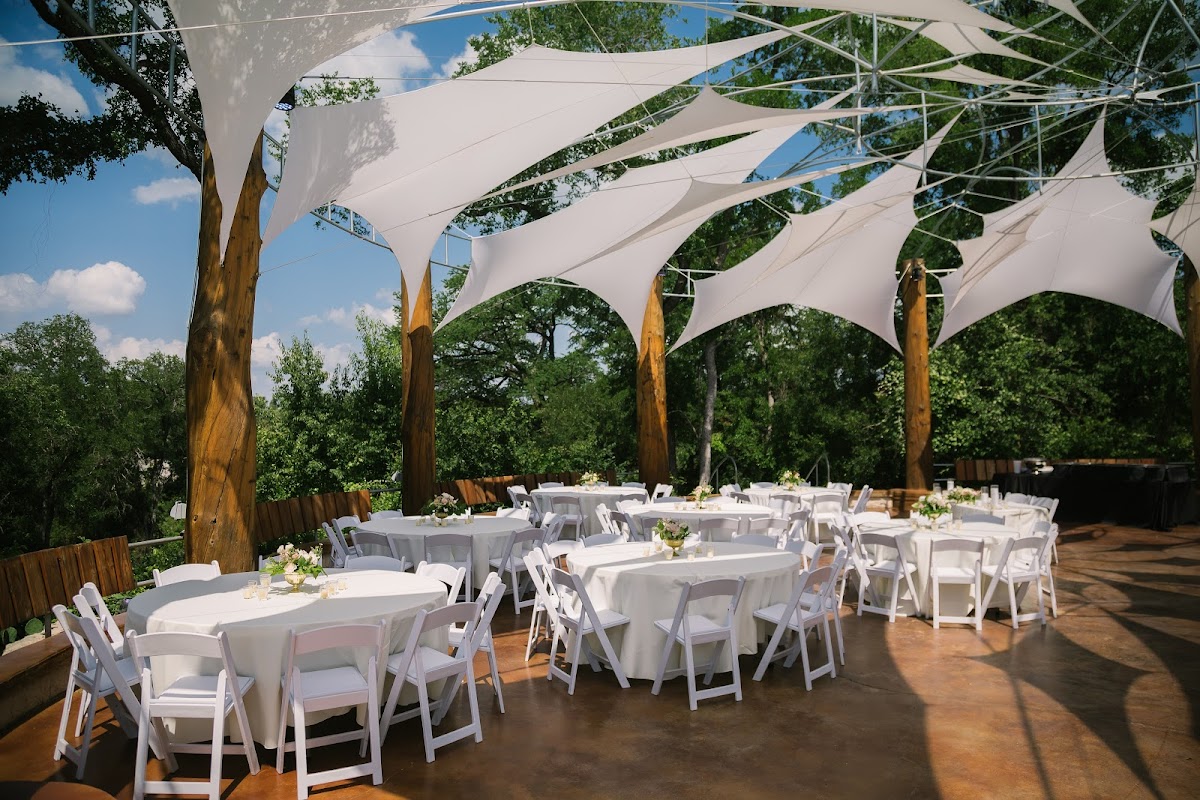
Beyond the ceremony platform, the property includes a 3,000-square-foot open-air reception pavilion with a permanent stage, a full staging kitchen, restroom facilities, and a dance floor. There is also the Ranch House, a Hill Country lodge that sleeps up to 30 guests and serves as a getting-ready space, rehearsal dinner venue, and overnight accommodation. The property includes five treehouse lodgings scattered throughout the canopy — Lofthaven, Juniper, Willow, Yoki, and Nest — each one a fully appointed cabin perched in the trees with views of the ravine below. For couples booking weekend packages, this is a true destination experience: you arrive Friday afternoon, your guests stay in the treehouses, and you have the entire property until Sunday morning.
Logistically, Cypress Valley operates with two-day weekend access (setup begins at 4 p.m. Friday, teardown by 11 a.m. Sunday), which is generous by Texas event venue standards. Caterers have access to a staging kitchen in the pavilion and a full kitchen in the Ranch House with a six-burner stove, two ovens, and substantial prep space. Outside caterers are permitted, and the venue does not enforce a preferred vendor list, which gives florists like Poppy full creative freedom. The site is roughly 45 minutes from central Austin depending on traffic, and load-in is straightforward with parking near the pavilion. The primary logistical consideration for Cypress Valley Event Center wedding flowers is the heat and humidity — this is an outdoor venue with shaded areas but limited climate control, so flower varieties need to be chosen accordingly, particularly for spring and summer weddings.
Event Spaces & Floral Opportunities
Ceremony Platform (Arboreal I-do)
Capacity: Varies; platform accommodates couple and officiant, guests seated in amphitheater below
Setting: This is the venue’s signature moment. The platform is a wooden deck roughly 15 feet by 20 feet, suspended between two ancient bald cypress trees over a spring-fed creek. Access is via a spiral staircase and elevated walkway that threads through the canopy. The trees themselves form natural columns on either side of the platform, their trunks easily six feet in diameter, their bark deeply furrowed and textured. The creek below is audible but not loud — a constant, gentle background that eliminates the need for ceremony sound masking. Light filters through the canopy in shafts, particularly in late afternoon, creating natural spotlighting. The platform railing is simple wood construction, sturdy but unadorned. There is no architectural arch, no built-in backdrop — just trees, sky, water, and the couple.
Floral approach: Restraint is the watchword here. The platform is not large, and anything that impedes sightlines from the amphitheater below defeats the purpose of this elevated ceremony space. We favor garland treatments along the platform railing — something organic and loose-limbed, not densely packed. Think smilax vine as the foundation, woven with soft, romantic blooms like Sahara or Quicksand roses (those dusty blush tones that photograph beautifully in dappled light), white lisianthus, and delicate jasmine or passion vine tendrils. The garland should appear to grow naturally from the railing, as if the forest decided to bloom on its own. For the entry point where the walkway meets the platform, a low asymmetrical arrangement in a weathered wooden box or moss-covered container — garden roses (Patience or Keira), white ranunculus, blushing bride protea, and local foliage like Texas mountain laurel or cedar. Avoid tall ceremony structures unless the couple specifically requests an arch; if they do, it should be minimal and organic — two gnarled branches or driftwood poles lashed together, dressed with a loose swag of greenery and a few strategic floral clusters. The trees are the architecture. Your job is accent, not replacement. One detail that works beautifully: small hanging glass orbs or test tubes suspended from the lower cypress branches with monofilament, each containing a single stem of waxflower or spray rose. They catch the light, move with the breeze, and feel like floating jewels in the canopy.
Creekside Amphitheater
Capacity: Approximately 125 guests on natural stone seating
Setting: The amphitheater is a hillside ravine that rises from the creek bed to the forest floor above, with natural limestone outcroppings and flat stone slabs that serve as benches. It is not manicured — there are roots and uneven ground, which adds to the authenticity but requires guests to navigate carefully. The sightlines converge on the ceremony platform, which is framed by the cypress trees and the creek below. The amphitheater has an organic, almost prehistoric feel, like a place humans discovered rather than built. In spring, native ferns and wildflowers bloom along the hillside. The space is fully shaded by the canopy, which keeps it cooler but also means limited direct sunlight for flower preservation.
Floral approach: The amphitheater calls for aisle markers rather than continuous aisle runners, given the uneven terrain. We recommend clusters of flowers placed strategically along the primary walking paths — mason jars or small galvanized buckets filled with garden-style arrangements of local wildflowers (bluebonnets in spring, Mexican hat, winecup, standing cypress), combined with commercially available blooms like stock, larkspur, and spray roses. These can be nestled into the stone seating or secured to the natural rock outcroppings with floral wire. The goal is to create a sense of abundance without looking formally arranged. For the main aisle where the couple will descend to the platform, consider petals scattered on the stones — soft colors like blush, peach, and cream that complement the limestone. Alternatively, a loose greenery runner made from Texas cedar, fern fronds, and smilax can be laid down the center path, with flowers tucked in sporadically. One technique that works particularly well: hanging arrangements from the lower tree branches that overhang the aisle. Use shepherd’s hooks or sturdy wire to suspend small posies of spray roses, waxflower, and trailing jasmine — they create vertical interest without obstructing the view and photograph beautifully from below.
Creekside Reception Pavilion
Capacity: 125 seated
Setting: The pavilion is a large, open-air structure with a permanent roof, exposed wooden beams, and a concrete floor. It includes a substantial stage at one end (ideal for bands or DJs), a bar area, restrooms, and access to a staging kitchen. The design is utilitarian but attractive — think modern barn rather than rustic shed. The sides are open to the ravine, allowing breezes and views of the surrounding forest. A dance floor is provided, and the venue offers a Tidewater tent for weather contingencies, though most couples opt to embrace the open-air experience. The space has industrial overhead lighting and string lights can be added for ambiance. The pavilion sits on the opposite side of the creek from the ceremony platform, connected by a footbridge.
Floral approach: The open-air design means Cypress Valley Event Center wedding flowers in the pavilion need to hold up to ambient humidity and temperature fluctuations. We favor hardy, heat-tolerant varieties for table centerpieces: celosia (particularly the plumed varieties in coral and burgundy), zinnias (Benary’s Giant in salmon, coral, and pink), sunflowers (if the aesthetic allows), and succulents as textural base elements. For a more refined look, use garden roses that tolerate warmth well — Mayra’s Rose, Romantic Antike, and Toffee all perform admirably in Texas heat — combined with hypericum berries, scabiosa, and seeded eucalyptus. Vessel choice matters here: galvanized metal, wood, or ceramic containers read more authentically than crystal or glass in this setting. For long banquet-style tables, a greenery runner of Italian ruscus and seeded eucalyptus with clustered bud vases placed every few feet creates a relaxed, organic look without the expense of continuous florals. The stage is an ideal location for a statement installation: consider a large-scale arch or half-moon floral structure behind the band, constructed from locally sourced branches (cedar, oak, or mesquite) and dressed with lush arrangements of hydrangea (Annabelle or Limelight), garden roses, and cascading amaranthus. If the couple is budget-conscious, even a simple stage-front arrangement — two large urns overflowing with greenery, sunflowers, and locally foraged branches — makes the performance area feel intentional. One practical note: the pavilion’s bar area is prominent and benefits from a garland or floral installation along the front of the bar — this becomes a focal point for cocktail hour and photographs.
Ranch House
Capacity: 30 seated for dinner, sleeps 30 overnight
Setting: The Ranch House is a substantial Hill Country lodge with a large main room featuring 130-degree views of the treetops through floor-to-ceiling windows. There is a full kitchen with commercial-grade appliances, multiple bedrooms, a wraparound deck, and access to garden spaces. The aesthetic is upscale rustic — wood paneling, stone accents, comfortable seating, and a large bar area. It serves triple duty as a getting-ready space (separate areas for bridal party and groomsmen), a rehearsal dinner venue, and overnight accommodations for family or the wedding party. The deck overlooks the ravine and connects visually to the canopy where the treehouses are perched.
Floral approach: The Ranch House is ideal for smaller, intimate floral moments that feel personal rather than grand. For rehearsal dinners, we recommend low, lush centerpieces on the dining table — compote bowls or wooden boxes filled with a mix of garden roses (Juliet, Patience, Café au Lait dahlias if in season), local wildflowers, and textured greenery. The bar is a natural location for a cascading garland of smilax, jasmine vine, and clusters of spray roses or waxflower — this creates a festive focal point without overwhelming the space. For getting-ready coverage, small bud vases or posies in the bridal suite add a touch of elegance without competing with the views. Consider a bridal bouquet station on a side table — the bouquet, a few loose blooms, ribbons, and a pair of pruning shears arranged on a vintage tray make for beautiful detail shots. The deck is perfect for potted arrangements — succulents in aged terracotta pots, or seasonal blooms in galvanized buckets placed along the railing. If the couple is hosting a welcome reception at the Ranch House, hurricane lanterns filled with floating candles and single blooms (gardenias, roses, or camellias depending on season) create a romantic, low-maintenance display. One thoughtful touch: small welcome arrangements for each treehouse — a simple jar with three to five stems of local wildflowers or garden roses, left in each lodging for overnight guests. It is a small gesture that communicates care and makes the treehouse experience feel even more special.
Wedding Flower Ideas for Cypress Valley Event Center
Hill Country Wildflower
This concept leans into the Texas landscape with a palette that honors native and naturalized blooms. Start with bluebonnets (in season, March through April), combined with Indian paintbrush, winecup, standing cypress, Mexican hat, and coreopsis. Add commercially available flowers that echo the wild aesthetic: Icelandic poppies in coral and peach, feverfew, chamomile, Queen Anne’s lace, and dill. For structure, include larkspur in soft blues and purples and stock in cream and blush. Foliage should be locally sourced where possible — Texas mountain laurel, cedar, live oak, and fern fronds. Containers are mason jars, galvanized buckets, enamelware pitchers, and wooden crates. This palette is vibrant without being loud, organic without feeling unfinished. It works beautifully in the amphitheater as aisle clusters, in the pavilion as table arrangements, and on the ceremony platform as railing garlands. It is the choice for couples who want their wedding to feel rooted in place, not imported from somewhere else.
Treetop Romance
This design leans soft, romantic, and slightly ethereal — think of early morning light filtering through the canopy. The palette is blush, cream, soft peach, and muted sage green. Flowers include Patience garden roses, Quicksand roses, Sahara roses, white ranunculus, ivory lisianthus, blush astilbe, and white sweet peas. Textural accents come from blushing bride protea, scabiosa pods, jasmine vine, passion vine tendrils, and Italian ruscus. Foliage is soft and trailing — smilax, plumosa fern, and silver dollar eucalyptus. Containers are white ceramic compotes, antique brass bowls, and weathered wooden boxes. This palette photographs like a dream in dappled light and complements the natural greens and browns of the ravine without competing. Use it for suspended arrangements in the cypress canopy, garlands along the ceremony platform railing, and low centerpieces in the pavilion. The overall effect is romantic, timeless, and deeply feminine.
Rustic Texan Sunset
This concept takes its cue from the Hill Country sky at golden hour — warm, bold, and saturated. The palette is burnt orange, deep coral, golden yellow, burgundy, and rust. Flowers include Circus roses (orange and yellow), Free Spirit roses (coral), Toffee roses (burnt orange), zinnias in coral and orange, celosia in burgundy and rust, sunflowers (Teddy Bear or ProCut varieties), and marigolds. Add hypericum berries in rust, hanging amaranthus in burgundy, and safflower for texture. Foliage is seeded eucalyptus, olive branches, and Texas cedar. Containers are terracotta pots, copper vessels, and reclaimed wood boxes. This palette is bold and unapologetic, ideal for couples who want their florals to make a statement. It works particularly well for late afternoon ceremonies and evening receptions, when the warm tones are amplified by natural light. Use it for large stage installations, dense table centerpieces, and dramatic ceremony platform arrangements. The overall effect is festive, warm, and deeply connected to the Texas landscape.
Seasonal Considerations
Spring (March - May)
Spring in the Texas Hill Country is legendary, and for good reason. March through April brings bluebonnet season, when the roadsides and fields erupt in blue and the entire region becomes a pilgrimage site for wildflower enthusiasts. If your wedding falls during this window, incorporate them — responsibly sourced from local growers, not picked from public land. Temperatures range from the mid-60s to mid-80s, and the humidity is manageable. This is also the season for native wildflowers like Indian paintbrush, winecup, and standing cypress, as well as commercially grown poppies, ranunculus, anemones, and sweet peas. The creek at Cypress Valley is running strong in spring from winter rains, and the canopy is lush and green. One consideration: spring storms can roll through quickly, so have a contingency plan even though the venue offers weather tents. Florals to favor: garden roses, ranunculus, anemones, larkspur, stock, and any local wildflowers. Avoid: highly fragile blooms that will wilt in sudden temperature shifts.
Summer (June - August)
Texas summers are hot, humid, and relentless — daytime temperatures regularly exceed 95 degrees, and the combination of heat and moisture is punishing for most flowers. If you are marrying at Cypress Valley in summer, schedule your ceremony for late afternoon or early evening to take advantage of the shaded ravine, and choose flowers that can survive the climate. Hardy options include celosia (excellent heat tolerance), zinnias, sunflowers, marigolds, succulents, hypericum berries, and tropical foliage like ti leaf and monstera. Garden roses can work if they are kept hydrated and brought in the morning of the event — varieties like Mayra’s Rose, Romantic Antike, and Toffee hold up better than most. Avoid peonies, sweet peas, ranunculus, and anything delicate or highly perishable. The creek provides some natural cooling, and the canopy offers shade, which helps. One advantage of summer: the extended daylight means your cocktail hour and early reception benefit from natural light well into the evening. Hydration stations for guests are essential, and for florals, ensure that water sources are available near arrangement locations for last-minute refreshing.
Fall (September - November)
Fall is peak wedding season in Texas Hill Country, with good reason. Temperatures drop into the 70s and 80s, humidity decreases, and the landscape takes on warmer tones as the light shifts. The cypress trees at the venue begin their transition to russet and gold, particularly in November, which creates a stunning natural backdrop. This is the season for dahlias (Café au Lait, Peaches and Cream, Black Satin), chrysanthemums, roses, hypericum berries, and foliage in warm tones like oak leaves, privet berries, and seeded eucalyptus. Locally, you will find Mexican mint marigold, goldenrod, and asters. The cooler temperatures mean flowers hold up better, giving you more flexibility in design. Fall also brings hunting season and football season, so expect heavier traffic on Highway 71 and book accommodations early if you are planning a destination weekend. Florals to favor: dahlias, garden roses, spray roses, chrysanthemums, asters, and anything in warm, earthy tones. Avoid: expecting spring blooms like peonies or tulips, which are not seasonally appropriate.
Winter (December - February)
Winter in the Hill Country is mild compared to most of the country, with temperatures ranging from the 40s to 60s. Occasional cold snaps can drop temperatures into the 30s or lower, and while snow is rare, it is not impossible. The cypress trees lose their needles in winter, which transforms the canopy from lush green to bare branches — it is a different aesthetic, more skeletal and dramatic, but equally beautiful in its own way. The creek continues to flow, and the open-air pavilion can be enclosed with the Tidewater tent if needed for warmth. Winter florals skew toward hardy varieties: roses, carnations, chrysanthemums, alstroemeria, and evergreen foliage like cedar, pine, and magnolia. This is also a good season for amaryllis, paperwhites, and hellebores if you want a more sophisticated, European aesthetic. For holiday weddings, incorporate seasonal elements like pine cones, holly berries, and cinnamon sticks. Winter light in Texas is soft and golden, which photographs beautifully. Florals to favor: roses, carnations, evergreen foliage, and seasonal accents. Avoid: tropical flowers that will not tolerate temperature swings.
Poppy’s Expert Take
Platform weight limits matter. The ceremony platform is suspended between trees, which means it has structural load limits. Large, heavy floral installations — think multi-tiered arches with water-soaked foam bases — may not be feasible or safe. Work with lightweight materials: chicken wire armatures, foam-free mechanics, and blooms that do not require excessive water weight. We have had success with garlands affixed to the railing rather than free-standing structures, which keeps the load distributed and secure. Always coordinate with the venue’s event manager about weight restrictions before designing ceremony installations.
The creek creates humidity. The spring-fed creek running beneath the ceremony platform is beautiful, but it also produces ambient moisture that affects flower longevity. Blooms that are sensitive to humidity — particularly garden roses with densely packed petals like Patience or David Austin varieties — may begin to brown at the edges faster than they would in a drier environment. Combat this by choosing flowers on the day of the event rather than the day before, and by selecting varieties known for their resilience: spray roses, lisianthus, waxflower, and hypericum. If you must use delicate blooms, keep them in a climate-controlled space until the last possible moment.
Treehouse welcome florals are high-impact. Cypress Valley’s five treehouse lodgings are part of the experience for overnight guests, and a small floral gesture in each one makes a memorable impression. We are talking about a single bud vase with three to five stems — nothing elaborate, but thoughtfully chosen. A jar of wildflowers, a small cluster of garden roses, or even a succulent in a terracotta pot. Guests remember these details. It elevates the weekend from “wedding venue” to “curated experience,” and the cost is minimal compared to the goodwill generated.
Timing your setup around the amphitheater. Because the amphitheater is a natural hillside with limited access, installing aisle treatments requires careful timing. Avoid doing it too early in the day when the stone is still damp from morning dew, which can destabilize vessels. Similarly, if you are using petals, scatter them within an hour of the ceremony to prevent them from wilting or blowing away. The canopy provides shade, which helps, but Texas breezes can be unpredictable. Secure everything with floral wire or discreet weights, and have a backup plan if wind picks up.
The pavilion stage is your statement moment. The Creekside Reception Pavilion has a large, permanent stage that will be visible throughout the reception, whether it is used for a band, DJ, or speeches. This is not the place to skimp. A well-designed stage installation — a floral arch, a large-scale arrangement, or even a simple garland with dramatic draping — creates a focal point that anchors the entire space and provides a beautiful backdrop for toasts and first dances. Conversely, a bare stage with a folding table and a laptop looks unfinished. If budget is tight, prioritize the stage over individual guest table centerpieces.
Coordinate load-in with other vendors. Cypress Valley’s two-day weekend access is generous, but it also means multiple vendors are setting up simultaneously on Friday afternoon and Saturday morning. Floral load-in should ideally happen Saturday morning, not Friday, to ensure maximum freshness, but that puts you in competition with caterers, rental companies, and AV teams for space and access. Communicate with the event coordinator and other vendors in advance to establish a load-in schedule. We have found that early morning load-in (7-9 a.m. Saturday) works best — you beat the heat, avoid vendor congestion, and give flowers time to settle before the ceremony.
Repurposing ceremony florals is logistically complex. The ceremony platform is a 20-foot elevated walk from the pavilion, across a footbridge, through the ravine. If you want to repurpose ceremony arrangements for the reception, factor in the time and labor required to disassemble, transport, and reinstall them. For smaller weddings where budget is tight, it is doable but requires a dedicated person (a florist assistant or day-of coordinator) to manage the transition. For larger weddings, it is often more efficient to design separate ceremony and reception florals rather than attempting a flip.
What Poppy Couples Spend on Flowers Here
$1,200 - $2,500 | The Essentials
At this level, you are focusing on the ceremony platform and reception tables with selective enhancements. For the ceremony platform, a lush smilax and rose garland along the front railing, plus two low arrangements flanking the entry point — budget approximately $400-$600. In the Creekside Amphitheater, simple aisle markers using mason jars or small buckets with seasonal blooms every third or fourth row — another $200-$300. For the pavilion reception, low centerpieces for guest tables (plan for 10-15 tables depending on layout) using garden roses, spray roses, and seasonal greenery in simple vessels — allocate $75-$100 per table for a total of $900-$1,200. Add a bridal bouquet ($250-$350) and boutonnieres for the groom and groomsmen ($15-$20 each), and you have covered the core elements. This budget prioritizes the spaces guests will see most and photograph most, creating a cohesive look without excess.
$2,500 - $4,500 | The Full Picture
This tier adds significant impact at the ceremony and incorporates statement pieces for the reception. Start with everything in the Essentials tier, then upgrade the ceremony platform with a more elaborate garland (adding wisteria, jasmine, and trailing elements), plus suspended hanging arrangements in glass orbs from the cypress branches — increase ceremony budget to $800-$1,200. For the amphitheater aisle, increase flower density and add a continuous greenery runner with floral clusters — $500-$700. At the pavilion, upgrade table centerpieces to include a mix of low and elevated arrangements (some on clear risers or gold stands to vary height), incorporate more premium blooms like garden roses and dahlias, and add a stage installation behind the band or DJ — a large-scale arch or substantial stage-front arrangements. Reception budget increases to $1,800-$2,500. Include bridesmaid bouquets ($150-$200 each) and additional personal flowers (mothers, grandmothers). At this level, you also have budget for welcome arrangements at the Ranch House bar and small florals for the getting-ready suite, which add polish to the overall experience.
$4,500+ | The Full Experience
This is the budget for couples who want Cypress Valley transformed into a floral immersion. Begin with an expanded ceremony platform installation that includes a custom organic arch made from locally sourced branches, dressed with abundant garden roses, cascading amaranthus, and lush greenery, plus multiple hanging installations throughout the cypress canopy — $1,500-$2,000 for ceremony alone. The amphitheater receives full aisle florals with clusters every row, plus floral treatments on the natural stone seating areas. At the pavilion, every table gets a substantial centerpiece (mix of elevated and low), the stage receives a dramatic full arch or large-scale installation, the bar gets a cascading garland with floral clusters, and we add additional accent pieces like floral arrangements on cocktail tables, the escort card table, the cake table, and entryway urns. Reception budget is $3,000-$4,000+. Include full wedding party florals, corsages and boutonnieres for extended family, and bud vases for each of the five treehouses. At this level, we also design a rehearsal dinner arrangement for the Ranch House and potentially a welcome party installation if the couple is hosting Friday evening events. The result is a fully realized floral experience where no space is overlooked, and every moment of the weekend feels intentionally designed.