
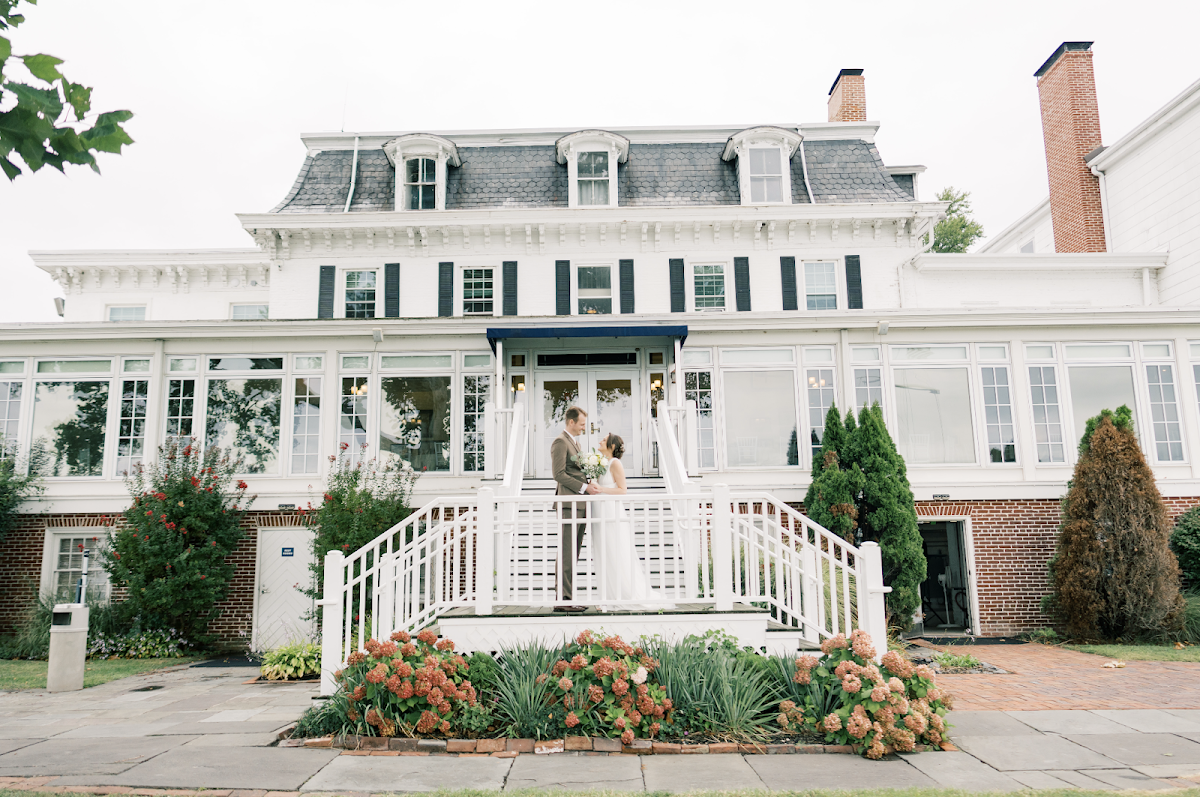
You take I-95 south from Philadelphia, exit toward the airport, and suddenly the industrial fringe gives way to something unexpected: eleven acres of pristine waterfront, a white mansion rising above the Delaware River, wooden docks stretching into blue-gray water where sailboats rock gently at their moorings. This is not the Philadelphia most people picture. This is the Corinthian Yacht Club, founded in 1892, where the city’s maritime history still lives and breathes. You arrive through a tree-lined approach, and the first thing that registers is the expanse — seven acres of manicured lawn rolling toward the river, the kind of green space that feels impossibly generous this close to a major city. Then the mansion itself, classic and dignified, with floor-to-ceiling windows that catch the afternoon light and throw it back across the water in brilliant flashes. Beyond the lawn, the tent site overlooks a parade of sailboats, their masts tracing vertical lines against the sky. At sunset, when the Delaware turns molten gold and the Philadelphia skyline glows faintly in the distance, you understand why couples choose this place. It is a true waterfront escape with none of the stuffiness that sometimes accompanies yacht club weddings — just honest, beautiful space where river and sky meet. Poppy has designed Corinthian Yacht Club of Philadelphia wedding flowers for 2 celebrations here, and both times, we have been struck by the venue’s ability to feel both grand and intimate, formal and relaxed, all at once.
About Corinthian Yacht Club of Philadelphia
The Corinthian Yacht Club of Philadelphia has occupied this remarkable stretch of Delaware River waterfront since 1892, making it one of the region’s oldest continuously operating yacht clubs. The clubhouse — a classic white mansion with deep porches and broad eaves — has been carefully updated over the decades while preserving its heritage character. Inside, the rooms are warm and inviting, filled with maritime artifacts that tell the story of Philadelphia’s yachting tradition: antique ship models in glass cases, nautical flags mounted on paneled walls, heritage artwork depicting famous regattas, and volumes from Lloyd’s Register of American Yachts lining built-in bookshelves. These are not decorative props purchased for ambiance. They are the real thing, accumulated over 130 years of active club life, and they lend the space a sense of authenticity that newly minted “nautical” venues simply cannot replicate.
The property itself spans eleven acres at the south end of Tinicum Island in Essington, Pennsylvania, positioned where the river widens and the city skyline becomes a distant backdrop rather than an intrusion. The grounds include expansive lawns that slope gently toward the water, mature trees that provide natural shade and structure, and those remarkable docks where club members’ sailboats bob at their moorings. For a wedding, this translates into extraordinary flexibility: you can host a 300-person tented reception on the lawn, a waterfront ceremony with sailboats as your backdrop, cocktails on the covered porch overlooking the river, and a seated dinner inside the clubhouse’s banquet hall with its floor-to-ceiling windows. Each space flows naturally into the next, and the Delaware River remains the constant thread — visible from nearly every vantage point on the property.
Logistically, the Corinthian Yacht Club sits just off I-95, roughly 15 minutes from Philadelphia International Airport and 25 minutes from Center City Philadelphia. This makes it remarkably accessible for out-of-town guests while feeling like a genuine departure from urban life. For Poppy’s delivery and setup teams, the venue provides straightforward load-in access via a service entrance, ample space for staging near the tent site, and an events coordinator who understands vendor logistics and timelines. The club’s catering is handled in-house, and while they maintain an approved vendor list for certain services, florists have flexibility to work independently, which has made our collaborations here smooth and professional.
The venue requires liability insurance from all vendors (standard for wedding venues in the Philadelphia market) and maintains exclusive alcohol service through their in-house bar program, which includes a four-hour open bar in most packages. Amplified music is permitted both indoors and outdoors, though it’s worth noting that the outdoor spaces benefit from the buffer of seven acres — noise rarely becomes an issue here. What stands out most from a florist’s perspective is the venue’s genuine waterfront location. This is not a property that simply glimpses the river from a distance. The ceremony lawn sits directly on the water’s edge, the tent site overlooks active docks, and the Delaware is not just scenery but an active, living presence — tides shifting, sailboats moving, light changing with the hour. That dynamism informs every floral decision we make here.
Event Spaces & Floral Opportunities
Indoor Banquet Hall
Capacity: 120 seated
Setting: The Indoor Banquet Hall occupies the heart of the historic clubhouse, a gracious space with floor-to-ceiling windows that flood the room with natural light and frame sweeping views of the Delaware River. The interior reflects the yacht club’s nautical heritage without veering into cliché — ship models rest on mantels, maritime artwork hangs on cream-painted walls, and the bar area features dark wood and brass fixtures that evoke classic seafaring style. A dining room porch extends from the main space, creating seamless indoor-outdoor flow and providing additional seating or cocktail space with river views. The room feels traditional and polished without being stuffy, the kind of space where a black-tie dinner feels appropriate but not required.
Floral approach: The banquet hall’s floor-to-ceiling windows are its defining feature, and as with any venue where the view does heavy lifting, the rule is simple: complement, don’t compete. We favor low, lush centerpieces that leave sightlines open — think mounded arrangements of white garden roses (Patience, Polar Star), cream spray roses, and seasonal greenery in aged brass compote vessels or maritime-inspired blue and white ceramic containers that nod to the room’s nautical heritage. The color palette should echo the natural tones visible through those windows: soft blues that mirror the river, sandy beiges, crisp whites, and touches of navy or deep teal for contrast. The bar area is an excellent opportunity for an elevated arrangement — a substantial urn filled with white hydrangea, blue delphinium, eucalyptus, and trailing jasmine vine creates a focal point without overwhelming the space. Because the dining room porch is visible from the main hall, it’s critical to maintain visual continuity: carry the same vessels and palette onto the porch tables so the transition feels intentional rather than disjointed. For couples who want more drama without blocking views, consider tall taper candles in brass candlesticks clustered among the low florals, or a statement installation flanking the entrance to the porch — a pair of large arrangements in whitewashed urns overflowing with seasonal blooms signals the transition from cocktails to dinner.
Large Outdoor Tented Reception
Capacity: 300 seated
Setting: The crown jewel of the Corinthian Yacht Club is this expansive lawn site that accommodates a large festive tent overlooking the Delaware River. The tent comes equipped with string lights that crisscross the ceiling, creating a romantic canopy of light after sunset. The structure is substantial — large enough for 300 guests with room for a dance floor, band or DJ setup, and lounge areas — and the tent’s open sides frame views of the river, the docks, and passing sailboats. The lawn itself is meticulously maintained, and the surrounding mature trees provide natural framing without encroaching on the tent footprint. This is a true blank canvas space, where the architecture of the tent and the drama of the waterfront setting provide the bones, and everything else is yours to define.
Floral approach: A tent of this size invites — even demands — ambitious floral design. The string lights provide baseline ambiance, but the real opportunity is overhead. Consider suspended installations: floral chandeliers constructed from chicken wire frames filled with smilax, Italian ruscus, and clusters of garden roses (Juliet, Constance, Keira) and lisianthus in soft peach and cream tones. These can be hung at varying heights above the dance floor or down the center of the tent, creating dimension and drawing the eye upward. For centerpieces, we recommend going tall with arrangements on clear glass risers or gold trumpet vases — think dramatic stems of delphinium, foxglove, and larkspur in coastal blues and whites, with lush garden roses, ranunculus, and trailing amaranthus near the base. The key is to fill the vertical space without creating a forest that blocks conversation. Perimeter arrangements matter here as well: the tent’s entrance is prime real estate for a statement piece — perhaps a pair of oversized arrangements flanking the doorway in whitewashed wooden boxes, overflowing with hydrangea, roses, eucalyptus, and seasonal blooms. If the tent features support poles, wrap them in smilax garlands with floral clusters at intervals, transforming structural necessities into design assets. Because this space sits directly on the waterfront, incorporate elements that reference the setting without being literal: driftwood accents, sea oats, dusty miller (which has a silvery, beachy quality), and pale blue accents that echo the river beyond. The effect should feel lush, romantic, and connected to place — not a generic tent wedding, but a celebration that could only happen here, on this particular stretch of Delaware River shoreline.
Outdoor Ceremony Space
Capacity: 300 seated
Setting: The outdoor ceremony space is a broad expanse of lawn that runs right to the water’s edge, with the Delaware River as your backdrop and sailboats drifting past during your vows. The most popular setup places a white wooden arch at the ceremony focal point, with rows of white folding or Chiavari chairs arranged on the grass. To one side, the yacht club’s docks and moored boats provide authentic maritime character; to the other, the manicured lawn stretches toward the clubhouse. The light here is extraordinary, especially in late afternoon when the sun begins its descent and everything takes on that golden-hour glow. There is something deeply romantic about saying your vows with the river flowing behind you — a sense of movement and permanence at once, the water a living witness to the promises being made.
Floral approach: A waterfront ceremony with sailboats as your backdrop requires restraint and intention. The natural setting is already doing considerable work, so the florals should frame and enhance rather than dominate. The white wooden arch is your primary canvas: we recommend a lush asymmetrical installation that feels organic and garden-gathered rather than stiff and formal. Start with a base of smilax, eucalyptus, and Italian ruscus, then build in clusters of white garden roses (Patience, White O’Hara), cream ranunculus, white lisianthus, blue delphinium (for that essential coastal color), white hydrangea, and touches of sea oats or fountain grass for texture and movement. The arrangement should feel like it grew there naturally, with tendrils reaching and blooms clustered at varying densities. Aisle arrangements can be minimal — every third or fourth row, perhaps, with arrangements in low urns or lanterns wrapped in smilax and blooms that echo the arch. Too many aisle markers will clutter the clean sight lines to the river. If the ceremony is at sunset, consider incorporating white pillar candles in hurricane lanterns along the aisle for a romantic glow as the light fades. For the first row of seating, small nosegays tied to the aisle-end chairs with ribbon add a refined detail without blocking views. The ceremony space also includes the potential for a floral-draped shepherd’s hooks flanking the seating area, marking the transition from lawn to ceremony space, but this is optional and best reserved for couples who want more floral presence. The cardinal rule: nothing should obstruct the view of the river, which is why you chose this location in the first place.
Covered Outdoor Space (Dining Room Porch)
Capacity: Flexible — typically used for cocktails or as extension of banquet hall
Setting: The covered dining room porch extends from the Indoor Banquet Hall, offering Delaware River views in a weather-protected setting. This transitional space features the same floor-to-ceiling windows as the banquet hall, but with the feeling of being outdoors — fresh air, natural light, and proximity to the water. It’s an ideal location for cocktail hour, allowing guests to enjoy the waterfront setting without full sun exposure, or it can serve as overflow seating during dinner. The porch’s railing overlooks the lawn and river, and the white railings and columns create a classic, clean backdrop.
Floral approach: Because this space connects directly to the Indoor Banquet Hall, visual continuity is essential. The floral palette, vessel style, and design approach should feel like a natural extension of what’s happening inside. For cocktail hour, consider a large statement arrangement on the porch bar or serving area — something elevated and lush that draws guests out from the indoor spaces. If the porch is being used for seated dining, carry the same centerpiece style from the banquet hall onto these tables, maintaining consistency in vessel choice and bloom selection. Small bud vase clusters with seasonal blooms scattered on cocktail tables create intimate moments without requiring extensive labor or budget. The porch railing also presents an opportunity: garlands of smilax with tucked-in clusters of roses and hydrangea can dress the perimeter, though this is best reserved for larger budgets or couples who want substantial floral presence throughout all spaces. The key is ensuring that guests moving between the banquet hall and porch experience a seamless aesthetic transition — the florals should guide them naturally from one space to the next, reinforcing the feeling that the entire clubhouse is dressed for celebration.
Wedding Flower Ideas for Corinthian Yacht Club of Philadelphia
Yacht Club Classic
This concept honors the venue’s 130-year maritime heritage with a palette rooted in nautical tradition but elevated beyond typical “anchor and navy” clichés. Start with a foundation of crisp white and cream blooms — Patience garden roses, White O’Hara garden roses, white ranunculus, white lisianthus, and white hydrangea — then layer in true navy accents through delphinium, deep blue tweedia, and navy taper candles. Introduce touches of brass and gold through vessel choices: aged brass compote bowls, gold-rimmed mercury glass votives, and brass candlesticks. Greenery includes eucalyptus (both seeded and silver dollar), Italian ruscus, and smilax, which brings movement without competing with the blooms. For texture, incorporate sea oats or bleached bunny tails, which reference coastal grasses without being literal. This palette works beautifully in the Indoor Banquet Hall, where the maritime artifacts and brass fixtures complement the brass vessels, and in the tented reception, where the classic colors feel elegant and timeless against the river backdrop. Arrangements in this style should be lush but structured — not wildly organic, but not overly formal either. Think of the finest yacht club dinners: polished, refined, with just enough personality to avoid feeling generic.
River Romance
This palette takes its cues from the Delaware River itself, capturing the soft blues, sandy beiges, and golden light that define this waterfront setting. Begin with a base of soft blue and lavender tones — blue delphinium, light blue hydrangea, lavender stock, and scabiosa — then warm it with peach, blush, and champagne blooms: Juliet garden roses, Shimmer peach garden roses, quicksand roses, blush ranunculus, and champagne spray roses. Greenery leans soft and silvery: dusty miller (for that beachy, silvery tone), eucalyptus, and touches of lamb’s ear for texture. Vessels should feel organic and coastal: whitewashed wooden boxes, cream ceramic urns, and clear glass cylinders with sand and candles for cocktail tables. This palette is ideal for the outdoor ceremony space, where the soft blues echo the river beyond, and for the covered porch during cocktail hour, where the romantic tones catch the golden hour light beautifully. The overall effect should feel like a watercolor painting — soft, romantic, with colors bleeding into one another rather than creating hard contrasts. This is the couple who wants their wedding to feel like a sunset sail on the Delaware: breezy, beautiful, and deeply connected to the water that defines this place.
Garden by the Water
For couples who want lush, abundant florals that bring an English garden sensibility to this waterfront setting, this concept delivers romance in spades. The palette is full-spectrum soft: blush, peach, lavender, soft yellow, cream, and touches of deeper mauve. Blooms include garden roses in every variety (Keira, Constance, Juliet, Patience, David Austin Charity), ranunculus, lisianthus, stock, sweet peas (when in season), tulips (spring), peonies (late spring/early summer), dahlias (late summer/fall), and hydrangea as a lush base. Greenery is abundant and varied: smilax garlands, jasmine vine, eucalyptus, ferns, and Italian ruscus. Vessels lean romantic and collected: mismatched vintage brass, soft pink and sage ceramic containers, and mercury glass for candlelight. This style works brilliantly in the tented reception, where the volume of space allows for truly dramatic installations — suspended floral chandeliers, tall arrangements, and lush garlands. It also translates beautifully to the ceremony arch, which can be dressed as a full floral moment, overflowing with blooms in every direction. The effect is English countryside meets American waterfront: deeply romantic, unapologetically abundant, and designed for the couple who believes you can never have too many flowers. This is not minimalist or modern. This is garden party elegance, transported to the banks of the Delaware.
Seasonal Considerations
The Corinthian Yacht Club’s waterfront location along the Delaware River means weather patterns play a significant role in planning, and each season brings distinct advantages and considerations for floral design.
Spring (April - May) arrives with unpredictable energy in the Philadelphia region. Early April can still bring frost, while late May often feels like full summer. The advantage: spectacular spring blooms are at peak availability and pricing — tulips (French, parrot, and fringed varieties in every color), ranunculus, anemones, sweet peas, lilac, and flowering branches (cherry, quince, dogwood) that add dramatic height to arrangements. The river comes alive in spring, with increased boat activity and brilliant green growth along the shoreline. The risk: weather volatility. A beautiful 70-degree ceremony day can turn blustery with river winds, and late-season cold snaps can damage delicate blooms. For outdoor ceremonies, we recommend hardy spring flowers (tulips are surprisingly sturdy, ranunculus hold well) and avoid ultra-delicate choices like sweet peas unless you’re willing to accept some petal damage. Tent heaters may be necessary for evening receptions in April. The lawn is lush and green by May, and the covered porch becomes valuable real estate when spring showers threaten. Best months: Mid-May, when weather stabilizes but spring blooms are still available.
Summer (June - August) is peak wedding season at the Corinthian Yacht Club for good reason: long days, reliable weather, and that incomparable Delaware River light at sunset. Summer brings the full palette of premium blooms — garden roses reach peak form, hydrangeas are abundant and affordable, peonies appear in June (though they fade by July), and dahlias begin arriving in late summer with spectacular form and color range. The waterfront setting is at its most active, with sailboats constantly moving across the backdrop and the river shimmering in afternoon heat. The challenges: heat and humidity. Philadelphia summers are not gentle, and by July and August, temperatures regularly reach the 90s with oppressive humidity. Delicate blooms will struggle in outdoor settings — sweet peas will wilt within an hour, many garden rose varieties will open rapidly and shatter in the heat. We recommend heat-tolerant choices: hydrangea (which we can keep hydrated), roses with thicker petals (Quicksand, Amnesia, Shimmer), and greenery like eucalyptus and Italian ruscus that won’t flag in the heat. For outdoor ceremonies, timing is everything — late afternoon (5 PM or later) ceremonies benefit from softening light and dropping temperatures. The tent provides crucial shade for reception florals, but we deliver as close to event time as possible and ensure arrangements are deeply hydrated. The lawn is most lush in June before summer heat stresses it. Best months: June for peonies and moderate temperatures; September (early fall) for peak dahlia season without extreme heat.
Fall (September - November) brings the most forgiving weather to the Delaware Valley and the most spectacular light. September is still warm but less humid, October delivers crisp days and cool evenings perfect for tent receptions, and November can be surprisingly mild along the water. Fall bloom availability is exceptional: dahlias are at absolute peak (dinner-plate size, incredible color saturation), café au lait dahlias become affordable and plentiful, and seasonal favorites like marigolds, zinnias, celosia, and fall foliage (maple, oak, ornamental grasses) bring warmth and texture. The river takes on deeper tones — steel blue, gray-green — that complement autumn palettes beautifully. The yacht club’s mature trees turn golden and rust, providing natural decoration. The risk: weather can turn quickly in November, and a cold snap may require tent heating. Wind picks up as fall progresses, so outdoor ceremony structures need secure anchoring. For floral design, fall is a gift — nearly every bloom is available, prices are reasonable, and the hearty nature of fall flowers means they perform beautifully even in fluctuating temperatures. Rich burgundies, burnt oranges, deep plums, and golden yellows feel perfectly suited to the season and the venue’s classic architecture. Best months: Late September through mid-October, when weather is most reliable and dahlia season peaks.
Winter (December - February) is the quiet season at the Corinthian Yacht Club, but the venue’s indoor spaces make it viable for couples seeking an intimate, elegant winter celebration. The Indoor Banquet Hall with its floor-to-ceiling river views becomes the primary focus, and the space’s classic architecture lends itself beautifully to winter styling — think deep greens, whites, and metallics. Winter bloom availability shifts toward amaryllis, tulips (imported, so prices rise), roses, ranunculus, anemones, and evergreen branches (pine, cedar, fir, magnolia) that bring fragrance and texture. The river takes on a moody, dramatic quality in winter — often gray and windswept, with remarkable light at midday. Outdoor events are rare but not impossible; heated tents and careful bloom selection (nothing delicate) make winter tent receptions possible, though we strongly recommend having an indoor backup plan. Winter weddings benefit from candlelight — lots of it — which plays beautifully in the banquet hall’s warm interior. Logistically, winter delivery is straightforward with no heat concerns, and blooms remain fresh longer in cool conditions. Best month: December for holiday-adjacent celebrations, when the venue can be dressed with evergreens and the river’s winter beauty feels intentional rather than bleak.
Poppy’s Expert Take
Plan for the Delaware River wind. The Corinthian Yacht Club’s waterfront location is stunning, but the river generates consistent breezes that intensify in late afternoon. For outdoor ceremony arches, we use heavy-duty bases and additional staking that’s invisible but essential — a beautiful arch toppling during vows is a florist’s nightmare. Aisle arrangements in tall vessels need weighted bases or sandbags. Delicate blooms like sweet peas or cosmos will be battered by river wind; choose sturdier options like roses, hydrangea, and spray roses for outdoor installations. If you’re planning a waterfront ceremony, schedule it for when the wind typically dies down (early evening in summer) or embrace the movement — loose, organic designs actually look more beautiful when gently swaying than rigid structures that fight the elements.
The tent is a blank canvas — use it. The large outdoor tent with string lights provides baseline ambiance, but the real opportunity is vertical space. Couples often underspend on tent florals because the string lights feel sufficient, but a tent this size benefits enormously from suspended installations. Even a single dramatic floral chandelier above the dance floor transforms the space from “nice tent” to “unforgettable venue.” If budget allows, consider garlands along the tent perimeter or wrapped around support poles. The tent’s open sides mean your florals are constantly visible from outside — they become part of the venue’s exterior presence, not just interior decoration. Work with your florist to identify the highest-impact installations (entrance, dance floor, bar area) and concentrate budget there rather than spreading it thinly across every possible surface.
Coordinate indoor and outdoor color continuity. The beauty of the Corinthian Yacht Club is its multiple spaces, but this creates a design challenge: guests move from outdoor ceremony to covered porch cocktails to tented or indoor reception, and if the floral palette shifts dramatically between spaces, the experience feels disjointed. Establish a consistent color story and vessel style that translates across all areas. You don’t need identical arrangements everywhere, but the ceremony arch blooms should relate to cocktail table florals should echo reception centerpieces. This continuity makes the entire venue feel cohesively designed rather than assembled from disconnected elements. Share your floor plan and timeline with your florist so they can map visual transitions between spaces.
Leverage the maritime artifacts — don’t fight them. The Indoor Banquet Hall’s nautical decor (ship models, maritime artwork, nautical flags) is part of the venue’s authentic character. Couples sometimes try to obscure these elements with excessive florals or competing themes, which feels forced. Instead, let your floral palette complement the existing maritime aesthetic: navy and white looks intentional here, brass and gold vessels echo the clubhouse’s fixtures, and coastal elements like driftwood or sea oats reference the setting without being literal. The venue already has a strong identity; your florals should enhance it, not erase it. This also means you need less floral volume than in a blank-slate venue — the space already has character, so strategic placement matters more than sheer quantity.
Timing matters for waterfront light. The quality of light at the Corinthian Yacht Club changes dramatically throughout the day, and this affects both photography and how your florals appear. Late afternoon and early evening (the hour before sunset) delivers that golden light that makes the Delaware River glow and transforms your floral colors — soft pinks and peaches become luminous, whites turn creamy and warm, blues deepen gorgeously. If you’re planning an outdoor ceremony, schedule it to capture this light (typically 5-7 PM depending on season). For reception florals under the tent, consider how they’ll appear both in daylight (during cocktails) and after dark under string lights — colors shift significantly. Whites and creams glow beautifully under artificial light, while very dark blooms (deep burgundy, purple) can read as black at night unless supplemented with lighter tones.
The docks are a photographer’s dream — keep them clear. The yacht club’s wooden docks with moored sailboats are one of the property’s most distinctive features and a prime location for portraits. Resist the urge to place floral installations on the docks themselves — the natural backdrop needs nothing added. Instead, ensure your personal flowers (bridal bouquet, bridesmaid bouquets) are designed to photograph beautifully against this setting. If you’re planning a first look or couple’s portraits on the docks, schedule it during golden hour when the light is softest and the river is most photogenic. Your florist doesn’t need to do anything to the docks; they’re already perfect. Save your floral budget for areas that need enhancement.
Budget for multiple spaces carefully. The Corinthian Yacht Club offers incredible versatility with its ceremony lawn, covered porch, indoor banquet hall, and tented reception option, but couples often underestimate the floral budget required to dress multiple spaces well. Prioritize your primary guest experience areas (ceremony arch, reception centerpieces) first, then add secondary spaces (cocktail area, bar, entrance installations) as budget allows. A common mistake: spreading budget too thinly across every space, resulting in sparse florals everywhere rather than impact where it matters most. It’s better to have a show-stopping ceremony installation and beautiful reception centerpieces than mediocre florals in six different locations. Discuss priorities with your florist and let them guide you on where investment delivers the greatest visual return for your specific event flow.
What Poppy Couples Spend on Flowers Here
$3,000 - $5,000 | The Waterfront Essentials
This range covers the foundational floral elements for a Corinthian Yacht Club wedding, focusing on the moments and spaces guests will remember most. Expect a beautifully designed ceremony arch installation for the outdoor waterfront ceremony — lush asymmetrical design with garden roses, seasonal blooms, and greenery that frames your vows against the Delaware River backdrop. Personal flowers include a bridal bouquet, three to four bridesmaid bouquets, and boutonnieres for the wedding party. Reception florals focus on guest tables: low, lush centerpieces in a consistent style (your choice of vessels and seasonal palette) for up to 15 tables, typically in the Indoor Banquet Hall or smaller tented reception. This budget also accommodates one or two accent pieces — perhaps elevated arrangements for the bar area or flanking the entrance from cocktail hour to reception. What’s not included: extensive ceremony aisle florals, cocktail table arrangements, large-scale installations for the tent, or florals for secondary spaces like the dining room porch. This tier works beautifully for couples hosting 100-120 guests primarily in the Indoor Banquet Hall