
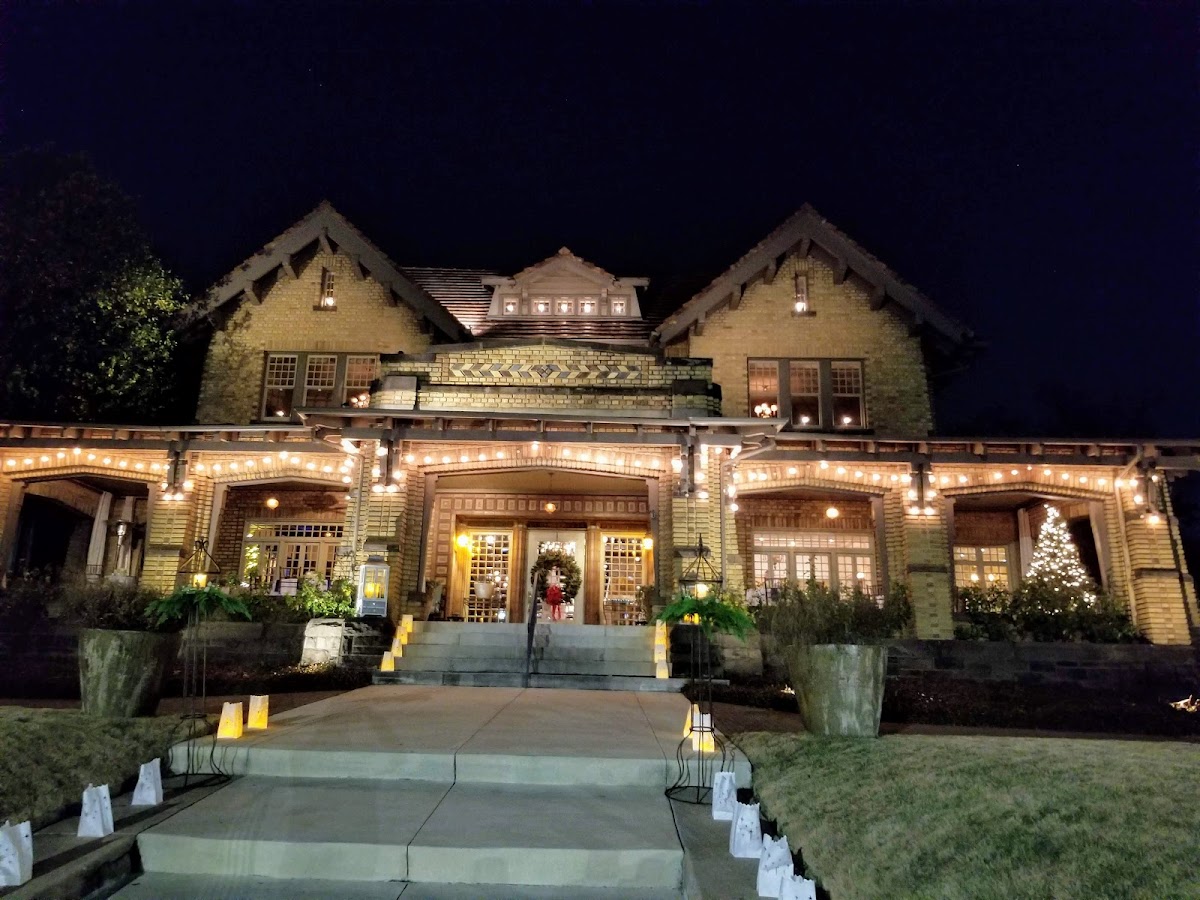
You drive south on Highland Avenue, past the early-twentieth-century homes with their deep front porches and mature magnolias, and just before you reach Five Points South with its bustle of James Beard–caliber restaurants and boutiques, the Clubhouse on Highland appears. The timbered Tudor façade rises from the corner like something lifted from the Cotswolds — dark beams against cream stucco, leaded glass windows catching the afternoon light, stone accents weathered to a perfect patina. Built in 1910 by architect William Warren, this is not a venue trying to evoke history. It is history, preserved and polished, standing quietly confident on a tree-lined street in one of Birmingham’s most charming residential neighborhoods. You walk through the entrance, and the transition is immediate: from the outside world into a space that feels both grand and intimate, formal yet welcoming. The original hardwood floors glow under your feet. The ornate fireplaces anchor each room. Through the back windows, string lights twinkle in the garden, promising an evening that feels like stepping into a living memory. Poppy has designed Clubhouse on Highland wedding flowers for 1 celebration here so far, and we understand why this venue, tucked away in Highland Park, has become one of Birmingham’s most coveted addresses for couples who want elegance without pretense.
About Clubhouse on Highland
Clubhouse on Highland occupies a rare position in Birmingham’s wedding landscape: it is a private, historically significant property that feels like a gracious home rather than an events facility. The mansion was built during the city’s early industrial boom, when Birmingham’s steel and iron magnates were constructing grand residences in what was then the fashionable Highland Park neighborhood. William Warren, the architect, designed it in the Tudor Revival style that was experiencing a resurgence in American residential architecture at the time — a deliberate nod to English country estates with their romantic silhouettes and craft-focused details. The result is a building that reads as both substantial and inviting, with steeply pitched rooflines, decorative half-timbering, and a stone foundation that anchors it firmly to the Alabama red clay.
Inside, the period details remain intact: hand-carved woodwork, plaster crown moldings, and those remarkable fireplaces — each one different, each one an architectural set piece in its own right. The Great Room features a fireplace with ornate detailing that would be the envy of any historic home museum, flanked by tall windows that flood the space with natural light during the day and glow softly during evening events. The hardwood floors throughout are original, refinished to a warm honey tone that photographs beautifully and provides a neutral base for any design direction. The tall ceilings — a luxury in 1910 and still a luxury now — give the interior spaces a sense of airiness and grandeur that smaller venues simply cannot replicate.
The outdoor garden is where the venue’s dual personality truly shines. By day, it is a lush, green sanctuary with mature plantings and stone pathways that wind through the landscaping. By night, the string lights transform it into something out of a garden party in the South of France — romantic, enchanted, and utterly magical for cocktail hours or outdoor ceremonies. The garden is not vast, but it is beautifully proportioned and meticulously maintained, with enough natural landscaping that you do not need to bring in the world to make it feel complete.
Logistically, Clubhouse on Highland is located in the Highland Avenue Historic District, which places it less than ten minutes from downtown Birmingham and within walking distance of Five Points South, where guests can find some of Alabama’s best dining and nightlife. The neighborhood itself is walkable, tree-lined, and safe, with a residential character that makes the venue feel like a hidden gem rather than a commercial event space. For Poppy’s delivery and setup, the venue offers straightforward load-in access and on-site parking for vendors. The events team is accommodating and professional, and crucially, the venue allows outside vendors — a flexibility that is increasingly rare in Birmingham’s wedding market. Liability insurance is required from all vendors, which is standard practice and something Poppy maintains as a matter of course.
One of the venue’s most appealing features from a florist’s perspective is that it does not need much. The architecture and historic character provide so much inherent beauty that couples are not starting from a blank slate. This is not a space that demands transformation. It asks only to be honored, complemented, and perhaps slightly elevated. As a Birmingham wedding florist, Poppy appreciates venues like this — places where our flowers can enhance rather than compensate, where thoughtful design makes a meaningful difference rather than simply filling a void.
Event Spaces & Floral Opportunities
The Great Room
Capacity: Flexible, depending on setup; suitable for ceremonies, cocktail hours, or dancing
Setting: This is the heart of the house — a generous, high-ceilinged room anchored by that extraordinary fireplace and illuminated by tall windows along one wall. The original hardwood floors, refinished to a warm glow, stretch across the space. The architectural detailing is ornate without being fussy: plaster moldings, exposed beams, and that fireplace, which is large enough to serve as a ceremony backdrop and detailed enough to warrant its own postcard. The room is formal in its bones but flexible in its spirit, equally suited to rows of ceremony chairs facing the fireplace, cocktail tables scattered throughout for a standing reception, or cleared entirely for dancing under the chandeliers. The palette is warm neutrals — honey-toned wood, cream walls, and the natural stone of the fireplace — which means it plays well with virtually any color story.
Floral approach: The fireplace is the obvious hero of this room, and during a ceremony, it becomes the natural focal point. We recommend a substantial mantel arrangement that respects the fireplace’s architecture rather than obscuring it: think an asymmetrical installation that spills from one side, built with garden roses (Juliet, Patience, Keira), white delphinium for height, jasmine vine trailing downward, and abundant Italian ruscus and eucalyptus. The key is to work with the lines of the mantel and the surrounding stonework, allowing the flowers to feel integrated rather than merely placed. If the Great Room is used for reception dining, the tall ceilings invite elevated centerpieces — arrangements on 24- or 30-inch stands that lift blooms above eye level while keeping sightlines open. These could feature long-stemmed roses (Quicksand, Café au Lait, White O’Hara), lisianthus, and flowing greenery in tall glass cylinders or gold compote stands. For cocktail hour setups, scattered arrangements on pedestals at varying heights can define the space without overcrowding it. The tall windows mean that afternoon light will illuminate your florals beautifully, so consider how arrangements will be backlit — less dense, more architectural forms read well in strong natural light.
The Dining Room
Capacity: Intimate; suitable for smaller seated dinners or buffet service
Setting: Adjacent to the Great Room, the Dining Room is a more intimate, enclosed space with the same warm hardwood floors and period architectural details but with lower ceilings and a cozier scale. It reads as a formal dining room in a grand home — which is exactly what it was. The proportions are perfect for smaller guest counts or for a sweetheart table setup during larger receptions. When used for buffet service, the room’s configuration allows for a logical flow, with space along the walls for serving stations and the center kept open for movement. The lighting in here is softer, warmer, and more contained, which changes how florals read — colors appear richer, and candlelight becomes even more flattering.
Floral approach: In this more intimate setting, florals should be lush but lower in scale. We favor compote-style arrangements that sit 8 to 12 inches tall, mounded and generous with blooms but not towering. Think garden roses (Patience, Romantic Antike, Mayra’s Rose), spray roses (Bombastic, Princess Charlene), ranunculus in blush and ivory, and soft textural elements like astilbe and tweedia. Vessels should feel refined — antique brass compotes, ceramic footed bowls in cream or sage, or mercury glass for a touch of shimmer. If the room is used for a sweetheart table, a long, low runner-style arrangement works beautifully along the front or back of the table: smilax or Italian ruscus as the base, clusters of roses and lisianthus tucked in at intervals, and candles interspersed for that soft, romantic glow. For buffet setups, a single statement arrangement on the buffet table itself — substantial but not so large that it interferes with serving — can anchor the space. The warm lighting here is kind to rich, saturated colors, so do not shy away from deeper tones: burgundy dahlias, plum-colored hellebores, terracotta roses, and dusty mauve accents all read gorgeously in this room.
Outdoor Garden
Capacity: Flexible; suitable for ceremonies, cocktail hours, or outdoor receptions
Setting: Step through the back doors of the mansion, and you enter a garden that feels both cultivated and slightly wild in the way the best Southern gardens do. Mature plantings — azaleas, camellias, boxwood, and climbing vines — provide the bones, while stone pathways and small terraces create defined areas for different parts of the celebration. The string lights overhead are already installed, strung in a canopy that transforms the space at dusk from pleasant to transcendent. The garden is not massive, but it is beautifully proportioned and offers enough variety in its layout that a ceremony, cocktail hour, and even a smaller reception can all happen here without feeling cramped. The surrounding greenery provides natural privacy and a sense of enclosure, while the proximity to the house means that the Tudor architecture remains visible as a dramatic backdrop.
Floral approach: The garden already has so much going for it that our role as florists is to enhance rather than overhaul. For ceremonies, an arbor or chuppah is the traditional choice, but consider a freestanding ceremony backdrop instead — something that integrates the existing landscaping. We love a simple wooden frame dressed with asymmetrical clusters of greenery and blooms: smilax and trailing jasmine vine for movement, garden roses (Patience, Constance, Bombastic spray roses) clustered at the base, white delphinium for vertical interest, and accents of butterfly ranunculus or sweet peas for softness. The goal is a structure that looks like it grew there. Aisle markers can be as simple as shepherd’s hooks with small posies of seasonal blooms or lanterns surrounded by greenery. For cocktail hours, we avoid over-floraling the cocktail tables — the string lights and natural setting are the real attraction. Instead, consider a statement arrangement at the bar or on a central table, and let the garden itself do the heavy lifting. If the reception is outdoors, long farm tables dressed with garland runners look spectacular under string lights: eucalyptus or smilax as the base, with clusters of garden roses, dahlias, and seasonal blooms tucked in every two feet, and pillar candles in hurricanes for that essential glow as the sun sets. The outdoor lighting means that flowers with good silhouettes and structure read better than densely packed arrangements — think looser, more organic compositions that catch the light.
Private Upstairs Rooms
Capacity: Small; designed for bridal party preparations and private moments
Setting: The upstairs rooms are quieter, more private spaces that serve as getting-ready suites for the wedding party. These are not grand ballrooms — they are intimate, thoughtfully furnished rooms with good natural light, comfortable seating, and the same period details found throughout the house. This is where the bride gets into her dress, where the bridesmaids sip champagne and laugh too loudly, where the photographer captures those quiet, anticipatory moments before the ceremony. The scale is residential, which means the floral needs are different here — less about making a design statement and more about creating an atmosphere.
Floral approach: A single, exquisite arrangement in the bridal suite is all you need. We recommend something fragrant and lovely that will also photograph beautifully: a gathered bouquet of garden roses (Juliet, Patience, Keira), sweet peas, ranunculus, and perhaps a few stems of fragrant stock, arranged loosely in a simple ceramic or glass vase. The arrangement should feel like something you might find in a friend’s beautiful home — effortless, elegant, not overly designed. If the bride is sentimental, loose stems in bud vases on side tables add a thoughtful touch without cluttering the space. The key is restraint: these rooms are small, and you want the florals to enhance the atmosphere, not dominate it. Consider, too, a small nosegay or wrist corsage for the mother of the bride that can sit on a dresser until it is time to pin it on — another lovely detail that shows up in getting-ready photos.
Wedding Flower Ideas for Clubhouse on Highland
English Garden Romance
This concept leans into the Tudor architecture with a palette and sensibility borrowed from an English cottage garden. We are talking about blowsy garden roses in shades of blush, cream, and the palest pink — varieties like Juliet, Patience, and Constance that have that cabbage-rose, old-fashioned quality. Layer in sweet peas (when in season, April through June), ranunculus in cream and soft peach, hellebores for a slightly unexpected edge, and lisianthus for volume. Textural greenery is key: Italian ruscus, jasmine vine, and smilax create movement and softness. Vessels should feel collected and slightly aged — ceramic compotes in cream or soft gray, vintage brass candlesticks, and footed bowls with a patina. Arrangements are loose, organic, and slightly overflowing, as though someone just gathered them from the garden outside. This palette is stunning in the Great Room, where the warm wood tones and stone fireplace provide the perfect neutral backdrop, and equally beautiful in the garden, where the florals feel like a natural extension of the existing landscaping. The whole effect is effortlessly romantic, timeless, and deeply pretty.
Southern Heritage
This is a celebration of Alabama’s floral heritage with a palette that nods to the region’s gardens and the historic nature of the venue. Think magnolia leaves as a foundational greenery — their dark, glossy surface and rusty undersides are unmistakably Southern. Pair them with white and ivory blooms: white garden roses (Patience, Mondial, Playa Blanca), white hydrangea, white lisianthus, and white ranunculus. Add touches of soft green with pale green hydrangea, hellebores, and scabiosa pods. The palette is clean and elegant but grounded in tradition. Vessels should feel substantial and classic: white ceramic urns, aged brass compotes, and clear glass cylinders that let the flowers speak. For outdoor ceremonies, consider magnolia-leaf garland along the aisle or wrapping the base of an arbor — glossy, structural, and instantly recognizable. This approach works particularly well for spring and summer weddings, when magnolia is at its best, and it photographs beautifully against the Tudor stone and timber architecture. The overall feeling is gracious, refined, and unmistakably Southern.
Jewel Box Opulence
For couples who want drama and richness, this concept embraces a darker, more saturated palette inspired by the jewel tones of a vintage velvet sofa or an antique tapestry. Start with deep burgundy and wine-colored blooms: burgundy dahlias (Black Jack, Arabian Night), deep red garden roses (Tess, Heart Garden), and plum-colored calla lilies. Layer in softer shades to keep it from feeling too heavy: dusty mauve roses (Quicksand, Amnesia), blush ranunculus, and pale pink astilbe. Greenery should be rich and textured: burgundy-toned eucalyptus, dark Italian ruscus, and trailing jasmine vine. Vessels in antique gold, brushed brass, or even deep charcoal gray compotes and urns add to the luxurious feel. This palette is particularly stunning in the Dining Room, where the warm, intimate lighting makes the deep colors glow, and on the fireplace mantel in the Great Room, where a rich, abundant arrangement feels appropriately grand. For evening receptions, these colors are magical under candlelight and string lights — they deepen and become even more saturated, creating a moody, romantic atmosphere. The overall effect is opulent, dramatic, and utterly memorable.
Seasonal Considerations
Birmingham’s humid subtropical climate means hot, sticky summers and mild, generally pleasant winters, with spring and fall offering the most comfortable conditions for outdoor celebrations. Understanding the seasonal shifts in temperature, humidity, and bloom availability is critical for planning Clubhouse on Highland wedding flowers that will not only look beautiful but also hold up throughout your event.
Spring (March through May) is peak wedding season in Birmingham for good reason. Temperatures range from the mid-60s to low 80s, humidity is manageable, and the garden spaces are in full bloom. This is the season for tulips, which we source locally when possible, and for sweet peas, ranunculus, and anemones — all of which thrive in cooler conditions and are widely available from domestic and California growers. Dogwood branches, with their delicate white or pink blooms, are a quintessentially Southern addition to arrangements and can be sourced locally in April. The outdoor garden is particularly stunning in spring, with azaleas and camellias providing a backdrop of color, which means your floral installations can be slightly more restrained and still make a major impact. If you are planning a spring wedding here, lean into the season: use the ephemeral blooms that are at their peak, and embrace the soft, fresh palette that feels right when the garden is waking up. Be mindful, however, that spring can also bring rain — have a contingency plan for ceremonies if you are planning to be outdoors.
Fall (September through November) is the other prime season in Birmingham, with cooler temperatures, lower humidity, and that beautiful slant of autumn light. Dahlias are at their absolute peak in fall — dinner-plate varieties, pompons, and everything in between, in colors ranging from burgundy to peach to coral. Local dahlias from Alabama and Georgia growers are available through October, and they are spectacular. This is also the season for chrysanthemums (choose the sophisticated spray mums rather than the grocery-store pom-poms), marigolds in rich oranges and golds, and beautiful foliage like oak leaves, magnolia branches, and bittersweet vine. Café au Lait dahlias, in particular, are a fall favorite — their enormous, blowsy blooms in shades of blush, peach, and cream are show-stoppers in any arrangement. The Great Room’s fireplace feels particularly appropriate in fall, and a mantel arrangement with dahlias, marigolds, and trailing foliage in warm autumn tones is perfection. The outdoor garden remains beautiful through November, with the string lights providing warmth as temperatures drop in the evening.
Winter (December through February) in Birmingham is mild compared to much of the country, with daytime temperatures typically in the 50s and occasional cold snaps that bring frost or even rare snow. Winter weddings at Clubhouse on Highland benefit from the cozy, intimate atmosphere of the indoor spaces — the fireplaces are actually functional, and there is something deeply romantic about a winter wedding by fireplace light. Floral availability shifts in winter: we rely more heavily on imported blooms and greenhouse-grown varieties. Amaryllis, anemones (which return in winter as a cool-season crop), hellebores, and ranunculus are all available, along with evergreen foliage like pine, cedar, and magnolia. For holiday weddings, we incorporate seasonal elements like pinecones, berries, and even touches of gilded magnolia leaves for a festive feel without veering into overtly Christmas territory. Winter weddings here can embrace richer, deeper palettes — burgundy, forest green, cream, and gold — and the indoor lighting makes these colors glow. If you are planning an outdoor ceremony in winter, have heaters and blankets available for guests, and consider a shorter ceremony format to keep everyone comfortable.
Poppy’s Expert Take
The fireplace is your ceremony backdrop — use it. That ornate fireplace in the Great Room is one of the most photographed features at Clubhouse on Highland, and for indoor ceremonies, it is an architectural gift. Do not try to cover it or compete with it. Instead, design a mantel arrangement that enhances its beauty: asymmetrical, lush, and integrated into the stonework and mantel lines. We typically start with a greenery base — smilax or Italian ruscus secured to the mantel with floral putty and wire — and then build in clusters of blooms at varying depths to create dimension. The arrangement should feel like it belongs there, not like it was placed on top. Work with your florist to ensure the floral design complements the fireplace’s proportions and does not block any of the beautiful carved detailing.
Protect those original floors. The hardwood floors throughout Clubhouse on Highland are over a century old, refinished and beautiful, and the venue understandably wants to keep them that way. When planning aisle runners, ceremony structures, or any floral installations that touch the floor, make sure everything has protective padding or felt underneath. We use rubber-backed aisle runners and ensure that any floor-standing arrangements are in stable, flat-bottomed vessels that will not tip or scratch. Avoid anything with metal feet or sharp edges, and communicate with all your vendors — the rental company, the DJ, the photographer — about the importance of floor protection. It is a small detail, but it matters here.
Evening garden ceremonies are magical — plan for the lighting. The string lights in the outdoor garden are installed and ready to go, and at dusk, they transform the space into something out of a fairytale. If you are planning an evening garden ceremony, time it for that magic-hour transition when the natural light is fading and the string lights are just starting to glow. Your photographer will thank you. From a floral perspective, this lighting means that silhouette and form matter more than color — arrangements that are too densely packed or overly structured can read as heavy blobs in low light. Instead, opt for looser, more organic designs that allow light to filter through. Greenery with movement — trailing jasmine vine, smilax, or even hanging amaranthus — catches the light beautifully.
Do not over-floral the garden. The outdoor garden at Clubhouse on Highland already has strong landscaping, mature plantings, and those string lights, which means it does not need much from a florist to feel complete. Couples sometimes worry that they are not doing enough, but trust us: less is more here. A beautiful ceremony structure and simple aisle markers are sufficient for ceremonies. For cocktail hours, a statement arrangement at the bar and perhaps a few small clusters on a welcome table are all you need. Let the garden itself be the star — your guests will be looking at the setting, not scrutinizing the cocktail tables for floral arrangements.
The venue allows outside vendors — take advantage of that flexibility. Unlike many historic venues in Birmingham, Clubhouse on Highland allows outside vendors, which means you are not locked into a single florist, caterer, or DJ. This flexibility is valuable and increasingly rare. As a Birmingham wedding florist, Poppy appreciates working at venues where couples have the freedom to choose vendors who align with their vision and budget. That said, with flexibility comes responsibility: make sure your vendors are professional, insured (the venue requires liability insurance), and experienced with historic properties. A vendor who understands how to work respectfully in a space like this will make your day run more smoothly.
Consider a smaller, more intimate guest count. Clubhouse on Highland is not a sprawling ballroom venue — it is a historic home with multiple smaller spaces that work beautifully for intimate weddings. If your guest count is under 100, this venue truly shines. You can use the Great Room for the ceremony, transition guests to the garden for cocktails, and then move back inside to the Dining Room for a seated dinner. The flow feels natural and intentional, and the scale of the spaces matches the guest count perfectly. Larger weddings can certainly work here, but they require more creative use of the spaces and potentially tenting the garden for reception seating. From a floral design perspective, smaller weddings allow for more detailed, luxurious arrangements without breaking the budget — a dozen truly spectacular centerpieces will always look better than fifty mediocre ones.
Hire a month-of coordinator. Clubhouse on Highland is a DIY-friendly venue in the sense that it allows outside vendors and does not have rigid restrictions, but that also means you need someone managing logistics on the day of. A month-of coordinator (or a full-service planner, if your budget allows) is essential for ensuring that vendor load-in happens smoothly, that the ceremony starts on time, and that transitions between spaces are seamless. As your florist, Poppy will handle all the floral setup and design, but we are not managing your timeline, cueing the DJ, or directing guests. Make sure someone is. It will make the entire day run more smoothly and allow you to actually enjoy your wedding instead of troubleshooting logistics.
What Poppy Couples Spend on Flowers Here
Based on our experience at Clubhouse on Highland and the Birmingham market more broadly, couples typically invest between $3,000 and $7,000 on wedding flowers for this venue, with the average landing around $4,926. The final investment depends on guest count, the number of spaces being used, the complexity of the floral designs, and the types of blooms chosen. Here’s how that breaks down across three budget tiers:
$3,000 - $4,500 | The Essentials This tier covers the foundational floral elements for an intimate wedding (50-75 guests) at Clubhouse on Highland. You will have a beautiful bridal bouquet with premium blooms like garden roses and ranunculus, three to four bridesmaid bouquets in a complementary but slightly simpler style, two to three boutonnieres, and corsages for mothers and grandmothers. For the ceremony, this budget allows for a mantel arrangement on the Great Room fireplace or a modest ceremony structure in the garden — something like a simple wooden frame dressed with greenery and clusters of blooms at the base. Reception florals include centerpieces for up to ten guest tables, designed as either low compote arrangements or bud vase clusters. We typically recommend mixing a few statement centerpieces (fuller, more lush) with simpler designs (smaller bud vases or single-variety arrangements) to maximize impact while staying within budget. This tier works well for couples who are using primarily indoor spaces and want beautiful, thoughtfully designed flowers without covering every surface.
$4,500 - $6,500 | The Full Picture This mid-tier budget is the sweet spot for most Clubhouse on Highland weddings, accommodating 75-125 guests and allowing for fuller floral coverage across multiple spaces. In addition to the bridal party flowers, you will have a more substantial ceremony installation — either a lush mantel arrangement with cascading greenery and abundant blooms for an indoor ceremony in the Great Room, or a fully dressed arbor or ceremony structure for the garden with aisle markers (shepherd’s hooks with posies or greenery clusters). Reception florals include centerpieces for all guest tables (12-15 arrangements), designed in a cohesive style — perhaps alternating between tall elevated arrangements and low compote designs to create visual variety. This budget also allows for additional touches: a statement arrangement for the welcome table or card table, a lush installation at the bar, small arrangements for cocktail tables in the garden, and perhaps floral accents on the cake table or sweetheart table. You will have the flexibility to incorporate more premium blooms (peonies, ranunculus, garden roses, seasonal dahlias) and more intricate designs. This tier allows Poppy to create a cohesive floral story that flows through all the spaces you are using, from ceremony to cocktails to reception.
$6,500+ | The Full Experience This tier is for couples who want abundant, luxurious florals throughout Clubhouse on Highland and are hosting a larger wedding (125+ guests) or simply want a more elevated floral presence. Everything from the mid-tier is included and amplified: a show-stopping ceremony installation (think a fully dressed mantel with cascading greenery that drapes down the sides of the fireplace, or an elaborate garden arbor with lush clusters of blooms and trailing vines), substantial centerpieces for all guest tables with a mix of tall and low designs, and extensive coverage in all the spaces. This budget allows for additional design elements that create true wow moments: a floral runner down the center of long farm tables if you are doing family-style seating, lush garland installations on staircases or mantels, large-scale arrangements flanking the entrance to the Great Room or garden, and florals in the private upstairs getting-ready suite. You will also have the flexibility to incorporate the most premium, sought-after blooms regardless of season — imported peonies in October, for example, or specialty garden roses and dinner-plate dahlias. At this level, Poppy can create a fully immersive floral experience where every space feels intentionally designed and every detail is considered. The result is a wedding where the flowers are not just an accent but a defining element of the entire aesthetic.