
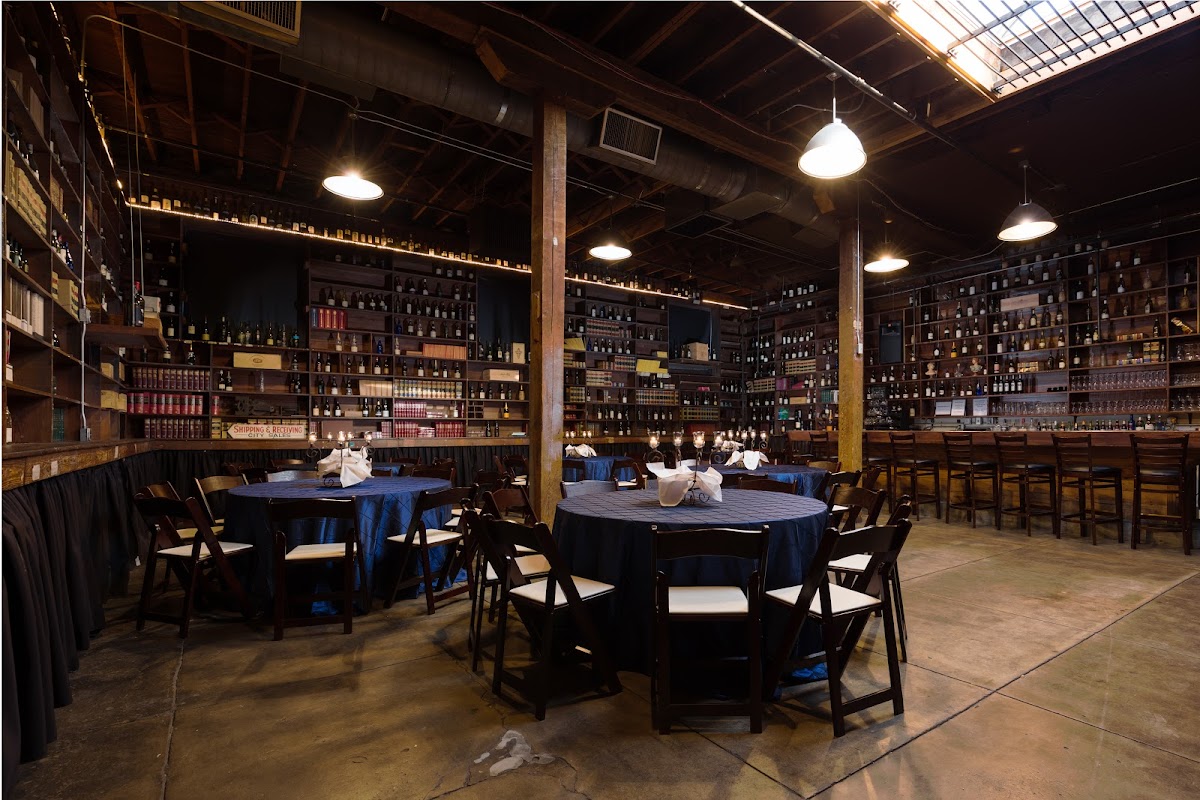
The approach tells you everything. You’re on First Avenue South, in the heart of Birmingham’s historic Southside, and the warehouse district still wears its industrial bones proudly. Red brick rises four stories, factory-style windows march in neat rows, and somewhere nearby you can hear a train in the distance — a reminder that this neighborhood once hummed with commerce and manufacturing. B&A Warehouse sits one block from downtown’s transportation hub, surrounded by the kind of urban energy that only comes when old buildings find new purpose. Park in the valet area or pull around to the loading dock (there’s plenty of room for vendor arrivals), and step through those heavy doors into something unexpected: soaring ceilings strung with Edison bulbs and cafe lights, exposed wooden beams that have weathered a century, walls of red brick glowing warm in the amber light. The factory exterior remains, but inside, someone has conjured a kind of industrial romance — all the grit and texture of the warehouse’s past, softened by string lights, polished wood floors, and windows that flood the space with Alabama daylight. Poppy has received inquiries for 8 events here, and while we haven’t yet designed B&A Warehouse wedding flowers on-site, we know this space well enough to understand its promise: a venue that doesn’t ask you to decorate around its character, but rather to lean into it.
About B&A Warehouse
B&A Warehouse occupies a beautifully repurposed industrial building in Birmingham’s Parkside District, a neighborhood that has undergone one of the South’s most successful urban revitalizations. What was once a district of manufacturing warehouses and railroad depots is now a thriving cultural hub, home to Regions Field (the city’s minor league baseball stadium), Railroad Park, and a growing collection of restaurants, breweries, and event spaces that draw both locals and visitors. The warehouse itself retains its original architectural bones — exposed red brick walls, high ceilings with hand-hewn wooden beams, and those distinctive factory windows that characterize early 20th-century industrial construction. The building’s exterior still reads as pure industrial vernacular, which makes the interior transformation all the more striking. Rather than trying to mask the building’s history, B&A Warehouse has enhanced it, preserving the raw textures while adding contemporary comfort and flexibility.
The venue’s layout encompasses multiple distinct spaces that can be used independently or in combination, making it suitable for everything from a 50-person rehearsal dinner in The Bottle Room to a 300-guest reception that flows through The Warehouse and Brick Room. Each space has its own character — from the soaring drama of the main Warehouse to the vintage intimacy of The Bottle Room to the graphic boldness of The Glass Room with its black-and-white checkered floor — but they all share that same industrial-meets-refined aesthetic. The built-in 12-by-16-foot stage in The Warehouse is a particular asset, providing a natural focal point for ceremonies or a professional setup for bands and entertainment. String lights crisscross the ceilings throughout, adding warmth and romance without softening the venue’s edge too much.
Logistically, B&A Warehouse sits in an exceptionally accessible location. It’s walkable to downtown Birmingham hotels, restaurants, and attractions, and the proximity to major roads and the transportation hub makes it easy for guests traveling from outside the city. For Poppy’s delivery teams (or any Birmingham wedding florist, for that matter), the loading dock access is a significant advantage — you can pull right up, unload on a level surface, and move arrangements inside without navigating stairs or tight doorways. Vendor access is straightforward, and the venue’s events team is accustomed to coordinating with outside professionals. Parking is managed through valet service for guest events, with remote parking and shuttle service available for larger weddings.
It’s worth noting that B&A Warehouse handles catering and alcohol exclusively in-house. The culinary team offers customized menus with global influences and full-service gourmet catering, and three fully stocked bars with included bartending are part of the package. This bundled approach can simplify planning for some couples, though it does mean less flexibility in vendor selection. Floral designers, however, are not restricted, which gives couples the freedom to work with a Birmingham wedding florist who understands how to design for industrial spaces.
Event Spaces & Floral Opportunities
The Warehouse
Capacity: 300 seated
Setting: The Warehouse is the flagship space at B&A Warehouse, and it earns that title honestly. This is the room that makes you stop and look up. Ceilings soar to what feels like cathedral height, supported by massive exposed wooden beams that still bear the marks of their original construction. Red brick walls rise on all sides, their surfaces worn and textured in a way that no faux finish could replicate. Industrial windows line the upper walls, flooding the space with natural light during afternoon events and providing glimpses of the urban skyline beyond. The built-in stage commands one end of the room — a 12-by-16-foot platform perfect for a ceremony altar, a band, or a DJ setup. Polished wooden floors stretch across the expansive footprint, and strings of Edison bulbs and cafe lights create a canopy of warm light overhead. This is a room that can accommodate almost any layout you can imagine — long banquet tables for a family-style dinner, rounds for a classic reception, or a combination of lounge seating and cocktail tables for a more modern approach. The space has presence without being precious, and it’s large enough to handle 300 guests without feeling crowded.
Floral approach: The key to designing B&A Warehouse wedding flowers in this space is understanding that the architecture is your partner, not your adversary. Those soaring ceilings are an invitation to go vertical — think tall centerpieces on elevated stands that lift blooms to eye level and above, creating visual interest at multiple heights. We love using arrangements on 24- to 30-inch gold or matte black risers, topped with lush compositions of Cafe au Lait dahlias, Quicksand and Cappuccino roses, white majolica spray roses, and trailing jasmine vine or smilax that cascades down toward the table. The effect is dramatic without blocking conversation. For couples who want to make a statement, the exposed beams are structurally sound enough to support hanging installations — imagine a series of floral chandeliers running the length of the room, each one a sphere of greenery (Italian ruscus, eucalyptus, and olive branches) punctuated with clusters of ivory garden roses and blush ranunculus. The built-in stage is a natural ceremony focal point and deserves a substantial floral treatment: a large-scale asymmetrical arch or corner arrangement in reclaimed wood vessels, overflowing with seasonal blooms in a palette that complements your overall design. The red brick walls provide a textured, warm backdrop that works beautifully with almost any color palette, but particularly with earthy tones, deep jewel colors, and lush greenery. For reception tables, we recommend either very low arrangements (no taller than 10 inches, allowing for easy conversation) or the tall elevated style mentioned above. The window sills, if accessible, can hold bud vases or small clusters of blooms to soften the industrial edges. And don’t overlook the entrance — a pair of large urns flanking the doorway, filled with statement branches (curly willow, flowering quince in spring, magnolia foliage in summer) and seasonal flowers, signals to guests that they’re entering a carefully considered celebration.
The Brick Room / Brick and Crossing Room
Capacity: Varies based on configuration (can accommodate mid-sized groups or serve as extension of The Warehouse)
Setting: The Brick Room — sometimes called the Brick and Crossing Room — is a 5,300-square-foot space that offers flexibility as either a standalone venue or a complementary extension of The Warehouse. The aesthetic is similar: exposed red brick walls, wooden floors, and that same industrial-chic vibe, but the scale is more intimate. A polished wooden dance floor is built into the space, and windows offer views of the surrounding city. The room can be configured in multiple ways depending on your needs, which makes it ideal for ceremonies, cocktail hours, or mid-sized receptions. When used in conjunction with The Warehouse, it often serves as a ceremony space or a cocktail lounge while the main space is set for dinner, allowing for a seamless transition between parts of the event.
Floral approach: Because this space is so flexible, your floral design should be equally adaptable. If you’re using the Brick Room for a ceremony, consider a floral installation that can be repurposed for the reception — perhaps a substantial arch or altar arrangement that can later be moved to frame the sweepstakes table or placed behind the band. We often design these as two large asymmetrical arrangements on either side of where the couple will stand, using a mix of garden roses (Patience, Juliet, and O’Hara in blush and peach tones), white delphinium or stock for height, and plenty of textured greenery like seeded eucalyptus and Italian ruscus. The brick walls here are an asset — consider a living wall installation or a series of vertical floral panels that can be attached to the brick with removable hooks, creating a lush backdrop without competing with the architecture. For cocktail configurations, scattered arrangements on high-top tables work beautifully: compact, textured designs in brass or copper vessels, featuring seasonal blooms that can withstand a bit of jostling from cocktail guests. The wooden dance floor can be edged with petals (we love a gradient from blush to ivory) or lined with small votives and bud vases for a romantic feel. If the room is serving as an extension of The Warehouse, maintain visual continuity with your floral palette and vessel choices so the two spaces feel connected rather than disjointed.
The Bottle Room
Capacity: 50 seated or 75 cocktail-style
Setting: The Bottle Room is where B&A Warehouse reveals its softer side. This intimate space features the same exposed brick and wooden beams as the larger rooms, but the scale is deliberately cozy — designed for rehearsal dinners, smaller ceremonies, or pre-wedding gatherings that benefit from a sense of enclosure and warmth. The vintage aesthetic is more pronounced here, with original architectural details that feel less industrial and more like a reclaimed farmhouse. The private entrance allows this space to function independently of the rest of the venue, and the wall-mounted smart television (discreetly integrated) makes it suitable for presentations or photo slideshows without detracting from the overall ambiance.
Floral approach: Intimacy is the guiding principle for B&A Warehouse wedding flowers in The Bottle Room. This is not the place for towering installations or dramatic floral chandeliers — instead, focus on creating lush, abundant arrangements at a human scale. Think compote-style centerpieces in aged brass or mercury glass vessels, filled to overflowing with garden roses (Keira, Patience, and Romantic Antike in soft pinks and creams), spray roses, lisianthus in ivory and blush, and plenty of textured foliage. These arrangements should feel gathered rather than structured, as if someone just walked in from a cutting garden. If you’re hosting a rehearsal dinner here, consider a single statement runner down the center of a long banquet table — smilax, eucalyptus, and olive branches woven together and studded with clusters of roses, ranunculus, and seasonal blooms. The exposed wooden beams can be subtly adorned with greenery swags, though we recommend a light touch to avoid overwhelming the space. For cocktail-style events, place small arrangements on every available surface — the bar, side tables, windowsills — to create a sense of floral abundance without formal structure. The vintage aesthetic pairs beautifully with antique-style containers: tarnished silver julep cups, mismatched china teacups, or small ceramic crocks in muted tones. This is also an ideal space for incorporating candles — tapers in brass candlesticks, pillar candles in various heights, and votives scattered generously — to enhance the warm, intimate atmosphere.
The Glass Room
Capacity: Varies based on configuration (ideal for intimate gatherings)
Setting: The Glass Room is B&A Warehouse’s wildcard — a space with a completely different visual language than the rest of the venue. Instead of exposed brick and wooden beams, you get a bold black-and-white checkered floor that reads as mid-century modern or even vaguely Art Deco. Glass windows line two sides of the room, providing natural light and a sense of openness, and a separate entrance point makes it function as an independent space. The room is smaller and more intimate, perfect for cocktail hours, bridal suite preparations, or smaller ceremonies for couples who want something with more graphic punch than rustic charm.
Floral approach: The checkered floor is the dominant visual element here, and your florals need to either complement it or provide enough contrast to stand apart. We recommend two approaches: either embrace a monochromatic palette that echoes the black-and-white floor (think all-white blooms with dark greenery — white peonies, ranunculus, sweet peas, and jasmine vine, with accents of blackened magnolia leaves or privet berries), or go bold with saturated color that pops against the graphic floor (deep fuchsia peonies, coral charm peonies, hot pink garden roses, and vibrant orange ranunculus in matte black vessels). The natural light from the glass windows is a gift for photographers and for florals alike — colors will appear more saturated and true in this light, so choose blooms accordingly. Window sills can hold linear arrangements in low vessels, creating a connection between the interior space and the urban views beyond. If you’re using The Glass Room for a cocktail hour, consider a single large installation — perhaps a floral-draped bar or a corner arrangement that serves as a photo backdrop — rather than scattering small arrangements throughout. The separate entrance can be marked with a dramatic floral wreath on the door or flanking arrangements in tall vessels. This is also a great space for experimenting with modern vessel choices — geometric metal stands, lucite boxes filled with floating blooms, or sleek ceramic cylinders in matte finishes that complement the room’s clean-lined aesthetic.
Wedding Flower Ideas for B&A Warehouse
Industrial Garden
This concept softens the warehouse’s raw edges with an abundance of organic, garden-inspired florals while honoring the industrial architecture. The palette is soft and romantic — blush, peach, ivory, champagne, and dusty rose — with plenty of greenery to create a lush, overgrown feel. Use garden roses in varieties like Patience, Juliet, Keira, and Romantic Antike, combined with ranunculus, hellebores, sweet peas, and spirea. Add textured greenery like seeded eucalyptus, Italian ruscus, jasmine vine, and smilax to create movement and depth. Vessels should bridge the two aesthetics: aged copper compotes, tarnished brass urns, reclaimed wooden boxes, and vintage enamelware in muted tones. In The Warehouse, create elevated centerpieces on gold stands with abundant, asymmetrical arrangements that feel garden-gathered rather than structured. Add hanging installations of greenery garlands strung with cafe lights and punctuated with clusters of blooms. For the stage or ceremony focal point, build a large-scale corner installation using reclaimed wood as a base, overflowing with the full palette and trailing greenery that puddles onto the floor. In the Brick Room, design a living wall installation or vertical panels of greenery and florals as a ceremony backdrop. The Bottle Room gets compote-style arrangements and greenery runners for long tables. This design works beautifully year-round but is particularly stunning in spring (March through May) when garden roses and ranunculus are at their peak and most affordable.
Modern Minimalist
For couples drawn to clean lines and contemporary aesthetics, this concept embraces the warehouse’s industrial bones with minimal but impactful florals. The palette is deliberately restrained — white, ivory, deep green, and matte black. Use architectural blooms like calla lilies, anthuriums, white phalaenopsis orchids, and hellebores, combined with structural greenery like monstera leaves, ti leaves, and umbrella fern. Vessels are key here: matte black cylinders, concrete cubes, geometric metal stands, and clear glass in simple forms. In The Warehouse, forego traditional centerpieces in favor of single statement blooms in small vessels at each place setting, or create elevated arrangements on tall clear stands with just three to five stems per arrangement — perhaps a single calla lily stem, a monstera leaf, and a sprig of eucalyptus. The drama comes from repetition and spacing rather than abundance. For the stage, design a minimalist arch using black metal piping or a simple geometric structure adorned with sparse but strategic floral placements — clusters of white phalaenopsis orchids at key points, with negative space as part of the design. In The Glass Room, this aesthetic feels particularly at home: use the checkered floor as a foundation and create arrangements that echo its graphic quality. Suspend a single large installation over the center of the room if it’s being used for cocktails — a sphere of monstera leaves with white anthuriums emerging at intervals. This approach is budget-friendly despite its high-design appearance, as you’re using fewer blooms overall but maximizing their impact through thoughtful placement.
Southern Jewel Box
This concept leans into Birmingham’s Southern location while embracing the venue’s urban edge, creating a palette that feels rich, saturated, and full of personality. The colors are jewel-toned with Southern charm: deep burgundy, plum, coral, peach, and emerald green, with accents of gold. Use dahlias (Cafe au Lait, Labyrinth, Jowey Winnie), garden roses in saturated tones (Madam Bombastic, Tess, Free Spirit), ranunculus in coral and raspberry, tulips in deep burgundy and plum (when in season), and magnolia foliage — a nod to Alabama’s state flower. Add Southern elements like cotton stems (in fall and winter), magnolia leaves (glossy and green or spray-painted gold), and smilax vine. Vessels should feel luxe: gold compotes, mercury glass, brass candlesticks, and vintage silver julep cups. In The Warehouse, create abundant centerpieces that mix all the jewel tones together, designed in a loose, organic style rather than formal arrangements. The brick walls provide the perfect backdrop for these saturated colors, which will appear to glow in the warm string lighting. For the stage or ceremony area, build a dramatic asymmetrical installation using all the elements — dahlias, roses, magnolia branches, and trailing greenery — in a corner arrangement that feels both opulent and organic. In The Bottle Room, this palette shines in compote arrangements on long tables, surrounded by gold-rimmed chargers and amber glassware for a truly Southern celebration. Add tapered candles in burgundy or plum for extra drama. In the Brick Room, line the wooden dance floor with votive candles in gold holders and scatter petals in coordinating tones. This design is ideal for fall weddings (September through November) when dahlias are abundant and affordable, but can be adapted for spring with tulips and ranunculus taking center stage.
Seasonal Considerations
Birmingham’s humid subtropical climate offers four distinct seasons, each with its own opportunities and challenges for B&A Warehouse wedding flowers. Understanding what blooms when — and how the weather impacts floral design — will help you make informed decisions about your celebration.
Spring (March through May) arrives early in Birmingham, with temperatures climbing from the 60s into the 80s as the season progresses. This is one of the best times for floral abundance and value. Tulips (particularly the large French and parrot varieties) are available through early May, along with ranunculus, anemones, hyacinth, and the first flush of garden roses. Locally, Alabama’s native plants begin to bloom — dogwood, redbud, and wisteria — and while you may not incorporate these directly into your arrangements, they provide beautiful context for outdoor photography around the Southside neighborhood. Spring in Birmingham can bring significant rain, but since B&A Warehouse is entirely indoor, weather is less of a concern than at outdoor venues. The main consideration is ensuring your delivery and setup happen during a dry window, as our teams will be moving arrangements from vehicles into the loading dock. Spring weddings here benefit from lighter, brighter palettes that feel fresh and seasonal: soft pastels, whites and greens, and the jewel-toned tulips and ranunculus that are spring’s signature. The natural light pouring through those industrial windows is particularly beautiful in spring — longer days and softer afternoon light that makes everything glow.
Summer (June through August) in Birmingham is hot and humid, with temperatures regularly in the 90s and humidity that can make it feel even warmer. For floral design, this means choosing blooms that can withstand heat during transport and setup. Hardy flowers like roses, hydrangeas (particularly the Annabelle and Limelight varieties), zinnias, celosia, and dahlias (which begin their season in mid to late summer) are all good choices. Avoid delicate blooms like sweet peas, anemones, or tulips, which are out of season and wouldn’t survive the heat anyway. The advantage of an indoor venue like B&A Warehouse is climate control — once your flowers are inside and the air conditioning is running, they’ll be perfectly comfortable. However, our delivery teams need to work efficiently to minimize the time arrangements spend in the heat between our refrigerated truck and the venue’s interior. Hydration is key: we use water tubes on every boutonniere and corsage, ensure centerpieces are delivered in water-filled vessels, and may add floral preservative to help blooms last through a long reception. Summer palettes can embrace the season’s warmth: think sunset tones (coral, peach, mango, and pink), bold tropical-inspired colors, or crisp whites and greens for a cooling effect. The string lights and industrial windows create a warm glow in summer evening receptions that feels festive and inviting.
Fall (September through November) is the busiest wedding season in Birmingham for good reason — temperatures moderate into the comfortable 60s and 70s, humidity drops, and the quality of light becomes softer and more golden. This is prime dahlia season, with these spectacular blooms available in dozens of varieties and at their most affordable. Garden roses continue through fall, as do chrysanthemums (the sophisticated spray varieties, not the grocery store pom-poms), roses, and textured foliage like fall-toned eucalyptus and oak leaves. Locally, the landscape begins its autumn transformation, and while Birmingham doesn’t have the dramatic fall color of more northern climates, there’s still a subtle shift in the light and foliage. For B&A Warehouse wedding flowers, fall allows for richer, deeper palettes: burgundy and wine tones, rust and terracotta, deep plum, and burnt orange, often combined with plenty of greenery and textured elements. The venue’s brick walls and wooden floors feel particularly well-suited to these autumn tones. Consider incorporating seasonal elements like magnolia leaves (which can be left green or painted gold), cotton stems for a Southern touch, or bunches of seeded eucalyptus for texture. Fall’s moderate temperatures make setup easier for our teams and mean your flowers will remain fresh-looking throughout your celebration. If you’re planning a fall wedding here, book your date early — this season fills up quickly.
Winter (December through February) in Birmingham is mild compared to much of the country, with temperatures typically in the 40s and 50s, occasionally dipping into the 30s. Snow is rare, though ice storms can occasionally impact travel. Winter is the season of evergreens, amaryllis, hellebores (the “Christmas rose”), camellias, ranunculus (which become available again after a summer absence), and imported tulips. The holiday season offers additional opportunities for festive design elements, though many couples prefer to avoid the December rush by opting for January or February dates. Winter palettes at B&A Warehouse can embrace the season: deep jewel tones (emerald, ruby, sapphire), elegant whites and creams with evergreen foliage, or unexpected combinations like coral and burgundy. The venue’s string lights feel especially magical in winter, creating a warm, cozy atmosphere against the industrial architecture. Candlelight becomes more prominent in winter designs — think clusters of pillar candles in varying heights, tapered candles in tall holders, and votives scattered generously throughout the space. Because it gets dark earlier in winter, your ceremony and reception will likely take place entirely in artificial light, which means your florals should be designed with this in mind — avoid colors that can look muddy in warm lighting (some purples and mauves) and embrace tones that glow (peach, champagne, ivory, and white). Winter also tends to be a more affordable season for weddings overall, as many venues and vendors offer reduced rates for off-peak dates.
Poppy’s Expert Take
The brick walls are your secret weapon, not your obstacle. Many couples initially worry that the exposed red brick throughout B&A Warehouse will clash with their floral colors or limit their palette options. In reality, the warm terracotta tones of the brick are incredibly versatile — they provide a textured, warm backdrop that makes virtually every floral color appear more saturated and vibrant. Blush and peach tones look particularly beautiful against the brick, creating a romantic, sun-warmed effect. Deep burgundies and plums echo the brick’s red undertones and feel rich and intentional. Even bright whites and greens pop against the textured surface. The key is to think of the brick as a neutral backdrop rather than a competing color. Where couples sometimes go wrong is trying to cover or hide the brick with fabric draping or other treatments — this is expensive, time-consuming, and actually diminishes the venue’s best architectural feature. Instead, embrace the industrial texture and use your florals to soften and complement it. Vines like smilax or jasmine can be attached to brick walls with removable adhesive hooks (check with the venue first about their policy) to create a living wall effect, or you can place large arrangements on pedestals in front of brick walls to create dimensional floral installations that play with the texture behind them.
Vertical space is your best value investment in The Warehouse. With ceilings that soar upward of twenty feet, The Warehouse has extraordinary vertical potential that many couples overlook. Yes, tall centerpieces on elevated stands cost more than low arrangements, but they create impact and presence that’s worth the investment in this particular space. The alternative — using only low centerpieces in a room this large — can make the space feel underfilled and your budget can seem to disappear into the vast square footage. A better approach is to mix investment: use dramatic tall arrangements on every third or fourth table, and lower (less expensive) arrangements on the others. The tall pieces draw the eye upward and create visual interest at multiple heights, while the lower pieces fill in the gaps. Even more impactful are hanging installations — garlands, floral chandeliers, or even simple greenery swags suspended from the exposed beams. These create a ceiling of sorts, making the vast space feel more intimate while still honoring its scale. If hanging installations are beyond your budget, consider using the built-in stage as your major floral investment: a substantial ceremony installation here becomes a focal point that anchors the entire room and remains visible throughout the reception.
Timing your delivery for an indoor venue still matters. Even though B&A Warehouse is climate-controlled and you don’t have to worry about rain ruining an outdoor ceremony, the timing of floral delivery and setup still matters significantly. The venue’s loading dock access is excellent, but you’ll want to coordinate with other vendors (particularly the caterer, since they’re in-house and will have significant setup needs) to ensure there’s adequate time and space for floral installation. We typically recommend starting floral setup at least four to five hours before guest arrival for a full-scale wedding here — not because the space is difficult to work in, but because there’s often a lot of floral real estate to cover (especially if you’re using multiple rooms), and we want to ensure every arrangement is perfectly placed, properly watered, and looking its best before anyone arrives. The earlier setup also allows time for adjustments if needed. Another consideration: if you’re doing a ceremony and reception in the same space (The Warehouse or Brick Room), plan for how the ceremony arrangements will transition. Can they stay in place and become part of the reception decor, or do they need to be moved? Will you repurpose your ceremony arch or altar flowers to another location, or will they remain as a backdrop for the band or DJ? These logistics should be discussed with your florist and venue coordinator well before the wedding day.
The string lights are your friend — design with them, not against them. B&A Warehouse’s built-in string lights and Edison bulbs create a warm, romantic ambiance that’s one of the venue’s signature features. These lights also influence how your florals will appear in photographs and in person. Warm-toned lighting (which is what string lights provide) makes warm-colored flowers — peach, coral, champagne, blush, and ivory — look especially luminous and beautiful. Cooler colors like pure white, lavender, and some blues can appear slightly muted or off-tone in warm lighting, though this can be corrected somewhat by your photographer’s white balance settings. If you love cooler-toned florals, don’t abandon them entirely, but consider balancing them with warmer accents or incorporating them in areas with more natural light (like near the industrial windows during afternoon events). Another consideration: the string lights create a canopy effect overhead, which means hanging floral installations need to be positioned carefully so they don’t interfere with the lighting or create shadows. We often design hanging elements to work with the string lights — suspending floral garlands from the same beams that hold the lights, or positioning floral chandeliers in the spaces between light strands rather than directly beneath them.
Repurposing between spaces is smart design and smart budgeting. With four distinct event spaces at B&A Warehouse, couples often plan to use multiple rooms throughout their celebration — perhaps cocktails in the Brick Room, ceremony on The Warehouse stage, and reception in the main Warehouse floor plan. This room-to-room flow creates opportunities for strategic floral repurposing that can stretch your budget significantly. Large ceremony arrangements flanking the stage can be moved during