
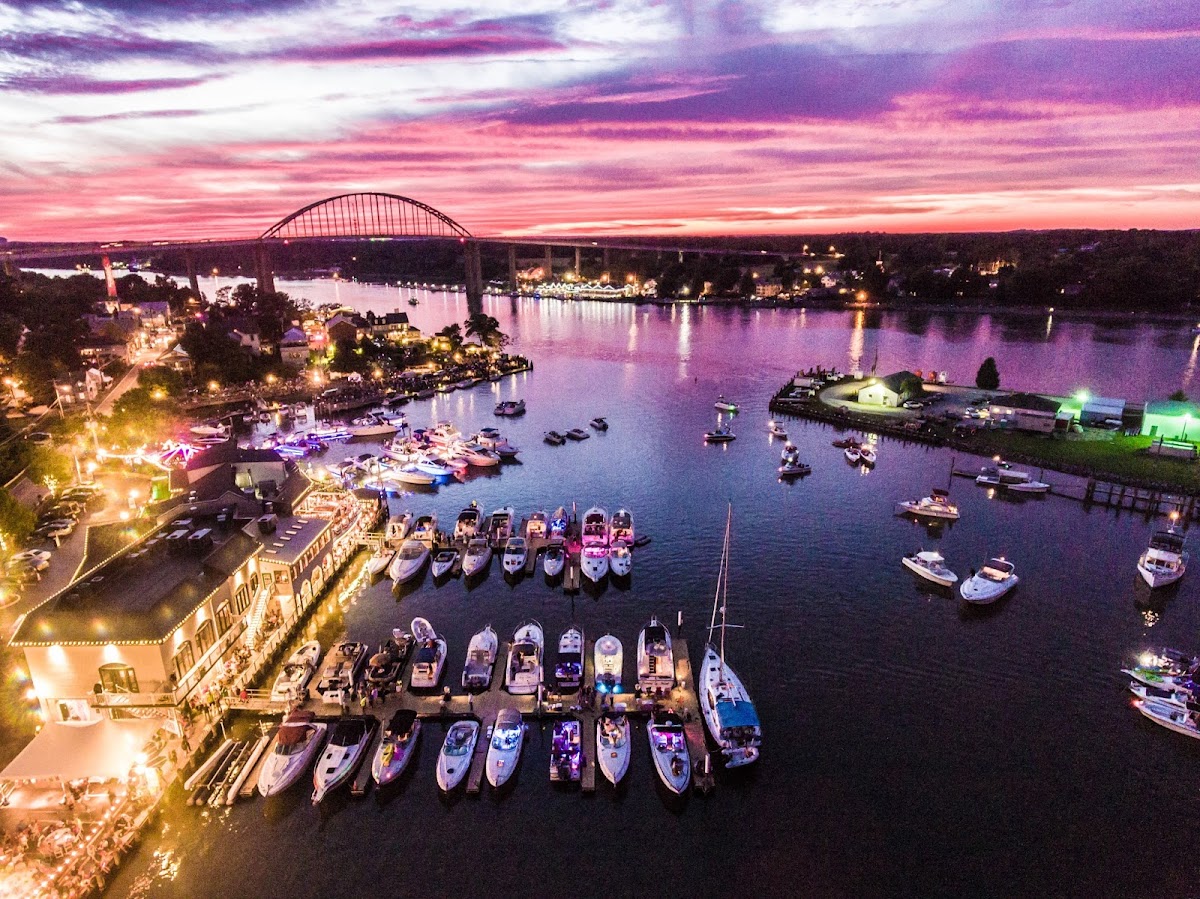
You approach Chesapeake City from Route 213, and somewhere between the farmland and the first glimpse of water, the landscape shifts into something more deliberate. The road narrows as you cross into the historic district — 19th-century brick storefronts, painted clapboard houses with widow’s walks, the kind of architecture that suggests permanence and craft. Then you see the canal. The Chesapeake & Delaware Canal cuts through town like a working artery, massive container ships gliding past as if through someone’s backyard, and suddenly the scale of this place clicks into focus. This is not a sleepy marina town playing at nautical charm. This is the only town in Maryland situated on a working commercial canal, and it wears that distinction with quiet confidence. The Chesapeake Inn sits at the water’s edge on Second Street, its white facade and deep porches facing Back Creek and the Chesapeake Bay beyond. From the dockside boardwalk, you can watch sailboats tack across the bay, kayakers paddling the creek, fishing boats returning with the day’s catch. Inside, the ballroom’s floor-to-ceiling windows frame all of this — water, boats, sky — and at night, when the fiber optic ceiling comes alive with a thousand twinkling stars, the room feels suspended between the real sky and its perfect replica. Poppy has designed Chesapeake Inn Restaurant & Marina Ballroom wedding flowers for 1 wedding here so far, and we are eager to return to this waterfront jewel where history, maritime culture, and modern elegance converge in one of Maryland’s most distinctive settings.
About Chesapeake Inn Restaurant & Marina Ballroom
The Chesapeake Inn has occupied its prime waterfront location since the late 19th century, evolving from a canal-side tavern into the full-service wedding and event venue it is today. The building itself carries the architectural markers of its era — white painted wood, Victorian proportions, deep wraparound porches designed for sitting and watching the water — but the interior spaces have been thoughtfully updated with modern amenities while preserving the bones of the original structure. The result is a venue that feels rooted in its place and time without being trapped there, a balance that serves wedding design particularly well.
Chesapeake City is listed on the National Register of Historic Places, and the Inn sits at the heart of this preserved district. Walk out the front door and you are steps from antique shops, waterfront restaurants, six neighborhood bars, and a local brewery — the kind of walkable downtown that makes a wedding weekend feel like a destination without requiring a passport. The C&D Canal, completed in 1829, remains one of the busiest canals in the world, connecting the Delaware River to the Chesapeake Bay and shortening the water route between Philadelphia and Baltimore by nearly 300 miles. On any given day, you will see container ships, tankers, sailboats, pleasure craft, and the occasional tall ship passing through. For wedding guests, this creates an unusual and captivating backdrop — dinner conversations interrupted by the sight of a massive cargo ship gliding silently past the windows.
The venue’s proximity to major metropolitan areas makes it surprisingly accessible despite its tucked-away feel. From Philadelphia, the drive is roughly 45 minutes via I-95 and Route 213. From Baltimore, about an hour. From Washington, D.C., closer to 90 minutes. This positions Chesapeake Inn as a legitimate destination venue for the entire Mid-Atlantic corridor — far enough to feel like an escape, close enough that guests do not need to book flights or plan elaborate travel logistics. For Poppy’s delivery team based in the Philadelphia area, the drive is straightforward, and the venue provides clear load-in access with parking adjacent to the ballroom entrance, a detail that matters greatly when transporting delicate floral installations.
The Inn’s culinary program is handled entirely in-house by an award-winning catering team, with full beverage service including champagne toasts, customizable bar packages, and specialty cocktails. Couples are required to use the venue’s catering but have flexibility with most other vendors, including florists — a setup that allows Poppy to work directly with couples without navigating exclusive vendor relationships. The events team is professional, communicative, and experienced with the logistics of multi-space weddings, which is essential when your ceremony is in Pell Garden, cocktails on the Terrace, and reception in the ballroom. Liability insurance is required for all vendors, a standard and reasonable request.
Event Spaces & Floral Opportunities
Chesapeake Inn Ballroom
Capacity: 175 seated
Setting: The Chesapeake Inn Ballroom is where the venue reveals its full hand. The space is anchored by a dramatic fiber optic ceiling that replicates a night sky — thousands of tiny lights twinkling in shifting patterns, creating an effect that is both romantic and slightly surreal, as if you are dining outdoors under the stars while comfortably indoors with climate control and a proper dance floor. The grand chandelier provides a secondary focal point, its warm glow softening the modern lighting system that allows for customizable color washes throughout the evening. One wall is dominated by windows overlooking the marina and Back Creek, framing water views and the parade of passing boats. The aesthetic is polished and contemporary, with neutral walls, hardwood floors, and enough architectural interest that the space never feels like a blank box.
Floral approach: The starlit ceiling is both a gift and a directive. It eliminates the need for overhead floral installations — no hanging greenery garlands, no suspended floral chandeliers, nothing that would compete with or obscure that twinkling sky. Instead, focus all floral energy on the horizontal plane: lush, abundant centerpieces that draw the eye down to the tables rather than up to the ceiling. We favor two approaches here. The first is elevated arrangements on tall, clear glass risers (30-36 inches), which lift the florals into a middle zone above guest sightlines but well below the ceiling — clouds of Quicksand and Patience roses, white hydrangea, pale peach ranunculus, and trailing jasmine vine, arranged to appear effortlessly abundant and almost floating in space. The second approach is low, densely packed arrangements in wide, shallow vessels — compote-style bowls filled with garden roses (Juliet, Keira, Charity), white lisianthus, blush spray roses, scabiosa, and soft greenery like dusty miller and eucalyptus. These sit directly on the tables, allowing unobstructed conversation and views of the water. For the entrance to the ballroom, a statement installation — perhaps a pair of large urns flanking the doorway, overflowing with hydrangea, delphinium, and trailing amaranthus in shades that echo the sunset over the bay: coral, peach, soft gold, and cream. The chandelier’s warm tones favor florals in the warmer spectrum — avoid stark whites and cool purples, which will read gray under the golden light. The waterfront views are your silent partner in this room; let them do half the decorative work.
The Terrace and Veranda
Capacity: 40 seated
Setting: This is the venue’s intimate outdoor space, a covered terrace overlooking Back Creek with open sides that allow bay breezes to circulate and the sound of water lapping against the dock to become part of the ambient soundtrack. The atmosphere here is decidedly more relaxed than the ballroom — bistro tables, string lights, a view that includes working fishing boats and the occasional heron stalking the shallows. It is the kind of space where guests instinctively loosen their ties and kick off their heels, perfect for rehearsal dinners, welcome cocktails, or post-ceremony drinks before the main reception.
Floral approach: The casual waterfront vibe calls for arrangements that feel organic, unfussy, and weather-appropriate. This is not the place for precious garden roses that will wilt in the humidity or delicate orchids that cannot handle a breeze. Instead, embrace hardy, textural blooms and abundant greenery. We recommend low arrangements in weathered terracotta pots or galvanized metal buckets — clusters of white hydrangea, blue delphinium, lavender stock, and cheerful yellow billy balls, accented with seeded eucalyptus, Italian ruscus, and sprigs of rosemary (which doubles as a fragrant element that guests enjoy brushing their fingers across). For cocktail tables, small mason jars wrapped in twine and filled with seasonal wildflowers — Queen Anne’s lace, black-eyed Susans, asters, cosmos — create a charming, low-key accent without blocking sightlines to the creek. If the Terrace is being used for a rehearsal dinner, consider a longer, low garland running the length of the main table — smilax and eucalyptus woven with clusters of spray roses and astilbe, trailing naturally off the table edges. Nautical touches work beautifully here without veering into theme-park territory: wrapped rope around vessel bases, small pieces of driftwood tucked into arrangements, even a few scattered shells if the aesthetic feels right. The key is to let the waterfront location do most of the heavy lifting while florals provide punctuation, not paragraphs.
Pell Garden
Setting: Pell Garden is Chesapeake City’s secret weapon for outdoor ceremonies. Located in the heart of the historic district, just steps from the Inn, this garden space features mature trees, established greenery, and views of the adjacent creek. The existing landscaping is lush and well-maintained, providing a naturally beautiful backdrop that requires minimal additional decor. Guests can walk from the Inn to the garden along the charming downtown streets, which adds a sense of procession and anticipation to the ceremony.
Floral approach: The cardinal rule for Pell Garden is restraint. The existing greenery is the star, and your ceremony florals should enhance rather than compete with it. We recommend a simple but impactful approach: a refined altar arrangement — either a low, lush arrangement on a vintage table or pedestal (garden roses, peonies when in season, ranunculus, and cascading greenery) or a more architectural arch adorned with flowing greenery garlands and strategic floral clusters at the corners and apex. Avoid the temptation to cover every inch of an arch with flowers; instead, let smilax, Italian ruscus, and jasmine vine form the foundation, then punctuate with groupings of roses, hydrangea, and seasonal blooms in your chosen palette. For the aisle, consider every-other-row shepherds’ hooks with small arrangements of flowers matching the altar design, or simple greenery garlands tied to the aisle chairs with trailing silk ribbon. If the budget allows, we love lining the aisle with potted ferns or boxwood topiaries that can be repurposed at the reception venue afterward — sustainable, elegant, and practical. The creek views and mature trees provide all the drama you need; your florals should feel like they have always been there, a natural extension of the garden itself.
Moon Property
Setting: For couples seeking a more architectural ceremony backdrop, the Moon Property delivers. This offsite location (still within easy walking distance or a very short shuttle ride) positions the ceremony with the vintage Chesapeake City Bridge as the focal point — a steel arch bridge painted deep green, spanning the canal with classic early-20th-century engineering elegance. It is an iconic view, instantly recognizable to anyone familiar with the area, and it photographs beautifully at any time of day.
Floral approach: The bridge is your statement piece, which means ceremony florals should frame the view rather than compete with it. We recommend a minimalist approach: a simple, elegant ceremony arch positioned to one side of the aisle (not directly blocking the bridge view), constructed from natural wood or brushed metal and adorned with asymmetric floral clusters. Think a concentration of blooms at one corner — Patience and Quicksand roses, white ranunculus, pale blue delphinium, scabiosa, with trailing jasmine and Italian ruscus cascading down one side — and allow the rest of the arch to remain bare or lightly wrapped with greenery. For the aisle, low arrangements in vintage brass or copper vessels every few rows, simple and refined. The goal is to create a sense of intentional design without overwhelming the bridge’s architectural presence. Avoid tall, symmetrical structures that will compete with the bridge’s lines; instead, work with organic, flowing shapes that complement the industrial elegance of the setting. This is also an excellent location to incorporate a subtle nod to the maritime setting: perhaps a touch of sea lavender or a few pieces of dried lotus pods mixed into the greenery for texture and coastal reference without being literal.
Chandler House
Setting: The Chandler House offers a more intimate, backyard-style ceremony location with a relaxed, residential feel. Details about this space are less formally documented, which suggests it is used less frequently or for smaller, more private ceremonies, but the “backyard vibes” descriptor tells us everything we need to know about the approach.
Floral approach: For a backyard-style setting, embrace the informality. This is the place for wildflower-inspired arrangements, organic shapes, and a palette that feels picked from a summer garden. We recommend a simple wooden arbor or a fabric backdrop draped between two trees, with florals clustered at the base — an abundance of garden roses, dahlias, cosmos, zinnias, and snapdragons in shades of coral, peach, yellow, and cream, mixed with herbs like lavender and rosemary for fragrance and texture. For the aisle, consider large potted arrangements that can double as reception decor later — hydrangea in weathered terracotta, ornamental grasses in galvanized buckets, even flowering shrubs like butterfly bush or mock orange if the season allows. The key is to make everything feel relaxed and abundant, as if the flowers simply grew there and you happened to choose this spot for your ceremony. Mason jars hanging from shepherd’s hooks along the aisle, filled with seasonal blooms and tied with burlap ribbon, reinforce the casual, garden-party aesthetic. This is not the space for formal symmetry or precious blooms; it is the space for joyful abundance and textural variety.
Chesapeake City Boardwalk
Setting: While not technically an event space, the dockside boardwalk adjacent to the Inn is one of the most popular locations for wedding photography. The marina views, working boats, and glimpses of the canal create a quintessentially Chesapeake City backdrop that guests and photographers gravitate toward naturally.
Floral approach: The boardwalk’s importance to your wedding day is less about installation florals and more about ensuring your personal flowers — the bridal bouquet especially — are designed to shine in this setting. The waterfront backdrop is busy and colorful (boats in various hues, blue water, weathered dock wood), so bouquets should be designed with enough visual weight and color contrast to stand out in photographs without getting lost. We favor generous, textured bouquets with a clear focal point: Cafe au Lait dahlias surrounded by garden roses, ranunculus, and scabiosa in a cohesive palette (perhaps all blush and cream, or a richer coral and peach, or even a dramatic burgundy and navy), bound tightly with silk ribbon in a complementary tone. Avoid overly loose, airy bouquets that will read as undefined blobs in wide-angle shots with the busy marina background. The goal is a bouquet with clear shape, strong color story, and enough substance to hold its own against the visual complexity of the waterfront setting.
Wedding Flower Ideas for Chesapeake Inn Restaurant & Marina Ballroom
Waterfront Whisper
This palette takes its cues from the bay itself — the soft blues and greens of the water, the pale gold of morning light on the creek, the blush tones of sunrise over the marina. We are working with Quicksand and Patience roses, pale blue delphinium, white and blush ranunculus, white lisianthus, Queen Anne’s lace, and soft green hellebores, accented with seeded eucalyptus, dusty miller, and trailing jasmine vine. Vessels are a mix of weathered wood boxes, pale blue ceramic compotes, and clear glass cylinders that allow the floral stems to show through. In the ballroom, centerpieces alternate between elevated arrangements on clear risers and low, sprawling designs that cascade slightly over the table edges. The Terrace receives small arrangements in blue mason jars wrapped with twine. For ceremonies at Pell Garden or Moon Property, the altar features an asymmetric design with delphinium and jasmine creating height on one side, balanced by a lush cluster of roses and ranunculus at the base. This palette is especially effective for spring and summer weddings when the light is soft and the water sparkles, and it photographs beautifully in the bright, airy conditions of waterfront settings.
Canal Town Romance
This design leans into Chesapeake City’s 19th-century maritime heritage with a palette of rich, romantic tones grounded in antique vessels and vintage-inspired shapes. We are using burgundy and mauve dahlias (Jowey Mirella, Labyrinth), Café au Lait dahlias, Juliet and Keira garden roses in blush and peach, deep plum ranunculus, chocolate cosmos, burgundy scabiosa, and cascading amaranthus in dusty rose. Foliage includes dark green Italian ruscus, burgundy leucadendron, and trails of scented geranium. Arrangements sit in antique brass urns, weathered copper vessels, and dark wood boxes with a patina that suggests they have been sitting in a canal-side attic for a century. In the ballroom, the moody palette works beautifully under the warm chandelier glow, creating depth and richness without feeling heavy. On the Terrace, smaller versions in copper julep cups add elegance to the casual setting. Ceremony florals at Moon Property are kept minimal to let the bridge’s industrial architecture shine, with clusters of the deep dahlias and roses at the base of a simple wooden arch. This palette is ideal for autumn and early winter weddings when the light turns golden and the air takes on a crispness that complements the deeper tones.
Bayside Garden
This concept brings the abundance of a cottage garden to the waterfront, with a palette that is cheerful, textural, and full of movement. We are mixing coral charm peonies (when in season), peach and yellow garden roses (Juliet, Golden Patience), apricot ranunculus, yellow billy balls, peach stock, white sweet peas, lavender stock, and white astilbe, with foliage including seeded eucalyptus, rosemary, lemon leaf, and wild fern fronds. Vessels are galvanized metal buckets, weathered terracotta pots, and rustic wooden crates lined with moss. The effect is lush, organic, and slightly untamed, as if you gathered armloads of flowers from a waterfront garden and arranged them with joyful abandon. In the ballroom, centerpieces are densely packed in low compotes, overflowing with blooms and trailing greenery. The Terrace gets clusters of potted herbs and flowers that guests can enjoy up close. For Pell Garden ceremonies, we recommend lining the aisle with potted lavender and rosemary in terracotta, creating a fragrant path that feels distinctly garden-inspired. Chandler House is perfect for this palette, with large, overflowing arrangements on wooden crates flanking the ceremony space. This is a spring and summer palette through and through, best suited to weddings in May, June, July, and August when the peach and coral tones feel aligned with the warmth of the season.
Seasonal Considerations
Chesapeake City’s location on the upper Chesapeake Bay means it experiences four distinct seasons, each bringing unique considerations for wedding flowers and outdoor events.
Spring (March-May): Spring arrives slowly on the bay, with March often still chilly and unpredictable. April and May are peak spring wedding months, offering moderate temperatures (60s to 70s), blooming trees and gardens throughout the historic district, and increasingly reliable weather for outdoor ceremonies. Tulips, daffodils, hyacinth, ranunculus, anemones, and early garden roses are readily available and affordable. Peonies arrive in late April and peak in May, making them a seasonal highlight worth celebrating. For outdoor ceremonies in Pell Garden or on the Chandler House grounds, have a backup plan for rain — the Terrace can accommodate smaller ceremonies, or the ballroom can be flipped for a ceremony-then-reception setup. Spring’s softer light is ideal for photography on the boardwalk, and the emerging green of the season creates a fresh, optimistic backdrop. Watch out for wind off the water; secure all aisle arrangements and consider heavier vessels for outdoor florals.
Summer (June-August): Summer brings warmth, humidity, and peak marina activity — the boats are out in full force, the water is a vibrant blue, and the entire town feels alive. Temperatures range from the 80s to low 90s, with occasional afternoon thunderstorms. This is the busiest wedding season at the Inn, and for good reason: the long daylight hours mean ceremonies can start later, receptions can extend onto the Terrace for dancing under the stars, and the bay views are at their most picturesque. Florally, focus on heat-tolerant blooms: garden roses hold up better than spray roses in heat, zinnias and dahlias are summer workhorses, sunflowers add cheerful pops of color, and hydrangeas remain reliable if kept properly hydrated. Avoid delicate blooms like sweet peas and anemones, which will wilt quickly in the heat and humidity. For outdoor ceremonies, schedule them for late afternoon or early evening when temperatures drop, and ensure arrangements are delivered as close to ceremony time as possible. The humidity actually helps some flowers last longer, but the heat can be brutal during setup, so hydration for both flowers and the Poppy team is essential. Consider incorporating potted plants and succulents for cocktail table decor — they will withstand the heat better than cut flowers.
Autumn (September-November): Autumn is many couples’ favorite season at Chesapeake Inn. September offers the best of both worlds — still-warm days with cooler evenings, summer’s late-blooming flowers transitioning into fall varieties. October brings peak fall color in the surrounding trees, with the canal framed by gold and red foliage, and temperatures in the comfortable 60s to 70s. November is cooler (50s to 60s) but still manageable for outdoor ceremonies with the right planning. Florally, this is dahlia season — hundreds of varieties in every color, size, and form imaginable, often at their most affordable. Café au Lait dahlias, burgundy dahlias, coral dahlias, peach dahlias — they are all available and glorious. Add in garden roses, ranunculus (which return in fall), marigolds, asters, and chrysanthemums (the sophisticated spray varieties, not the grocery store mums), plus textural elements like wheat, seeded eucalyptus, hypericum berries, and fall foliage branches. The changing leaves along the boardwalk and throughout the historic district create a naturally beautiful photo backdrop. The fall light is golden and flattering, especially in late afternoon. This is the season to lean into richer, warmer palettes that echo the landscape — burnt orange, deep red, golden yellow, burgundy, and chocolate brown all feel right.
Winter (December-February): Winter weddings at Chesapeake Inn are less common but offer their own distinct appeal. The ballroom’s starlit ceiling becomes even more magical when it is dark and cold outside, and the waterfront takes on a stark, serene beauty. Temperatures range from the 30s to 50s, and snow is possible but not guaranteed. Outdoor ceremonies are not recommended unless you are providing serious heat sources and warm blankets for guests. Florally, winter is the season for amaryllis, anemones (which are actually a winter/spring flower despite their delicate appearance), hellebores, paperwhites, ranunculus, tulips, and imported garden roses. Evergreen foliage — noble fir, cedar, pine, eucalyptus — provides texture and a subtle seasonal nod without veering into Christmas territory. For December weddings, it is nearly impossible to avoid some holiday association, so embrace it with elegance: deep red roses, white amaryllis, gold accents, and touches of evergreen can feel festive without being literal. January and February weddings can move away from holiday motifs entirely, focusing instead on sophisticated winter whites, creams, and grays with silver and crystal accents. The key advantage of winter weddings is budget — many flowers are more affordable, and venue availability (and sometimes pricing) is better. The key challenge is weather; have solid backup plans and do not count on outdoor spaces being usable.
Poppy’s Expert Take
The starlit ceiling is non-negotiable. If you fall in love with the ballroom because of that fiber optic ceiling — and you should, because it is stunning — do not make the mistake of trying to compete with it or cover it up. We have seen couples plan elaborate overhead installations only to realize during setup that covering that twinkling sky is like hanging curtains over a sunset. Build your floral design around the ceiling, not in spite of it. Focus on elevated centerpieces that occupy the middle zone or lush, low arrangements that keep all the visual interest at table level. Trust us: your guests want to see those stars, and your photographer will thank you for the dramatic backdrop.
Plan for wind at outdoor ceremonies. The waterfront location means unpredictable breezes, especially at Pell Garden and Moon Property. Anything placed outdoors needs to be weighted, secured, or designed to withstand a gust. We use sandbags inside decorative vessels, stake shepherds’ hooks deep into the ground, and avoid tall, top-heavy arrangements that will blow over. For ceremony programs, consider having guests pick them up rather than placing them on every chair (where they will blow away). Outdoor florals should be designed with sturdier, less delicate blooms and foliage that can handle some movement. Delphinium, snapdragons, and other tall stems should be avoided in favor of roses, hydrangea, and other blooms that stay put.
Coordinate with the marina schedule for photos. The boardwalk and marina are working spaces, not just wedding backdrops. Fishing boats come and go, recreational boaters dock for lunch at the Inn’s restaurant, and occasionally a massive container ship glides past on the canal. While your photographer will work around these elements, it is worth coordinating with the venue to understand peak marina activity times and whether any large vessels are expected during your wedding day. The ships, when they do pass, are actually incredible photo opportunities — but they also block the bay view entirely for several minutes. Knowing the schedule helps your photographer plan accordingly.
Repurpose ceremony florals at the reception. With multiple ceremony location options (Pell Garden, Moon Property, Chandler House) and the ballroom as the primary reception space, there is significant opportunity for floral repurposing. Altar arrangements can be moved to the entrance of the ballroom, to flank the cake table, or even placed on the Terrace as guests transition to cocktails. Aisle arrangements in urns or pots can become decor on the boardwalk or at the bar. Build repurposing into your floral plan from the start, and make sure your timeline allows for vendor access between ceremony and reception to move pieces. This maximizes your budget and ensures no flower goes to waste.
Embrace the waterfront aesthetic without being literal. It is tempting to lean hard into nautical themes — anchors, rope, starfish, navy stripes — but Chesapeake Inn’s setting is sophisticated enough that it does not need you to hit guests over the head with the maritime location. A few subtle nods (rope-wrapped vessels, a touch of sea lavender, colors inspired by the water) are more effective than a full “ahoy, matey” approach. Let the venue’s natural waterfront elegance speak for itself, and use florals to complement rather than announce the setting.
Budget thoughtfully for multi-space weddings. If your ceremony is at Pell Garden or Moon Property and your reception is in the ballroom, you are essentially designing florals for two entirely separate locations. This can escalate costs quickly. Prioritize the space where guests will spend the most time (usually the reception) and keep ceremony florals more focused and minimal. A stunning altar arrangement and a few aisle accents will feel complete in the naturally beautiful outdoor settings, allowing you to allocate more budget to the ballroom centerpieces that guests will sit with for hours.
Consider the cocktail flow. The Terrace is a popular cocktail location, and guests naturally spill out from the ballroom onto the outdoor space. If you are using the Terrace for cocktails, make sure it feels intentionally designed with a few floral touches — even small arrangements on cocktail tables make a difference. If cocktails are in the ballroom before it is flipped for dinner, your centerpieces need to look good in bright, natural daylight (during setup and cocktails) and under evening lighting (during dinner and dancing). Test your palette in both lighting conditions if possible, or trust your florist’s experience with how colors shift from day to night.
What Poppy Couples Spend on Flowers Here
While our data for Chesapeake Inn is still growing with only one booking so far, we can draw