
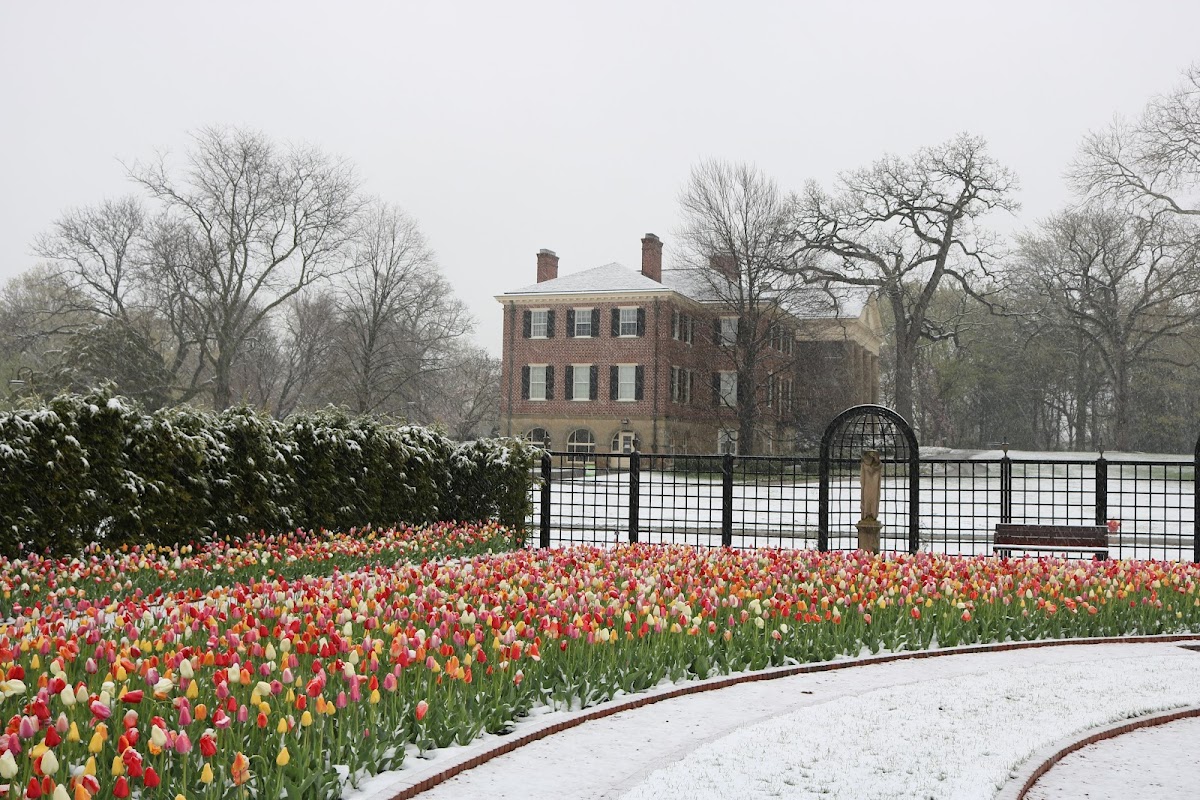
Designing flowers for Cantigny Golf is an exercise in scale and architectural respect. With 500 acres of manicured grounds and world-class botanical collections, the challenge is not adding beauty, but ensuring your design has enough presence to avoid being swallowed by the vastness of the estate.
We know this venue intimately and understand that the most successful weddings here lean into the formal, neoclassical aesthetic of the architecture while using the existing gardens as a color palette foundation rather than a competitor.
The Spaces
Rose Garden
This is the horticultural crown jewel of the property. The space is enclosed by Japanese yews, creating a private “room” within the larger gardens. The 250-year-old bur oak is the natural focal point, offering a canopy that no man-made structure can replicate.
- What works: Ground-level semi-circular installations that frame the couple at the base of the oak tree. This keeps the focus low and intimate while allowing the tree’s height to provide the drama.
- Skip: Tall, spindly arches that look fragile against the massive trunk of the oak.
- Watch out: The mosaic walkways are historic and narrow; ensure your floral footprint doesn’t create a tripping hazard for guests.
- Budget hero move: Use the existing rose varieties as your color guide. By matching your floral palette to the 50 varieties on-site, your arrangements will look like an intentional extension of the garden.
Le Jardin
Le Jardin offers a more expansive, open-air feeling with tranquil water features and a panoramic view of the grounds. It is a space that feels light and airy, demanding a similar approach to floral design.
- What works: “Growing” aisle markers that appear to sprout from the lawn. These ground-level clusters feel organic to the setting.
- Skip: Heavy, dark floral walls that block the very views guests are there to see.
- Watch out: This area is highly exposed to wind. Every structure—from chuppahs to pedestals—must be heavily weighted.
- Budget hero move: Repurpose ceremony aisle markers as low centerpieces for the reception tables. The garden-to-table transition is seamless here.
Red Oak Room
The primary indoor option, the Red Oak Room, provides a sophisticated contrast to the wilder garden spaces. The large windows are the room’s best feature, flooding the space with natural light and keeping the golf course visible.
- What works: Compote-style centerpieces that allow for conversation across the table. Use textures like ferns or moss to bring the “outside in.”
- Skip: Massive tall centerpieces that obstruct the window views. If you want height, use slender glass or gold stands that guests can see through.
- Watch out: The room’s lighting is elegant but can feel warm; choose floral colors that pop against wood tones and cream walls.
- Budget hero move: Focus your budget on a “statement” bar arrangement or a fireplace mantel installation to create a secondary focal point away from the windows.
First Division Museum Entrance
For couples seeking a more “estate” feel, the museum’s neoclassical facade with its white columns and symmetrical brickwork is unmatched. It is formal, grand, and demanding of high-end design.
- What works: Large-scale, symmetrical urns flanking the entrance. This mirrors the columns and honors the building’s balance.
- Skip: Asymmetrical, “boho” styles that clash with the rigid formality of the architecture.
- Watch out: The brick is a deep red; avoid muddy purples or dark reds that will disappear against the building. Opt for whites, creams, or vibrant corals.
- Budget hero move: Two massive, high-impact urns at the entrance provide more visual value than ten smaller arrangements scattered around the perimeter.
What Works at Cantigny Golf
- Symmetrical Balance: The neoclassical architecture of the museum and the formal layouts of the gardens demand symmetry. If you place a pedestal on the left, you almost always need one on the right to maintain the visual harmony of the estate.
- High-Contrast Palettes: Against the lush green of the golf course and the deep red of the museum brick, soft pastels can sometimes look washed out in midday sun. Consider adding a “pop” color—like a deep coral, a bright yellow, or a crisp white—to ensure the flowers stand out in photography.
- Wind-Resistant Engineering: Cantigny is wide open. We treat every outdoor installation with “gale-force” respect. Heavy bases, sandbags hidden by greenery, and low-profile designs are the standard here.
- Horticultural Storytelling: This is a botanical destination. Using unique textures like hosta leaves (inspired by their Hosta Garden) or mosses and ferns (inspired by the Logarium) makes the floral design feel site-specific and curated.
- Scale Over Quantity: Because the property is so large, small arrangements can look like “clutter.” It is better to have three massive, high-impact floral moments than twenty small ones that guests barely notice against the 500-acre backdrop.
Budget Guide
| Tier | Investment | Floral Strategy |
|---|---|---|
| Essentials | $1,750 - $3,000 | Focus entirely on the personal flowers and a single high-impact ceremony focal point, such as a pair of large urns. |
| Sweet Spot | $3,500 - $5,500 | Includes full personals, a ground-level ceremony installation, and low, lush compote centerpieces for the reception. |
| Full Experience | $6,000 - $9,000 | Adds aisle flowers, a larger-scale ceremony structure (arch or pillars), and a mix of high and low centerpieces to add dimension. |
| Statement | $10,000+ | Full estate transformation: museum entrance urns, a floral-heavy ceremony structure, and elevated installations for the reception. |
The character of Cantigny is one of quiet, historic grandeur; your floral budget should be allocated to pieces that enhance that sense of permanent, stately beauty.
Tips
- Weight your structures: The wind off the open golf course is no joke; ensure every pedestal and arch has a heavy, stable base.
- Embrace the symmetry: When designing for the museum entrance, mirror the architecture with flanking arrangements to create a formal, high-end look.
- Respect the pathways: The mosaic walkways in the upper gardens are narrow; keep your floral footprint compact to allow for easy guest movement.
- Coordinate the flip: If moving flowers from the Rose Garden to the Red Oak Room, ensure your team has a clear path that avoids the public museum crowds.
- Color match the roses: Use the “Chicago Peace Rose” (pink and yellow) as a starting point for a palette that feels perfectly at home on the estate.