
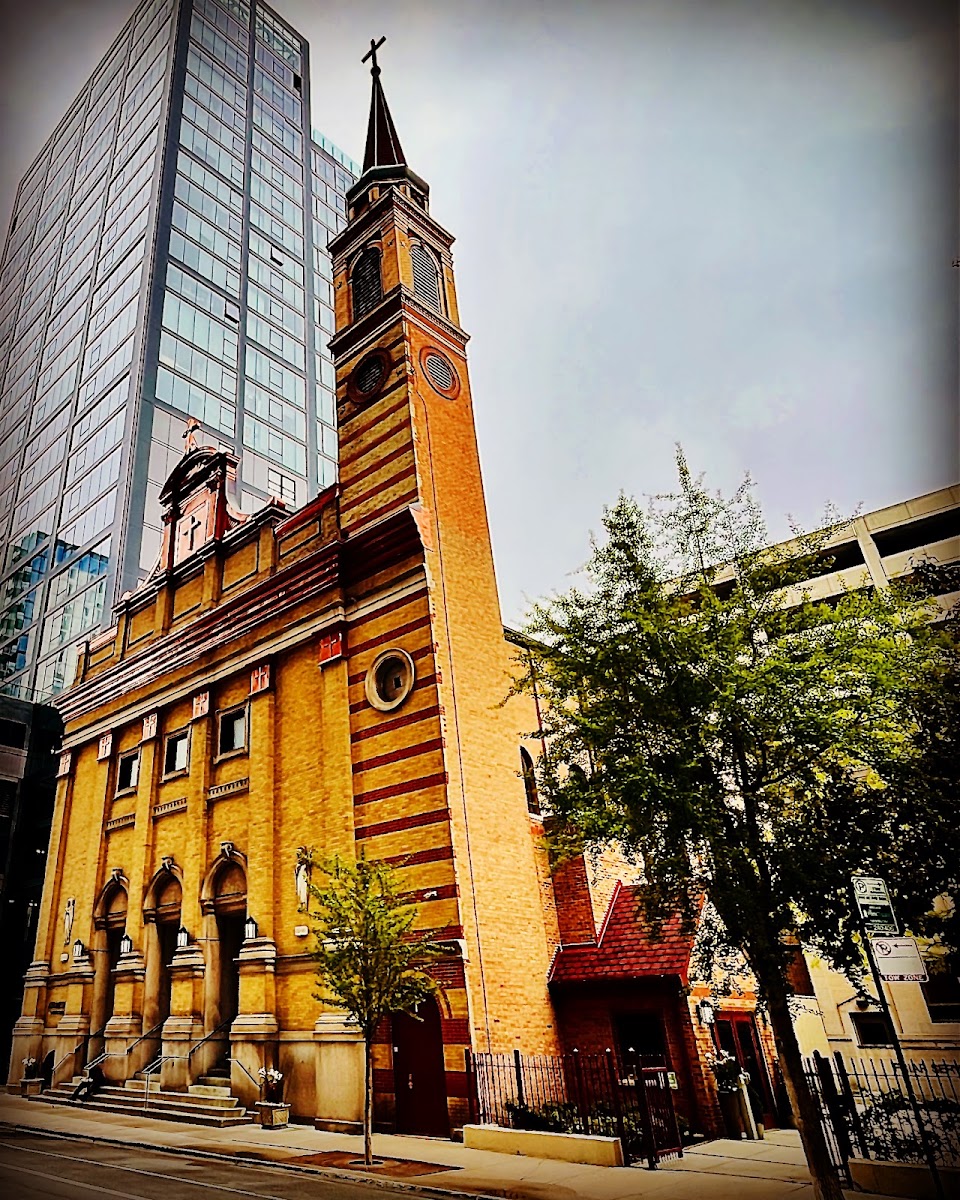
Assumption Catholic Church is not a blank canvas. It is a dense, architecturally significant environment where the primary design challenge is scale. In a space defined by 19th-century woodwork and soaring vaulted ceilings, floral designs must be intentional and substantial. Small, delicate arrangements will vanish into the shadows of the pews; instead, we focus on architectural floral work that complements the existing grandeur without competing with the religious artistry.
The visual gravity of the dark wood and marble requires a specific approach to color theory. We treat the sanctuary as a gallery where the flowers are the featured exhibition. This means prioritizing high-contrast palettes—think crisp whites, creams, and reflexed roses—or deep, saturated jewel tones that harmonize with the stained glass. The goal is to create focal points that anchor the ceremony in a space that is otherwise designed to draw the eye upward toward the heavens.
The Spaces
The Sanctuary
The primary environment is an exclusively indoor, traditional ecclesiastical space. The architecture is dominated by warm browns, creams, and the reflective surfaces of marble floors. The soaring height of the ceiling is the defining characteristic, meaning any floral work at ground level must have enough “visual weight” to ground the couple.
- What works: Large-format flanking arrangements at the altar are essential. These should be designed with enough height to bridge the gap between the floor and the start of the ornate backdrop. Floor-based “meadows” along the aisle work exceptionally well here, as the marble floors provide a neutral, reflective base that makes the textures of the greenery pop.
- Skip: Tiny pew bows or single-stem markers. The scale of this church is so massive that small details are lost to everyone except the person sitting directly next to them. They do not translate in professional photography and offer little return on investment.
- Watch out: The marble floors can be slippery if water-based arrangements are not properly secured. Additionally, the church’s existing religious schedule often means tight windows for setup and strike; designs should be modular and easily transported.
Budget hero move: Focus 70% of the floral budget on two massive, asymmetrical floor installations at the foot of the altar. By concentrating the flowers where the couple stands, you create a high-impact frame for every ceremony photograph, which is where the most value lies in a church setting.
What Works at Assumption Catholic Church
Monochromatic palettes for high contrast. Against the deep brown woodwork of the pews and the altar, a monochromatic white or ivory palette provides the cleanest, most sophisticated look. It ensures the flowers stand out in wide-angle shots of the entire sanctuary.
Asymmetrical altar framing. Rather than two identical pedestals, which can feel dated and stiff, we recommend organic, asymmetrical installations that appear to grow from the marble floor. This softens the rigid lines of the historic architecture and creates a more contemporary, editorial feel.
Lush greenery to break up the wood. Use substantial amounts of smilax or Italian ruscus to bring life into the space. The deep greens provide a necessary bridge between the dark wood and the bright floral blooms, preventing the arrangements from looking like floating spots of color.
Ground-level aisle meadows. Instead of hanging things on pews, place heavy, lush floral “clouds” on the floor at the start of the aisle and at the front. This utilizes the reflective quality of the marble and creates a sense of immersion for the processional.
Entrance statements. The transition from the urban River North exterior to the historic sanctuary is a major moment. A pair of large-scale urns at the interior entrance pews sets the tone for the design language before guests even take their seats.
Budget Guide
| Tier | Investment | Floral Strategy |
|---|---|---|
| Essentials | $1,750 - $3,500 | Focus exclusively on two large altar installations. These provide the necessary scale for photography without overextending the budget. |
| Sweet Spot | $3,500 - $6,500 | Includes the altar installations plus substantial aisle markers at the entrance and front pews to create a “framed” experience for the couple. |
| Full Experience | $6,500 - $10,000 | A full “meadow” treatment for the aisle, plus lush altar work and entrance arrangements. This tier allows for higher-end blooms like orchids or garden roses. |
| Statement | $10,000+ | Full-scale chancel installations that may include climbing greenery on the columns and a complete floral immersion from the entrance to the altar. |
The character of Assumption Catholic Church is one of historic weight; your floral budget should reflect a commitment to quality over quantity to match that permanence.
Tips
Prioritize the altar for photography. Most of your ceremony photos will be tight or medium shots of the couple at the altar; ensure the flowers are tall enough to be seen behind the couple’s heads while they are standing.
Consider the “Brown Wood Problem.” Dark wood absorbs light. If you choose dark red or purple flowers without enough lighter “filler” or greenery, they will disappear into the background in photos.
Plan for repurposing. Church ceremonies are relatively short. Ensure your florist designs the altar and aisle arrangements to be easily moved to your reception venue to maximize your investment.
Respect the marble. Always ensure your floral team uses heavy-duty liners and non-slip mats under any floor installations to protect the historic stone and prevent guest accidents.
Check the liturgical calendar. Catholic churches often have their own decor for seasons like Lent or Easter; always confirm with the parish coordinator what existing decor will be present on your date.