
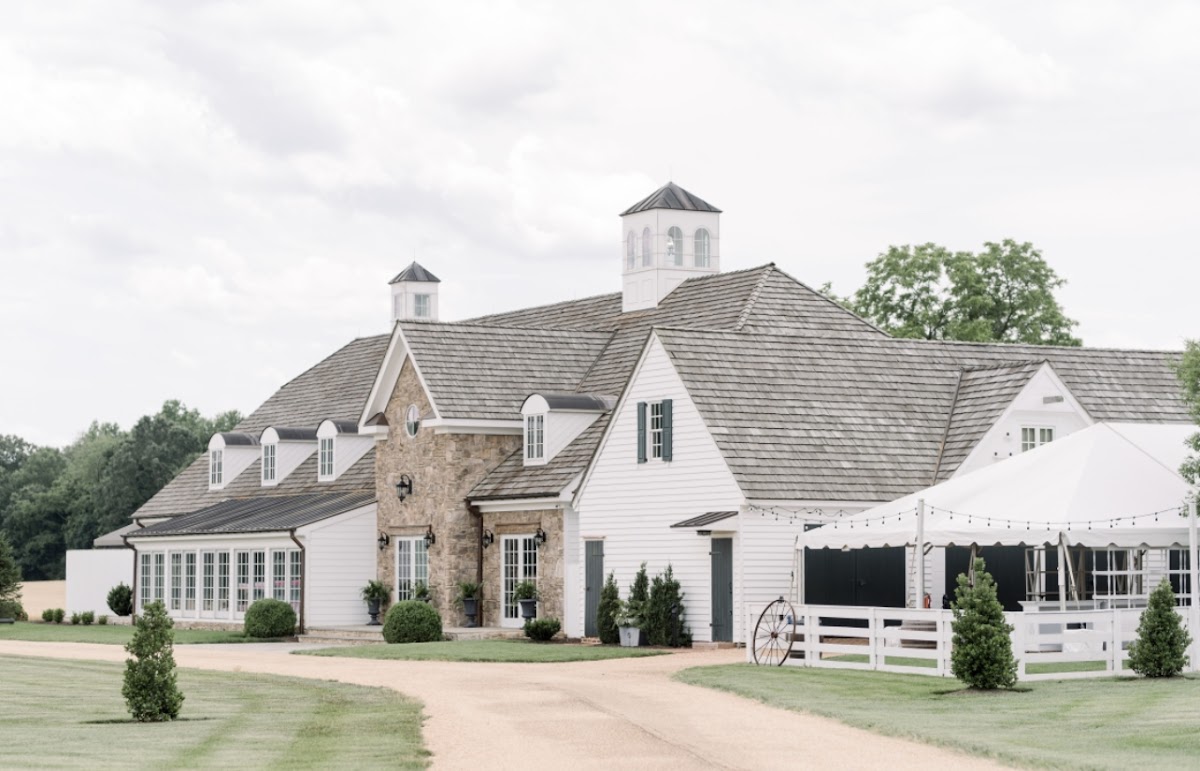
You take Route 5 east out of Richmond, following the James River as it winds through plantation country. The highway is also called John Tyler Memorial Highway, which tells you something about the history embedded in this landscape — presidents and colonial estates, fields that saw Revolutionary War skirmishes, houses that predate the nation itself. After forty minutes of passing split-rail fences and stands of hardwood forest, you turn onto the drive marked Burlington. The property unfolds gradually: first the lawns, manicured and vast, then the gardens with their stone statuary standing sentry among boxwood and perennials, and finally The Stables — a grand structure with exposed timber beams visible through tall windows, the kind of building that looks equally at home in Virginia and the French countryside. There is a sunken garden to one side, a converted colonial ice house to the other, and a bridal cottage tucked into the tree line. This is not a venue that announces itself with fanfare. It reveals itself in layers, each more compelling than the last. Burlington Weddings & Events sits on land where time moves differently, where history is not a theme but a fact, and where the architecture, the gardens, and the light conspire to make every celebration feel like it belongs to a slower, more graceful era. Poppy has designed Burlington Weddings & Events wedding flowers for couples drawn to this singular place.
About Burlington Weddings & Events
Burlington Weddings & Events occupies a historic parcel in Charles City County, the rural stretch of Virginia that lies between Richmond and Williamsburg along the James River corridor. This is plantation country in the truest sense — not a manufactured aesthetic, but the real thing. The surrounding area is home to Sherwood Forest (the longest frame house in America, once owned by President John Tyler), Berkeley Plantation (birthplace of a U.S. president and site of the first official Thanksgiving), and Shirley Plantation (Virginia’s oldest, dating to 1613). Burlington itself is set back from Route 5, bordered by fields and forest, with the kind of privacy that only comes from owning acreage and being miles from the nearest subdivision.
The centerpiece of the property is The Stables, a grand barnlike structure that houses the main reception space. The interior features exposed wooden beams reclaimed from barns and mills, original pine flooring laid in 1818 (refinished but authentic), custom-designed iron chandeliers, and a dramatic staircase that sweeps upward to a loft area. The aesthetic is rustic elegance — not shabby-chic farmhouse, but the kind of carefully restored agricultural architecture that honors its working origins while offering modern comfort. The ceiling soars to cathedral height, the windows stretch nearly floor to ceiling, and the overall effect is one of light-filled grandeur. The Stables can accommodate up to 300 guests for a seated dinner, and the space is versatile enough to serve as both ceremony and reception venue with a flip (though outdoor ceremony sites are also available and heavily utilized).
Beyond The Stables, the property includes several distinct spaces that add dimension to a wedding day. The Ice House Bar is a converted 18th-century colonial ice house — the real deal, with thick stone walls and a compact interior now outfitted as a charming bar for cocktail hour. The Bridal Cottage is a fully appointed on-site accommodation that sleeps seven, with a dedicated beauty salon room featuring three styling chairs and abundant natural light for getting-ready photos. The Groom’s Den offers a parallel space for groomsmen, with a living area, kitchen, bathroom, and comfortable furnishings. And then there are the gardens: a formal lawn suitable for 300 guests, a sunken garden with mature plantings and a sense of enclosure, and a statue garden where classical stone figures provide both structure and romance.
Burlington is located 40 minutes west of Richmond, 11 miles from Williamsburg, and directly on the Virginia Capital Trail — a 52-mile paved path that connects Jamestown to Richmond and draws cyclists and outdoor enthusiasts year-round. For couples hosting destination weddings, the proximity to Colonial Williamsburg and the James River plantations makes this an ideal weekend retreat. For Richmond-area couples, it offers an escape that feels farther away than it actually is. Parking is ample, with space for buses and limousines, and the venue provides golf cart shuttle service for guest convenience.
From a florist’s perspective, Burlington is accommodating and professional. The venue requires all vendors to be approved by a Burlington representative, but floral designers are generally welcomed, and load-in is straightforward with early access available (vendors may arrive as early as 10 a.m. on the event day, with the possibility of setup 1-2 days in advance by arrangement). The events team provides one hour post-event for vendor teardown, which is tight but manageable for an experienced crew. Poppy’s Richmond studio is 40 minutes west, making this an easy delivery route. All events require a licensed and insured wedding coordinator, which we appreciate — it ensures there is a point person managing timeline and logistics so we can focus on the florals. The venue provides exclusive use of the property for the event duration, meaning your wedding will not overlap with another party, and you will have the run of the grounds for photos, cocktails, and celebration.
Event Spaces & Floral Opportunities
The Stables
Capacity: 300 seated
Setting: The Stables is the heart of Burlington, a soaring timber-frame structure with exposed wooden beams, original 1818 pine flooring, custom iron chandeliers, and a grand staircase leading to a loft area. Tall windows line the walls, flooding the space with natural light, and a private hallway connects to a sunroom and catering kitchen for seamless buffet service. The room is large enough to accommodate a seated ceremony followed by a reception flip, or it can be used solely for dinner and dancing if you marry outdoors. The palette is warm and neutral — honey-toned wood, cream walls, wrought iron — providing a blank canvas that works with virtually any color story.
Floral approach: The Stables demands a sense of scale. This is not a room for timid centerpieces. The soaring ceilings and expansive floor plan require either elevated arrangements on tall tapered candlesticks or compote stands (we favor arrangements that rise 24 to 30 inches above the table, using a base of Italian ruscus, seeded eucalyptus, and jasmine vine, then layered with Cafe au Lait dahlias, Quicksand roses, white lisianthus, and trailing amaranthus), or alternatively, very lush low arrangements that read as abundant and organic — think garden roses (Juliet, Patience, Keira), ranunculus, hellebores, and clematis vine mounded into aged wooden dough bowls or stone-textured ceramic vessels. The grand staircase is your showpiece opportunity. A cascading garland of smilax, silver dollar eucalyptus, and trailing jasmine woven with clusters of garden roses, spray roses, and lisianthus at intervals will transform this architectural feature into a floral focal point that photographs beautifully and makes a statement as guests enter. At the base of the staircase, place a large-scale arrangement in a bronze or copper urn — something with height and presence, using branches (curly willow, flowering quince, or dogwood depending on season) as structure and filling in with blooms that echo your overall palette. If you are using The Stables for your ceremony, consider a freestanding arch or chuppah positioned at the base of the staircase or in front of the loft area. A wooden hexagonal arch draped asymmetrically with greenery and flowers creates a stunning focal point without blocking sightlines. The custom chandeliers are beautiful on their own and generally do not require floral enhancement, though a light swag of greenery can soften them if desired. For the reception, the long harvest tables or round guest tables benefit from either low lush centerpieces in varied heights or elevated designs that allow conversation to flow beneath. Burlington Weddings & Events wedding flowers in this space should feel abundant, romantic, and attuned to the historic bones of the room.
Gardens and Lawn
Capacity: 300 seated
Setting: Burlington offers two primary outdoor ceremony sites within its garden spaces: the formal lawn (a wide-open expanse framed by mature trees and distant views of the countryside) and the more intimate sunken garden (a terraced garden bed with stone edging, perennial plantings, and a sense of enclosure). Both sites overlook the surrounding landscape of fields and forest, with no visible modern development to interrupt the historic atmosphere. The statue garden, with its classical stone figures set among boxwood and flowering shrubs, provides an additional backdrop for photos and cocktail hour.
Ice House Bar
Capacity: Variable (cocktail space)
Setting: The Ice House Bar is a converted 18th-century colonial ice house — a small, thick-walled stone structure that once stored ice cut from the James River in winter and packed in sawdust to last through summer. Today it serves as a charming bar area for cocktail hour, with rustic stone walls, intimate proportions, and a distinctly historic atmosphere. The space is open-air in warm months and offers a unique backdrop that guests will remember.
Floral approach: The Ice House Bar calls for restraint and a nod to its agricultural past. This is not the place for formal arrangements in crystal vases. Instead, think rustic and organic: a small arrangement of wildflowers and herbs (yarrow, feverfew, dill, mint) in a vintage glass bottle or a ceramic crock placed on the bar top. A garland of eucalyptus and ivy can be draped across the bar front or wrapped around the exterior doorway. If you want to make a slightly larger statement, place a pair of low arrangements in wooden boxes or galvanized metal buckets on either side of the bar entrance, filled with seasonal blooms in a natural palette — white hydrangeas, peach stock, and blush spray roses for summer; bronze mums, rust-colored dahlias, and hypericum berries for fall. The Ice House Bar is also a prime photo opportunity, so consider how your florals will frame the space in pictures. A swag of greenery above the doorway, a cluster of blooms tucked into the stone wall, or even a simple arrangement on a side table can add color and texture without overwhelming the historic architecture.
Bridal Cottage
Capacity: Sleeps 7
Setting: The Bridal Cottage is a spacious on-site accommodation with three full bathrooms, a full kitchen, a beauty salon room with three styling chairs, and abundant natural light. This is where the bride and her bridal party will spend the morning and early afternoon, getting hair and makeup done, sipping champagne, and slipping into gowns. The space is bright, comfortable, and designed for the logistics of wedding-day preparation.
Floral approach: The Bridal Cottage does not require extensive floral installations, but a few thoughtful touches will elevate the space and make for better getting-ready photos. A small arrangement on the kitchen counter or the vanity in the beauty salon room — something low and lush, perhaps in soft blush and cream tones with roses, ranunculus, and hellebores in a ceramic bowl — adds a touch of elegance without taking up precious space. If you are having a bouquet delivery, this is where your bridal bouquet, bridesmaids’ bouquets, and any corsages or boutonnieres will be staged. Consider having your florist create a dedicated display area: bouquets laid out on a table covered with a linen runner, or hung on a vintage ribbon board for photos. Loose stems in a simple glass vase — peonies, garden roses, or even a single dramatic bloom like a king protea — can add a design element without requiring a full arrangement. The natural light in the cottage is ideal for capturing detail shots of the florals, so plan for your photographer to document the bouquets here before the ceremony.
Groom’s Den / Groomsmen Suite
Capacity: Variable (getting-ready space)
Setting: The Groom’s Den is a dedicated space for the groom and groomsmen, with a kitchen, bathroom, living area, bedroom with daybed, and entertainment options like darts. The atmosphere is comfortable and casual, designed for the guys to relax and prepare without feeling overly formal.
Floral approach: Groomsmen spaces are traditionally light on florals, but a small accent piece can add polish and provide a backdrop for detail shots of the boutonnieres, rings, and accessories. Consider a simple arrangement of greenery and masculine-toned blooms — deep burgundy dahlias, chocolate cosmos, dark scabiosa, and eucalyptus in a wooden box or a simple ceramic vessel. Alternatively, a small succulent arrangement in a rustic container (a wooden crate, a metal tray, a terra cotta pot) can add a modern touch without feeling overly floral. If the groom is wearing a boutonniere or pocket square with a floral motif, the arrangement can echo those colors. The goal is subtle enhancement, not a major floral statement.
Sunken Garden
Capacity: Intimate ceremony or cocktail space
Setting: The sunken garden is a terraced garden bed with stone edging, mature plantings, and a secluded, romantic atmosphere. It is smaller and more intimate than the formal lawn, making it ideal for smaller ceremonies or as a cocktail hour destination.
Floral approach: The sunken garden’s existing plantings are its main attraction, so florals should be used sparingly and strategically. A pair of large urns at the entrance to the garden, filled with seasonal blooms in colors that complement the existing perennials, can frame the space without overwhelming it. If using this area for a ceremony, a simple ceremony arch dressed with greenery and a few floral clusters will suffice — the goal is to enhance the natural beauty, not to cover it up. For cocktail hour, small bud vases or votives with floating blooms can be placed on side tables or low stone walls to add subtle floral touches that guests will notice up close.
Statue Garden
Capacity: Photo and cocktail space
Setting: The statue garden features classical stone statuary set among boxwood hedges and flowering shrubs, creating a formal, elegant atmosphere perfect for photos and pre-ceremony mingling.
Floral approach: The statuary provides built-in focal points, so florals should enhance rather than distract. A garland of ivy, jasmine vine, and roses can be draped across the base of a prominent statue, or a single urn arrangement can be placed at the foot of a figure to draw the eye upward. For cocktail hour, the existing structure of the garden allows for minimal floral intervention — a few small arrangements on highboys, a garland draped across the bar, or votives with greenery and a single bloom clustered on tables are all that is needed.
Wedding Flower Ideas for Burlington Weddings & Events
Tidewater Tradition
This concept draws from Virginia’s colonial and plantation heritage, with a palette rooted in history and elegance. Think ivory, champagne, soft peach, and muted gold — colors you might find in a colonial-era portrait or in the aged patina of a historic home’s wallpaper. Use blooms like garden roses (Patience, Juliet, Evelyn), white hydrangeas, blush ranunculus, peach stock, and cream lisianthus. Add textural accents with silver brunia, dusty miller, and eucalyptus in muted green-gray tones. Vessels should feel antique: aged brass compotes, weathered stone urns, mercury glass votives, and hand-thrown ceramic bowls in cream and taupe. This palette works beautifully in The Stables, where the warm wood tones and historic flooring provide a perfect backdrop, and in the statue garden, where the classical figures echo the formality of the design. For the ceremony, a fabric-draped arch in champagne linen with asymmetric floral clusters in ivory and peach feels both timeless and romantic.
James River Garden
This design takes inspiration from the lush gardens that surround Burlington and the verdant landscape of the James River corridor. The palette is green-forward with pops of soft color: think shades of green (from chartreuse to forest), blush, white, and soft lavender. Use garden roses (Keira, Ivory Patience), white lisianthus, blush astilbe, lavender delphinium, and white sweet peas, all surrounded by abundant greenery — Italian ruscus, seeded eucalyptus, olive branches, jasmine vine, and clematis. Add unexpected texture with herbs like rosemary and mint, or with pods and berries for depth. Vessels should feel organic: wooden dough bowls, moss-covered containers, natural woven baskets, and simple ceramic pots in white or soft green. This style is ideal for couples who want their florals to feel like they were gathered from the property itself. It works beautifully for outdoor ceremonies on the lawn or in the sunken garden, where the natural surroundings amplify the garden-picked aesthetic. In The Stables, this palette softens the rustic wood and stone without competing for attention.
Autumn at the Plantation
For fall weddings, lean into the richness of the season with a palette of rust, burgundy, amber, and deep plum, balanced by softer tones of peach and mauve. Use dahlias (Cafe au Lait, Labyrinth, Jowey Winnie), garden roses in cappuccino and caramel tones (Cappuccino, Quicksand, Toffee), burgundy carnations, plum ranunculus, and amber celosia. Layer in textural elements like hypericum berries, privet berries, oak leaves, and branches of bittersweet or crabapple. Vessels should feel warm and grounded: aged copper urns, bronze compotes, wooden boxes, and terra cotta pots. This palette is particularly stunning in The Stables as the autumn light filters through the tall windows, casting warm tones across the wood and stone. It also works beautifully on the lawn for an outdoor ceremony, where the changing leaves of the surrounding trees echo the florals. For centerpieces, consider mixing low lush arrangements with taller elevated designs to create visual variety and rhythm across the tables.
Seasonal Considerations
Burlington Weddings & Events is located in Virginia’s Tidewater region, where the climate is humid subtropical with four distinct seasons. Each season offers unique opportunities and challenges for wedding florals.
Spring (March–May): Spring in Charles City County is mild and unpredictable. March can still see temperatures in the 40s and 50s with occasional cold snaps, while May regularly reaches the 70s and feels like full spring. April is the sweet spot, with blooming dogwoods, redbuds, and azaleas adding natural color to the landscape. Spring rains are common, so outdoor ceremonies require a backup plan (The Stables can accommodate a full ceremony). Locally available flowers include tulips (in early to mid-spring), daffodils, hyacinths, peonies (late May), ranunculus, anemones, and sweet peas. Flowering branches like dogwood, cherry, and quince are also in season and make dramatic additions to large-scale arrangements. Spring weddings at Burlington benefit from the fresh, clean feeling of the season, and florals can lean light and airy — think whites, blushes, soft yellows, and plenty of greenery.
Summer (June–August): Summer in Virginia is hot and humid, with temperatures regularly in the 80s and 90s and high humidity that can make outdoor events uncomfortable. Afternoon thunderstorms are common, particularly in July and August. For outdoor ceremonies, consider an early evening start time (6 p.m. or later) to avoid the peak heat, and ensure there is ample shade and hydration for guests. Summer florals must be hardy and heat-tolerant. Reliable choices include roses (both garden and spray), hydrangeas (which hold up surprisingly well despite their delicate appearance), zinnias, celosia, and sunflowers. Avoid delicate blooms like sweet peas and ranunculus, which will wilt quickly in the heat. Summer is also the season of lush greenery — Italian ruscus, eucalyptus, and magnolia leaves are all abundant and affordable. The gardens at Burlington are at their peak in summer, so outdoor spaces require less floral enhancement than in other seasons. Let the landscape do some of the work, and focus your floral budget on key areas like the ceremony structure, the staircase in The Stables, and guest table centerpieces.
Fall (September–November): Fall is the most popular wedding season in Virginia, and for good reason. September can still be warm (70s to 80s), but October and November bring cooler, more comfortable temperatures (50s to 70s) and the stunning foliage that makes Virginia famous. The hardwood forests surrounding Burlington turn vibrant shades of red, orange, and gold, creating a natural backdrop that is hard to beat. Fall is also the season of dahlias, one of our favorite wedding flowers — available in an enormous range of colors and shapes, from the pale blush Cafe au Lait to the deep burgundy Black Satin. Other fall flowers include chrysanthemums, asters, marigolds, and late-season roses. Textural accents like hypericum berries, privet berries, crabapples, and dried grasses add seasonal richness. Fall weddings at Burlington can embrace the warmth and depth of the season with rich, saturated color palettes, or they can stay soft and romantic with blush, cream, and amber tones. Either way, the natural beauty of the season provides a strong foundation.
Winter (December–February): Winter in Charles City County is cold and variable, with temperatures ranging from the 30s to the 50s. Snow is possible but not guaranteed — most winters see only a few light snowfalls, and the ground rarely stays covered for long. Winter weddings at Burlington are necessarily indoor affairs, with The Stables as the primary venue space. The good news is that this room feels cozy and intimate in winter, particularly with candlelight and rich, warm florals. Winter flower options include amaryllis, ranunculus, anemones (imported), hellebores, and paperwhites. Evergreen branches (pine, cedar, juniper, magnolia) add seasonal texture and can be used generously in garlands, wreaths, and large-scale arrangements. Berries (hypericum, ilex, privet) and pinecones add festive accents without feeling overly Christmas-themed. Winter palettes can go in several directions: deep jewel tones (burgundy, forest green, plum), soft winter whites and silvers, or rich, warm tones (rust, amber, champagne). Winter weddings also offer an opportunity to use dramatic candlelight — taper candles in brass holders, pillar candles in hurricanes, and votives clustered on tables all create warmth and ambiance that complements the florals.
Poppy’s Expert Take
Plan for the staircase first. The grand staircase in The Stables is the single most important floral opportunity at Burlington. It is the first thing guests see when they enter, it is a natural photo backdrop, and it is large enough to warrant a significant floral installation. A cascading garland that runs the length of the banister, with floral clusters at intervals, will make an immediate and lasting impression. Budget for this before anything else, and build the rest of your floral plan around it.
Leverage the outdoor spaces for ceremony, but have a backup. The gardens at Burlington are stunning, and an outdoor ceremony on the lawn or in the sunken garden will take advantage of the natural beauty. However, Virginia weather is notoriously unpredictable, and spring and summer thunderstorms can roll in with little warning. The Stables can accommodate a full ceremony, so plan your floral design to be flexible. A freestanding arch or chuppah can be moved indoors if necessary, and arrangements in urns or on stands are more portable than installed pieces. Discuss contingency plans with your coordinator and your florist well in advance.
Use the Ice House Bar strategically. The Ice House Bar is small, but it punches above its weight in terms of guest experience and photo opportunities. A simple garland or a pair of small arrangements will elevate this space without requiring a large investment. Think of it as a detail that will show up in your photos and be remembered by guests, even if it is not a major focal point during the event itself.
Don’t overlook the getting-ready spaces. The Bridal Cottage and Groom’s Den are where some of your most cherished photos will be taken. A small arrangement in each space, plus a thoughtful display of the bouquets and boutonnieres, will add polish and beauty to those images. These do not need to be elaborate — a single arrangement and some loose stems are enough — but they should not be skipped entirely.
Choose vessels that match the venue’s aesthetic. Burlington’s rustic elegance calls for vessels that feel authentic and grounded. Avoid overly modern or minimalist containers (clear glass cylinders, geometric metal stands) in favor of aged brass, bronze, copper, ceramic, wood, and stone. Vintage urns, wooden dough bowls, and hand-thrown pottery all feel at home here. If you are renting vessels, work with your florist to select pieces that echo the historic character of the property.
Consider the timing of your event carefully. Burlington requires that all events conclude by 10 p.m., regardless of start time, with a maximum six-hour event duration. This is earlier than many venues, and it means you need to plan your timeline carefully. If you want a full cocktail hour, a seated dinner, and dancing, you will need to start earlier in the day. For evening weddings, this also means your floral installations will need to transition from daylight to candlelight relatively quickly. Work with your florist and planner to ensure the flowers will look beautiful in both settings.
Coordinate with your photographer on staircase portraits. The staircase is a prime photo location, and your photographer will want to use it for portraits of the couple, the bridal party, and family. Make sure your floral installation is designed with this in mind. A garland that runs the full length of the banister provides a beautiful backdrop without blocking faces or requiring guests to move arrangements out of the way. If you are placing a large arrangement at the base of the stairs, ensure it is positioned so it can remain in place during photos without obstructing the shot.
What Poppy Couples Spend on Flowers Here
While Poppy has not yet completed a full wedding at Burlington Weddings & Events, our experience with similar historic venues in Virginia and the Richmond market provides a strong framework for budgeting. Burlington’s combination of indoor and outdoor spaces, dramatic architectural features, and capacity for large guest counts means floral budgets here can range widely depending on the scope of your celebration.
$3,000–$5,000 | The Essentials
At this level, you are covering the key floral elements for a wedding of 100–150 guests. This includes a bridal bouquet, bridesmaids’ bouquets (four to six), boutonnieres and corsages, a ceremony installation (a medium-sized arch or pair of urns for an outdoor ceremony, or an altar arrangement for a ceremony in The Stables), and guest table centerpieces in a single style (either all low and lush, or all elevated, but not a mix). You might also include a small arrangement for the Ice House Bar and a simple garland for the staircase in The Stables. At this budget, we recommend focusing on the spaces that will have the most visual impact: the ceremony site and the staircase. Centerpieces can be relatively simple — low arrangements in wooden bowls or ceramic vessels, heavy on greenery and