
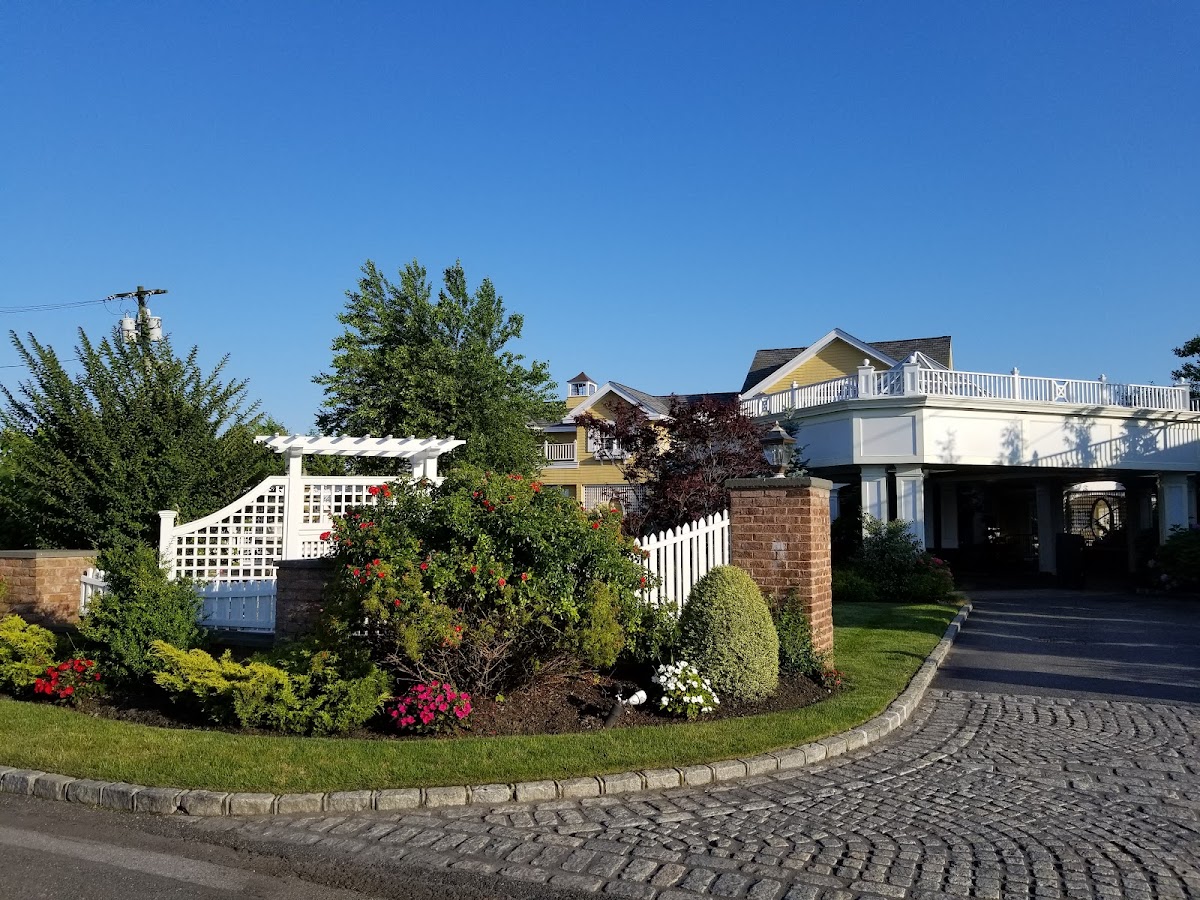
You cross the bridge onto Barnum Island, and suddenly the world slows down. The traffic of the Meadowbrook Parkway falls away behind you, replaced by narrow streets lined with Cape Cod cottages and sailboats bobbing in backyard slips. Island Park is not trying to impress anyone — it simply exists, quietly confident in its waterfront charm. Turn onto Waterfront Boulevard and Bridgeview Yacht Club appears like a postcard from another era: white clapboard, manicured lawns rolling down to Reynolds Channel, and that telltale shimmer of water everywhere you look. This is not the Hamptons. It is something more intimate, more neighborly, more rooted in the traditions of Long Island’s sailing culture. The venue sits directly on the water, with docks jutting into the channel and the distant silhouette of the Atlantic Beach Bridge arching against the sky. On summer evenings, the setting sun paints the water gold and rose, and every guest inevitably drifts to the windows to watch the spectacle. Poppy has received 5 inquiries for Bridgeview Yacht Club wedding flowers, and while we have not yet had the pleasure of designing here, we have studied this venue closely enough to know exactly what it asks of florals: complement the water, honor the light, and never upstage a Long Island sunset.
About Bridgeview Yacht Club
Bridgeview Yacht Club occupies a privileged perch on Reynolds Channel in Island Park, New York, a waterfront enclave on Long Island’s South Shore. The venue is part of the fabric of this tight-knit community — a place where yachting is a lifestyle, not an affectation, and where families have gathered for generations to celebrate by the water. The property itself spans the waterfront with multiple buildings and outdoor spaces, all designed in a classic Nantucket aesthetic: shingle siding, white trim, abundant windows, and interiors that blend nautical references (the granite bar, the ship’s wheel details) with refined elegance (crystal chandeliers, marble flooring, custom drapery). It is a venue that takes its waterfront location seriously — nearly every space offers views of the channel, whether through walls of glass in the Pavilion ballroom or the open-air perspective from the courtyard pergola.
The venue’s layout facilitates a natural flow through a wedding day. Couples typically begin with a ceremony in the outdoor courtyard beneath the pergola, with the water glittering behind them. Cocktail hour migrates to the State Room, a sprawling 7,500-square-foot space with a 25-foot granite bar and red oak floors that manage to feel both casual and sophisticated. Dinner and dancing take place in the Pavilion, the grand ballroom with its 11 crystal chandeliers and that extraordinary glass wall framing Reynolds Channel. The bridal party prepares upstairs in the Bridgeview Room, a private suite with its own red oak spiral staircase and a dressing room that overlooks the water. Throughout the property, lush gardens, cascading waterfalls, and a cast stone fountain create opportunities for photographs and quiet moments away from the crowd.
Logistically, Bridgeview Yacht Club is highly accessible from both New York City and Long Island. The venue sits roughly 50 minutes from Manhattan via the Meadowbrook Parkway or Southern State Parkway, and it is a quick drive from JFK Airport — a consideration for couples with out-of-town guests. The Island Park LIRR station is walkable from the venue, though most guests arrive by car, and parking is ample on-site with valet services available. For florists, load-in is straightforward with dedicated vendor access and an events team accustomed to coordinating multiple vendors. The venue operates as a full-service property with in-house catering and a preferred vendor list, though outside florists are welcomed as long as they carry proper insurance and provide a certificate of liability. This openness to Island Park wedding florists like Poppy means couples have the flexibility to choose a floral partner who understands their vision and the specific design opportunities this waterfront setting provides.
The venue’s season runs year-round, though spring through fall sees the highest concentration of weddings — understandably so, given the appeal of ceremonies on the water and cocktail hours on the pier as the sun sets over the channel. Winter weddings here take on a different character, cozier and more focused on the interior spaces, with the drama of the chandeliers and the warmth of candlelight replacing the outdoor vistas.
Event Spaces & Floral Opportunities
The Pavilion
Capacity: 375 seated for reception, 300 for ceremony
Setting: The Pavilion is the heart of Bridgeview Yacht Club — a 5,500-square-foot grand ballroom dominated by a wall of floor-to-ceiling windows that frame Reynolds Channel and the Long Island sky. Eleven crystal chandeliers descend from the ceiling, their facets catching and scattering light across the room. Custom ceiling drapery in soft neutrals creates a canopy effect, softening the volume of the space without diminishing its grandeur. The dance floor is substantial at 640 square feet, and there is a 12-foot full bar at one end of the room with the option for two additional roller bars during service. The palette is classic and neutral — white walls, honey-toned wood floors, touches of marble and granite — which means the room can adapt to nearly any design direction without clashing. The real star, though, is that glass wall. During daylight hours, natural light floods the room. At sunset, the sky performs its nightly show in shades of coral, rose, and violet. After dark, uplighting and the chandeliers transform the space into something intimate and jewel-like.
Floral approach: The Pavilion rewards restraint at the perimeter and drama at the focal points. The windows do not need florals competing for attention — guests will be drawn to them regardless — so we recommend keeping arrangements either very low (under 10 inches) or elevated on tall stands that lift blooms above sightlines entirely. For centerpieces, consider mounded garden-style designs in mercury glass compotes or textured ceramic vessels: Quicksand and Sahara roses, white ranunculus, blush astilbe, and trailing jasmine vine, with navy blue tweedia or delphinium as an accent if you want to nod to the nautical setting. For taller arrangements, use lucite or glass risers to create floating centerpieces — clusters of Cafe au Lait dahlias, white lisianthus, and Italian ruscus suspended at 30 inches, allowing clear conversation and unobstructed views of the water. The chandeliers themselves can be adorned with minimal greenery garlands (smilax is ideal — delicate and romantic without overwhelming the crystal), though many couples choose to leave them untouched and let the sparkle speak for itself. The head table is an opportunity for a long, lush runner-style arrangement — think five to six feet of blooms and greenery flowing across the table’s length, incorporating white hydrangea, cream spray roses, eucalyptus, and touches of Italian ruscus for texture. The custom ceiling drapery can be enhanced with clusters of blooms at the swag points where fabric gathers, though this is a detail that adds cost and should be reserved for couples with larger budgets. Finally, consider a statement installation at the entrance to the Pavilion — a pair of tall arrangements in gold trumpet vases flanking the doorway, overflowing with white larkspur, blush roses, and trailing amaranthus to signal the transition from cocktails to the main event.
State Room
Capacity: 375 guests for cocktail hour
Setting: The State Room is where guests decompress after the ceremony and before dinner — a sprawling 7,500-square-foot space styled with Nantucket references throughout. The defining feature is the 25-foot granite bar, a serious piece of architecture that anchors one end of the room. There is a 600-square-foot red oak dance floor (useful if you want live music during cocktails), crystal chandeliers overhead, and marble flooring that reflects light beautifully. The room opens onto views of the docks and pier, and on warm days, doors can be opened to blur the line between indoor and outdoor. The aesthetic is crisp and coastal — white wainscoting, navy blue accents, polished wood, and nautical touches that feel earned rather than kitschy.
Floral approach: The State Room is a transitional space, which means florals here should feel abundant but not fussy, impressive but not formal. The 25-foot granite bar is the hero feature and deserves floral attention. We recommend placing low, organic arrangements at both ends of the bar — white hydrangea, coral charm peonies (in season), blush spray roses, and seeded eucalyptus in weathered wood boxes or antique brass bowls — allowing the bartenders to work without obstruction while still creating visual impact. If budget allows, add a series of bud vases with single blooms (white anemones, blue delphinium, coral ranunculus) running down the length of the bar for a collected, effortless look. Cocktail tables throughout the room can be dressed with simple arrangements in varying heights — some in low footed compotes, others in slender trumpet vases — using a nautical-leaning palette of navy, white, blush, and coral. Think white lisianthus, coral roses (Free Spirit or Vuvuzela), navy scabiosa, and plenty of textured greenery like dusty miller and silver brunia. For high-top tables, consider single statement stems in glass cylinder vases — one perfect white amaryllis or a cluster of blue delphinium — that allow guests to set down drinks easily. If the couple wants to incorporate the dance floor into cocktail hour design, surround it with lanterns and low greenery garlands to define the space without creating barriers.
Bridgeview Room / Bridal Suite
Capacity: Bridal party (typically 8-12 people)
Setting: The Bridgeview Room is the private bridal suite on the upper level, accessed via a stunning red oak spiral staircase. The suite includes a large crystal chandelier, a 13-foot wooden bar (useful for mimosas and coffee service during getting-ready hours), wood panel dance floor space, walls of glass overlooking the water, and a private dressing room with its own bath. It is a luxurious, light-filled space that photographs beautifully and allows the bridal party to prepare away from guests.
Floral approach: Florals in the bridal suite serve two purposes: they enhance the getting-ready experience and they elevate the photography. The red oak spiral staircase is the most photogenic feature in the room and begs for a floral treatment. We recommend a garland running along the handrail — smilax as the base, woven through with clusters of blooms that echo the bridal bouquet (perhaps white spray roses, blush ranunculus, eucalyptus, and a few trailing stems of jasmine for movement). This installation creates a romantic backdrop for photos of the bride descending the staircase and also makes a statement when photographed from below. On the bar or side tables, include a few small arrangements in bud vases or vintage cut glass — loose, garden-style clusters of whatever flowers appear in the bride’s bouquet. This creates visual cohesion in getting-ready photos and adds a thoughtful, personalized touch to the suite. If the bride is bringing a floral hair piece or flower crown, have it displayed on a velvet pillow or vintage tray alongside her jewelry and accessories for detail shots. Finally, consider a single statement bloom — a perfect garden rose, a white peony, a sprig of jasmine — placed on the bride’s dress hanger for that quintessential getting-ready photograph.
Outdoor Courtyard
Capacity: 300 guests
Setting: The Outdoor Courtyard is Bridgeview Yacht Club’s primary ceremony space, and it is everything a waterfront wedding ceremony should be. The focal point is a white pergola structure that stands against the backdrop of Reynolds Channel, with lush gardens on either side and the water glittering beyond. The courtyard itself is intimate without feeling cramped, with space for 300 guests in white garden chairs arranged in rows. The pergola can be decorated and draped to taste, offering a blank canvas for floral designers. The surrounding grounds feature mature plantings, waterfalls, and the cast stone fountain, all of which contribute to the garden atmosphere.
Floral approach: The pergola is the most important floral opportunity at Bridgeview Yacht Club, and the design should reflect the couple’s overall aesthetic while respecting the waterfront backdrop. For a classic, romantic look, drape the pergola in sheer white fabric and adorn each corner post with a large, lush arrangement spilling with white and blush blooms — think white hydrangea, Quicksand roses, white peonies (in season), blush lisianthus, and cascading trails of Italian ruscus and jasmine vine. The top of the pergola can be connected with a floral garland running its length, incorporating smilax, eucalyptus, and clusters of blooms at intervals. For a more modern approach, skip the fabric draping and create a minimalist installation with asymmetrical greenery garlands (olive branches, eucalyptus, fern) and sculptural blooms like white king protea or anthurium at the corners. The aisle itself should be marked subtly — the water view is the reason guests are here, so avoid towering arrangements that block sightlines. We recommend simple aisle markers every other row: low glass cylinders filled with floating candles and a few floating blooms (gardenias, peonies, or roses), or shepherd’s hooks with small posies in muted metallics. If the ceremony takes place at sunset, consider incorporating lanterns along the aisle for a warm glow as natural light fades. Finally, the cast stone fountain near the courtyard can be enhanced with floating florals (rose heads, ranunculus, or floating candles) for photographs, though this is an optional detail.
The Grounds / Waterfront Pier
Capacity: Flexible for cocktail hour or photography
Setting: The waterfront pier and promenade stretch along Reynolds Channel, offering panoramic water views, lush gardens, cascading waterfalls, and that cast stone fountain. This is where guests naturally gravitate during cocktail hour if weather permits, and it is also the venue’s most photogenic area. The docks themselves provide opportunities for couples to step away for private portraits with the water and boats as backdrop, while the gardens offer softer, more romantic settings for formal party photos.
Floral approach: The grounds already have abundant natural beauty, so florals here should enhance rather than dominate. If cocktail hour extends to the pier or terrace, consider placing large urns at key entry points — overflowing with white hydrangea, blush roses, trailing amaranthus, and plenty of greenery — to frame the space and guide guests outdoors. The cast stone fountain is an opportunity for a floating floral installation: scatter rose petals and floating candles across the water’s surface, or place a few large floating blooms (gardenias, peonies, lotus pods) for a subtle, romantic effect that photographs beautifully. Along the waterfront promenade, simple lanterns with votive candles can line the path, with occasional clusters of low florals in weathered wood or stone containers to tie the outdoor spaces to the ceremony and reception design. Avoid placing tall arrangements near the water — the wind off Reynolds Channel can be unpredictable, and the view is the reason guests are outside in the first place. Instead, use florals to accent, punctuate, and frame the natural environment without competing with it.
Wedding Flower Ideas for Bridgeview Yacht Club
Coastal Blue & White
This is the palette for couples who want to honor Bridgeview Yacht Club’s nautical identity without veering into literal anchors-and-ropes territory. Start with a base of crisp white blooms — white hydrangea, white lisianthus, white garden roses (Patience or Polar Star), and white ranunculus — and then introduce shades of blue as accents. Navy blue delphinium and scabiosa bring depth and drama, while softer cornflower blue tweedia and nigella add a dreamy, watercolor quality. Textural elements include dusty miller (for that silvery-blue foliage), seeded eucalyptus, and olive branches. Vessels should feel collected and coastal: white ceramic, weathered wood boxes, antique brass compotes, or even blue-and-white ginger jars for a preppy Nantucket reference. This palette works beautifully in the State Room, where the Nantucket styling calls for it, and in the Pavilion, where the blue reads as a sophisticated echo of the water outside. For the pergola, drape it in white fabric and create corner clusters heavy on the white blooms with just enough blue to tie it all together. Add navy blue velvet ribbon to the bridal bouquet and boutonnieres for a polished finish.
Sunset Romance
If you are getting married at Bridgeview Yacht Club, you are doing it at least in part for those Long Island sunsets — so why not bring that palette indoors? This concept uses the colors of a waterfront sunset: coral, peach, blush, rose, and hints of amber and gold. Flowers include coral charm peonies (if marrying in late spring), peach and coral garden roses (Juliet, Free Spirit, and Vuvuzela), blush ranunculus, peach stock, and apricot spray roses, with accents of butterscotch eryngium or amber-toned hypericum berries for texture. Greenery leans warm — use Italian ruscus, jasmine vine, and even copper beech leaves for depth. Vessels should be warm metallics — rose gold compotes, amber glass, hammered copper bowls — or natural materials like terracotta or unglazed ceramic. This palette positively glows in the Pavilion during golden hour, when the light through the windows amplifies the warm tones. For the pergola ceremony, create lush corner arrangements heavy on the coral and peach tones, and line the aisle with amber glass hurricanes filled with votives to echo the sunset glow. This is a palette that photographs like a dream and feels unmistakably romantic without being overly sweet.
Garden Estate
For couples who want Bridgeview Yacht Club to feel less yacht club and more English garden estate, this palette delivers refined abundance. We are talking about a lush, unstructured, slightly wild aesthetic with blooms that look like they were just cut from a countryside garden. The color story is soft and sophisticated: ivory, blush, mauve, champagne, and hints of sage green. Flowers include garden roses in shades like Patience, Juliet, and Keira, white and blush ranunculus, blush astilbe, mauve sweet peas (in season), white lisianthus, and jasmine vine for trailing movement. Foliage is critical here — use lots of it, and make it varied: Italian ruscus, seeded eucalyptus, olive branches, dusty miller, and even ornamental grasses like bunny tails for texture. Vessels should feel antique and collected: aged stone urns, weathered terracotta, moss-covered pots, vintage silver compotes, and mercury glass. This style works everywhere at Bridgeview — in the Pavilion, it softens the formality; in the State Room, it adds romance; and on the pergola, it creates a garden-within-a-garden effect. For centerpieces, think mounded and overflowing, with blooms spilling over the edges of vessels and trailing onto the table. This is not a palette for symmetry or precision — it is about movement, texture, and that effortless, just-gathered quality that only comes from intentional design.
Seasonal Considerations
Spring (April - May)
Spring on Long Island’s South Shore is a time of awakening — the maritime air warms, gardens burst into bloom, and the water loses its winter gray and turns a brighter blue. This is one of the most forgiving seasons for a Bridgeview Yacht Club wedding, with mild temperatures (typically 60s to low 70s) and relatively low humidity. The outdoor courtyard and waterfront pier are fully accessible, and the surrounding gardens are at their peak. Expect blooming tulips, daffodils, and azaleas in the landscaping, which means your floral palette can either echo these spring blooms or contrast with them. Spring is the season for tulips (in every color imaginable), peonies (late May only, and worth building a wedding around), ranunculus, anemones, sweet peas, lilac, and flowering branches like cherry blossom and dogwood. Weather can be unpredictable — May is generally reliable, but April can still surprise you with a chilly, overcast day — so have a contingency plan for moving the ceremony indoors to the Pavilion or Tank Room if necessary. For florals, spring blooms are relatively affordable and abundant, making this an excellent season for couples who want lush, garden-style designs without a prohibitive budget. Embrace the season’s natural palette of pastels, whites, and fresh greens, and your flowers will feel right at home in the waterfront setting.
Summer (June - August)
Summer is peak wedding season at Bridgeview Yacht Club, and for good reason: the weather is warm and predictable, the days are long (sunset happens after 8 p.m. in June), and the waterfront comes alive with boats, activity, and that particular quality of light that makes everything look golden. Temperatures can climb into the 80s and 90s, and humidity is often high, which means florals need to be chosen with care. Avoid highly perishable blooms like sweet peas, tulips, and certain garden roses that wilt in heat. Instead, lean on summer workhorses: hydrangea (especially white and green varieties), roses (spray roses and garden roses are more heat-tolerant than you’d expect), lisianthus, dahlias (late summer), sunflowers, zinnias, and cosmos. Greenery should be hardy — eucalyptus, Italian ruscus, olive branches, and ferns all hold up well in heat. Be strategic about setup timing: if your ceremony is at 5 p.m., ask your florist to deliver ceremony florals as late as possible to minimize time in the heat. For the outdoor pergola, consider using more greenery and fewer blooms to reduce heat stress, or choose blooms known for their durability like hydrangea and roses. Sunset ceremonies on the water are breathtaking in summer — the sky puts on a show in shades of pink, orange, and violet — so plan your timeline to take advantage of the light. Florals can be simpler in summer because the natural environment does so much of the work. Let the water and sky be the stars, and use flowers to frame and enhance rather than dominate.
Fall (September - October)
Fall is a spectacular season for a Bridgeview Yacht Club wedding. The heat and humidity of summer have broken, temperatures settle into the comfortable 60s and 70s, and the light takes on that golden, slanting quality that photographers dream about. The surrounding trees begin to turn color, adding amber, crimson, and rust to the landscape, and the water reflects the changing season. This is the time to embrace a richer, more saturated floral palette: burgundy dahlias (Rip City, Black Satin), rust and amber chrysanthemums, marigold-colored marigolds and zinnias, burgundy and coral roses, deep plum scabiosa, and even seasonal elements like ornamental kale, hypericum berries, and dried grasses. Foliage can include copper beech leaves, oak leaves, and branches with autumn color. Vessels should feel warm and organic — terracotta, aged brass, weathered wood, amber glass. Fall is also the season for local, farm-fresh blooms if you want to incorporate a sustainable or locally sourced element into your floral design. Weather is generally cooperative, though October can bring an occasional nor’easter, so monitor forecasts closely as your date approaches. The outdoor courtyard and waterfront pier are still ideal for ceremonies and cocktail hours, and the crisp air makes for comfortable celebration. For centerpieces, think abundant and textural — this is not the season for minimalism. Pile on the dahlias, add in unexpected elements like artichokes or pomegranates, and let your arrangements feel like harvest-time abundance.
Winter (November - March)
Winter weddings at Bridgeview Yacht Club shift the focus indoors, where the Pavilion’s crystal chandeliers and the State Room’s warm Nantucket styling create a cozy, elegant atmosphere. Temperatures range from the 30s to 40s, and snow is possible but not guaranteed (Island Park’s coastal location moderates extremes). The outdoor spaces are technically accessible, but most couples choose to keep ceremonies and cocktail hours inside. This is the season to embrace drama and luxury in your florals: think white amaryllis, paperwhites, anemones, ranunculus, hellebores, and tulips (which are actually a winter flower in the floral trade, imported from the Netherlands). Greenery can include evergreens like pine, fir, cedar, and boxwood, as well as the usual suspects like eucalyptus and Italian ruscus. Winter is also the season for unexpected textures: birch branches, curly willow, ilex berries, and even ornamental cabbage. The color palette can go in several directions — classic winter white and green, moody jewel tones (emerald, sapphire, amethyst, garnet), or warm and rich (burgundy, plum, copper, gold). Candlelight becomes even more important in winter, so incorporate lots of taper candles, votives, and pillars throughout the reception to create warmth and intimacy. For the Pavilion, consider a dramatic installation along the head table or around the entrance — something large-scale and luxurious that compensates for the lack of outdoor views. Winter blooms tend to be either very affordable (amaryllis, tulips, evergreens) or very expensive (peonies and garden roses are imported and costly), so plan accordingly. The advantage of a winter wedding is that guests are not expecting to be outside, which means you can invest your entire floral budget indoors and create a truly showstopping reception environment.
Poppy’s Expert Take
Respect the views, or pay the price. Bridgeview Yacht Club’s greatest asset is the water — specifically, those walls of glass in the Pavilion and the waterfront backdrop in the courtyard. Any floral decision that blocks, competes with, or distracts from those views is a mistake. In the Pavilion, keep centerpieces low (under 10 inches) or elevated on tall risers that lift blooms above eye level. Do not place large arrangements on window sills or in front of the glass wall. On the pergola, avoid overly dense floral backdrops that block the channel — guests are here to see the water, not a wall of roses. Instead, frame the view with florals that enhance without obscuring. If a couple insists on a full floral backdrop, we gently redirect them toward a garland-style installation that allows the water to remain visible between clusters of blooms.
The 25-foot granite bar is non-negotiable. In the State Room, the bar is the room’s architectural anchor, and it deserves a floral treatment that respects its scale. Do not place a single small arrangement at one end and call it done. Instead, bookend the bar with substantial arrangements at both ends — low and lush, overflowing the vessels — and then add a series of smaller bud vases or votives running the length of the bar to create visual continuity. The bar should feel abundant without impeding the bartenders’ workflow, which means nothing taller than 12 inches and nothing placed in the immediate work zone. This is one area where investing a few hundred additional dollars in florals makes an outsize impact — the bar is photographed constantly during cocktail hour, and a well-dressed bar elevates the entire space.
Chandeliers can be adorned, but should they be? The Pavilion’s 11