
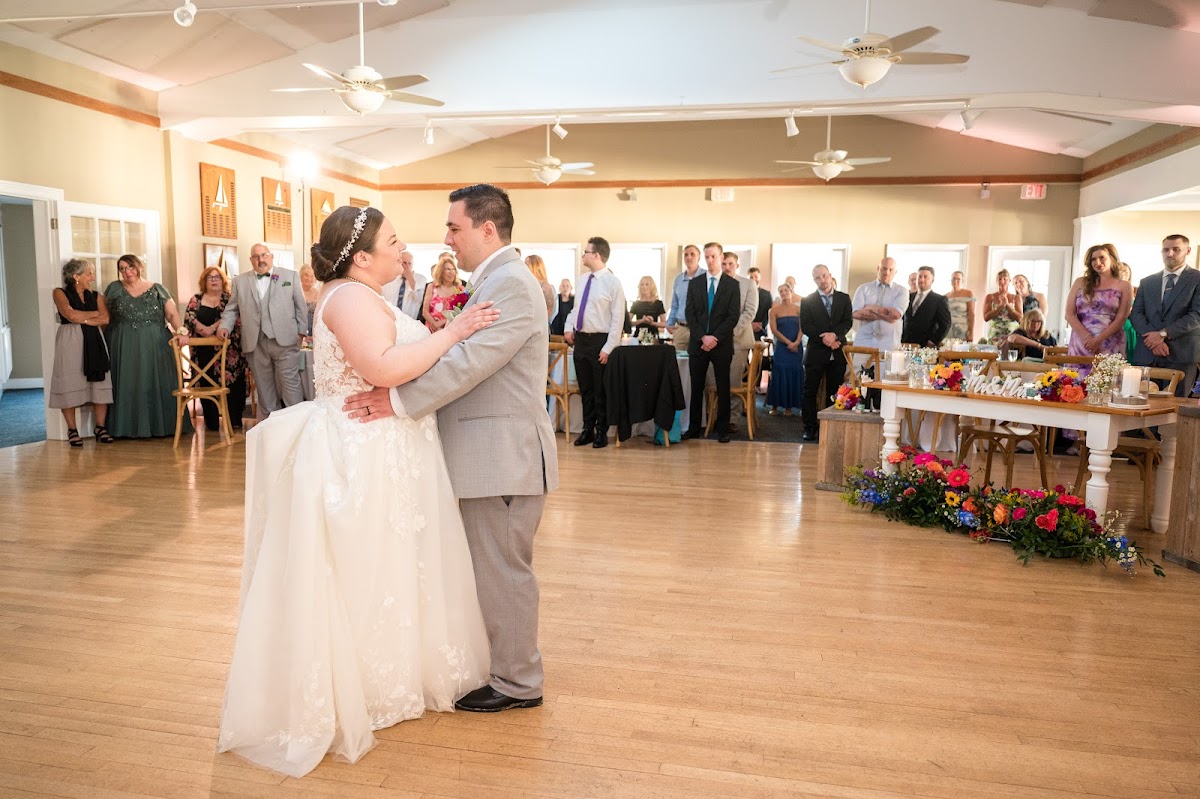
You cross the causeway from the mainland, Route 72 giving way to Long Beach Boulevard, and the air changes first — salt and sun and that particular blend of dried beach grass and SPF 50 that means summer on Long Beach Island. Brant Beach announces itself quietly, the way the best Jersey Shore neighborhoods do: modest beach houses painted in weathered blues and grays, bicycles leaning against porch railings, nautical flags snapping in the breeze. You turn onto Bayview Avenue, and there sits Brant Beach Yacht Club, its name a bit grand for what is really a classic waterfront clubhouse, which is to say exactly what you want it to be. No pretense. No columns trying to look like Newport. Just a one-story structure facing Barnegat Bay, windows running the length of the building, and beyond them, that wide-open expanse of water that turns from silver to rose to deep violet as the sun sets over the mainland. The yacht club’s private beach stretches along the bay — white sand, gentle waves, room enough for a hundred guests to watch you say your vows with the water at your back and the breeze in your hair. This is not a venue that needs to work hard. The bay does the heavy lifting. The sunsets are reliable. The rocking chairs on the covered deck tell you everything you need to know about the vibe. Poppy has fielded 10 inquiries for Brant Beach Yacht Club wedding flowers, and each time, we think the same thing: this is what a shore wedding should feel like.
About Brant Beach Yacht Club
Brant Beach Yacht Club sits on the bay side of Long Beach Island, a narrow barrier island that stretches 18 miles along the New Jersey coast between Barnegat Inlet and Beach Haven Inlet. The island is one of the Shore’s most beloved summer destinations — not the boardwalk-and-saltwater-taffy scene of Wildwood, not the upscale exclusivity of Spring Lake, but something in between: family-friendly, unpretentious, deeply rooted in a multigenerational beach culture where people return year after year to the same rental cottage or family compound. Brant Beach itself is a quiet residential stretch known for sailing, paddle boarding, and sunsets that draw locals out to their docks and porches every evening from May through September. The yacht club functions as a social hub for the community — sailing lessons, weekend regattas, holiday parties — but its events program has evolved to become one of the island’s most sought-after wedding venues, especially for couples who want a toes-in-the-sand ceremony without the formality (or price tag) of a resort.
The property is refreshingly straightforward. The Main Waterfront Clubhouse is a single-story structure with a layout that makes sense the moment you walk in: foyer with bay views, large open reception space with those crucial window-lined walls that flood the room with natural light, a commercial kitchen with restaurant-quality appliances, and that famous indoor/outdoor bar — truly one of the island’s most clever features, allowing bartenders to serve drinks to both the interior reception space and the exterior covered deck without guests having to migrate inside for refills. The bar taps and soda lines run through both sides. It is a small detail, but it changes the flow of a wedding entirely. Outside, the covered deck wraps around the clubhouse, furnished with classic wooden rocking chairs that guests invariably gravitate toward during cocktail hour. The rooftop observation deck is accessible via a narrow staircase (not ADA compliant, worth noting for your guest list), and from that vantage point, you get the full panorama: Barnegat Bay stretching west toward the Pine Barrens, the skyline of the mainland beyond, and if the light is right, a view that makes even the most jaded New Yorker reach for their phone to capture it.
The private bay beach is where most couples choose to hold their ceremony. Unlike ocean-side beaches with their crashing surf and unpredictable tides, bay beaches are calmer — the water laps rather than crashes, the sand is softer, and the wind, while still present, is generally more forgiving. The club’s beach is exclusive to events booked at the venue, which means no public beachgoers wandering through your vows. The backdrop is pure Jersey Shore: sailboats bobbing at their moorings, the occasional kayak gliding past, and that horizontal light that only happens over water.
Logistically, Brant Beach Yacht Club is about 75 minutes from Philadelphia and roughly two hours from New York City, making it accessible for metro area couples while still feeling like a true destination. The venue offers 12-hour access on the day of the event (11:30 a.m. to 11:30 p.m.), and couples can drop off items for setup on the Thursday prior to a weekend wedding. The club hosts only one wedding per day, which means you have the entire property — no overlapping events, no shared vendor load-in, no competing timelines. Touch of Elegance is the exclusive caterer, offering all-inclusive packages with customized menus, event planning, and on-site coordination. For florals, the yacht club does not restrict which designer you work with, though proximity matters: Poppy’s studio is about 90 minutes away, a manageable drive for our delivery team, and we have worked with enough shore venues to understand the particular challenges of beach ceremonies, salt air, and summer humidity.
Event Spaces & Floral Opportunities
Main Waterfront Clubhouse
Capacity: 200 seated
Setting: The Main Waterfront Clubhouse is where your reception unfolds, and it does so with a kind of unfussy elegance that only comes from great natural light and water views. The entire bay-facing wall is windows — floor to ceiling, no interruption — so the room feels like an extension of the outdoors. The ceiling is modest in height, which keeps the space intimate rather than cavernous. The floors are polished wood, the walls painted in soft neutrals, and the overall effect is blank canvas in the best sense: nothing competes with your design choices. The indoor/outdoor bar is a functional marvel, clad in light wood with plenty of room for bartenders to work both sides simultaneously. There is space for a band or DJ at one end, and the one-floor layout with handicapped access means all guests can move comfortably throughout the space. During the day, the room is flooded with sunlight. As evening falls and the bay turns from blue to gold to dusky purple, the windows become a living backdrop more dramatic than anything you could hang on a wall.
Floral approach: This is a room where the view does half the work, and your florals should honor that rather than fight it. Keep centerpieces low and lush — mounded garden roses (Keira, Patience, White O’Hara) with trailing jasmine vine, soft blue hydrangea, and tufts of sea lavender in low ceramic bowls or distressed white compotes that echo the beachy setting. If you prefer height, consider tall, slender arrangements on clear glass risers that lift the blooms above sightlines entirely — delphinium, lisianthus, and trailing amaranthus in a palette of soft blues, whites, and sandy beiges. The bar is prime real estate for a lush installation: a low garland of Italian ruscus, eucalyptus, and white spray roses running the length of the bar top, interspersed with pillar candles in glass hurricanes. The entrance from the foyer into the main space deserves a statement moment — a pair of large urns flanking the doorway, overflowing with blue hydrangea, white snapdragons, and textured foliage that signals the shift from cocktails to dinner. Avoid anything too tall on guest tables that will block those bay views, especially during sunset when your guests will want an unobstructed line of sight. The abundant natural light means even pale blooms will photograph beautifully, and the neutral walls allow for any color palette you choose, from classic nautical navy and white to soft coastal blush and seafoam.
Private Bay Beach
Capacity: 200+ ceremony seating
Setting: The private bay beach is the emotional centerpiece of a Brant Beach Yacht Club wedding. This is where you stand barefoot in the sand, the water behind you, the late afternoon sun turning everything golden. The beach is wide and sandy, gently sloping toward the bay, with enough space to set up rows of white folding chairs or leave it open for standing-room ceremonies. Sailboats dot the horizon. The mainland is visible across the water, low and hazy. The wind is a factor — not violent, but steady, the way bay breezes are. Sunset ceremonies are the most popular, and for good reason: the light is extraordinary, the temperature drops to something comfortable, and the whole scene feels like a postcard from the 1950s Shore, before everything got overdeveloped. The yacht club includes this beach in your event rental, and the rain plan (a ceremony on the covered deck under the awning) comes at no additional cost, which is a relief given the unpredictability of Shore weather.
Floral approach: Beach ceremony florals require a different strategy than garden or ballroom weddings. The enemy here is wind — not just the breeze that feels romantic when you are standing still, but the kind of sustained gusts that will topple anything not properly anchored. Start with a sturdy arch or arbor, and we do mean sturdy: heavy wooden structure, either rented or custom-built, weighted at the base with sandbags or concrete blocks hidden beneath fabric draping. The floral installation on the arch should be asymmetrical and relatively compact — a lush cluster of blooms on one side rather than a full garland that acts like a sail. Think white hydrangea, blue delphinium, cream roses (Patience, Polo), and plenty of textured greenery like Italian ruscus and dusty miller that can withstand wind without looking battered. Driftwood woven into the installation adds a coastal touch and provides structural support. For the aisle, skip anything lightweight or top-heavy. Instead, use shepherd’s hooks with floral arrangements in sturdy urns or — even better — potted arrangements in galvanized metal buckets weighted with sand, blooms that nod to the coastal setting: lavender, sea holly, white lisianthus, and sprigs of rosemary. If you want petals, use them sparingly and only if the forecast is calm; otherwise, they will scatter before your processional is halfway down the aisle. The beach itself is beautiful enough that you do not need much — a well-designed arch and subtle aisle markers are often sufficient. Let the bay, the sky, and the sailboats do the rest.
Covered Deck/Back Porch
Capacity: Variable, typically cocktail-style for 100+
Setting: The covered deck is where your guests will spend cocktail hour, and it is one of the yacht club’s most charming spaces. Wrapped around the clubhouse with a roof overhead and open sides, it offers protection from sun and light rain while maintaining that outdoor, breezy feel. Wooden rocking chairs line the perimeter — guests love them, and they photograph beautifully. The deck overlooks the bay, with unobstructed sunset views. High-top cocktail tables can be scattered across the space, and the indoor/outdoor bar means drinks are steps away. If weather turns truly foul, the yacht club can rent clear side walls to enclose the deck, essentially creating a windowed pavilion, though this is rarely necessary outside of shoulder season. The flooring is wood plank, weathered and sturdy, and the overall vibe is relaxed summer evening, cold drink in hand, shoes kicked off somewhere.
Floral approach: The covered deck is ideal for lush, statement floral moments because it is protected from the elements while still feeling open-air. High-top cocktail tables are the perfect opportunity for elevated arrangements — tall, loose, garden-style designs in textured ceramic vessels. Picture Café au Lait dahlias, peach and coral roses (Free Spirit, Romantic Antike), white veronica, and trailing smilax in vessels glazed in soft blues or sandy neutrals. These arrangements can be taller and more romantic than what works on the beach because the roof provides wind protection. Consider a garland installation along the deck railing — not a thick, formal swag, but a loose, organic runner of eucalyptus, Italian ruscus, and clusters of white hydrangea and cream spray roses (Majolika, Princess Charlene) wired intermittently along the length. This frames the bay view without blocking it and creates a cohesive look in guest photos. If you are using the rocking chairs, small floral accents tied to the backs with ribbon — single blooms or mini nosegays — add a thoughtful, welcoming touch without cluttering the seating. The bar is another opportunity: a low arrangement on each end, compact but lush, flanking the bartenders and adding a pop of color to what is otherwise a utilitarian space. The lighting on the deck is typically string lights or lanterns, so your floral palette should work in both daylight and soft evening illumination — whites, creams, soft corals, and dusty blues all glow beautifully as the sun sets.
Commodore’s Room
Capacity: Flexible; can accommodate additional seating for up to 180 total guests when combined with main space
Setting: The Commodore’s Room is the yacht club’s Swiss Army knife — a multi-purpose interior space with a working fireplace that can serve as a bridal suite, lounge area, dessert station, or overflow seating depending on your needs. The room has a warm, clubby feel with wood paneling and comfortable furnishings. The fireplace is the architectural anchor, flanked by built-in shelving and mantel space perfect for styling. If you are getting married in cooler months, the fireplace can actually be lit, which adds a cozy, intimate atmosphere. The room connects to the main clubhouse but feels separate enough to function as a distinct space, which is useful for couples who want a quieter area for older guests or a dedicated spot for late-night coffee and dessert.
Floral approach: The fireplace mantel is the focal point and deserves a lush installation. Think asymmetrical garland — five to seven feet long, draping gracefully off one side of the mantel and anchored with clusters of blooms. Use a base of smilax and seeded eucalyptus, then layer in garden roses (Quicksand, Sahara, Juliet), white ranunculus, pale peach stock, and sprigs of jasmine. Add pillar candles in varying heights along the mantel for a romantic glow, especially if the room is being used for evening activities like dessert service. If the space is functioning as a lounge, low arrangements on side tables and coffee tables — simple, elegant, not competing for attention — keep the floral presence consistent with the rest of the venue without overwhelming the room. For a dessert table setup, consider a larger centerpiece arrangement flanked by smaller bud vases in a complementary palette, creating visual rhythm along the table. If you are using the Commodore’s Room for getting-ready photos, a small bouquet or arrangement near the seating area adds a finished, intentional look without requiring significant additional investment.
Rooftop/Upper Deck
Capacity: Small groups for photos
Setting: The rooftop deck is not a ceremony or reception space — it is a photo opportunity, plain and simple, and a spectacular one. Accessed via a narrow interior staircase (not suitable for guests with mobility challenges), this upper observation deck offers 360-degree views of Barnegat Bay, the island, and the surrounding waterways. Couples typically head up here during golden hour with their photographer for portraits, and it delivers every time: wide-open sky, water stretching to the horizon, and that particular quality of late-afternoon light that makes everyone look like they belong on a magazine cover.
Floral approach: Less is more here because the view is the star. If you want florals in your rooftop portraits, consider bringing your bouquet and perhaps one or two small portable arrangements — a petite compote arrangement that can be placed on the railing or a handheld floral hoop for a whimsical, editorial touch. Anything permanent or installed is unnecessary and risks looking contrived in such a naturally beautiful setting. Save your floral budget for the spaces where guests will actually spend time. The rooftop deck does not need florals; it needs good light and a great photographer.
Pavers/Patio Area
Capacity: Flexible, typically used for smaller gatherings or ceremony alternative
Setting: The paver patio is a ground-level outdoor space adjacent to the clubhouse, used occasionally for ceremonies (especially smaller weddings or weekday events) or as an alternative cocktail area. The surface is brick or stone pavers, level and sturdy, with views toward the bay and easy access to the clubhouse interior. It lacks the romantic beach setting of the bay ceremony site, but it offers practicality — no sand, easier setup for chairs, better footing for guests in heels.
Floral approach: If you are using the patio for a ceremony, treat it like a garden wedding: a freestanding arch or fabric-draped arbor with lush floral clusters, aisle arrangements in urns or on shepherd’s hooks, and perhaps a low floral border along the seating area perimeter to define the space. For cocktail use, high-top tables with elevated arrangements and perhaps a few large potted plants (lemon trees, olive trees, hydrangeas in decorative pots) to soften the hard-edged paver surface and create a garden-party atmosphere. The patio is a functional space that benefits from generous florals to give it character, unlike the beach and bay-view areas that already have natural drama built in.
Foyer
Capacity: Entry/transition space
Setting: The foyer is your guests’ first impression as they enter the clubhouse from the exterior. Bay views through the windows, a transitional area leading to the main reception space, simple and clean in design. It is not large, but it sets the tone for the evening.
Floral approach: A single statement arrangement on a round entry table or pedestal — something generous and romantic that signals “you have arrived at a special event.” A lush, asymmetrical design in a classic urn: white hydrangea, blush roses, trailing amaranthus, and plenty of textured greenery. This arrangement will appear in the background of countless guest photos as people arrive, so it should feel elegant and cohesive with your overall design. If the foyer has a console or side table, a smaller complementary arrangement maintains visual consistency without crowding the space. This is not the place for minimalism — your entry florals should feel abundant and welcoming, the first hint of the beauty that awaits inside.
Wedding Flower Ideas for Brant Beach Yacht Club
Coastal Blue & White
This is the quintessential yacht club palette, and for good reason — it never fails. Crisp white blooms (hydrangea, garden roses like Patience and Playa Blanca, ranunculus, lisianthus) paired with varying shades of blue (delphinium in shades from pale sky to deep cobalt, tweedia, blue thistle, nigella). Add soft greenery (eucalyptus, dusty miller, Italian ruscus) and touches of silver brunia for texture. Vessels should be classic and clean: white ceramic compotes, blue-and-white porcelain ginger jars, clear glass cylinders wrapped in navy ribbon. This palette works beautifully in the Main Waterfront Clubhouse where it complements rather than competes with the bay views, and it photographs stunningly against both the water and the neutral interior. For the beach ceremony, a white-washed wooden arch with an asymmetrical installation of white hydrangea and blue delphinium feels fresh and romantic without trying too hard. Centerpieces can alternate between low, lush white arrangements and taller designs with blue delphinium reaching skyward. The overall effect is classic, timeless, unmistakably nautical without feeling themed or kitschy.
Sunset Coral & Peach
Take your color cues directly from the Barnegat Bay sunset: warm corals, soft peaches, touches of pink and gold. Use Free Spirit roses, Romantic Antike roses, coral charm peonies (if in season), peach ranunculus, apricot stock, and salmon-colored snapdragons. Add warmth with touches of burgundy (Rip City dahlias, burgundy scabiosa) and soften with cream and blush accents. Foliage should be soft and romantic: seeded eucalyptus, jasmine vine, trailing smilax. Vessels in warm metallics (aged brass, copper, rose gold) or natural materials (driftwood bases, weathered ceramic). This palette is especially magical during golden hour and into evening when the actual sunset mirrors your floral colors — the clubhouse windows become a living extension of your design. For the covered deck cocktail hour, tall arrangements in this palette catch the setting sun and seem to glow from within. On guest tables, low, lush arrangements in aged brass compotes feel warm and intimate as candlelight flickers during dinner. The beach ceremony arch can incorporate actual driftwood pieces woven with coral and peach blooms, tying the florals directly to the coastal setting.
Garden-by-the-Sea
This concept brings an English garden aesthetic to the shore — romantic, loose, slightly overgrown in the most beautiful way. The palette is soft and varied: blush, mauve, dusty rose, cream, with touches of lavender and sage green. Use garden roses in abundance (Juliet, Keira, Quicksand, Romantic Antike), mixed with ranunculus, sweet peas (if in season), astilbe, stock, jasmine, and plenty of textured foliage including rosemary, olive branches, lamb’s ear, and trailing jasmine vine. Add interest with scabiosa pods, privet berries, and sprigs of lavender. Vessels should feel organic and collected: aged terracotta, distressed ceramic, weathered wood containers, vintage brass. The installations should be loose and organic — no tight, structured arrangements. This style works beautifully in the Commodore’s Room where the fireplace provides a romantic backdrop for an abundant mantel installation, and on guest tables where the soft, overflowing arrangements invite guests to lean in and admire the details. For the beach ceremony, a driftwood arch becomes the structure for a wildly romantic, asymmetrical floral installation that looks as though it grew there naturally. The overall effect is effortlessly romantic, garden party meets seaside celebration, beautiful without being precious.
Seasonal Considerations
Spring (April-May)
Spring weddings at Brant Beach Yacht Club offer milder temperatures and the excitement of the island waking up from winter, but they come with weather unpredictability. Expect temperatures ranging from the 50s to the 70s, with the possibility of rain and wind. The bay can still be chilly, and the breeze can be brisk, so encourage guests to bring layers for beach ceremonies. On the floral front, spring is spectacular: peonies, ranunculus, anemones, sweet peas, and tulips are at their peak and regionally available from specialty growers. Spring blooms tend to have softer, more romantic forms than their summer counterparts, which works beautifully for garden-style designs. Be prepared with a solid rain plan — the covered deck ceremony option is included in your rental, so ensure your florist can adapt the ceremony arrangements to work in that space if needed. Wind protection becomes especially important for beach ceremonies in spring; use heavier, more compact floral installations and avoid anything too delicate or top-heavy. May is the sweet spot: warm enough for comfortable outdoor ceremonies, blooms still abundant, and rates often lower than peak summer.
Summer (June-August)
Summer is peak wedding season on Long Beach Island, and for good reason: warm weather, long daylight hours, and that classic Jersey Shore vibe in full swing. Temperatures typically range from the high 70s to mid-80s, with high humidity (expect 70-80% regularly) and the occasional summer thunderstorm rolling in from the mainland. Beach ceremonies are glorious but hot — sunset timing becomes crucial for guest comfort, typically around 8:00-8:30 p.m. in peak summer. The heat and humidity affect floral choices significantly: skip anything fragile (sweet peas will wilt instantly, certain garden roses struggle in heat). Instead, lean into blooms that can handle warmth: hydrangea (keep them well-hydrated), roses with thicker petals (Quicksand, Patience, Polo), dahlias, lisianthus, and zinnias. Your florist should deliver as close to event time as possible, and arrangements should be kept in shade and misted regularly before the ceremony. The upside? Summer offers the widest variety of blooms and the most dramatic sunset colors — the sky over Barnegat Bay turns spectacular shades of coral, pink, and gold. Book the venue early; summer weekends fill up a year or more in advance. Budget for potential heat-related adjustments like additional water stations for guests and backup plans for florals that may need refreshing during extended outdoor cocktail hours.
Fall (September-October)
Fall is arguably the best time to marry at Brant Beach Yacht Club. September still feels like summer on the island — warm days, cooler evenings, comfortable bay breezes — but the crowds have thinned and rates often drop post-Labor Day. October brings quintessential autumn weather: crisp air, stunning light, comfortable temperatures (60s-70s), and the kind of clear, bright days that make everything look sharp in photos. Hurricane season runs through November, so monitor forecasts and ensure you have comprehensive vendor contracts with weather contingencies, but in our experience, the majority of fall weekends are spectacular. The floral palette shifts beautifully in autumn: dahlias are at their absolute peak (Café au Lait, Labyrinth, Rip City), garden roses are still available, and you can incorporate seasonal textures like seeded eucalyptus, hypericum berries, privet berries, and even small branches with turning leaves. The light in fall is extraordinary — lower in the sky, more golden, longer shadows — which makes every floral arrangement photograph like a painting. October sunsets over the bay are particularly stunning, happening early enough (around 6:00-6:30 p.m.) that you can have a sunset ceremony and still dine before 8:00 p.m. If you want the Shore experience without the peak-season prices and crowds, fall is your window.
Winter (November-March)
Winter weddings at Brant Beach Yacht Club are rare but not impossible, and they offer a completely different aesthetic. The island is quiet — most summer rentals are closed, restaurants operate on limited schedules, and the yacht club itself may have reduced availability. Temperatures range from the 30s to 50s, with wind chill making the bay feel significantly colder. Beach ceremonies are generally not advisable unless you have an exceptionally hardy group and can provide serious heaters and blankets. The covered deck with clear side walls becomes your best outdoor option, or consider an entirely indoor event using the Main Waterfront Clubhouse for both ceremony and reception. The advantage? The venue is likely available on short notice, rates may be lower, and you will have a truly intimate, cozy celebration. For florals, winter offers the chance to lean into richer, moodier palettes: deep burgundy, plum, hunter green, and cream. Amaryllis, anemones, ranunculus, hellebores, and evergreen branches (pine, fir, cedar) all work beautifully. The fireplace in the Commodore’s Room becomes a central feature, ideal for a dramatic mantel installation with candles and lush greenery. Winter weddings here feel like a secret — special, quiet, and entirely yours.
Poppy’s Expert Take
The wind is not a suggestion. Every florist says they understand beach weddings, but until you have watched a $2,000 ceremony arch topple into the sand five minutes before the processional, you do not truly understand. At Brant Beach Yacht Club, the bay breeze is constant and occasionally assertive. Your ceremony structure must be weighted and anchored properly — not just “it feels stable,” but actually secured with sandbags, stakes, or concrete blocks hidden beneath fabric or sand. Floral installations should be compact and asymmetrical rather than full garlands that catch wind like a sail. We have learned to avoid tall, thin vessels and top-heavy arrangements near the beach; everything gets a stability test before it leaves our studio. If your florist does not immediately start talking about anchoring systems when you mention a beach ceremony, find another florist.
Timing is everything with the sunset. Brant Beach Yacht Club’s bay views are its greatest asset, but only if you plan your timeline around the light. Sunset times shift dramatically across the season — 8:30 p.m. in midsummer, 5:30 p.m. by late October. Work backward from sunset to determine your ceremony start time; ideally, you want vows to happen 20-30 minutes before sunset when the light is warm but not blinding. Cocktail hour then unfolds during golden hour with the sky doing its full color-shift performance. If you schedule your ceremony too early, you miss the magic light; too late, and your guests are standing in the dark trying to see you exchange rings. Your florist should know this too — certain colors (soft blues, pale pinks) glow in sunset light, while others (deep purples, reds) can look muddy. Schedule a site visit at your intended ceremony time if possible, or at minimum, look at sunset time charts for your wedding date and plan accordingly.
The covered deck is your secret weapon. Many couples fixate on the