
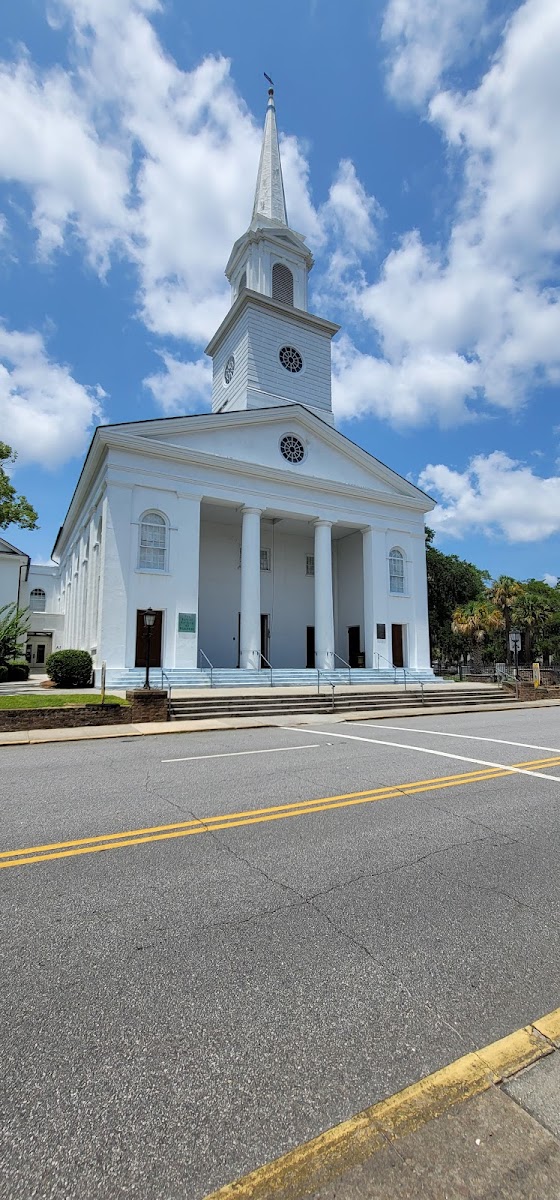
Designing for the Baptist Church of Beaufort requires a departure from traditional “wedding decor” in favor of a site-specific, naturalistic approach. The architectural weight of the 1844 sanctuary and the ethereal quality of the moss-draped oaks create a Southern Gothic atmosphere that is already visually saturated. The floral objective here is not to decorate the space, but to emerge from it.
Success at this venue depends on a designer’s ability to work with the existing landscape of Beaufort’s historic district. The silver-grey of the Spanish moss acts as a neutral base, while the weathered brick and aged stone markers provide a textured, historic canvas. This is a site for “quiet” luxury—designs that look as though they have been there for decades rather than hours.
The Spaces
The Churchyard
The churchyard is the primary draw for those seeking an authentic Lowcountry aesthetic. It is a space defined by history, shade, and the movement of the wind through the oaks. Because the ground is a mix of grass and mulch, and the sky is open, the scale of your arrangements must be substantial enough to register against the massive trees but low enough to maintain the sightlines of the historic markers.
- What works: Ground-level floral “nests” or meadows that follow the natural curves of the paths. Using heavy-bottomed vessels is essential to combat the coastal breeze.
- Skip: Tall, spindly pedestals or thin shepherd’s hooks. These look fragile and out of place against the rugged, ancient trees.
- Watch out: The proximity to historic gravestones. Installations must be entirely self-supporting and non-invasive. There is no room for floral foam or mechanics that could leak onto or damage the stone.
- Budget hero move: Focus the entire churchyard budget on two massive, ground-based installations at the “altar” area, nestled between two prominent oaks.
Sanctuary Entrance
The transition from the street to the sacred space is a critical design moment. The architecture of the Baptist Church of Beaufort is stately and symmetrical. This is the best location for a “statement” piece that welcomes guests and sets the tone for the ceremony.
- What works: Asymmetrical installations that climb the handrails or flank the base of the stairs. Use varieties that mimic the local flora, like smilax vine, to bridge the gap between the wild churchyard and the formal building.
- Skip: Wreaths on the doors. They often look too domestic for a building of this scale and history.
- Watch out: High sun exposure on the front steps. Beaufort’s afternoon sun can be punishing; choose hardy greens and woody-stemmed blooms for these exposed spots.
What Works at Baptist Church of Beaufort
The “Lowcountry Palette” is your best friend. Stick to colors that exist naturally in the Beaufort landscape: dusty blues, sages, creams, and the occasional deep “oxblood” red or muddy mauve. These tones vibrate perfectly against the grey Spanish moss and the orange-tinted brick.
Incorporate local textures. Smilax is the gold standard for South Carolina weddings. Its delicate, winding nature mimics the way vines grow naturally in the churchyard. Using it to “grow” up the architecture or around the base of trees creates an effortless, integrated look.
Ground-up installations are the only way to go. Because you cannot rig anything to the historic structure or the protected trees, everything must be floor-based. Large-scale “meadows” that appear to be sprouting from the mulch are more effective than traditional arrangements in vases.
Embrace the wind. Beaufort is a coastal town. Instead of fighting the breeze with stiff, wired arrangements, choose flowers with movement. Long-stemmed ranunculus, cosmos, and grasses dance in the wind and look better in photography than static, round bouquets.
Respect the silence of the stones. The historical markers are the soul of this venue. Floral designs should frame these elements, not cover them. A “less is more” philosophy ensures that the history of the site remains the protagonist.
Budget Guide
| Tier | Investment | Floral Strategy |
|---|---|---|
| Essentials | $1,750 - $2,500 | Focus on personal flowers (bouquets/boutonnieres) and a single, high-impact ground installation at the ceremony focal point. |
| Sweet Spot | $2,500 - $4,500 | Adds aisle markers that transition to a reception space and a more robust entrance installation for the sanctuary steps. |
| Full Experience | $4,500 - $7,500 | Comprehensive ground-based “meadows” throughout the churchyard, lush greenery installations on the entrance architecture, and premium floral varieties. |
| Statement | $7,500+ | Full immersion. Large-scale floral “hedges” defining the ceremony space, extensive vine work on the church exterior, and high-density focal points. |
The character of this venue is one of understated Southern elegance; even a $1,750 budget can look sophisticated if the placement is strategic and the color palette is disciplined.
Tips
Use heavy mechanics for the churchyard. The wind coming off the water can be deceptive. Ensure every ground arrangement is weighted with sandbags or heavy stones hidden within the design.
Avoid floral foam at all costs. Beyond the environmental impact, foam-based designs look too stiff for this organic environment. Use chicken wire and water tubes for a more natural, “growing” look.
Plan for the humidity. Beaufort’s moisture levels can make certain flowers (like hydrangeas) wilt within an hour. Opt for hardy roses, orchids, and tropical-leaning foliages that can stand the heat.
Repurpose with a plan. If your reception is elsewhere in Beaufort, your ground meadows can easily be moved to frame a bandstand or sweetheart table, but you must have a dedicated team to handle the logistics on the uneven churchyard terrain.
Coordinate with the church’s historical committee. This is a functioning historic site. Always confirm the exact boundaries of where flowers can be placed to ensure no markers or protected plants are disturbed.