
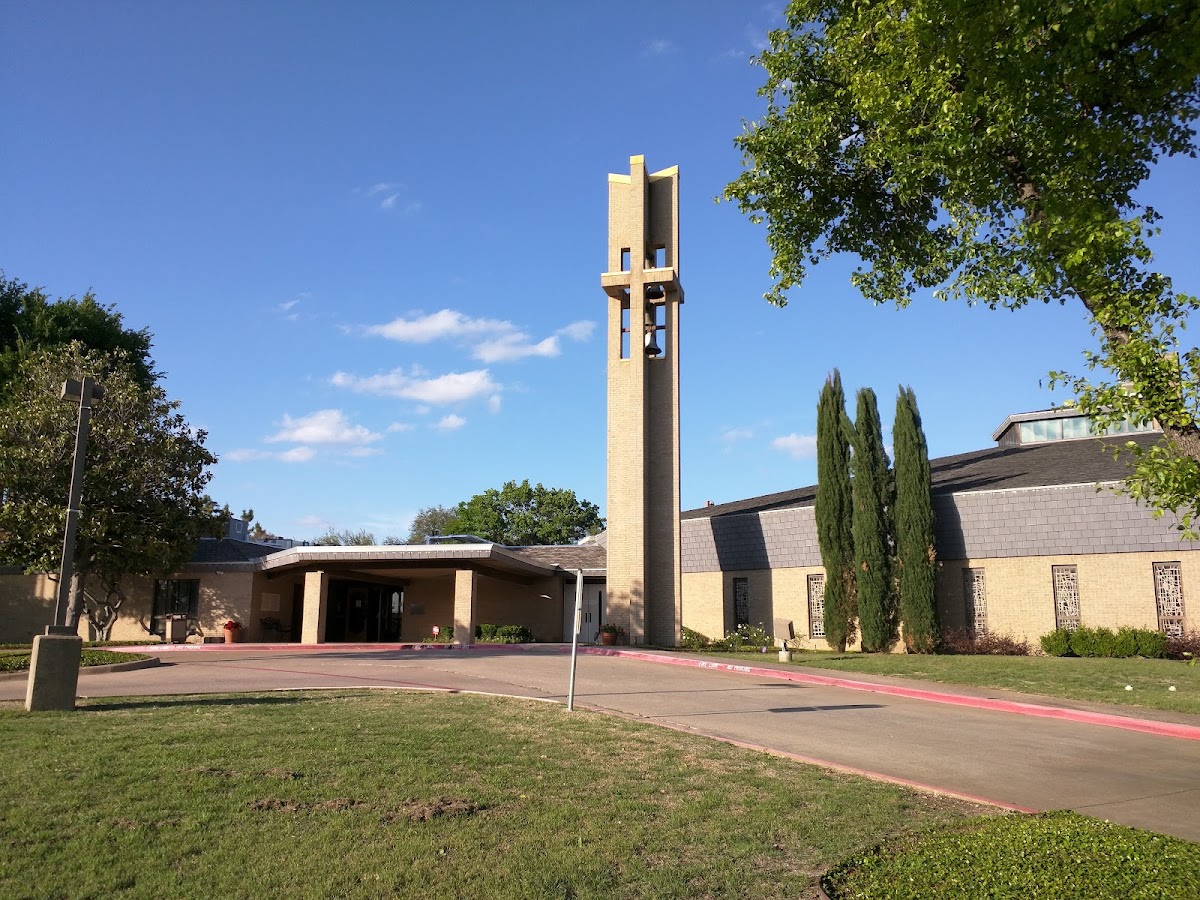
Designing for All Saints Catholic Church requires a deep understanding of liturgical tradition paired with an eye for architectural scale. The sanctuary is defined by its stunning stained glass windows, which cast a specific, shifting light throughout the day that must be accounted for in your color selection. This is a venue where “small” flowers disappear; the architecture demands intention and volume.
The Spaces
Main Sanctuary
The heart of the parish, this space is traditional but feels open due to the expansive windows. The Gospel-themed stained glass provides a rich backdrop of jewel tones that serves as the primary visual anchor for any event.
- What works: Large-scale altar urns that sit on pedestals. These elevate the flowers to eye level for seated guests and ensure the arrangements aren’t lost against the floor. Pew markers with long, trailing ribbons add a sense of movement to the heavy wooden pews.
- Skip: Small, delicate bud vases or “airy” arrangements that lack a strong silhouette. They will be swallowed by the vastness of the room.
- Watch out: The sanctuary has specific rules regarding the placement of flowers during certain liturgical seasons (like Lent). Always verify with the parish office before finalizing your design plan.
- Budget hero move: Focus your entire ceremony budget on two massive, lush altar arrangements. Because of the room’s symmetry, these two pieces will do more for your photography than ten smaller items scattered elsewhere.
Parish Life Center
This is a modern, flexible space used for receptions. It is a clean slate, which is both an opportunity and a challenge. Without flowers, it can feel somewhat utilitarian.
- What works: Elevated centerpieces. Using tall stands allows you to add height to the room without blocking sightlines across the tables. It also helps to draw the eye up, away from the functional flooring and toward the celebratory atmosphere.
- Skip: Short, flat arrangements that don’t have enough “heave” to make the room feel transformed.
- Watch out: The ceilings are standard height and made of drywall, meaning hanging installations or “floral clouds” are not feasible here. Focus on floor-up designs.
- Budget hero move: Repurpose your altar arrangements to the entrance of the Parish Life Center or flanking the head table to maximize their value.
Fellowship Hall
A more intimate setting, often used for smaller gatherings or pre-ceremony waiting areas.
- What works: Low, textured compote arrangements. Since the ceilings are lower here, keeping the flowers close to the table creates a cozy, communal vibe.
- Skip: Anything tall or over-designed. The space is too small for grand statements.
- Watch out: Table dimensions can vary; ensure your floral footprint leaves enough room for place settings and shared platters.
What Works at All Saints Catholic Church
Lean into jewel tones. The stained glass at All Saints is saturated and vibrant. While all-white palettes are classic, they can sometimes look “washed out” when the sun hits the blue and red glass. Incorporating deep burgundies, rich plums, or even subtle ochre can tie the floral design into the permanent architecture of the church.
Symmetry is non-negotiable. Catholic liturgies are centered on the altar. Floral designs should frame the action rather than distract from it. Matching arrangements on either side of the tabernacle or at the base of the ambo create a balanced, reverent frame for the ceremony.
Floor-standing installations at the back of the church. The transition from the narthex into the sanctuary is a major “moment.” Placing two large floor installations at the start of the aisle creates an immediate sense of occasion and provides a beautiful foreground for photos of the processional.
Consider the “Long View.” Most guests will be viewing the flowers from 20 to 50 feet away. Choose blooms with high petal counts and clear shapes—like garden roses, hydrangeas, and delphinium—that maintain their visual integrity at a distance. Save the tiny, intricate textures for the bridal bouquet.
Greenery as an architectural tool. In the Parish Life Center, use lush greenery like Smilax or Ruscus to “soften” the corners of the room or to frame the bar area. This helps to transition the space from a community hall to a dedicated event environment.
Budget Guide
| Tier | Investment | Floral Strategy |
|---|---|---|
| Essentials | $1,750 - $3,000 | Focus on personal flowers (bouquets/boutonnieres) and two high-impact altar arrangements. |
| Sweet Spot | $3,000 - $5,500 | Includes the Essentials, plus pew markers for the ceremony and modest centerpieces for the Parish Life Center. |
| Full Experience | $5,500 - $8,500 | Adds a large-scale entry installation, elevated centerpieces for the reception, and lush decor for the head table. |
| Statement | $8,500+ | Full-scale transformation including floor-to-ceiling greenery accents in the PLC and premium, high-density blooms throughout. |
The character of All Saints is one of traditional elegance and community warmth, which is best reflected in designs that feel substantial and grounded.
Tips
Parish approval is paramount. All Saints requires decor approval from the parish office; ensure your floral plan adheres to their specific guidelines on candle usage and placement.
No alcohol on-site. Keep in mind that the church grounds are alcohol-free, which often means the reception energy remains focused on the meal and the community—your table decor will be noticed and appreciated.
Morning light is the strongest. If you are having a morning or early afternoon ceremony, the stained glass will be at its most vibrant; plan your flower colors to harmonize with that intensity.
Repurposing requires a team. Moving large altar pieces from the sanctuary to the Parish Life Center is a great way to save money, but it requires a professional strike team to do it quickly and discreetly during the cocktail hour.
Check the liturgical calendar. During seasons like Advent or Lent, the church may have its own decor in place that cannot be moved; always coordinate your color palette with the seasonal liturgical colors.