
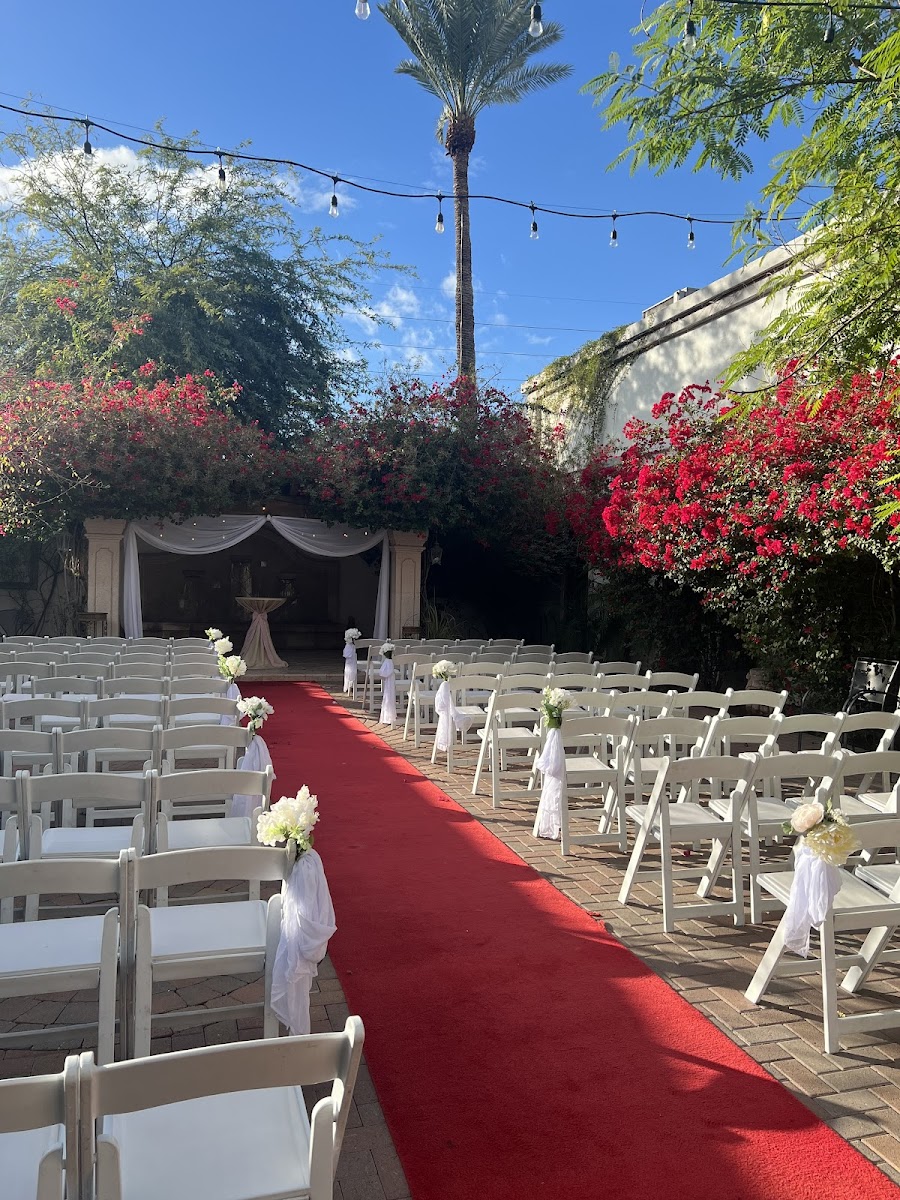
You turn off Central Avenue onto 16th Street, the mid-century architecture of Midtown Phoenix giving way block by block to something older, something that doesn’t quite fit the grid. And then you see it: stucco walls the color of desert sand, wrought iron curves catching the afternoon light, arched doorways that suggest courtyards and fountains and a quieter century. Antigua Garden sits on its corner lot like a secret someone forgot to keep, barely five minutes from downtown Phoenix yet wholly removed from the glass towers and urban sprawl. The building dates to 1943, built originally as the Phoenix Baptist Church, and the Spanish Colonial bones remain — thick walls, dark wooden beams, those distinctive mission-style curves. But what makes couples stop on the sidewalk, what makes them pull out their phones before they’ve even checked in with the coordinator, is the garden itself. You enter through a private gate into a courtyard where bougainvillea spills over the gazebo in magenta and fuchsia, where bistro lights crisscross overhead, where a water feature catches the light and throws it back in ripples. This is not the Arizona of saguaro and desert floor. This is the Arizona of Spanish missions and old haciendas, of walled gardens that hold the cool even in July. Poppy has designed Antigua Garden wedding flowers for 1 celebration here so far, and we are already mapping out the next dozen in our minds — because this venue does something rare. It gives you history, architecture, and intimacy all at once, and it asks your florals to rise to the occasion.
About Antigua Garden
Antigua Garden occupies a unique place in the Phoenix wedding landscape. The building’s 1943 origins as the Phoenix Baptist Church mean you get the architectural integrity of a historic structure — high ceilings, thick plaster walls, dark wood details, and that unmistakable Spanish Colonial silhouette — without the restrictions and formality of a museum or preserved landmark. The current ownership has renovated thoughtfully, adding modern amenities (climate control, updated lighting, upgraded seating) while preserving the original character. The result is a venue that photographs like old-world romance but functions like a contemporary event space.
The property centers around the Spanish-style garden and patio, accessible through a private entry that immediately separates you from the urban surroundings. The garden features mature landscaping, a rustic gazebo draped in living bougainvillea, a decorative fireplace perfect for evening ambiance, and an illuminated water feature that provides both visual and auditory appeal. Bistro lighting is strung overhead in permanent installation, creating a canopy of warm light once the sun sets. This is the venue’s signature space, and it works equally well for ceremonies (the gazebo serves as a natural altar) or cocktail hours (the various seating areas and pathways encourage guests to wander and discover).
Inside, the renovated reception hall accommodates 50 to 250 guests with surprising flexibility. The room features a stately chandelier as its centerpiece, designer up lighting built into the walls to highlight architectural details and floral installations, upgraded Chiavari seating, and a built-in stage with a large dance floor. There is also a secondary space, the Grand Elegance ballroom, which seats up to 200 for dinner or can accommodate more for cocktail-style receptions. Both indoor spaces share the same Spanish Colonial design language — arched doorways, wrought iron details, and a warm neutral palette that accepts any color story you bring to it.
The venue’s location in Midtown Phoenix, just off 16th Street between Indian School and Thomas, puts you five minutes from downtown and equally close to Sky Harbor Airport. For out-of-town guests, this translates to easy access and short travel times. For vendors, it means straightforward load-in via the private parking area, no elevator logistics, and event staff who understand how to facilitate smooth setup. Antigua Garden operates with flexibility regarding vendor selection — couples can bring their own caterers, photographers, and florists, or work from the venue’s preferred list. The affiliated vendors are experienced with the property, but there are no mandatory vendor fees, which Poppy appreciates. The venue does require general liability insurance for all vendors, standard practice for Phoenix wedding venues. From our studio, the drive takes about twenty minutes depending on traffic, and we have found the event coordinators communicative and accommodating with delivery windows and setup timing.
One logistical note worth mentioning: the venue includes a dedicated bridal suite for getting-ready photos and pre-ceremony prep, and the Spanish mission-style staircase that leads from the suite to the main level is a photographer favorite. We always recommend a small arrangement for the staircase landing — something trailing and romantic that plays into the architecture without blocking the sightlines.
Event Spaces & Floral Opportunities
Spanish-Style Private Patio and Garden
Capacity: Flexible for ceremonies and cocktail hours; approximately 150-200 guests comfortably
Setting: This is where Antigua Garden earns its name. The outdoor patio and garden create an enclosed, intimate world separated from the city by stucco walls and mature landscaping. The rustic gazebo sits as the centerpiece, its wooden trellis structure nearly overtaken by living bougainvillea that blooms in waves of hot pink and magenta. Bistro lights are strung overhead in permanent installation, and at dusk they create a warm amber glow that competes favorably with any chandelier. The decorative fireplace anchors one corner of the space, the illuminated water feature another, and stone pathways wind between planting beds filled with desert-adapted greenery. The overall effect is courtyard romance with a distinct Spanish Colonial sensibility — think Sevilla, not Scottsdale.
Floral approach: The bougainvillea does significant decorative work here, and your florals should complement rather than compete with those cascading magenta blooms. For ceremonies held at the gazebo, we favor enhancing the existing structure with additional floral clusters at the base and along the lower crossbeams — think garden roses in blush and coral (Romantic Antike, Free Spirit), spray roses in peach (Peach Avalanche), and textural elements like scabiosa, astilbe, and hanging amaranthus in coordinating tones. Wrapping the entire gazebo in new florals fights the bougainvillea and usually loses; instead, we create strategic moments of color that feel like natural extensions of what’s already blooming. Aisle markers can be simple — terracotta pots (which echo the Spanish tile and clay tones throughout the venue) filled with loose, organic arrangements of roses, stock, and flowing jasmine vine, placed every third row. For cocktail hour in this same space, we love small bud vases on each high-top table, clustered in threes and filled with single-variety stems — all coral roses, all white ranunculus, all burgundy dahlias — for an eclectic, collected look. The water feature’s edge can be lined with floating candles and submerged orchid blooms for evening events. And the decorative fireplace, if you’re using the garden for cocktails in cooler months, becomes a focal point for a large urn arrangement — something tall and architectural with branches, protea, and plenty of eucalyptus that can handle the residual heat if the fire is lit.
Elegant Reception Hall
Capacity: 50-250 seated guests
Setting: The main reception hall has been completely renovated but retains the proportions and ceiling height of its ecclesiastical origins. The stately chandelier hangs at center, a traditional tiered design that draws the eye upward. Designer up lighting is built into the walls, and the venue staff can customize the color to match your palette — a feature we use to great effect by matching the light wash to the undertones in the floral arrangements. The room includes a built-in stage (ideal for band or DJ setup) and an expansive dance floor. Chiavari chairs come standard, and the long, arched windows along one wall let in natural light during daytime events while maintaining the stucco-and-beam architectural character.
Floral approach: The chandelier is the room’s jewelry, and it can handle embellishment. We have installed a suspended floral halo around its base — a circular garland of smilax, Italian ruscus, and seeded eucalyptus studded with spray roses and lisianthus, wired to hang just below the chandelier’s lowest tier so it appears to float. This treatment is dramatic without being heavy, and it photographs beautifully from below. For centerpieces, the up lighting allows you to play with color in ways that other venues don’t. A tall arrangement of magenta dahlias, fuchsia roses (Pink Floyd, Hot Princess), and trailing amaranthus will glow under magenta up lighting, creating a cohesive, almost monochromatic effect. Alternatively, low lush centerpieces work well on the long banquet tables many couples favor in this space — a garland-style runner of olive branches, eucalyptus, and garden roses (Patience, Quicksand, Juliet) interspersed with brass candlesticks gives an Old World, romantic feeling that complements the Spanish architecture. The stage offers an opportunity for a floral backdrop if you’re forgoing a traditional backdrop or band setup — two large pedestal arrangements flanking the stage stairs, or a horizontal installation across the back wall using foam-free mechanics and clusters of roses, hydrangea, and greenery. The venue’s neutral walls and warm wood tones mean you can go bold with color here, or keep it soft and romantic; the architecture supports both directions equally.
Grand Elegance Space
Capacity: Up to 200 seated; more for cocktail-style receptions
Setting: The Grand Elegance ballroom is the venue’s largest indoor space, and it functions as a flexible canvas. It lacks some of the specific architectural character of the main reception hall — no chandelier, no built-in stage — but it offers square footage and adaptability. The arched iron doors at the entryway carry through the Spanish Colonial aesthetic, and the space benefits from the same designer up lighting available in the other rooms. For larger weddings, this room handles the guest count without feeling cavernous. For cocktail-style receptions, it allows for varied furniture arrangements, multiple bar setups, and lounge areas.
Floral approach: Because this space is more neutral, your florals carry more weight in establishing the atmosphere. For seated dinners, we recommend anchor arrangements on the bars and gift table, then carry a cohesive centerpiece treatment across all guest tables — either all low and lush, or all elevated on tall glass risers to create sightlines. A favorite treatment for a recent wedding here involved clusters of three different height arrangements per table: one low bowl of garden roses and ranunculus, one medium-height compote of stock and tulips, and one tall taper candle surrounded by a wreath of spray roses and eucalyptus. The varied heights created visual interest without a single massive centerpiece. For cocktail receptions, we create multiple focal points — a dramatic arrangement on each highboy table, perhaps using architectural elements like contorted willow branches, pampas grass, king protea, and leucadendron for a modern desert aesthetic. The arched iron doors at the entrance are an opportunity often overlooked: a garland installation across the top of the arch, using smilax as the base and weaving in clusters of roses, tulips, and trailing jasmine, transforms the entry into a moment. This space also lends itself to interesting suspended installations if your budget allows — a cloud of hanging amaranthus and trailing greenery over the dance floor, for instance, adds dimension and drama to an otherwise straightforward room.
Spanish Mission-Style Staircase
Capacity: Not an event space, but a key design moment
Setting: The interior staircase connects the bridal suite to the main reception areas, and it is pure Spanish mission romance — dark wooden treads, white plaster walls, wrought iron railings, and alcoves along the landing that beg for floral or candle installations.
Floral approach: The staircase landing is where we place a small but considered arrangement on the day of the wedding. Think of it as the first floral moment your guests encounter as they move from the garden into the reception spaces. A low, organic arrangement in a ceramic or terracotta vessel — garden roses, ranunculus, scabiosa, with plenty of textured greenery like silver dollar eucalyptus and trailing jasmine — sits on the landing’s console table and sets the tone. For the stair rail itself, we sometimes install a loose, asymmetrical garland that drapes along one side, secured at intervals but allowed to trail naturally. This is especially effective for evening weddings when the staircase becomes a transition point between outdoor ceremony and indoor reception. The alcoves can hold pillar candles surrounded by petals or small wreaths of greenery, adding to the old-world, mission-chapel feeling.
Wedding Flower Ideas for Antigua Garden
Spanish Sunset
This palette takes its cue from the Arizona sky in the hour before dusk — deep coral, burnt orange, warm magenta, and touches of golden yellow. Start with roses in sunset tones: Free Spirit (coral-peach), Coral Charm peonies when in season, and Hot Princess (magenta-pink). Add ranunculus in burnt orange and coral, dahlias in shades from soft peach to deep rust (Café au Lait, Labyrinth, Akita). Incorporate texture with scabiosa pods, orange and coral stock, and hanging amaranthus in burgundy. Foliage should be warm-toned as well: use seeded eucalyptus, olive branches, and even sprigs of bougainvillea foliage (not the blooms, which are technically bracts) to tie into the garden’s existing plantings. Vessel choices matter here: aged terracotta pots, hand-hammered copper urns, or dark bronze compotes amplify the warm, earthy tones. This palette works beautifully in the garden at golden hour, when the bistro lights are just starting to glow and the natural light is amber and forgiving. In the reception hall, pair this palette with amber up lighting for a fully immersive, monochromatic effect. Spanish Sunset is ideal for October through April weddings when the heat has broken and evening celebrations can spill into the garden without wilting — florals or guests.
Mission Garden Romance
Leaning into the Spanish Colonial architecture with a softer, more romantic approach, this concept uses blush, cream, soft peach, and muted lavender with plenty of greenery. Garden roses are the foundation: Patience (blush with a hint of peach), Quicksand (antique mauve), Juliet (peachy-apricot), and O’Hara (soft blush). Add café au lait dahlias for their dinner-plate size and neutral coloring, white and blush ranunculus for texture, and lisianthus in cream and pale lavender for airiness. Foliage is critical to keep this from reading too sweet: use dusty miller for its silvery texture, Italian ruscus for movement, and plenty of seeded eucalyptus and olive branches to ground the palette. Jasmine vine can trail from taller arrangements, adding both visual flow and a subtle fragrance that suits the garden setting. Vessels should be understated — white ceramic, soft gray stone, or natural terracotta in muted tones. This palette is endlessly versatile, working equally well for a winter wedding in the Elegant Reception Hall (where the soft tones feel romantic against dark wood and warm lighting) or a spring garden ceremony where the flowers complement rather than compete with the bougainvillea’s brighter magenta. Mission Garden Romance appeals to couples who want their florals to feel lush and abundant without reading as overly colorful or bold.
Desert Modernist
For couples drawn to Antigua Garden’s architecture but wanting a less traditional floral direction, Desert Modernist offers a contemporary take rooted in the Sonoran landscape. The palette is restrained: cream, white, deep burgundy, and muted sage green, with an emphasis on sculptural forms over abundance. Use white and cream roses (Playa Blanca, Vendela, Patience), but sparingly, as accents rather than the main event. Instead, let architectural blooms do the work: king protea, leucadendron (Safari Sunset for burgundy tones), white or burgundy scabiosa, and pampas grass for movement. Incorporate succulents — echeveria, aeonium, even small agave rosettes — into arrangements as permanent elements guests can take home. For foliage, use silvery dusty miller, eucalyptus in muted tones, and even dried elements like bunny tail grass or preserved palm spears. Vessels are sleek and modern: matte white ceramic cylinders, concrete bowls, or even geometric terrariums that showcase the succulents. This palette reads as contemporary and sophisticated, allowing the venue’s Spanish architecture to provide the romance while the florals add a restrained, design-forward edge. Desert Modernist works especially well in the Grand Elegance Space, where the flexibility of the room allows the modern aesthetic to take center stage, and it appeals to couples who appreciate a more minimalist, curated approach to design.
Seasonal Considerations
Phoenix operates on a desert climate calendar that inverts much of the traditional wedding season logic. Understanding Arizona’s microclimates and temperature extremes is essential for both floral sourcing and guest comfort.
Spring (March - May): This is peak wedding season in Phoenix, and for good reason. Daytime temperatures range from the mid-70s to low 90s, and evenings cool comfortably into the 60s and 70s. The desert is in bloom — palo verde trees turn the landscape yellow-green, and ocotillo sprouts red-orange blooms at its tips. For wedding florals, spring offers the best availability of domestic blooms at reasonable pricing: garden roses, ranunculus, anemones, sweet peas, and peonies (late April and May) are all accessible. Locally, you might even source Arizona-grown larkspur or snapdragons from specialty growers in the northern part of the state. At Antigua Garden, spring weddings can fully utilize the outdoor garden space for ceremonies and cocktails without heat concerns. Morning or late afternoon ceremonies are ideal. Floral hydration is less of a concern than in summer, though we still recommend getting arrangements on-site as close to guest arrival as possible. Spring’s mild weather allows for trailing vines, delicate blooms like sweet peas, and even floral crowns without worrying about immediate wilt. Best months: mid-March through April.
Summer (June - August): Phoenix summer is extreme, with daytime highs routinely exceeding 110°F and overnight lows barely dipping below 90°F. This is not the season for outdoor daytime ceremonies, though evening events can work if you’re starting after sunset (around 7:30 PM in June, closer to 7 PM by August). At Antigua Garden, summer weddings shift entirely indoors for the ceremony and reception, with the garden used only briefly for golden-hour photos before or after sunset. Floral selection must prioritize heat tolerance: roses hold up better than you’d expect if kept hydrated; succulents and protea are nearly indestructible; orchids handle heat well; but delicate blooms like sweet peas, anemones, and ranunculus are off the table. Hydrangeas will wilt almost immediately. We work closely with our cooler storage and build arrangements the morning of, delivering just hours before the event. Vessel choice matters — avoid metal containers that heat up in transport and essentially cook the stems from the outside. Summer is also when we lean into dried and preserved elements: pampas grass, bunny tails, and preserved palm add volume and texture without hydration concerns. Budget-wise, summer is slightly better for floral pricing, as demand is lower. If you’re getting married in Phoenix summer, embrace the desert aesthetic and work with blooms that can handle the heat. Best approach: lean modern and architectural rather than lush and romantic.
Fall (September - November): Fall is the second-best wedding season in Phoenix, though September can still feel like summer with highs in the low 100s. By October, temperatures moderate into the 80s and 90s, and November is genuinely pleasant, with daytime highs in the 70s and cool evenings. This is when the desert transitions — the landscape turns golden, and the light takes on a particular slant that photographers love. For florals, fall brings dahlias (peak season), garden roses in deeper tones, marigolds, zinnias, and chrysanthemums. Autumn weddings at Antigua Garden can take full advantage of the garden space, and the magenta bougainvillea blooms beautifully in October and November as temperatures cool. We often incorporate seasonal elements like pampas grass, which adds movement and a soft, neutral texture that complements the Spanish architecture. Fall color palettes can go bold — burnt orange, deep burgundy, rust, and gold — without feeling out of place against the desert backdrop. November is also when you can start using more delicate blooms again without the immediate wilt risk of summer. Best months: November, with October as a close second if you’re comfortable with warmer weather.
Winter (December - February): Phoenix winter is mild and beautiful, with daytime temperatures in the 60s and 70s and cool evenings that occasionally dip into the 40s. This is the true “off-season” only because couples default to traditional winter wedding destinations, but it is arguably the most comfortable time of year for an outdoor Arizona wedding. At Antigua Garden, winter allows for full use of the garden, and the decorative fireplace becomes a functional (and atmospheric) element for evening cocktail hours. Florally, winter is when we see the best availability of anemones, ranunculus, hellebores, and jasmine. Amaryllis and paperwhites can add a subtle holiday reference for December weddings without veering into Christmas territory. The cooler temperatures also mean florals last longer — arrangements installed in the morning will still look fresh at midnight. Winter palette options are wide open: you can go classic winter white and green, jewel-toned and romantic, or even continue with desert-modern aesthetics using succulents and neutral tones. One practical note: winter is when Phoenix experiences its brief rainy season, though precipitation is still rare. Have a weather backup plan, but don’t let the possibility of rain deter you from booking a winter date. Best months: February for the most reliable weather, December for couples who want a warm winter wedding escape.
Poppy’s Expert Take
The bougainvillea sets the tone — work with it, not against it. The garden’s signature magenta bougainvillea is a permanent fixture and in near-constant bloom. Couples sometimes worry it will clash with their chosen palette, but the solution is not to fight it with competing colors. Instead, pull tones from it. If your palette includes any shade of pink, coral, magenta, or even warm lavender, the bougainvillea becomes an asset. If you’re committed to a cooler palette (blues, purples, whites), focus your floral work inside the reception spaces where the bougainvillea is not a visual factor, and keep the garden ceremony florals minimal and greenery-focused. The bougainvillea is lush and dramatic on its own — you do not need to out-flower it.
The staircase is a photo moment worth investing in. Every photographer working at Antigua Garden will use that Spanish mission-style staircase. It is architectural, romantic, and beautifully lit. A small floral installation on the landing — nothing elaborate, just a considered arrangement that complements your overall design — elevates the photos significantly. We typically allocate $150-250 of the budget to this staircase moment, and it consistently appears in our clients’ favorite images. For couples doing getting-ready photos in the bridal suite, a small bouquet-style arrangement or loose petals on the stairs adds to the narrative.
Coordinate your up lighting with your floral palette from the start. Antigua Garden’s designer up lighting is a powerful tool, but only if you plan for it. The venue will ask you to choose a color, and that choice should be informed by your floral palette. If you’re using warm-toned florals (peach, coral, blush), amber or warm pink up lighting enhances the tones. If you’re going bold with burgundy and deep red florals, a magenta or warm red up light creates a cohesive, enveloping atmosphere. Cool-toned florals (whites, blues, lavenders) benefit from lavender or soft blue lighting. The mistake we see most often is couples choosing up lighting based on their linens or bridesmaid dresses without considering how it will interact with the flowers. Talk to your florist and your venue coordinator at the same time, and choose lighting that amplifies your floral investment.
Plan for Arizona heat even in “cooler” months. Phoenix is hot. Even in October and November, midday temperatures can hit the 80s and 90s. If your ceremony is outdoors in the garden, schedule it for late afternoon or early evening to spare both your guests and your florals. We deliver and install as close to event start time as the venue allows, and we always pre-hydrate blooms extensively. For summer weddings, accept that not all flowers are feasible. If you have your heart set on peonies or hydrangeas and you’re marrying in July, we need to have a conversation about alternatives. Roses, orchids, and succulents are your friends in Phoenix heat. Delicate, water-heavy blooms are not.
The gazebo needs less than you think. First-time visitors to Antigua Garden often envision a fully floraled gazebo, stems covering every inch of the trellis. In practice, the existing bougainvillea is already lush, and over-floraling the structure fights the natural beauty rather than enhancing it. We recommend strategic clusters — one substantial installation at the peak of the arch, smaller clusters at the base, and perhaps some trailing elements — rather than full coverage. This approach photographs better (you can still see the structure’s lines), costs significantly less, and feels organic rather than overdone. Save your budget for centerpieces and personal flowers where the impact is longer-lasting.
The venue’s flexibility is a double-edged sword — make decisions early. Antigua Garden allows couples to bring their own caterers, choose their own rentals, and work with any florist. This flexibility is wonderful but can be overwhelming. Because the venue is not providing bundled décor or built-in design elements, your florals, linens, and rentals are doing all the aesthetic work. If you wait until two months before the wedding to finalize your floral vision, availability may be limited, especially during peak season. We recommend booking your florist as soon as you book your venue, and scheduling your design consultation at least four to five months before the wedding date. This timeline gives you access to the best flower availability and allows for sourcing specialty blooms if desired.
The water feature and fireplace are underutilized focal points. Most couples focus their floral budget on tables and the gazebo, but the garden’s water feature and decorative fireplace are opportunities to create memorable moments. For the water feature, consider floating candles and submerged blooms (orchids work beautifully) for an evening ceremony or cocktail hour. The fireplace, especially for fall and winter weddings, can be flanked by large urn arrangements that frame the space and draw guests toward that corner of the garden. These installations require relatively few stems (one large arrangement in a statement urn uses fewer flowers than five centerpieces) but create high visual impact and additional photo backdrops. Allocate $200-400 for one of these focal-point installations, and your photographer will thank you.
What Poppy Couples Spend on Flowers Here
Based on our experience at Antigua Garden and the venue’s average order value of $4,056, couples investing in wedding flowers here typically fall into one of three categories. The venue’s flexibility and multiple event spaces allow for significant range in floral scope, and your priorities — whether personal flowers, ceremony impact, or lush reception centerpieces — will guide where your budget is best spent.
$2,500 - $3,500 | The Focused Approach
This budget creates a complete floral presence while making strategic choices about where to invest. You’ll have beautiful personal flowers: a lush bridal bouquet using premium blooms like garden roses (Juliet, Patience, Quicksand), ranunculus, and textured greenery ($250-350), four to five bridesmaids’ bouquets in a complementary but simpler style ($400-550), and boutonnieres for the groom and groomsmen ($150-200). For the garden ceremony, we’d recommend enhancing the gazebo with two large clusters of florals at the base and one installation at the arch peak, plus ten to twelve aisle markers using small arrangements in terracotta pots ($800-1,000 total). The reception work focuses on guest table centerpieces — for twenty tables, we’d create a mix of low, lush arrangements using garden roses, spray roses, and seasonal blooms in simple vessels ($1,200-1,500), and allocate the remaining budget to a small arrangement for the staircase landing and one or two arrangements for the bar or welcome table. This budget works beautifully for couples prioritizing the ceremony and personal flowers, with a clean, elegant reception aesthetic that doesn’t require floral abundance at every turn. It’s well-suited to the Elegant Reception Hall with its existing chandelier and architectural interest, where florals can be tasteful accents rather than the room’s entire design.
$3,500 - $5,500 | The Full Vision
This is the range where Antigua Garden wedding flowers come fully to life across all the venue’s spaces. Personal flowers are more generous: an abundant bridal bouquet with premium and specialty blooms ($350-450), larger bridesmaids’ bouquets that feel substantial ($600-750), and florals for all the men plus mothers’ corsages ($250-300). The garden ceremony gets a more developed treatment — full gazebo florals with installations at the base, mid-points, and arch, aisle markers every other row, and perhaps a pair of large urn arrangements flanking the entrance to the ceremony space ($1,400-1,800). For the reception in either the Elegant Reception Hall or Grand Elegance Space, you’ll have centerpieces for every table with a mix of