


Transparency Series
What's Actually Included When You Book a Wedding Florist
Transparency Series
Picture two florist proposals side by side. One comes in at $3,200, the other at $4,500, for what looks like the same wedding. Neither one breaks its number down the same way, and nothing on either page tells you what accounts for the $1,300 gap. So which is the better value—and which one is going to surprise you with extra charges later?
This is the part of hiring a florist for wedding flowers that almost nobody explains. Most couples have a rough sense of what wedding flowers cost—our guide to wedding flower budgets covers that side in detail.
Far fewer know what's included in a wedding florist's cost in the first place. So here's the other half of the picture: what wedding florist services actually include, component by component, so you can compare proposals on equal terms instead of guessing.
What a design meeting covers
Start with the part most couples picture as "choosing flowers," because it's much more than that. A design consultation is where a florist turns how you want your wedding to feel into a concrete plan.
A real consultation isn't a florist handing you a menu. It's a designer working through your aesthetic, your venue's layout and light, your guest count, your color direction, and what's actually in season on your date. That's the difference between an arrangement that simply matches your colors and one that works in your specific room, on your specific day.
You should walk away with something concrete, not just a nice conversation. With Poppy, that takes the form of an online proposal builder: you answer questions about your style, and you get back an itemized proposal you can see and adjust before committing to anything. It's a clear example of what a consultation should produce—a real, reviewable starting point.
So this is the honest answer to the question "what does a wedding florist do": it begins with design thinking applied to your wedding specifically, long before a single stem is ordered.
Sourcing and flower selection
Once the design is set, the florist has to source it—and this is one of the biggest reasons two proposals for similar weddings land at different numbers.
Sourcing is a series of judgment calls. A florist is choosing flowers based on what's actually in season for your date, what will hold up through a long day, what's available at the quality they need, and what to substitute if a crop comes in short. Season drives much of it: the same wedding flower arrangements can cost meaningfully more—or look different—depending on whether the blooms are at their natural peak or shipped a long way to stand in for it.
Where a florist buys matters too. Some source mostly through wholesalers; others, including Poppy, work farm-direct whenever possible, which tends to mean fresher flowers, longer vase life, and less waste along the way. None of this appears as a line item—but it's a real part of what you're paying for, and a real part of what you get.
Processing and prep
Here's a stage almost no proposal names, and most couples never picture: everything that happens to the flowers between when they arrive and when they're wedding-ready.
Fresh flowers don't show up ready to use. They have to be unpacked, hydrated, and conditioned—stems cut, leaves stripped, blooms given time to open to exactly the right point. They're sorted by color and quality, and anything that doesn't meet the bar is set aside. Then the building begins: bouquets balanced by hand, centerpieces assembled one at a time and checked against your palette, larger installations pre-built and tested.
This is hours of skilled labor, and it's a real part of what "included" means. When a florist's quote feels higher than a bucket of loose stems would cost, this invisible stretch of work—the conditioning, the prep, the quality checks—is much of the reason.

Delivery, installation, and on-site styling
This is the line item that varies most between florists, and the one couples underestimate most often: getting everything to the venue and making it look the way it did in the plan.
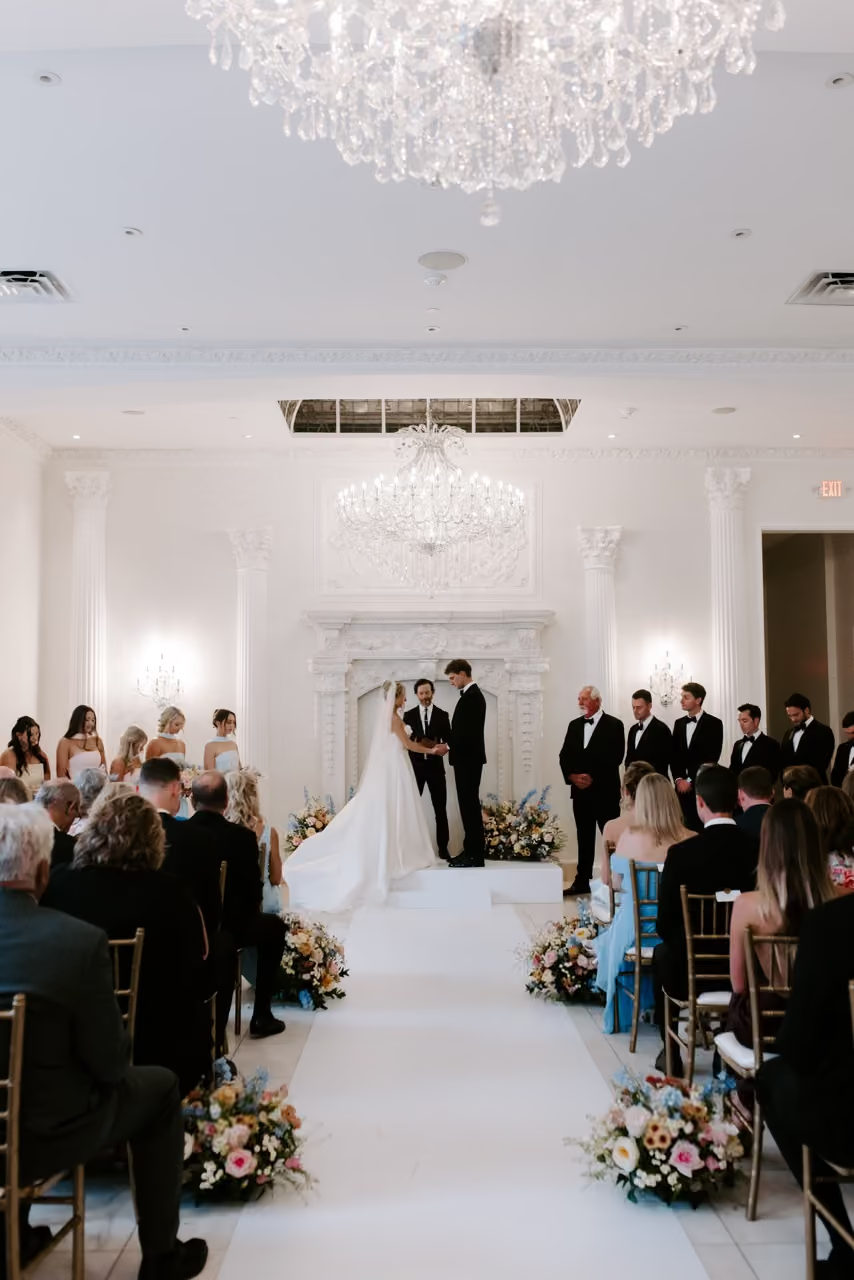
Delivery isn't a drop-off. On the day, it can mean hours of transport, careful unloading, and then the real work: placing and styling every arrangement in the actual space. Centerpieces get leveled across the room. Ceremony pieces get installed, sometimes on ladders. Arbors and hanging designs need a crew and a timeline. Outdoor setups get adjusted for heat, wind, and light. If your ceremony flowers move to the reception, someone is doing that flip while you're taking photos.
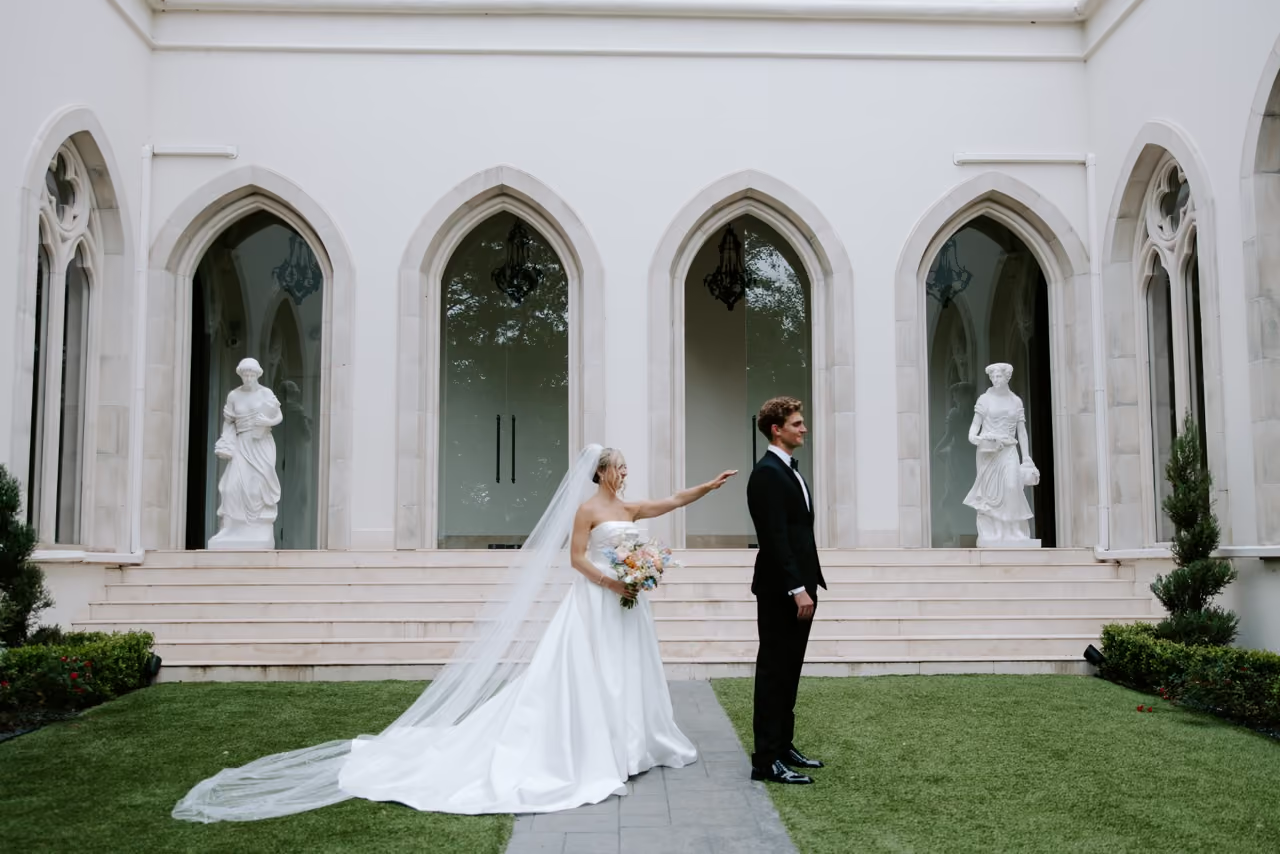
All of it is labor, and it's where two proposals for the same flowers can quietly diverge by hundreds of dollars. It helps to see what it looks like finished: Poppy's real weddings show the difference on-site styling makes between "flowers delivered" and a room that's truly ready. When you compare florists, read this part of every proposal closely—"delivery" on one and "delivery, installation, and styling" on another are not the same service.
Breakdown and cleanup
Breakdown is everything that happens after the last dance: collecting arrangements, removing installations, clearing vessels, and leaving the venue the way the florist found it. It's easy to forget when you're comparing proposals—and it's one of the most common places they quietly differ.
Some florists include breakdown as standard. Others list it separately, and a few don't handle it at all—which can leave you, a family member, or your planner doing it at midnight, or facing a venue cleanup fee you didn't budget for. Rental items like vessels and candleholders usually have to be returned too, and that trip is labor someone is paying for.
It isn't a glamorous part of the service, but it's a real one. When a proposal says nothing about breakdown, that is a key item to ask about.
How to read a florist's proposal
Once you know everything that can be included, reading a proposal gets much simpler. The real question—what do you get when you hire a wedding florist—stops being a mystery, because you can finally see it line by line. You're no longer comparing two totals; you're comparing two scopes of work.
A clear proposal should tell you four things: what's included, what's still flexible, what happens on the wedding day itself, and where extra costs could come from later. If a proposal is only a number and a flower list, that's not a reason to walk away—it's a reason to ask. A good florist can explain the thinking behind their pricing: what the design time covers, whether installation and breakdown are in, what's a rental versus a purchase.
That's really what to expect from a wedding florist proposal worth trusting—it makes the scope obvious. The clearest proposal isn't always the lowest one; it's the one where you can see exactly what you're getting, and exactly what you're not. That clarity is what lets you choose a florist for wedding flowers with confidence instead of hope.
You don't have to decide all of it now
Here's the reassuring part, and the reason all of this matters for a decision that can feel stressful. Understanding everything that's included doesn't mean you have to decide every detail right now.
Booking a florist and finalizing a design are two separate steps. With Poppy's Secure Now, Refine Later model, you place a deposit to secure your date and your overall design direction—and then the specifics keep evolving with you, right up until 60 days before the wedding. Guest counts change, palettes shift, you find something new; none of that means starting over.
So once you understand what's included, committing gets lighter, not heavier. You're not locking in every stem today. You're securing a team and a direction, with room to refine the rest as your wedding comes into focus.