


Behind The Design
Mirrored Pedestals: How Designers Are Turning Florals Into Full-Room Sculpture

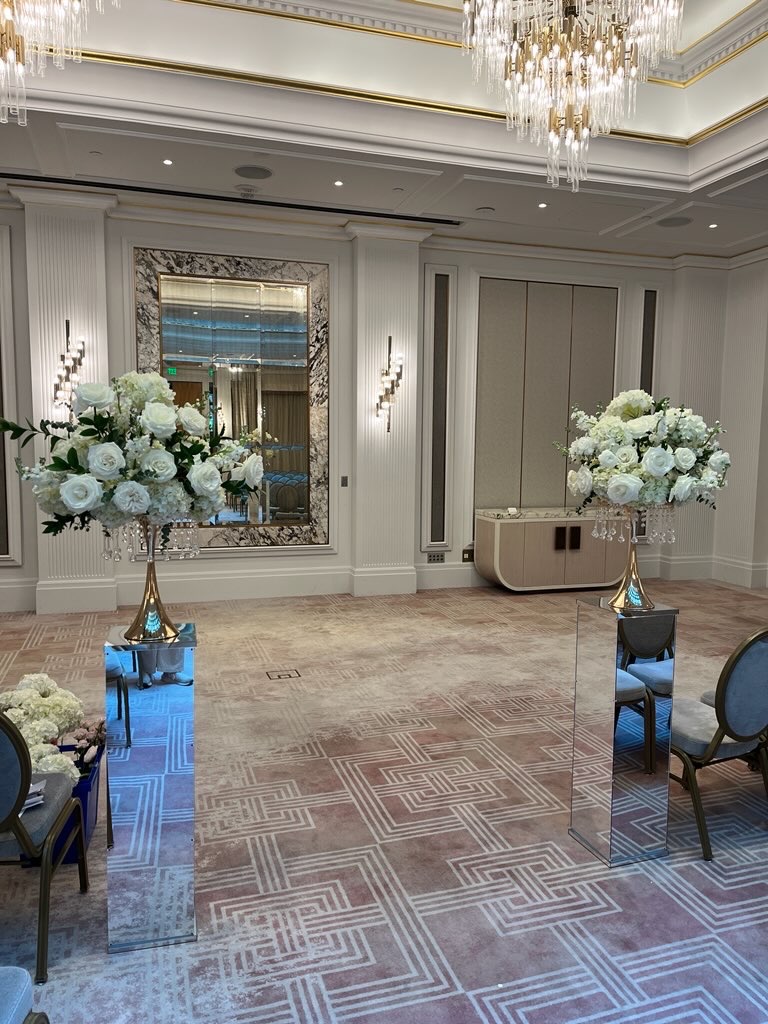
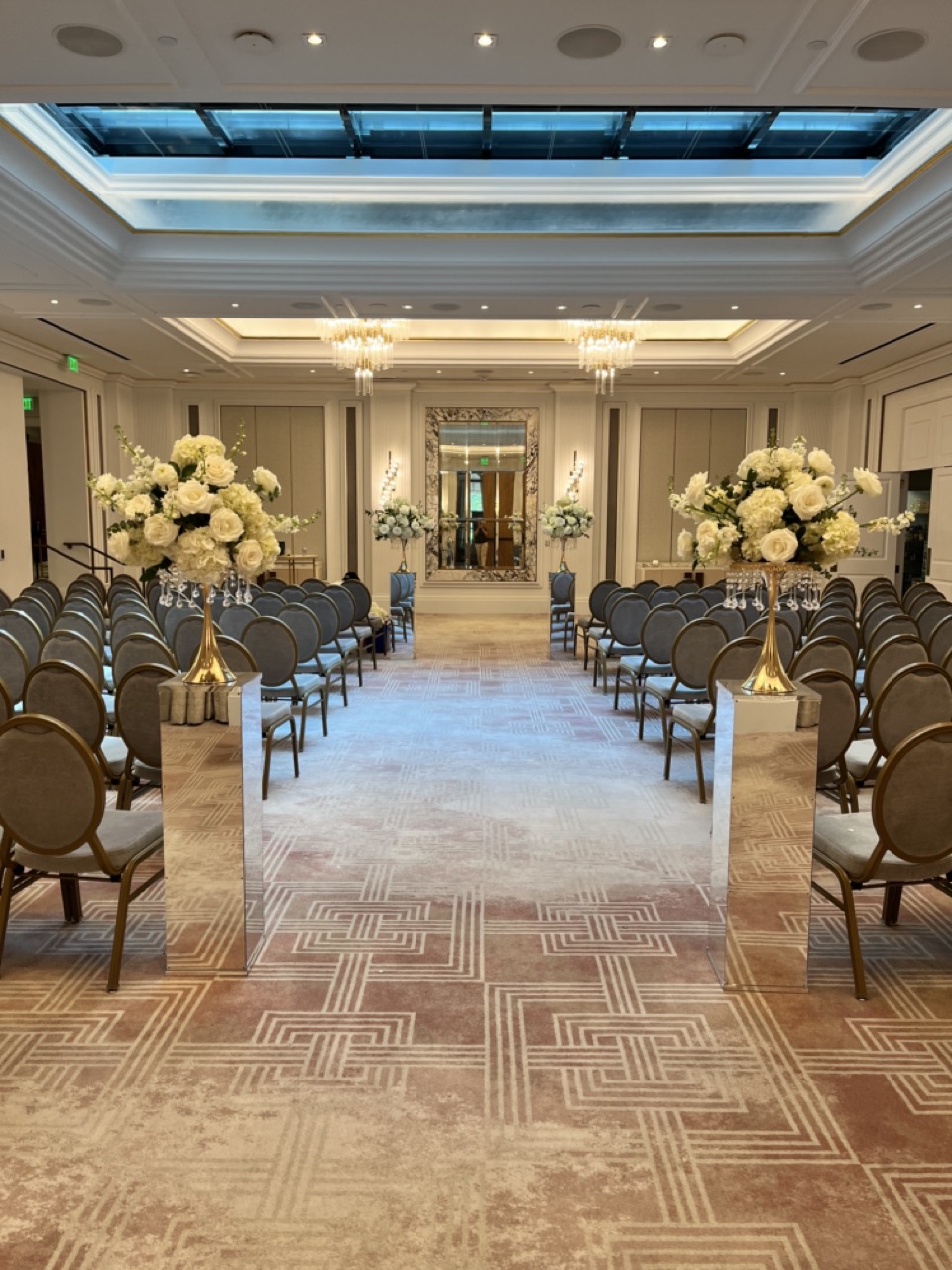
A mirrored pedestal installation turns an arrangement into a moment you notice from across the room, from multiple angles, and in photos from every direction. The flowers are part of that. So is the pedestal, and what it does to them.
This is a staging technique and understanding how it works makes it easier to decide whether it's the right choice for your wedding.
Why the Mirror Does Most of the Work
When a floral arrangement sits on a mirrored surface, you see the reflection from below. Normally, the base of an arrangement (the physical structure, stem wrapping, the visual bottom of the design) is what you see. Here, that space becomes a reflection of the flowers themselves instead.
A relatively compact arrangement ends up looking like a full sculptural design. The eye doesn't register where the flowers end and the reflection begins. From most viewing angles, the installation seems significantly larger than its actual size.
This is also what distinguishes a mirrored pedestal from a standard column or riser. Height alone raises an arrangement, but the mirror is part of the design. It catches light and creates depth, making it part of the composition.
Garden roses, peonies, ranunculus, and dahlias, with their large, round blooms, tend to look best in reflection because round shapes multiply cleanly. Trailing elements (amaranthus, jasmine vine, hanging eucalyptus) gain even more movement when reflected: the downward trail appears to continue upward in the mirror.
Where This Technique Works Hardest
This technique works hardest in a few specific situations.
Think reception focal points: the entrance, the sweetheart table surround, the space behind the head table — anywhere a couple wants a moment before guests have even found their seats. A mirrored pedestal at the reception entrance looks architectural and sets the design tone for the room.
Another example is ceremony installations. Framing an arch or altar with mirrored pedestals instead of standard stands creates vertical symmetry that photographs cleanly and is intentional from the guest seats. The reflections catch whatever light is available (natural, candlelight, or both) and distribute it through the arrangement.
The reflective surface creates layering and depth in images that a standard centerpiece doesn't produce. For couples who care about what the room shots and detail photos look like, this is a choice with direct impact on the images they'll have afterward.
A single large mirrored pedestal installation in a cocktail space is often more effective than spreading smaller arrangements across multiple surfaces. One installation, concentrated in one place, can create a stronger moment.
Fewer Stems, More Visual Weight
There's a practical dimension to this technique worth understanding: because the reflection doubles what's visible, a designer can achieve the visual density of a larger arrangement with a smaller stem count.
A compact arrangement of large-headed blooms looks significantly fuller when reflected than the same arrangement would on a standard stand. For couples working with a defined budget, a mirrored pedestal at a single focal point can deliver more visual impact per dollar. That beats spreading the same flowers across additional pieces.
Doing more with intention instead of volume, fits the broader direction couples are moving in 2026. 2026: The Year of Self-Expression →