


Trends & Inspiration
Calla Lilies and Lily of the Valley: Two Takes on the One-Flower Bouquet
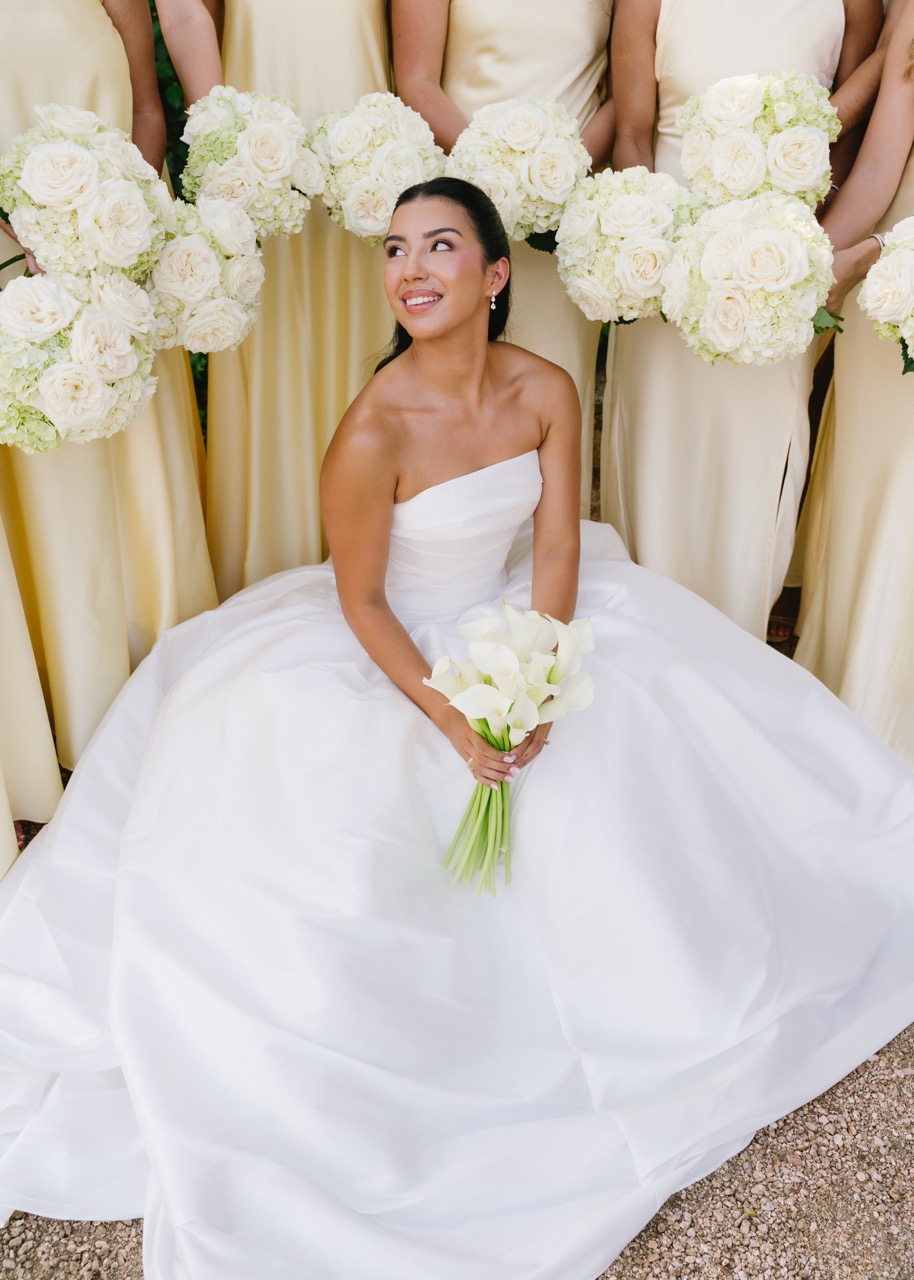
Trends & Inspiration
You've probably saved the photo. One flower— no filler, no greenery, nothing else competing for your attention. A calla lily tilting forward on its long stem. Or a cluster of lily of the valley, the tiny bells just visible beneath the arch of the foliage.
It keeps showing up in your feed. You keep saving it. And then you wonder: is this a real direction, or just a styling choice that looks effortless in editorial shots and falls apart in actual weddings?
It's real. But the reason it looks so effortless has almost nothing to do with simplicity.
Why Monofloral Is Actually the Harder Call
A mixed bouquet has built-in flexibility. Ranunculus fills in where a garden rose doesn't quite open. Greenery adds volume when a stem sits lower than the others. Variety distributes the visual weight so no single element has to carry the whole thing.
When there's only one flower, that flexibility disappears.
Every stem in a monofloral bouquet is on view. Proportion matters more than usual — stem count, length, bloom stage, all of it. A single calla lily a quarter-inch shorter than the others reads immediately. A cluster of lily of the valley where a few bells haven't fully opened tells a different story than one where everything is at the same stage.
This is why monofloral is a more demanding design choice, not a more minimal one. The simplicity is the design. There's no redundancy to fall back on, which is exactly what gives it the quality it has.
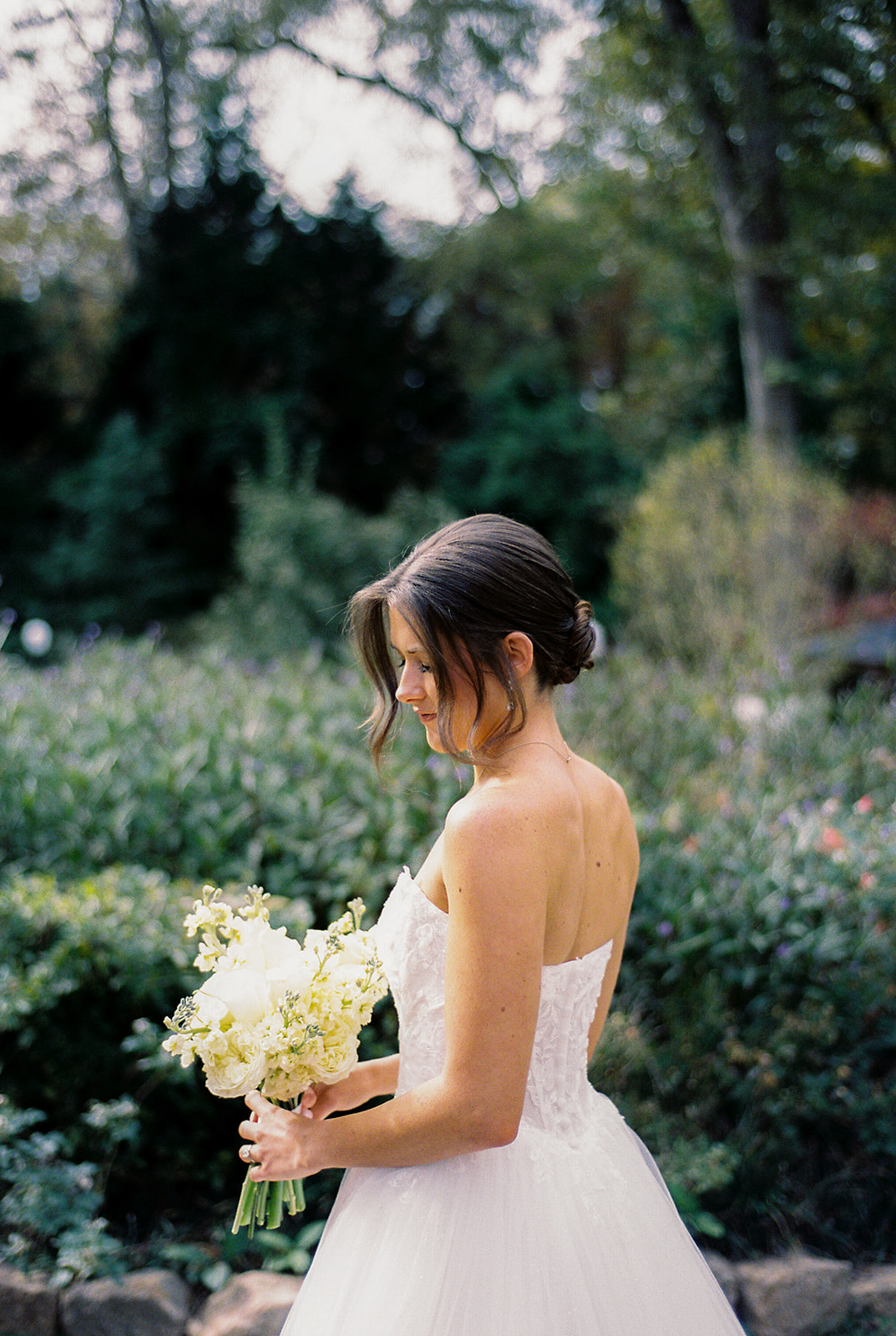
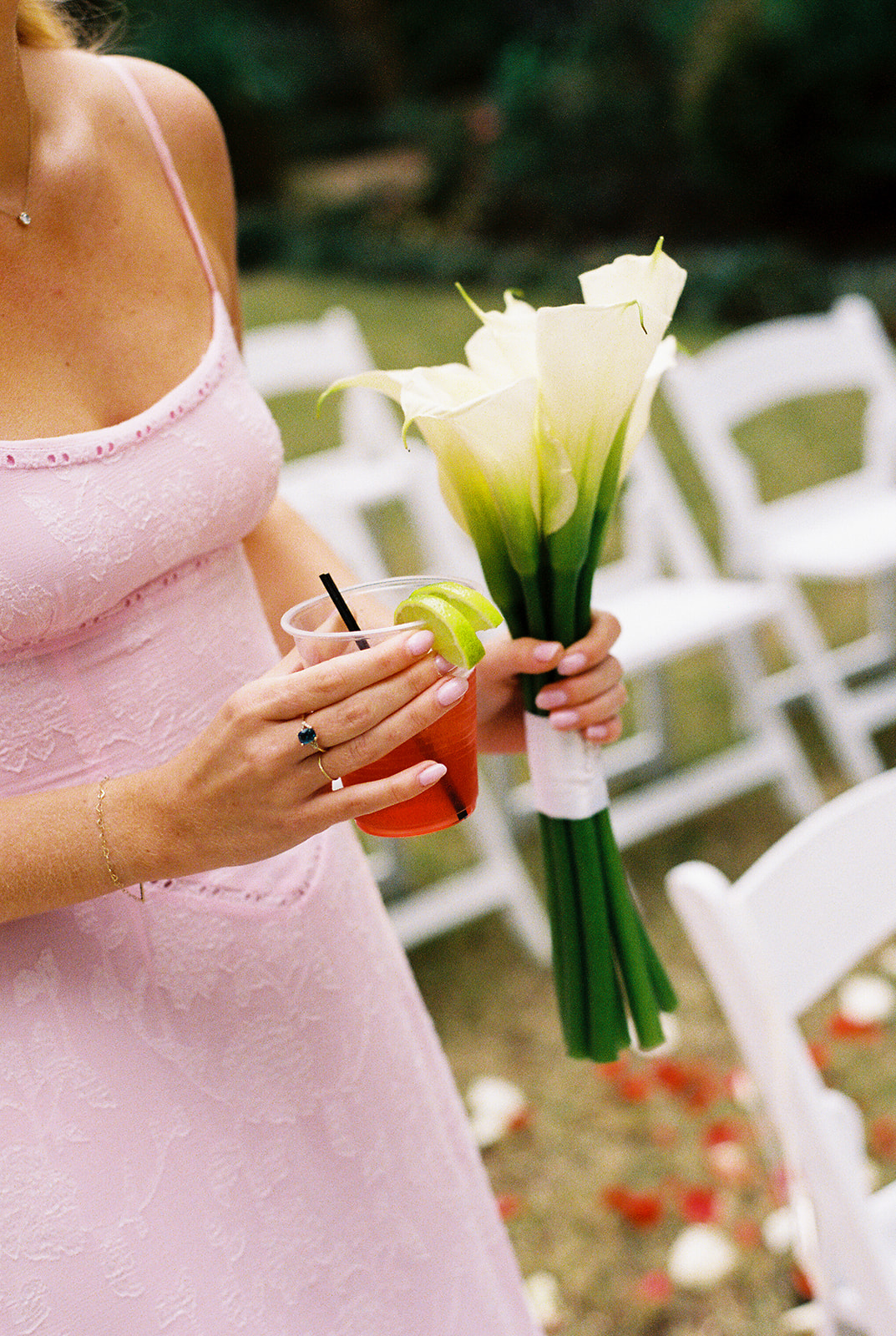
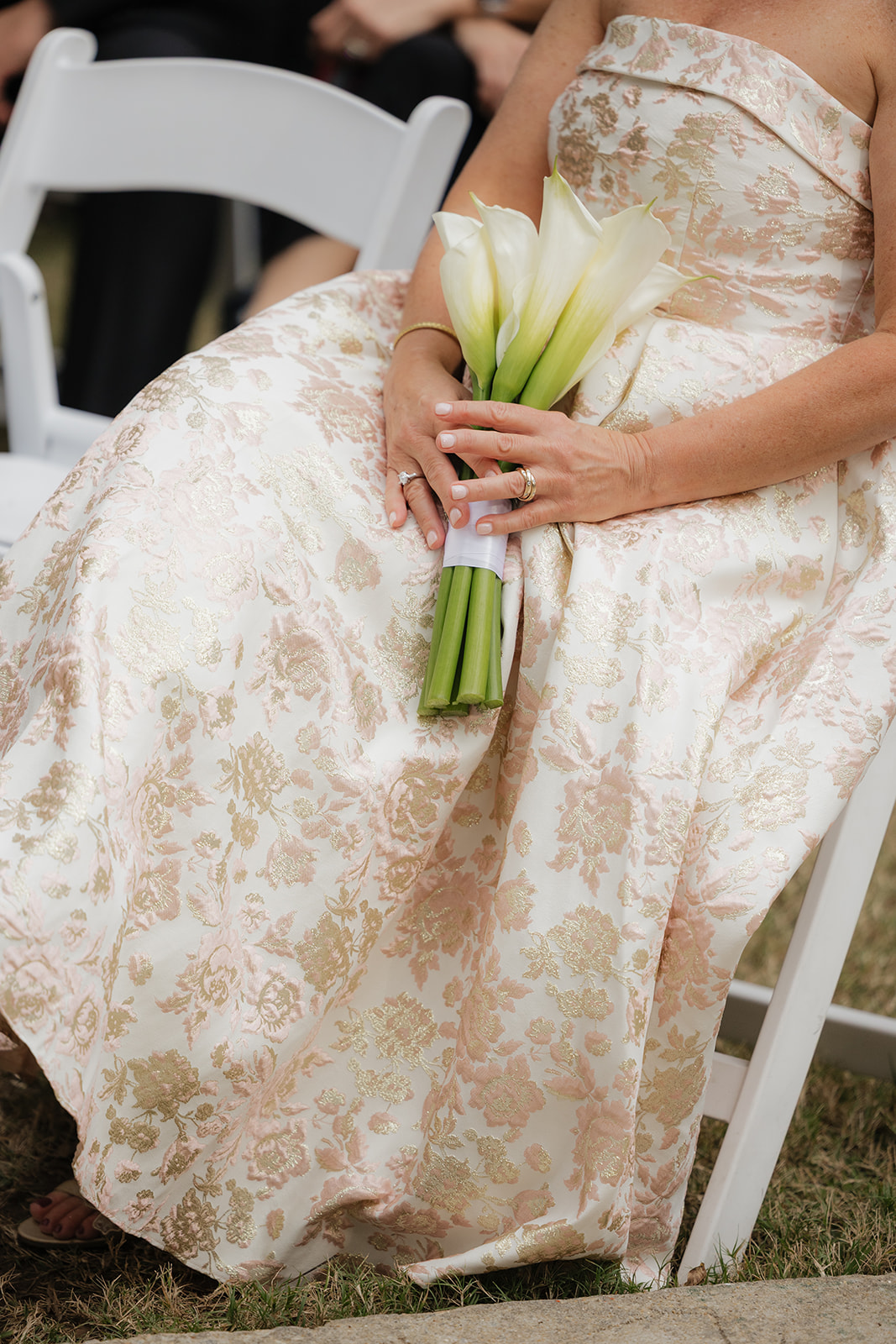
What a Calla Lily Bouquet Actually Looks Like
The calla lily is architectural in a way that few other cut flowers are. It doesn't open or soften the way a peony does. It holds its shape.
Gathered into a hand-tied monofloral bouquet, calla lilies create a sculptural mass — stems parallel, blooms all facing forward or fanning slightly. The look is modern without being cold. A small number of stems makes a considered statement; a larger gathered bunch reads almost more like an object than a flower arrangement. Both work.
They come in a wide range — bright white, blush, deep burgundy, near-black. A bouquet of all ivory calla lilies reads one way. Deep eggplant-toned callas read another way entirely: still architectural, more weight.
One practical note worth knowing: calla lilies are available through most of the year via farm-direct sourcing, which gives them real flexibility compared to a lot of other specific-variety requests. If you have a firm date and a specific color in mind, this isn't a stem you'll need to work around.
The wedding this tends to suit: clean venue lines, a dress with sculptural detail, a design direction that reads deliberate rather than romantic.
What a Lily of the Valley Bouquet Actually Looks Like
Lily of the valley is a completely different flower doing a completely different thing.
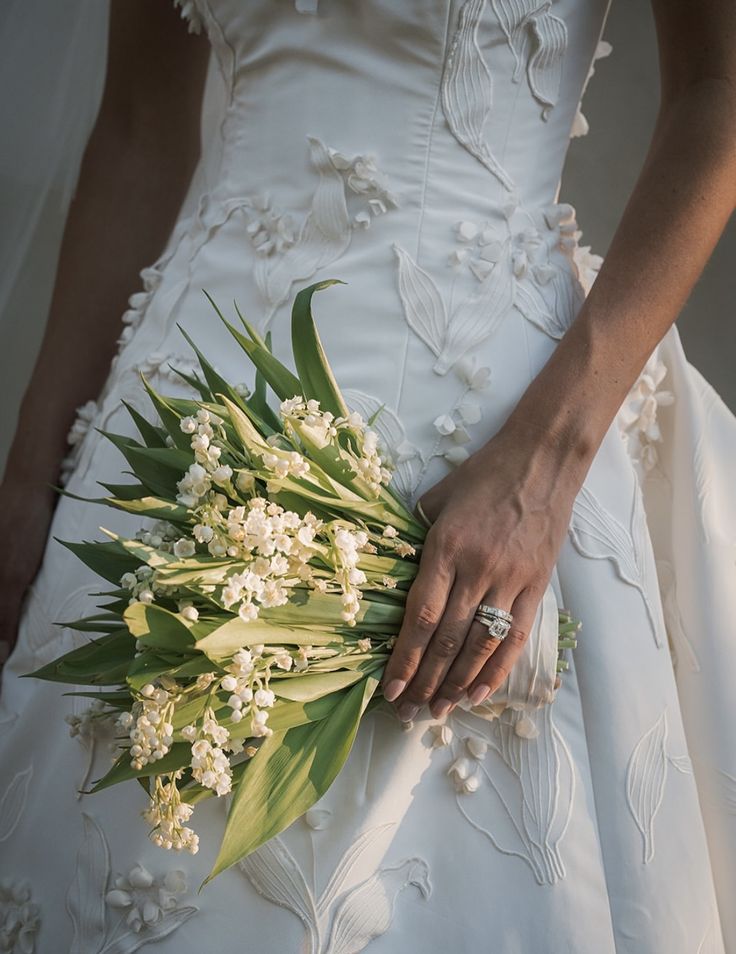
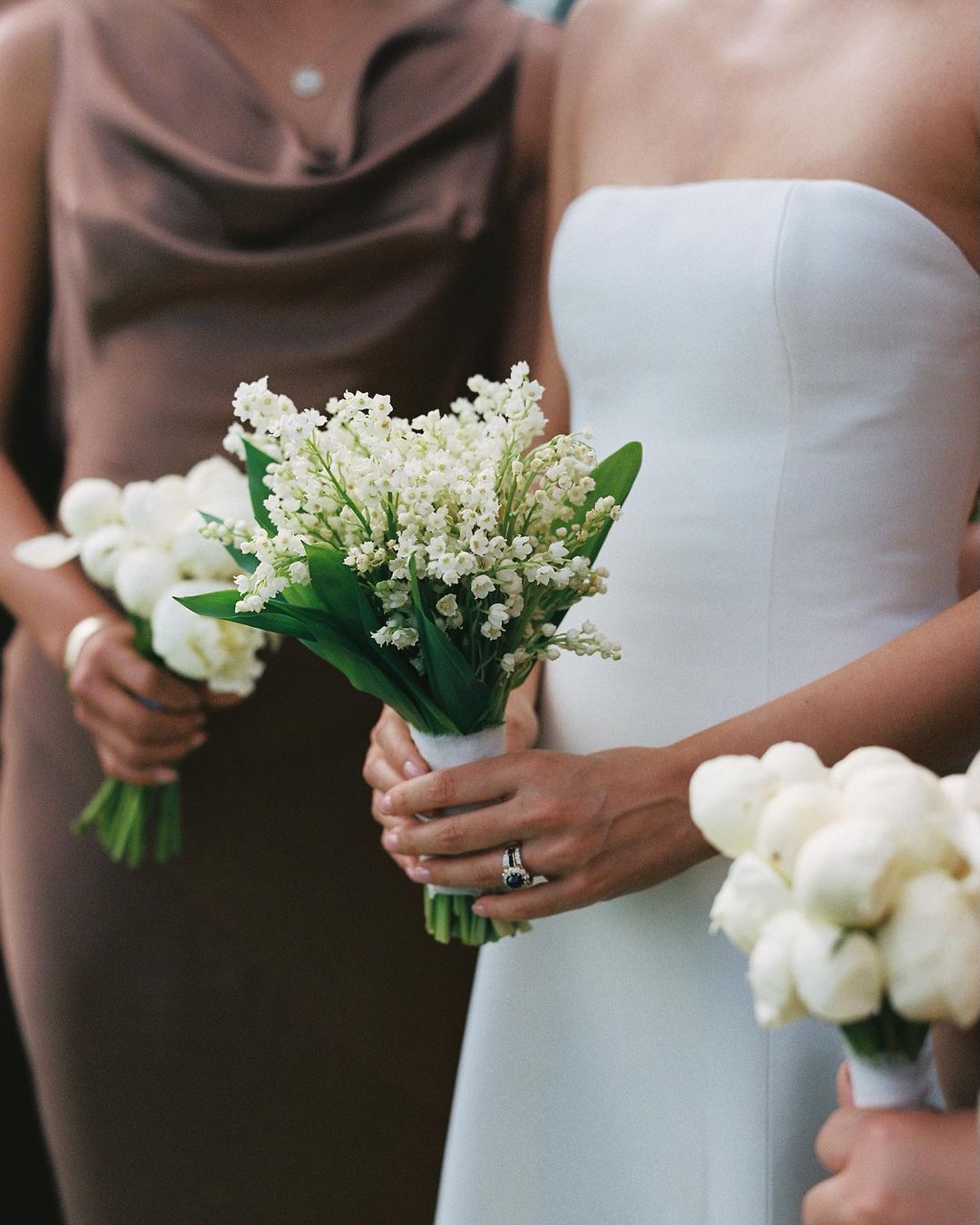
Where a calla lily holds its shape, lily of the valley drapes. The stems are thin and arching. The blooms are tiny white bells arranged along each stem, facing down — the kind of flower you have to get close to in order to really see. In a monofloral arrangement, that delicacy becomes the entire point. A dense cluster of lily-of-the-valley stems has fine, bell-shaped texture up close and reads as a soft white cloud from across the room.
The fragrance is part of it, too. Light, clean, distinct — not sweet the way garden roses can be. It carries.
Here's the practical reality: lily of the valley has a genuinely short natural season, typically late April through early June. Outside that window, sourcing quality stems requires farm-direct access — it doesn't travel through standard distribution channels the way more common cuts do, which affects both availability and price. It's worth bringing up with your designer early, especially if your date falls outside late spring.
The wedding this tends to suit: a romantic dress with softness and movement, an intimate setting, a venue with warmth rather than sharp architectural lines. It's the bouquet you imagine being carried down an aisle with afternoon light coming through from the side.

Calla Lilies and Lily of the Valley: Two Distinct Looks
They're not interchangeable, even though both keep appearing in the same "minimal bridal" Pinterest categories. The aesthetic territory they occupy is completely different.
If the photos you're saving show a bouquet that reads from across a room — where the flower is bold enough to hold its own against an architectural backdrop and the stems are long and structural — that's the calla lily direction.
If you're saving photos where the bouquet looks like something you could have gathered by hand — dense, entirely white, almost impossible to distinguish as individual stems, fragrant — that's lily of the valley.
Both can be adjusted for scale. A calla lily bouquet carried loosely in an open hand reads differently from one held more formally. A lily of the valley cluster the size of a small dinner plate reads differently from a tight, narrow bundle. The silhouette matters almost as much as the flower itself — which is worth understanding before you land on a direction.
Find your bouquet silhouette →
One thing both have in common in 2026: they're showing up in editorial content and in real weddings at the same rate, which isn't typically how trends move. Usually a look hits editorial a full season before couples actually carry it down the aisle. These two are moving in parallel — which suggests the appeal is something real, not just a styling choice for photographers. The full 2026 flower trends breakdown →
If a monofloral direction is pulling at you, the most useful thing to get clear on early is which of these two you're actually drawn to — and what that says about the rest of your design. They both register as intentional. They point in different directions. Getting specific about that before the rest of the planning picks up speed makes every conversation after it easier.
For more on the calla lily specifically, the complete calla lily guide covers seasonality, color range, and what to look for in quality. And if you want the vocabulary for discussing bouquet styles more broadly, the Wedding Flower Glossary is a useful reference to have open.