


Behind The Design
The Anatomy of an Editorial Bouquet: How Poppy Designers Build Structure, Not Just Stems
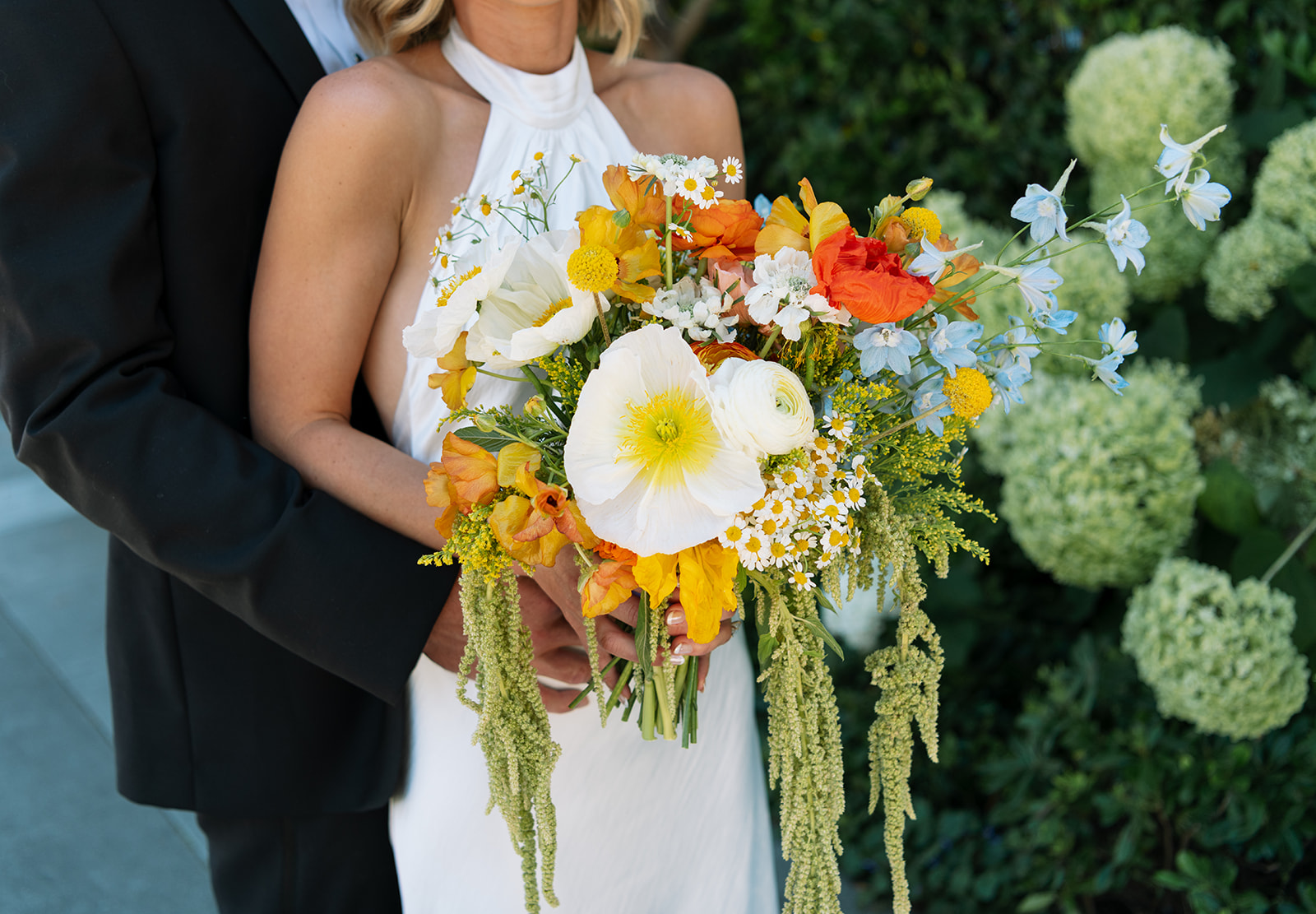
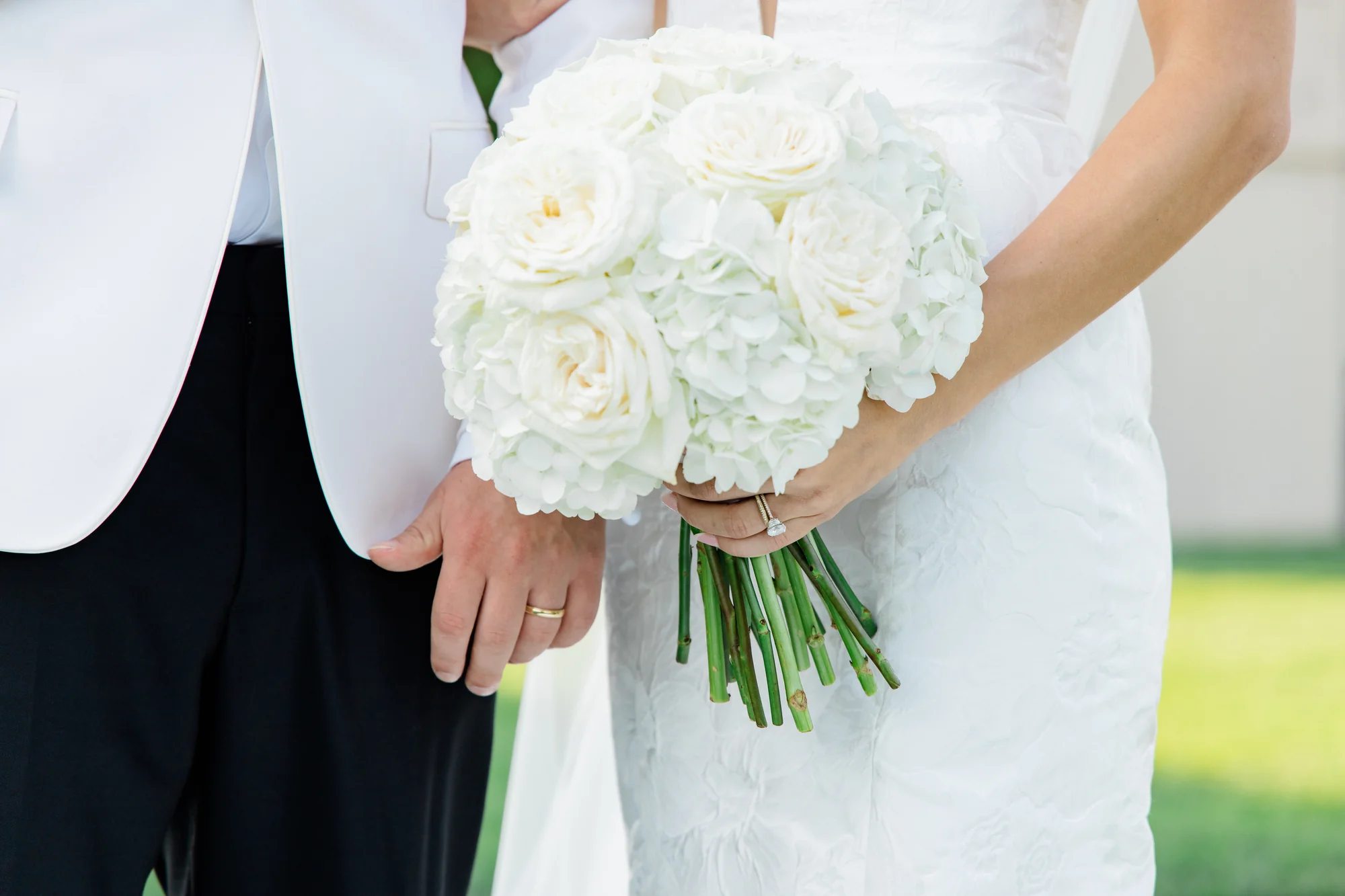
Imagine two bouquets. Both have the same flowers: garden roses, ranunculus, a few cascading elements. In the first, every stem is cut to the same length. The heads all face forward. The silhouette is a clean sphere. It reads as polished and classic.
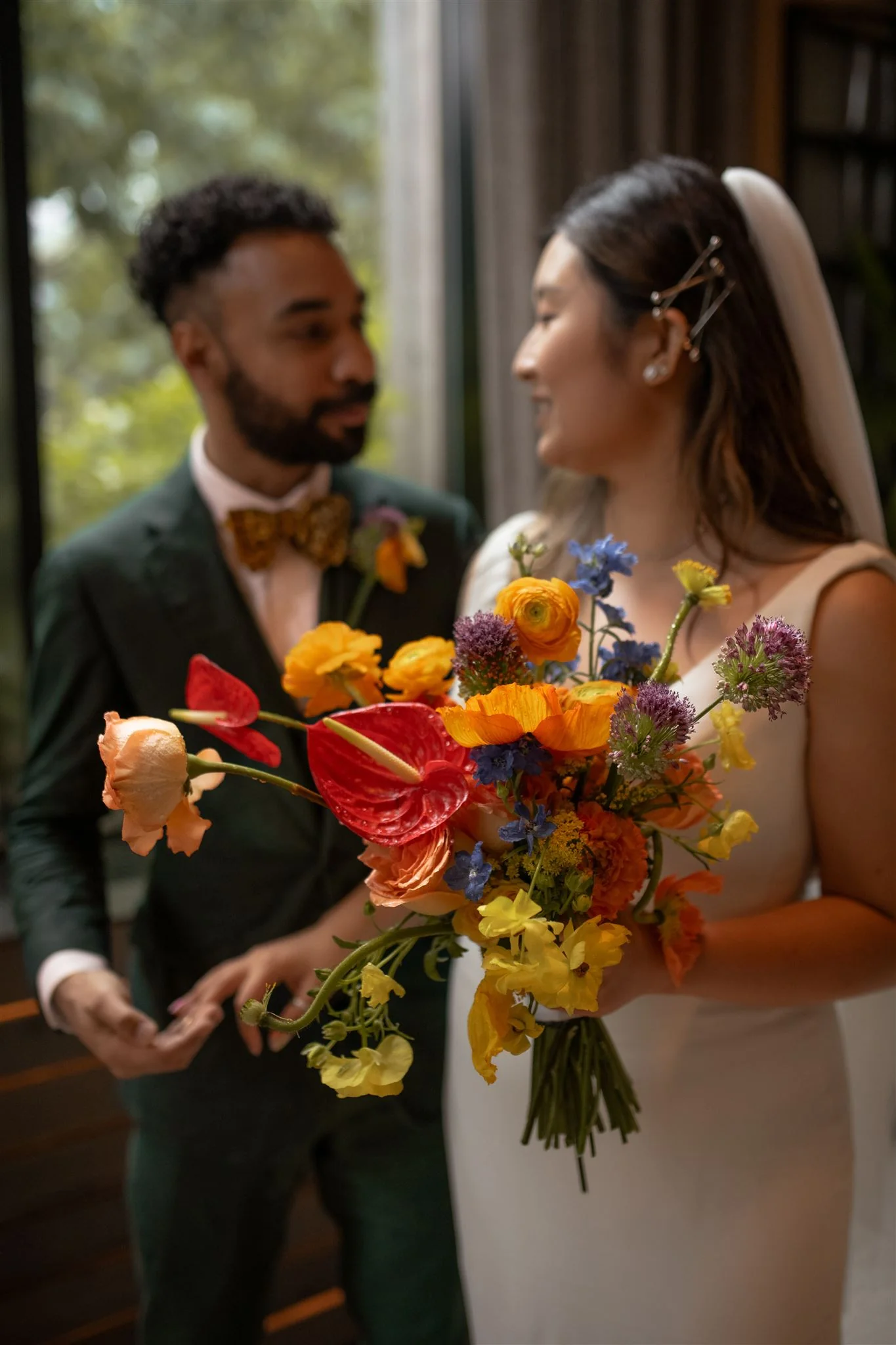
The second has the same flowers. But one garden rose sits higher than the others. There's an intentional gap between a cluster of ranunculus and a trailing stem. Some blooms turn slightly sideways. There's a clear focal point where the eye lands first, and then moves.
Both are well-made bouquets. They simply have different structural intentions. One is built around fullness and uniformity; the other around hierarchy and negative space.
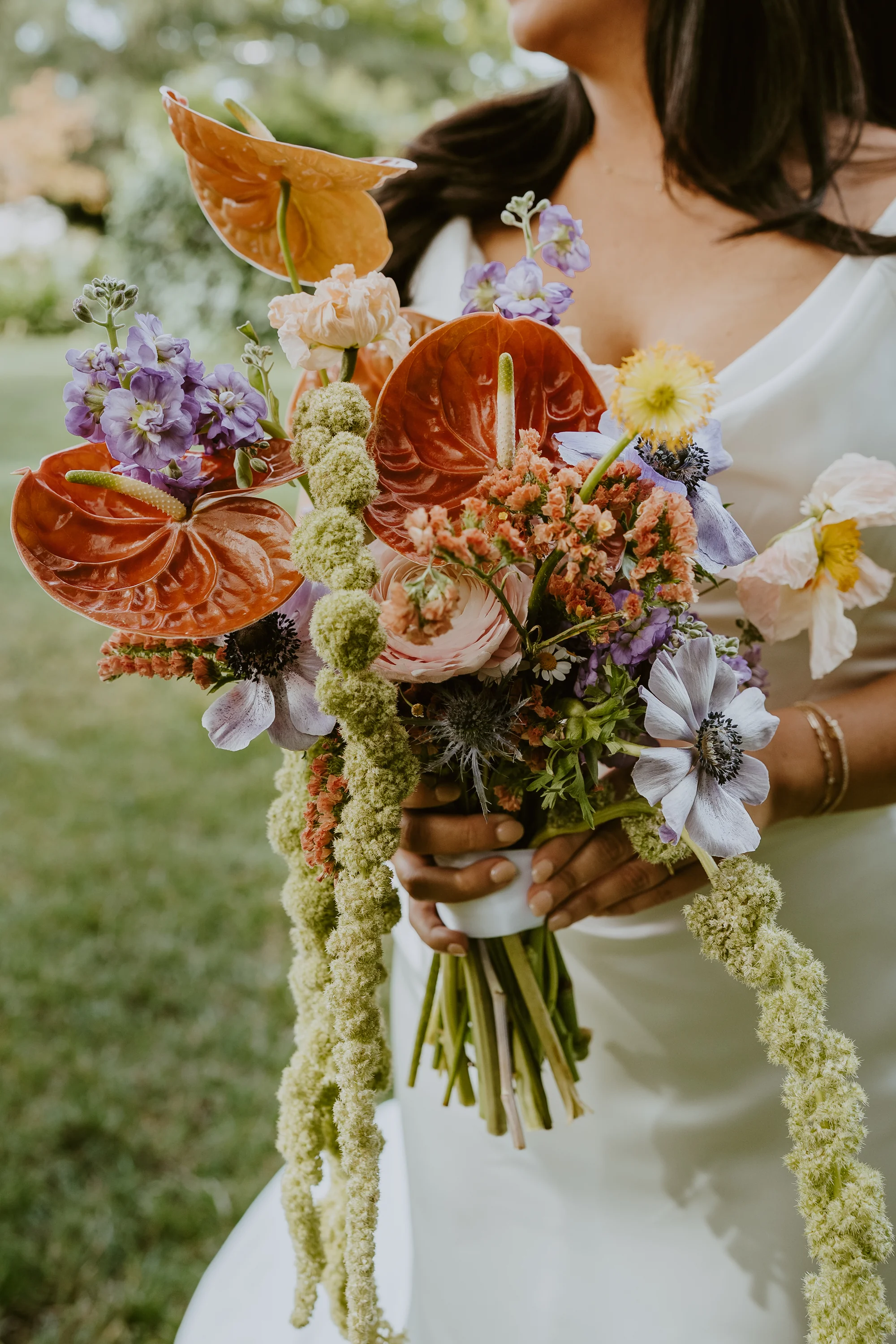
What Makes a Bouquet Look Editorial
The word gets used a lot. It tends to mean "moody photos" or "something I saw in a magazine" or "not quite traditional." Those are all good starting points, but none of them tell a designer what to actually build.
An editorial bouquet is one where the structural decisions — proportion, negative space, focal point, movement — are as visible as the flowers themselves. The design choices are clear, even in a still image.
That's the definition a designer is working from. It doesn't require rare or expensive stems but intentional structure.
Proportion and Scale
The first structural decision isn't which flowers. It's how big, and relative to what.
A bouquet is held against a dress, in a specific space, by a specific person — and what reads as proportional depends on all three. A sweeping ballgown works with a large dramatic bouquet. A minimalist slip dress calls for something with more negative space and less visual weight. Both require that the proportion decision was made deliberately.
This is also where the distinction between bouquet size and bouquet scale matters. Two bouquets can be the same physical dimensions and read completely differently depending on how the stems are distributed. A compact bouquet with one large focal bloom feels differently than one where that same size is filled edge-to-edge with uniform blooms. The Wedding Bouquet Size Chart → covers the dimension questions; proportion is the design question that sits underneath it.

Negative Space as a Design Tool
This is the structural principle that most clearly separates an editorial bouquet from a classic one.
A round or garden-style bouquet is built for fullness. The goal is density: a lush, layered surface with no visible gaps.
An editorial bouquet uses the gaps. Negative space — the air between blooms, the visible stems, the places where nothing is — is part of the composition. It gives the eye somewhere to rest.
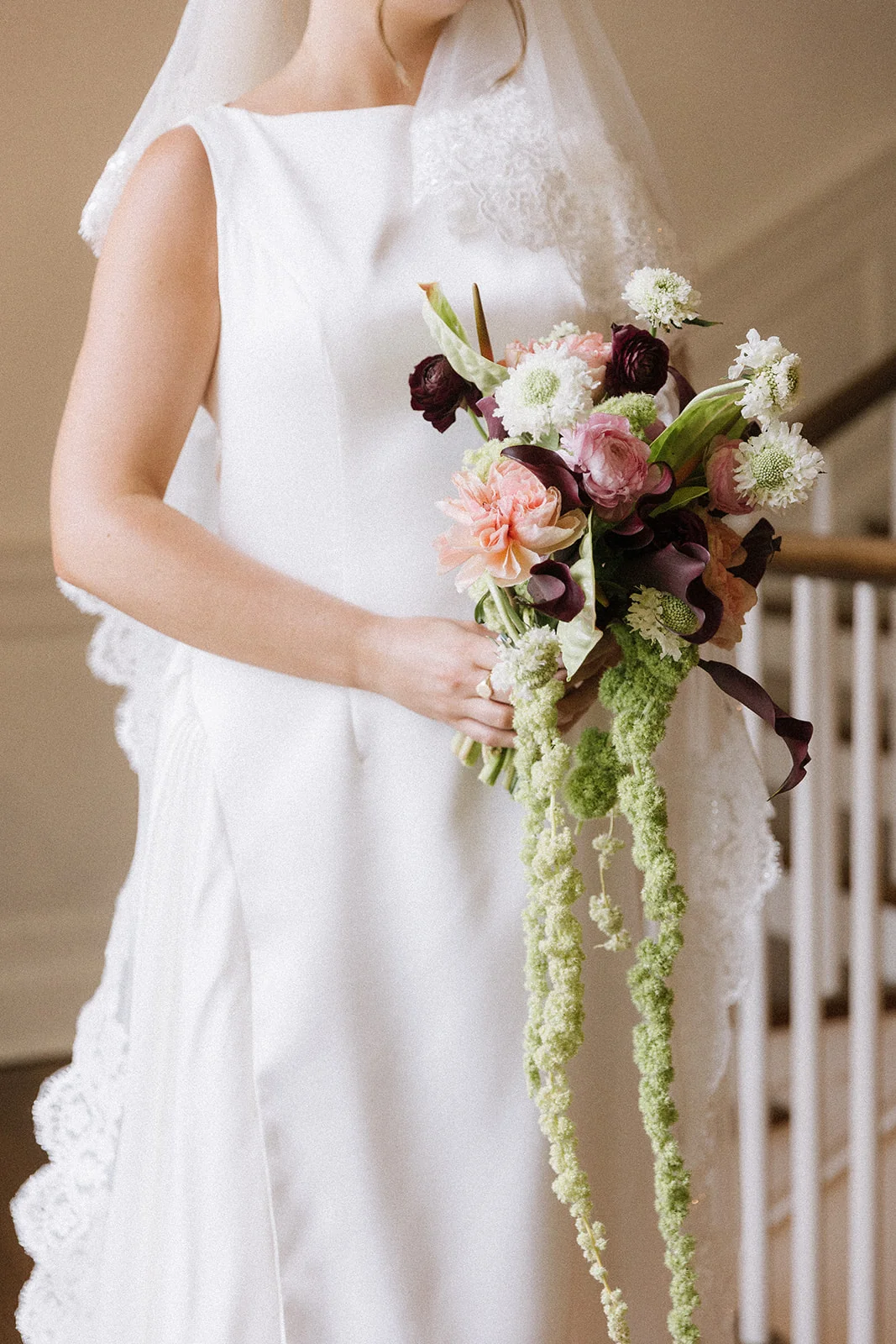
In practice, two stems set deliberately apart create negative space. A single trailing element against open air creates negative space. A focal bloom placed slightly off-center, with breathing room on one side, creates negative space. They're an intentional part of the design.
Focal Point Hierarchy
In a round bouquet, there's uniform texture, density, and height — every stem competes equally for the eye.
An editorial bouquet has a focal point: one bloom, one cluster. Everything else supports it or directs toward it.
The focal point isn't always the largest flower or the most expensive one. It could be a single oversized garden rose. It could be a cluster of smaller blooms that together carry the visual weight. What makes it a focal point is that the rest of the bouquet is organized around it.
If some of this vocabulary is new, the Wedding Flower Glossary → is a useful reference. Knowing how to describe what you like makes the design conversation more specific.
Movement and Asymmetry
Asymmetry is the element most associated with an editorial bouquet, and also the one most often misread as "less structured" or "a looser version" of a classic design.
Asymmetry requires more decision-making than symmetry, not less. An asymmetrical bouquet has to balance visually across an uneven composition — a trailing element on one side needs visual weight somewhere else; a flower placed high needs something to balance it below.
Movement comes from the same principle. These aren't things that are the result of deliberate placement. The bouquet looks like it's in motion because it was built to.
How This Connects to How Poppy Builds Bouquets
None of this is a specialty service or a premium tier. It's the design thinking behind every Poppy bouquet. We start with mood, structure, and what the finished piece should communicate, rather than a stem list.
When structure comes first, the flowers serve the composition. That's what makes a bouquet read as intentional.
If you want to translate this into your own design — shape, proportion, overall direction — Find Your Perfect Bouquet Silhouette → is the right next step.