
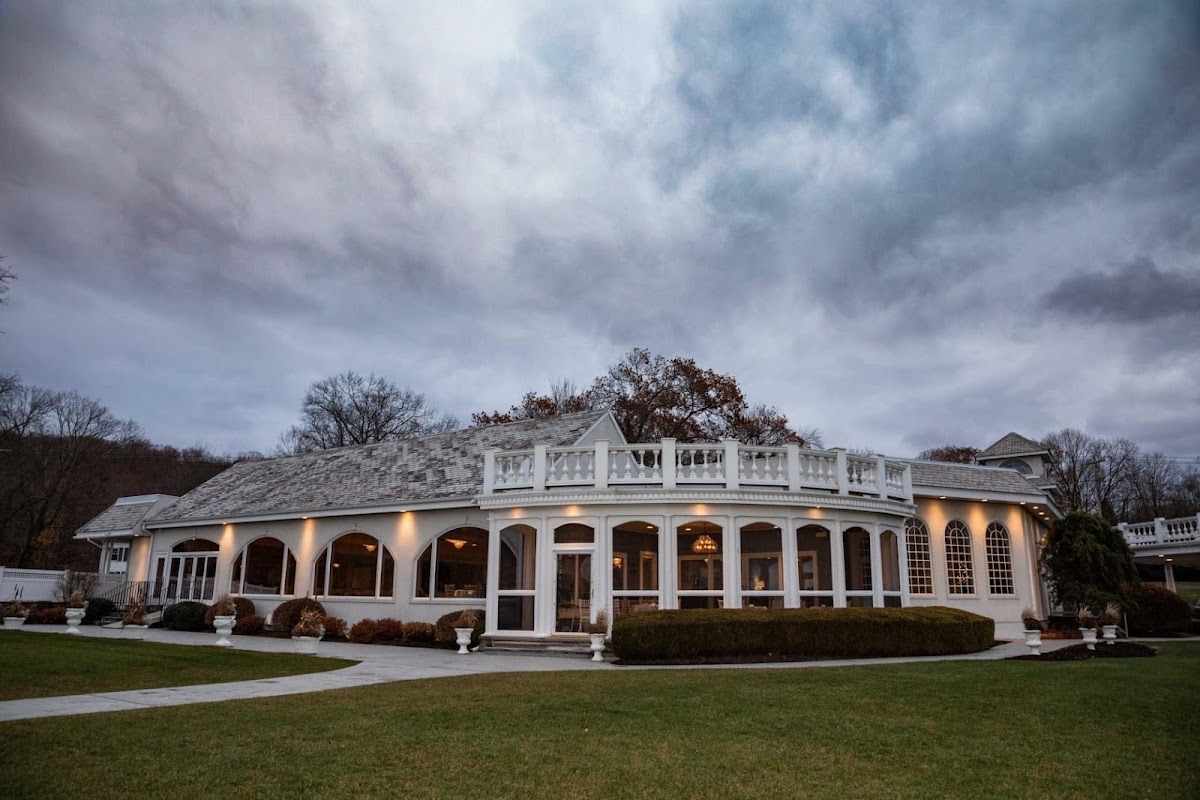
You turn off Route 7 onto Candlewood Lake Road, and the suburban sprawl of Danbury begins to loosen its grip. The road narrows, winds through wooded residential stretches, and then the trees part to reveal something that stops first-time visitors mid-sentence: eight miles of gleaming water stretching toward low, forested hills on the opposite shore. Connecticut’s largest lake, a reservoir created in the 1920s that has since become the centerpiece of an entire lakeside community. The Candlewood Inn sits directly on this water — not near it, not with a view of it from a distance, but right there, lawn sweeping down to the shore, terraces perched above the ripples, the kind of proximity that makes guests instinctively reach for their phones before they’ve even stepped out of the car. This is the only wedding venue in Connecticut with this particular geography, and that exclusivity shows. Poppy has designed The Candlewood Inn wedding flowers for 5 celebrations here, and each time we arrive for setup, we’re reminded that the lake is not background. It is the main event, and everything we design must understand that.
About The Candlewood Inn
The Candlewood Inn operates as a full-service lakefront venue with an events program built around the singular advantage of its location. Candlewood Lake itself spans five Connecticut towns and over 5,000 acres of water surface, originally created as a hydroelectric project but now better known for recreation — boating, fishing, summer homes lining the wooded shores. The Inn sits in Brookfield, about five miles from downtown Danbury and roughly an hour and a half from both New York City and the Connecticut shoreline, making it accessible to couples throughout Fairfield County, the Hartford area, and metropolitan New York without feeling urban in any way. The area around the lake maintains a resort-town atmosphere — casual waterfront restaurants, marinas, quiet residential neighborhoods — with none of the commercial congestion you might find closer to I-84.
The building itself is classic New England lakeside architecture: clean white clapboard siding, peaked rooflines, wide covered porches, and an abundance of windows designed to capture the water views from every possible angle. The interior spaces lean formal-traditional rather than rustic — think crisp white linens, elegant chandeliers, and polished wood floors, not exposed beams and barn doors. The aesthetic is country club meets lakeside resort, a style that photographs beautifully and accommodates a wide range of design approaches from classic romantic to modern minimalist. The venue’s ballroom, with its eight-foot-high picture windows wrapping the lakeside wall, is the showpiece — floor-to-ceiling glass that frames the water and hills like a living painting.
For logistics, The Candlewood Inn operates with an in-house culinary team and event coordination staff, which means setup and breakdown are handled by venue personnel familiar with the spaces. Florists are outside vendors (good news for us), and the team is accustomed to working with wedding professionals. Load-in typically happens through the main entrance with direct access to the ballroom and easy cart-rolling distance to the outdoor ceremony site. Parking is ample and included in the venue’s site fee, which is a relief for couples with large guest counts. The venue requires proof of liability insurance from all vendors — a standard practice — and Poppy carries comprehensive coverage that satisfies their COI requirements without issue.
One practical note: because the venue sits directly on the lake, wind can be a factor, especially during afternoon ceremonies. We’ve learned to anchor outdoor installations with extra stability and choose bloom varieties that don’t shatter in a breeze. The exposure also means spectacular light during golden hour, particularly for ceremonies timed to capture sunset over the water, but that same light can be intense and warm-toned, which affects how certain flower colors photograph. These are solvable challenges, not dealbreakers, but they matter when planning Candlewood Inn wedding flowers that will look as good in person as they do in images.
Event Spaces & Floral Opportunities
Ballroom
Capacity: 250 seated
Setting: The ballroom is the heart of Candlewood Inn receptions, and its defining feature is that wall of eight-foot-high windows overlooking the lake. The entire lakeside elevation is glass, which floods the room with natural light during daytime events and offers dramatic twilight views as evening falls. The aesthetic is refined and traditional — cream-colored walls, polished hardwood floors, classic chandeliers with crystal accents, and a color palette that stays neutral to let the view be the hero. The space is rectangular with the long axis parallel to the water, so most guest tables naturally orient toward those windows. It is a room that knows its strength and does not try to compete with the scenery outside.
Floral approach: The cardinal rule here is the same as any venue with significant views: do not block them. Tall centerpieces are permissible only if they are elevated on transparent risers or slender stands that keep the blooms well above eye level — think 30-inch clear acrylic columns topped with airy arrangements of delphinium, snapdragons, and trailing amaranthus that draw the eye upward without creating a visual barrier. More commonly, we design low, lush centerpieces that stay under 12 inches: garden roses (Keira, Patience, or Quicksand for soft palettes), spray roses, ranunculus, and textured foliage like dusty miller or eucalyptus mounded in low compote bowls or shallow ceramic vessels that echo the room’s cream and white tones. For the head table, which typically sits along one of the shorter walls, we can go larger — a 10-foot garland of smilax, Italian ruscus, and seeded eucalyptus interspersed with clusters of garden roses, lisianthus, and scabiosa, designed to drape naturally along the table edge. The abundant natural light in this room is both gift and challenge: flowers look luminous and vibrant, but delicate blooms like sweet peas or anemones can wilt faster than they would in a darker space. We often mist arrangements just before guests enter and choose hardy varieties like spray roses and alstroemeria for longevity. The classic elegance of the room allows for virtually any palette, but we find that soft, romantic tones — blush, cream, champagne, soft peach — photograph beautifully against the natural greens and blues visible through the windows, while bold jewel tones (burgundy, navy, emerald) create dramatic contrast if couples want a more striking look.
Lawn & Ceremony Area
Capacity: Up to 250 guests
Setting: The ceremony lawn is the reason couples choose this venue. It is a broad, flat expanse of manicured grass that runs directly to the lake’s edge, with the water stretching out beyond and low, tree-covered hills forming the horizon line. Chairs are typically arranged in rows facing the water, with the couple standing at the shoreline or just back from it, so that the lake becomes the natural backdrop. On a clear day — especially late afternoon when the sun is angling across the water — the setting is breathtaking. On an overcast day, it is still lovely, with a soft, diffused light that flatters every skin tone. This is an outdoor space with no architectural features, no arbor structure, no built-in focal point, which means the floral design must create the visual anchor for the ceremony.
Floral approach: A ceremony arch or chuppah is essential here, and the scale should be generous enough to hold its own against the expanse of water and sky. We often build ground arches — sturdy wooden or metal frames set directly on the grass, dressed with a profusion of greenery and blooms that feel abundant without looking overly manicured. For a romantic, organic style, consider smilax, Italian ruscus, and willow branches as the base structure, then layer in garden roses (Juliet, Patience, Constance), spray roses, lisianthus, scabiosa, and touches of blue delphinium or tweedia to echo the water. For a more modern look, a geometric hexagonal arch with clean lines, sparsely dressed with eucalyptus and clusters of white blooms (white O’Hara roses, white ranunculus, white lisianthus) concentrated at the corners. Wind is the main concern on this lawn — the open exposure to the lake means breezes can pick up unexpectedly, especially in late afternoon. We anchor every arch with sandbags or ground stakes, and we avoid top-heavy designs or blooms that shatter easily (looking at you, peonies). Aisle markers should be low and stable: small posies of flowers tied to the outside chairs with ribbon, or shepherd’s hooks driven into the ground with floral clusters no more than 18 inches off the grass. Many couples choose to repurpose their ceremony arch flowers for the reception — we can break down the arch during cocktail hour and reinstall the greenery and blooms behind the sweetheart table in the ballroom, which is an excellent use of budget. One note on timing: if your ceremony is scheduled for late afternoon or early evening, consider how the setting sun will affect your photos. The light can be stunning, but it also casts long shadows and creates backlighting that makes exposure tricky. Your photographer will thank you if floral elements are positioned to frame without blocking faces.
Outdoor Patio
Capacity: Variable, typically 100–150 for cocktail-style
Setting: The terraces are multi-level outdoor spaces directly adjacent to the ballroom, with stone or paver surfaces, metal railings, and direct views over the water. These are where cocktail hour typically happens when weather permits, and the vibe is relaxed elegance — guests mingling with drinks in hand, servers circulating with passed hors d’oeuvres, the lake glittering a few feet away. There are often high-top cocktail tables scattered across the terraces, and sometimes lounge furniture or additional seating areas depending on the couple’s rental choices. The setting is inherently beautiful, needing little enhancement, but small floral touches can elevate the experience from pleasant to memorable.
Floral approach: Cocktail hour florals should be unobtrusive and charming. We favor bud vases or small low arrangements on high-top tables — single stems of garden roses, clusters of spray roses and waxflower, or small seasonal blooms like ranunculus, anemones, or dahlias in vintage glass vessels or simple ceramic bud vases. The goal is to add pops of color and softness without taking up valuable table space or obstructing conversations. If there is a bar set up on the patio, that is a prime location for a statement arrangement — something larger and more dramatic (24-inch tall centerpiece with delphinium, larkspur, garden roses, and trailing amaranthus in an urn or large ceramic vessel) that signals the party has begun. Hanging installations are also effective here if the patio structure allows: we have suspended small floral hoops (18-inch diameter metal rings wrapped in smilax and dotted with spray roses and eucalyptus) from pergola beams or overhead structure, creating visual interest at varying heights. The terraces transition seamlessly to the indoor spaces, so consider how your patio florals relate to what guests will see when they move into the ballroom — continuity of palette and style creates a cohesive experience.
Indoor Cocktail Area & Bar
Capacity: Variable, typically accommodates overflow from outdoor patio
Setting: When weather is questionable or for cooler-season weddings, cocktail hour happens indoors in spaces adjacent to the ballroom. This typically includes a stylish bar area with seating, side tables, and elegant finishes. The vibe is more polished than the outdoor terraces — still relaxed, but with a country-club formality. The venue provides handcrafted cocktails, and the bar itself becomes a visual focal point during this phase of the event.
Floral approach: The bar is your moment to make a statement. A substantial arrangement — something in the 30-inch range with height and presence — anchors the space and draws guests toward the bar. We like to incorporate elements that feel celebratory: tall stems like delphinium, snapdragons, or bells of Ireland for vertical interest, lush blooms like hydrangea, garden roses, and lisianthus for fullness, and unexpected accents like hanging amaranthus, scabiosa pods, or even fresh herbs (rosemary, mint, lavender) if the cocktail menu includes botanical drinks. Vessels should feel substantial — large ceramic urns, brass compotes, or wooden boxes that ground the arrangement and give it weight. Smaller arrangements can be placed on side tables or console surfaces throughout the indoor cocktail area — simple clusters of blooms in low vessels that add visual warmth without cluttering the space. If the couple is serving signature cocktails, consider coordinating floral elements with the drink ingredients: for a lavender martini, add fresh lavender stems to the bar arrangement; for a berry-based cocktail, incorporate hypericum berries or privet berries in the design. These small touches make the florals feel integrated into the overall experience rather than separate decoration.
Bridal Suite
Capacity: Bridal party and immediate family
Setting: The bridal suite is a private getting-ready space with generous natural light (critical for makeup application and photography), full-length mirrors, comfortable seating, and enough room for the bridal party to move around without feeling cramped. The aesthetic is clean and elegant, a neutral backdrop that allows the bridal details to shine. This is where getting-ready photos happen — the dress hanging in the window, bridesmaids in robes sipping champagne, close-ups of jewelry and shoes.
Floral approach: A single thoughtful arrangement transforms this space. We typically deliver a small-to-medium arrangement (12 to 16 inches tall) in a soft, romantic palette that complements the bridal bouquet. Garden roses (Keira, Patience, Quicksand), spray roses, ranunculus, and delicate accents like sweet peas or tweedia in a vintage ceramic pitcher, small urn, or simple glass vase. The arrangement should be pretty enough to photograph well but not so large that it overwhelms the space or gets in the way during preparations. Placement matters: a side table near the window where natural light will backlight the blooms, or on the vanity where it can appear in mirror-reflection shots. Some couples also request loose stems — a few extra roses or blooms to scatter artfully on surfaces for detail shots. If budget allows, small wrist corsages or hair flowers for the bridesmaids can be kept in the bridal suite in water until they are needed, which keeps them fresh and creates another beautiful detail for the photographer to capture.
Wedding Flower Ideas for The Candlewood Inn
Lakeside Reverie
This design embraces the soft, romantic quality of the waterfront setting with a palette drawn from the colors of dawn over the lake: blush pink, champagne, ivory, soft peach, and the palest butter yellow. We build around garden roses in varieties like Keira (blush with a hint of lavender), Patience (soft ivory with a creamy center), and Juliet (peachy-apricot that glows in natural light), layered with spray roses (Majolika for texture, Bombastic for blush tones), ranunculus in peach and cream, and lisianthus in champagne and white. Textural elements include silver-dollar eucalyptus, seeded eucalyptus, dusty miller, and trailing jasmine vine or clematis for movement. Vessels are soft and feminine: blush ceramic compotes, cream-colored stoneware bowls, vintage glass vases that catch and reflect light. The ceremony arch is lush and asymmetrical, with one side fuller than the other, creating an organic, overgrown-garden effect that feels effortless but is actually meticulously wired. This palette works beautifully in the ballroom, where the soft tones are amplified by natural light and create a luminous, ethereal atmosphere. It is especially stunning for spring and summer weddings when the light is warm and golden, and it photographs like a dream — soft, romantic, timeless.
Blue Horizon
Inspired by the lake itself, this concept leans into cooler tones with a sophisticated palette of dusty blue, slate gray, cream, and touches of greenish-blue. We work with blue delphinium (Guardian or Volkenfrieden varieties for depth of color), tweedia (small, star-shaped blooms in true blue), dusty blue hydrangea (Antique or Everlasting varieties), white O’Hara roses, white lisianthus, and pale blue thistle or sea holly for textural interest. Foliage includes eucalyptus in silver and blue-green tones, Italian ruscus, and bay laurel. Vessels are metallic — brushed silver compotes, galvanized metal containers, mercury glass vases that pick up and reflect the cool tones. The effect is modern, elegant, and slightly unexpected — blue florals remain relatively uncommon at weddings, so this palette stands out. It is ideal for couples who want something distinctive without being overly bold, and it works particularly well for summer and early fall weddings when the lake is deepest blue and the contrast between water and florals is most pronounced. In the ballroom, these cool tones create a serene, calming atmosphere that complements the natural setting without mimicking it too literally.
Sunset at Candlewood
This design captures the warm, vibrant colors of a Connecticut summer sunset: coral, peach, apricot, burnt orange, and touches of fuchsia. We build around dahlias (Café au Lait for soft peach, Cornel for coral-orange, Labyrinth for deep coral-red), garden roses in warm tones (Juliet, Free Spirit, Vuvuzela), ranunculus in coral and orange, and zinnias for a playful, garden-grown feel. Accents include hypericum berries in orange or peach, scabiosa in coral tones, and unexpected pops of fuchsia cosmos or hot pink spray roses to add vibrancy. Foliage is warm-toned as well: seeded eucalyptus, bronze-toned beech leaves, and magnolia foliage that picks up golden and rusty hues. Vessels are rustic-elegant: weathered terra cotta pots, wooden boxes with brass or copper liners, amber glass vases that glow when backlit. This palette is bold and celebratory, perfect for couples who want their florals to make a statement and create a party atmosphere. It works beautifully for late summer and early fall weddings, and it is particularly striking during golden hour when the natural light amplifies the warm tones. On the outdoor terraces during cocktail hour, these colors are almost incandescent, and in the ballroom, they create a warm, inviting glow that feels joyful and romantic.
Seasonal Considerations
Spring (March–May)
Spring in the Candlewood Lake area is unpredictable. March can still bring snow or freezing rain; May often feels like full summer. The lake itself takes time to warm, so the landscape around it can look bare and brown well into April before the trees fully leaf out. That said, spring offers some of the loveliest light — soft, diffused, not yet harsh — and blooming dogwoods, azaleas, and flowering trees around the property add natural color. For florals, spring is tulip and daffodil season, along with ranunculus, anemones, and the first peonies by late May. These blooms are delicate and gorgeous but require careful handling and climate control. Outdoor ceremonies are possible by late April, but always have a rain plan — the venue can accommodate indoor ceremonies if weather turns. Wind can be significant in spring as weather systems move through, so outdoor installations need extra anchoring. Spring weddings also mean lower humidity, which helps cut flowers last longer, but overnight temperatures can still drop into the 40s, so any florals left outside (ceremony setup the night before, for example) need to be hardy or covered.
Summer (June–August)
Summer is peak season at Candlewood Inn, and for good reason. The lake is warm, the lawns are lush and green, the days are long, and the weather is reliably warm to hot. Expect temperatures in the 80s and 90s during July and August, with high humidity that is typical of Connecticut summers. This is ideal wedding weather if you and your guests can handle the heat, and the lake provides a natural cooling effect with breezes off the water. For florals, summer heat is enemy number one. Delicate blooms like sweet peas, anemones, and peonies will wilt quickly in full sun, so we reserve those for indoor spaces or shaded areas. Hardy varieties like garden roses, spray roses, hydrangea, and lisianthus hold up better, along with tropical options like orchids if your palette allows. Summer also brings the widest selection of locally grown blooms: zinnias, dahlias, sunflowers, cosmos, and an abundance of foliage options. Outdoor ceremonies are beautiful but should be timed for late afternoon or early evening to avoid the hottest part of the day (4 or 5 p.m. onwards), and the dramatic summer sunsets over the lake are worth planning around. Hydration is critical — for guests, certainly, but also for flowers.
Fall (September–November)
Fall at Candlewood Lake is spectacular. The surrounding hills turn brilliant shades of red, orange, and gold, and the cooler, drier air makes for comfortable conditions and excellent floral longevity. September and early October are the sweet spot — temperatures in the 60s and 70s, low humidity, clear blue skies, and the landscape at its most photogenic. By late October and into November, temperatures drop into the 50s and 40s, trees are mostly bare, and there is a stark, end-of-season quality to the setting that can be beautiful in its own way but feels quite different from early fall. For florals, fall brings dahlias (the best season for them), chrysanthemums in rich tones, marigolds, zinnias, and late-season roses. The cooler temperatures mean flowers last longer and require less intervention to stay fresh. Fall palettes lean warm and rich — burgundy, rust, burnt orange, deep plum, bronze — and these tones look stunning against the natural foliage. Outdoor ceremonies are ideal in early fall, though by November you will want to have heaters available for guest comfort. One practical note: fall also means shorter days, so if you are planning a ceremony timed for sunset, be aware that golden hour moves earlier as the season progresses (by early November, sunset is around 5 p.m.).
Winter (December–February)
Winter weddings at Candlewood Inn are rare but undeniably romantic. The lake may freeze partially or fully depending on how severe the winter is, and the landscape takes on a spare, austere beauty. Snow-covered lawns, bare trees, the lake slate-gray under winter skies — it is atmospheric in a way that summer weddings cannot replicate. Indoor ceremonies become standard (the Tank Room or a space within the ballroom), and the venue’s cozy, elegant interiors feel particularly welcoming. For florals, winter limits local bloom availability, so we rely more on imported flowers and greenhouse-grown varieties. Amaryllis, paperwhites, anemones (imported from Europe or South America), roses, ranunculus, and evergreen foliage (pine, fir, cedar, magnolia) become the foundation. Winter palettes can go rich and jewel-toned (burgundy, emerald, deep plum) or crisp and wintry (white, cream, silver, with touches of evergreen). Evergreen garlands with clusters of white flowers and berries along the ballroom windows create a festive, seasonal look without veering into Christmas-decoration territory. Practical considerations: cold temperatures mean flowers can be transported and set up earlier without wilting, but any blooms left in unheated spaces (like a vehicle overnight) will freeze and be ruined. Also, winter roads in Connecticut can be unpredictable, so delivery timing needs to account for potential weather delays.
Poppy’s Expert Take
Mind the wind. The open exposure to Candlewood Lake means wind is a factor for any outdoor setup, particularly ceremony arches and aisle markers. We always use heavy-duty anchoring — sandbags for ground arches, weighted bases for any standing elements, and zip ties or floral wire for securing every stem. Avoid top-heavy designs and choose blooms that will not shatter or shed petals at the first breeze (skip peonies and fully opened roses for outdoor ceremonies; go for lisianthus, spray roses, and sturdy foliage). We have learned the hard way that a beautiful arch that topples over five minutes before the processional is a nightmare scenario, so overbuilding stability is never a mistake.
Use the ceremony arch twice. Most couples do not realize how easy it is to repurpose ceremony flowers for the reception. During cocktail hour, we can break down the ceremony arch, transport the greenery and blooms into the ballroom, and reinstall them behind the sweetheart table or along the head table. This effectively doubles the visual impact of one set of flowers and is one of the most cost-effective strategies we recommend. The venue staff is accustomed to this and accommodating with timing, as long as we coordinate in advance. If you are considering this, let us know early so we can design the arch in modular sections that break down and reassemble cleanly.
Low centerpieces are non-negotiable in the ballroom. Those eight-foot windows are the reason you booked this venue. Do not block them. Guests will spend the entire reception craning their necks around tall arrangements, and your photographer will have a hard time capturing the view that makes this space special. If you love the drama of height, we can achieve it with elevated designs on clear risers, but classic low arrangements (under 12 inches) are the safer, more effective choice. Trust us: when your centerpieces complement rather than compete with the lake, the overall effect is far more elegant.
Plan your ceremony timing around the light. Late afternoon and early evening ceremonies offer the most flattering light and the most dramatic backdrop, especially during summer when the sun sets over the water. But be strategic: if your ceremony is at 5:30 p.m. in August, the sun will be directly in your guests’ eyes if they are facing west toward the lake. Your photographer will need to adjust angles, and some guests will spend the ceremony squinting. Consider positioning the ceremony so the couple faces the lake (guests facing away from it) to avoid this issue, or schedule the ceremony slightly later to let the sun drop lower on the horizon.
Embrace the lake’s palette. The Candlewood Inn’s entire aesthetic is built around the water, so floral designs that reference blues, greens, and natural tones feel cohesive and intentional. That does not mean you are limited to aquatic colors, but it does mean that palettes which harmonize with the setting — soft blues, greens, neutrals, warm sunset tones — will photograph better and feel more integrated than, say, hot pink and black. If you have a bold color vision, we can make it work, but consider adding elements that bridge to the natural setting (silvery foliage, blue accents, organic textures) to keep the design from feeling disconnected.
The bridal suite is a photo opportunity. Do not overlook it. A small, thoughtful floral arrangement in the bridal suite shows up in dozens of getting-ready photos and costs a fraction of what you are spending on reception flowers. We recommend adding this to your proposal even if it means scaling back slightly elsewhere — the return on investment in terms of images is exceptional.
Load-in access is excellent, but coordinate early arrival. The venue staff is organized and accommodating, but they are managing multiple vendors (caterers, rental companies, photographers, DJs) all arriving within a compressed window. If you let Poppy know your timeline early, we can coordinate with the venue to arrive ahead of the rush, which gives us more time for setup and ensures we are not fighting for space or access. Early arrival also means we can handle any last-minute adjustments (rearranging centerpieces, adding extra stems, adjusting the ceremony arch) without the pressure of guests arriving in 20 minutes.
What Poppy Couples Spend on Flowers Here
$1,500–$2,000 | The Essentials
This tier covers the foundational floral elements for a Candlewood Inn wedding: a medium-scale ceremony arch or backdrop (ground arch dressed with greenery, garden roses, and seasonal blooms, positioned on the ceremony lawn to frame the lake view), aisle markers for the ceremony (small floral clusters on shepherd’s hooks or tied to chairs with ribbon), reception centerpieces for guest tables (low, lush arrangements in the 8- to 10-inch range, using garden roses, spray roses, and seasonal foliage in simple vessels), a head table arrangement (10-foot garland or a series of low centerpieces), and personal flowers (bridal bouquet, four bridesmaids’ bouquets, six boutonnieres, and two corsages). At this budget, we focus on one or two primary focal flowers (garden roses and one seasonal bloom like lisianthus or ranunculus) and let foliage and texture do much of the work. Greenery-heavy designs are cost-effective and photograph beautifully, and we can create visual impact through abundance and lushness rather than rare or expensive blooms. This tier works well for guest counts up to 100 and couples who prioritize the ceremony and reception over extensive cocktail-hour florals.
$2,000–$3,000 | The Full Picture
This tier adds layers of detail and expands floral coverage across multiple spaces. You will get everything from the Essentials tier, plus: an upgraded ceremony arch with more blooms and a larger scale (think 6-foot-wide arch densely dressed with garden roses, lisianthus, delphinium, and trailing vines), cocktail-hour florals (small bud vases or low arrangements for high-top tables on the outdoor patio, plus a statement arrangement for the bar), an upgraded head table design (12-foot garland with more varied blooms and textural elements), larger or more elaborate guest-table centerpieces (incorporating multiple flower varieties and more substantial vessels), and additional personal flowers (corsages for mothers and grandmothers, extra boutonnieres, flower crown or hair flowers for the bride). At this level, we can introduce more variety in bloom selection and create distinct looks for different spaces — a lush, organic ceremony arch, modern low centerpieces in the ballroom, and playful bud vases for cocktail hour. This tier is ideal for guest counts of 100 to 175 and couples who want comprehensive coverage without overspending.
$3,000+ | The Full Experience
This tier is about abundance, variety, and creating floral moments throughout the entire venue. You will get everything from the Full Picture tier, plus: a dramatically scaled ceremony arch (8-foot-wide or larger, lush and profuse, often with additional