
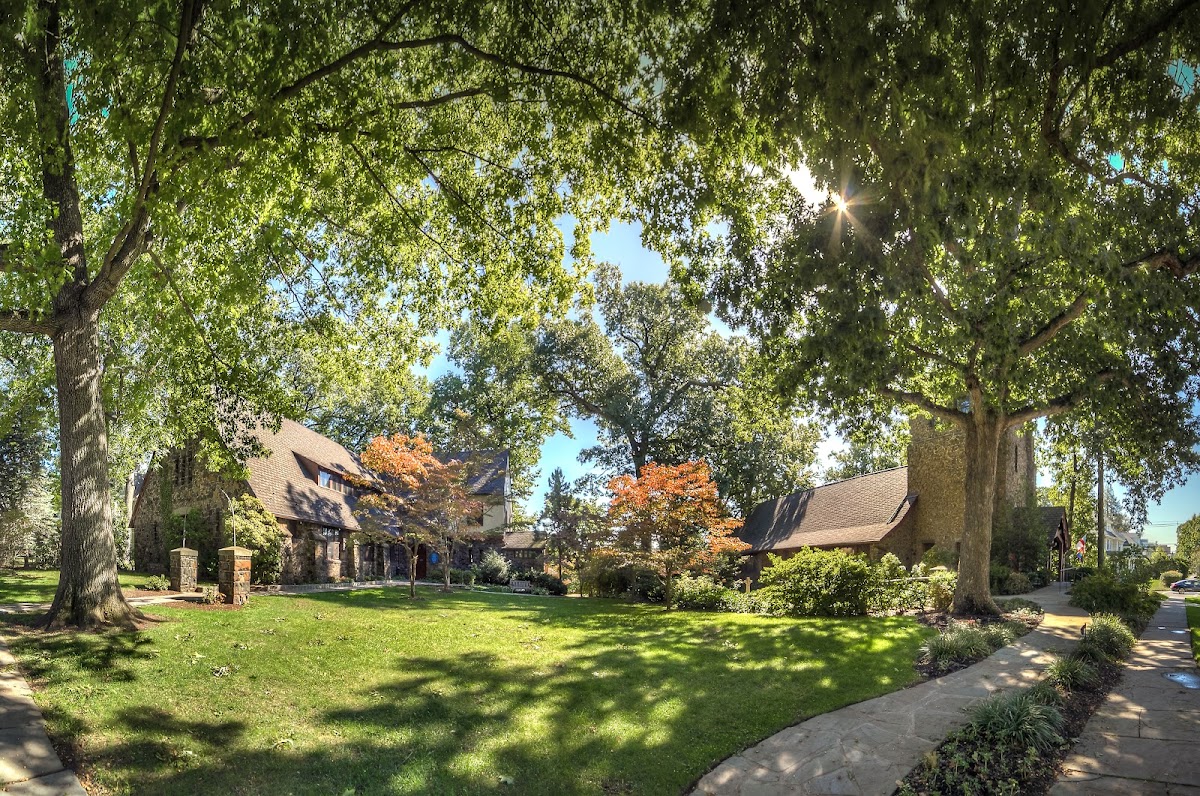
St. John’s Church offers a rare intersection of 19th-century weight and an inclusive, community-focused atmosphere. The design opportunity here lies in the contrast between the rugged stone masonry and the delicate, organic textures of high-end floral design.
The Spaces
Main Sanctuary
The sanctuary is a masterclass in traditional Episcopal architecture, defined by its warm brick interior, dark wood pews, and vaulted ceilings. Because the natural light is filtered through stained glass, the space can feel dim; your floral choices must provide the necessary brightness and visual “pop” against the heavy materials.
- What works: Large-scale altar meadows that appear to grow from the floor. These anchor the ceremony without competing with the historic altar. High-contrast palettes—think crisp whites, creams, and pale yellows—are essential to ensure the flowers don’t disappear into the brickwork.
- Skip: Tall, spindly stands or pedestals. The architecture is already vertical; you want to ground the space with lush, horizontal or floor-based movements.
- Watch out: Pew attachments. These are historic wooden pews, so all floral markers must be tied with ribbon or secured with non-invasive clips. No adhesives or metal clamps are permitted.
- Budget hero move: Focus your entire ceremony budget on two massive floor installations at the foot of the altar and a cluster at the baptismal font.
Parish Hall
Built in 1923, this space feels like an English countryside manor. With its coffered ceilings and soaring beams, it provides a warm, intimate setting for a sit-down meal. The wood floors and beams are the stars here, so the floral design should feel like an extension of a garden brought indoors.
- What works: Low, garden-style centerpieces in ceramic or stone vessels. The “English vernacular” style of the room calls for loose, airy arrangements with plenty of movement and seasonal foliage.
- Skip: Tall, narrow centerpieces. They feel disconnected from the cozy, historic proportions of the hall and can interfere with the view of the ceiling beams.
- Watch out: The “restaurant-sized” kitchen is a logistical win for caterers, but ensure your florist has a designated space for staging if they are doing on-site assembly, as the hall itself fills up quickly with 100 guests.
- Budget hero move: Use heavy greenery garlands along the mantle or the head table to lean into the English manor aesthetic without the cost of high-density blooms.
The Grounds
The exterior of St. John’s is a textured stone facade surrounded by mature landscaping and trees. It is the primary location for guest arrivals and post-ceremony photography.
- What works: A lush floral semi-arch or “nest” around the main stone entrance. This creates a transition from the outside world into the sacred space of the church.
- Skip: Delicate, lightweight arrangements that might blow over. The grounds are exposed, and Montclair can get a steady breeze.
- Watch out: Seasonal changes. The mature trees provide a beautiful backdrop in spring and fall, but in winter, the stone can look stark. Use evergreens and berries to maintain the visual weight.
What Works at St. John’s Church
- High-Contrast Palettes: Against the dark wood and red-toned brick of the sanctuary, “muddy” or dark colors (like burgundies or deep purples) will get lost. Stick to whites, peaches, or vibrant jewel tones to ensure the flowers stand out in photos.
- The Baptismal Font: This is a secondary architectural focal point. A simple wreath of greenery or a small, asymmetrical floral cluster here adds a touch of design to the back of the nave.
- Floor-Based Meadows: Instead of traditional urns, use “living” meadows that look like they are growing from the stone floor. This softens the hard lines of the masonry.
- Seasonal Foliage: The English style of the Parish Hall begs for seasonal transitions—flowering branches in the spring, lush ferns in the summer, and turning leaves in the autumn.
- Minimalist Pew Decor: A single, high-quality bloom with a long velvet ribbon is often more effective than a bulky bouquet on every pew. It maintains the clean lines of the aisle.
Budget Guide
| Tier | Estimate | Description |
|---|---|---|
| Essentials | $1,750 - $2,500 | Personal flowers (bouquets/boutonnieres) plus a pair of impactful altar arrangements or a baptismal font accent. |
| Sweet Spot | $3,500 - $4,500 | Adds a cohesive set of low garden centerpieces for the Parish Hall and simple, elegant pew markers for the ceremony. |
| Full Experience | $5,000 - $7,000 | Includes a statement entrance installation on the stone exterior, lush altar meadows, and upgraded centerpieces with more premium blooms. |
| Statement | $8,500+ | Full floral immersion including mantle installations in the Parish Hall, overhead greenery accents, and a complete floral “nest” for the ceremony. |
The character of St. John’s is rooted in its history; your floral budget should prioritize quality and texture over sheer volume to respect the integrity of the architecture.
Tips
- Lighting is everything: The sanctuary is dark. If you aren’t investing in professional pin-spotting for your flowers, keep your color palette light and bright.
- Repurpose with intention: Move your altar meadows to the Parish Hall to frame the sweetheart table or the band area after the ceremony.
- Non-invasive only: Ensure your florist is aware that this is a historic site; no nails, tacks, or damaging tapes can be used on the 100-year-old wood.
- Consider the Garden: If you are using the outdoor space for photos, ask your florist to provide a “toss” bouquet or extra petals to tie the outdoor shots to the indoor theme.
- Load-in Logistics: Parking is ample, but the walk from the lot to the sanctuary involves stone paths; ensure your floral team has heavy-duty carts.