
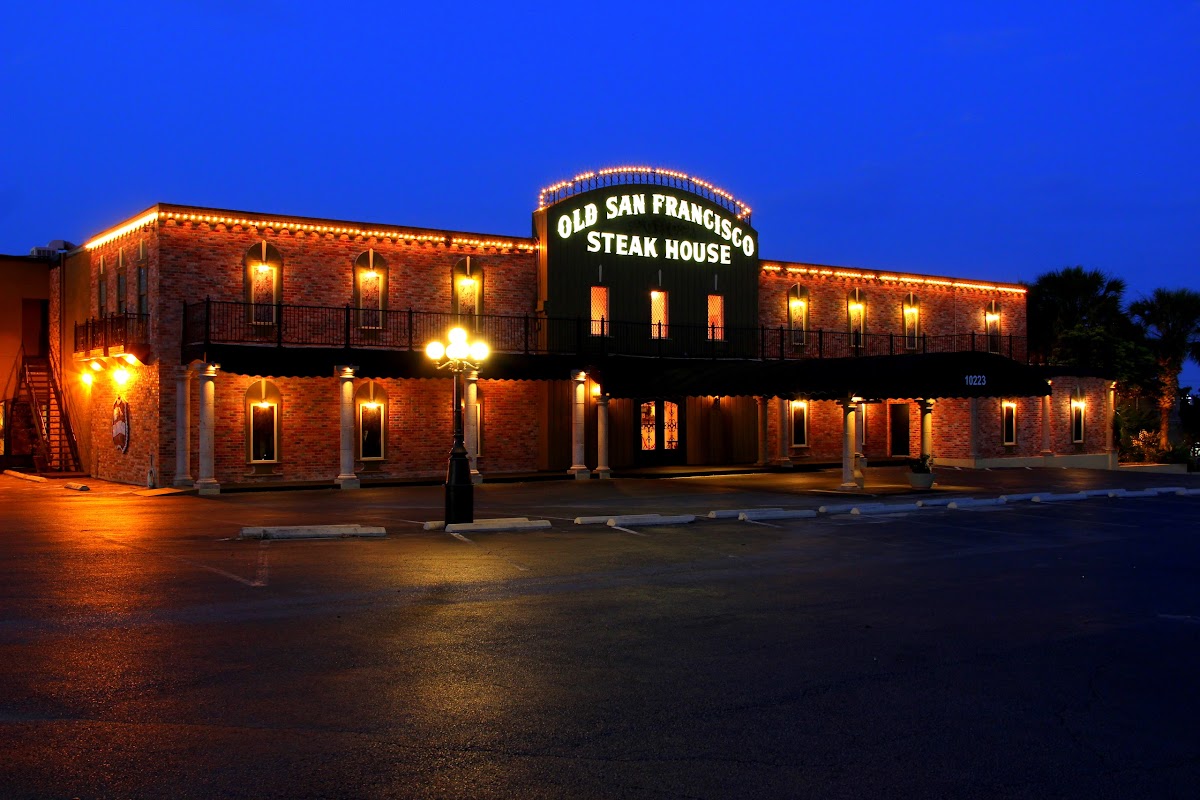
Designing for the Old San Francisco Steak House requires a shift in perspective. You aren’t working with a blank canvas; you are working with a space that has a loud, established personality defined by dark wood, vintage memorabilia, and a specific brand of Texas nostalgia. The goal isn’t to compete with the decor, but to use floral design to bring light and organic softness to the heavy architectural bones.
The lighting here is notoriously moody. In a restaurant setting, shadows are your biggest hurdle. From a photography standpoint, dark wood walls will swallow deep reds or muddy purples. We prioritize high-contrast palettes—think crisp whites, buttery creams, and pops of vibrant peach or coral—to ensure your investment is actually visible once the sun goes down.
The Spaces
Crystal Room / Swing Room
This is the venue’s crown jewel, characterized by its multi-level layout and prominent wooden balconies. It feels like a step back in time, and the height of the room is its greatest asset. Because the ceilings are standard and often lack rigging points, we look to the architecture to provide the “lift” that a traditional hanging installation would offer.
- What works: Smilax or Italian Ruscus woven through the balcony railings. This mimics the look of a hanging installation without the logistical nightmare of rigging from a drop ceiling.
- Skip: Tall, thin glass trumpets. They look dated against the rustic wood and can feel precarious in a room with a lot of foot traffic.
- Watch out: The “busy-ness” of the walls. If you use too many small, bud-vase-style arrangements, they will get lost in the eclectic decor.
- Budget hero move: Focus your entire reception budget on the balcony greenery and a lush, ground-level “meadow” at the foot of the sweetheart table.
Dining Room
The smaller dining areas are significantly more intimate and often darker than the main ballroom. These spaces are best suited for guest-heavy events where the focus is on the meal and the conversation.
- What works: Low, lush compote arrangements. These keep the sightlines open while providing a concentrated burst of color against the dark tabletops.
- Skip: Minimalist greenery-only designs. Without bright blooms, the greenery will blend into the shadows and look like “filler” rather than “design.”
- Watch out: Table size. Steakhouses often use heavy-duty table settings; ensure your florist knows the exact table dimensions so the arrangements don’t crowd the glassware.
Main Dining Room
This space is a bit more neutral, featuring standard carpeting and drop ceilings. It lacks some of the architectural drama of the Swing Room but offers a cleaner backdrop for those who want a more traditional wedding aesthetic.
- What works: Symmetrical floor installations to frame the head table or the entrance. This defines the “wedding” area within a space that can otherwise feel like a standard restaurant.
- Skip: Ceiling treatments. Drop ceilings are not designed to hold weight, and attempting to pin greenery to them rarely looks professional.
- Watch out: The lighting. This room often relies on artificial light; supplemental candlelight is non-negotiable here to create a romantic atmosphere.
What Works at Old San Francisco Steak House
- High-Contrast Palettes: Whites, creams, and pale yellows are essential. If you want color, go for saturated tones like “Sunset Orange” or “Bougainvillea Pink.” Avoid dark burgundies or deep blues unless they are heavily accented with white.
- Textural Greenery: Use varieties with different leaf shapes—like Eucalyptus Cinerea mixed with glossy Salal—to create depth against the flat wood surfaces.
- Abundant Candlelight: The venue provides the mood; you provide the glow. Mix standard floating candles with ribbed glass votives to break up the dark expanses of the tables.
- Ground-Level Statements: Since overhead rigging is off the table, use the floor. Large-scale arrangements at the base of the bar or the stairs create a luxury feel without needing a ladder.
- Architectural Integration: Treat the wooden pillars and railings as your trellis. Floral “climbing” designs that appear to grow up the existing wood structures feel much more organic in this venue than standalone pedestals.
Budget Guide
| Tier | Estimate | Description |
|---|---|---|
| Essentials | $1,750 - $2,500 | Personal flowers (bouquets/boutonnieres) and a curated set of low, impactful centerpieces for the main dining tables. |
| Sweet Spot | $3,000 - $4,500 | Adds a focal point installation, such as balcony greenery or a lush sweetheart table “nest,” plus upgraded candlelight. |
| Full Experience | $5,000 - $7,500 | Comprehensive floral coverage including balcony vines, floor-to-ceiling pillar designs, and premium blooms in all centerpieces. |
| Statement | $8,000+ | Full transformation. Includes custom-built floral backdrops, heavy floral entrance tunnels, and lush arrangements for every surface. |
The Old San Francisco Steak House is a “more is more” venue; a modest budget spent on high-impact areas will always look better than a large budget spread too thin across every corner.
Tips
- Prioritize the “Pop”: In your floral consultation, emphasize that the venue is dark. Request flowers with high “luminosity”—blooms that reflect light rather than absorb it.
- Repurpose with Intent: Move your ceremony floor arrangements to the base of the balcony stairs for the reception to maximize your investment.
- Avoid the “Clutter” Trap: The walls are already decorated with history; keep your floral silhouettes clean and intentional so the room feels curated, not crowded.
- Check Load-In Timing: As a functioning restaurant, load-in windows can be tight. Ensure your florist is prepared for a high-speed setup if there is a lunch service before your event.
- Embrace the Kitsch: This isn’t a modern white box venue. Leaning into a slightly more “wild” or “garden-style” floral aesthetic helps bridge the gap between the historic interior and a modern wedding.