
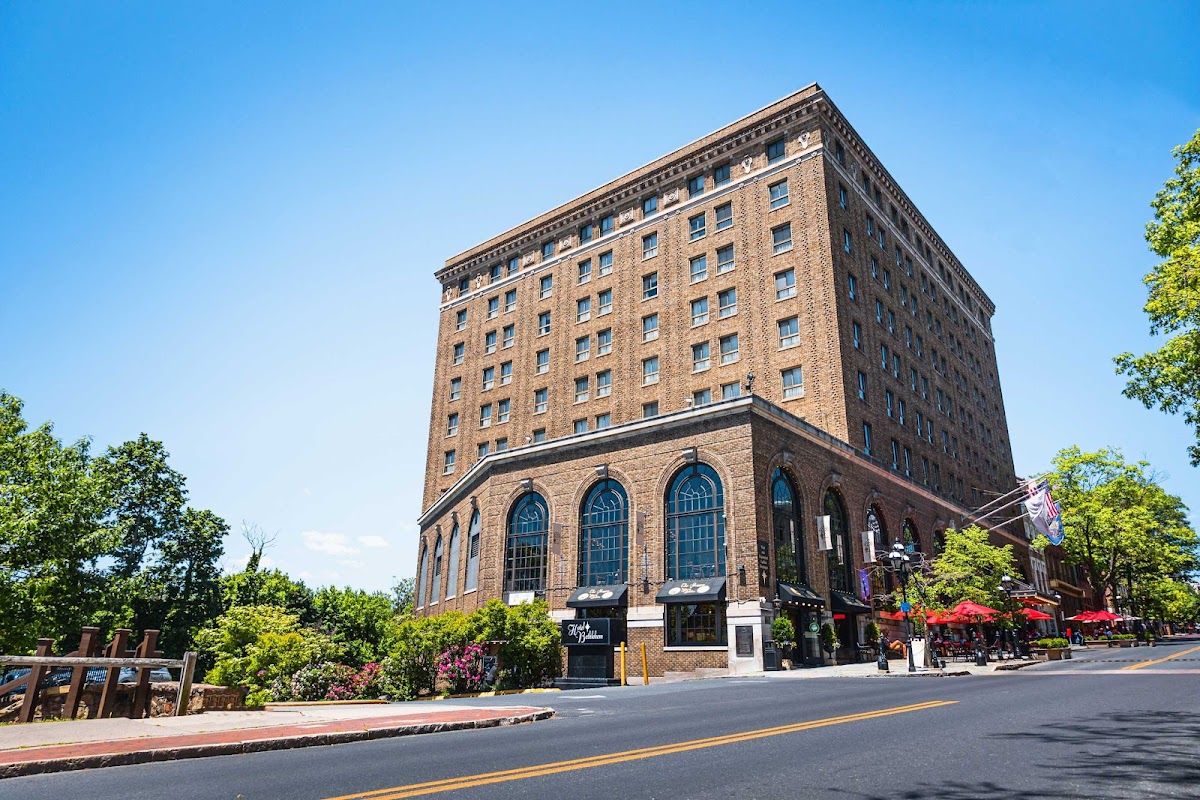
Designing for the Historic Hotel Bethlehem is an exercise in restraint and architectural respect. This is not a blank-canvas venue; it is a 1922 landmark with a specific, heavy aesthetic that ranges from the dark-wood intimacy of the Tap Room to the soaring, ornate grandeur of the Grand Ballroom.
The most successful floral designs here don’t try to hide the history. Instead, they use the venue’s existing textures—plaster, wood, and paint—as a foundation. Whether you are leaning into the “Christmas City” charm or a summer garden aesthetic, the scale must be calibrated to the room’s permanent features.
The Spaces
The Grand Ballroom
The Grand Ballroom is the hotel’s crown jewel, defined by high ceilings, massive chandeliers, and intricate moldings. It is a space that can easily swallow small arrangements, making them look like an afterthought.
- What works: Elevated arrangements on slender stands. You need to bridge the gap between the tabletop and the ceiling. Use branches, long-stemmed roses, or cascading greenery to create height without blocking sightlines across the table.
- Skip: Short, squat cubes. They disappear in a room of this volume.
- Watch out: The room has a lot of visual “noise” from the moldings and chandeliers. Stick to a tighter color palette to maintain a sense of luxury.
- Budget hero move: Focus your spend on four to six high-impact “statement” tall arrangements for the tables closest to the dance floor, and use lower, lush versions for the perimeter tables.
The Mural Ballroom
This space is more intimate and intellectually stimulating, dominated by its namesake murals. The lighting is typically softer, and the vibe is more “old-world salon” than “party palace.”
- What works: Low, garden-style compote arrangements. These allow guests to see the murals and each other. Use textures that feel “painted”—like ranunculus, sweet peas, and delicate vines.
- Skip: Anything that obstructs the walls. The murals are the reason you booked this room; don’t cover them with tall pedestals.
- Watch out: The colors in the murals are fixed. Ensure your floral palette complements the tones in the artwork (often earthy greens, blues, and ochres).
- Budget hero move: A single, long, lush floral runner for the head table that “grows” onto the floor at the ends.
The Tap Room
With its dark wood and framed artwork, the Tap Room is moody and masculine. It feels like a private club from a bygone era.
- What works: Deep jewel tones or crisp, high-contrast whites. Think burgundy dahlias, navy berries, or stark white anemones. Small, detailed “bud vase” clusters work well on the smaller tables here.
- Skip: Pastels. Pale pinks and lavenders can look washed out against the heavy wood.
- Watch out: Space is at a premium. Keep bar-top arrangements compact so they don’t interfere with service.
- Budget hero move: Focus on the bar and the mantel. Two large, asymmetrical arrangements in these spots define the room more than ten small centerpieces.
Garden Courtyard & Terrace
These outdoor or semi-outdoor spaces offer a breath of air amidst the hotel’s interior density. They are flanked by the hotel’s brick facade and offer views of Bethlehem’s historic skyline.
- What works: Large, stone-look urns filled with wild, sprawling greenery and blooms. This softens the hard lines of the brick and pavement.
- Skip: Delicate, light-weight plastic containers. The wind can pick up on the terrace, and you need weight to keep arrangements upright.
- Watch out: The transition from the street. The Hotel Entrance is a public space; your florals need to be substantial enough to signal “private event” to passersby.
- Budget hero move: Two large ground-level “nests” for the ceremony that can be moved to frame the sweetheart table or the ballroom entrance later.
What Works at Historic Hotel Bethlehem
Jewel-toned palettes for depth. The dark wood and vintage lighting of the hotel thrive on rich colors like emerald, plum, and amber. These tones feel sophisticated and intentional within the 1920s architecture.
Architectural symmetry. Because the ballrooms are designed with classical proportions, symmetrical floral placements (like flanking urns or centered mantels) feel more harmonious than overly organic, asymmetrical “wild” designs.
Metallic accents. Brass, gold, and copper vessels mirror the hotel’s hardware and chandeliers. Using metal instead of glass adds a layer of “weighted” luxury that matches the venue’s gravitas.
Monochromatic clusters in art-heavy rooms. In the Mural Ballroom, using a single color of flower (in varying textures) prevents the room from feeling cluttered against the detailed walls.
Lush greenery to soften the brick. Use smilax or ruscus to “climb” the indoor columns or frame the arched windows. It brings an organic element to the otherwise structured stone and plaster environment.
Budget Guide
| Tier | Investment | Floral Strategy |
|---|---|---|
| Essentials | $1,750 - $3,500 | Focus on personals (bouquets/boutonnieres) and two high-impact ceremony pieces that move to the reception. |
| Sweet Spot | $4,000 - $7,000 | Full table coverage with a mix of high/low arrangements. Elevated decor for the sweetheart table and bar. |
| Full Experience | $7,500 - $12,000 | Tall, architectural centerpieces for the Grand Ballroom. Staircase or entryway installations. Premium blooms like orchids and garden roses. |
| Statement | $15,000+ | Ceiling-height installations, lush floral walls, and custom-designed “living” bars. Full room transformation. |
The Historic Hotel Bethlehem is a venue of substance; your floral budget should prioritize quality and scale over sheer quantity to avoid getting lost in the architecture.
Tips
Plan for the parking deck load-in. The parking deck is convenient for guests but can be tight for large floral vans. Ensure your design team has a clear load-in plan for the elevator access.
Repurpose with a purpose. Floor arrangements from the Garden Courtyard ceremony should be moved to the Grand Ballroom stage or used to frame the cake table to maximize your investment.
Avoid “dainty” in the Grand Ballroom. If you choose low centerpieces, make them dense and lush. Airy, sparse designs will look like weeds in a room that grand.
Coordinate with the “Christmas City” schedule. If you are marrying in December, the hotel will be heavily decorated. Choose a floral palette that complements the hotel’s traditional holiday decor (usually reds, golds, and evergreens).
Check the UNESCO status restrictions. Being adjacent to a UNESCO World Heritage site means the exterior is protected. Do not plan for any installations that require drilling or permanent attachment to the hotel’s facade.