
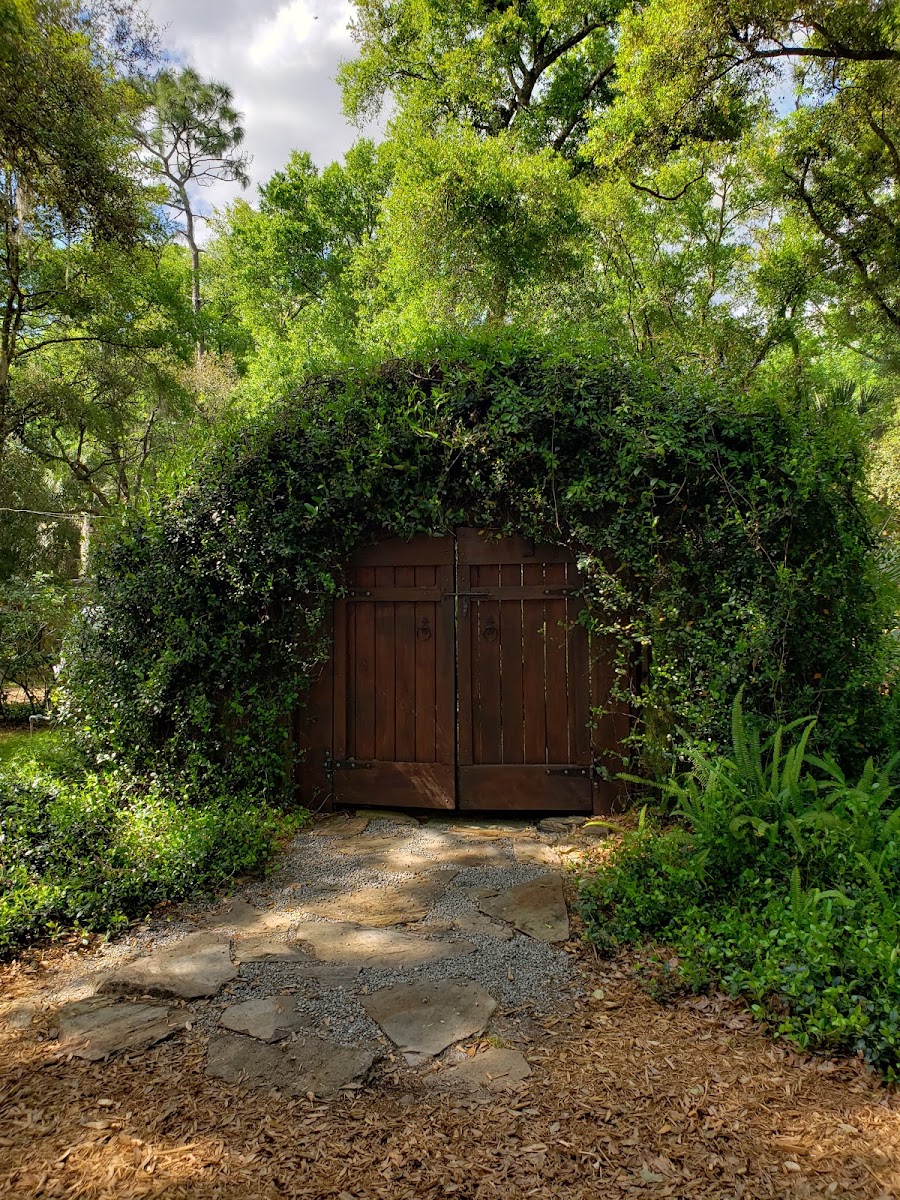
The GPS will try to convince you that you have taken a wrong turn. You will be thirty minutes north of Orlando, leaving behind the theme parks and outlet malls, driving through landscape that feels increasingly rural and unadorned. State Road 17 narrows. The Spanish moss hanging from the oaks grows thicker, longer, trailing almost to the ground in places. And then, at 5528 Aragon Avenue, you turn onto a property that seems to exist in a different century entirely — seven acres of towering oaks, tropical gardens so lush they feel prehistoric, and a stillness broken only by the fountain’s gentle splash and the wind moving through the palms. This is not a venue pretending to be a garden. This is an actual garden — part of the 35-acre Aragon Ranch estate — where jasmine arbors reach fifteen feet into the air, elephant ears grow as wide as dinner tables, and a heart-shaped mosaic dance floor sits permanently installed beneath a canopy of market lights. Poppy has designed Harmony Gardens Tropical Wedding Garden wedding flowers for one wedding here so far, but that first experience taught us something important: this venue does not need florals to prove it is beautiful. It needs florals that understand they are guests, not the main attraction.
About Harmony Gardens Tropical Wedding Garden
Harmony Gardens sits in De Leon Springs, a quiet pocket of Volusia County best known for its state park, old-fashioned pancake house, and the kind of Florida landscape that predates air conditioning and interstate highways. This is Central Florida before it became a destination — subtropical, sleepy, and astonishingly green. The property is part of Aragon Ranch, a working estate where the gardens have been cultivated over years to showcase the dramatic possibilities of Florida’s climate. The result is not a generic “tropical garden” with a few palms stuck in the ground for effect. This is a layered, considered landscape: towering live oaks draped in Spanish moss that create a natural cathedral overhead, beds of exotic gingers and heliconias in shades of scarlet and gold, elephant ear plants so large they could shelter a child from rain, and those extraordinary jasmine arbors — fifteen feet tall, covered in fragrant white blooms for much of the year — that serve as natural ceremony backdrops without any florist intervention at all.
The infrastructure here is surprisingly robust for a garden venue. There is a 2,400-square-foot covered dining pavilion with a proper roof and open sides, which means your dinner service will proceed even if the afternoon thunderstorms decide to show up (and in Florida, they often do). The pavilion comes outfitted with farm tables and white garden chairs, linens, and market lighting strung overhead — a full setup that reduces the logistical burden considerably. Separate from the dining pavilion is the open-air reception area, anchored by that heart-shaped dance floor made of mosaic slate and granite. It is a permanent installation, not a rental, which gives the space an anchored, intentional feel. There is also an on-site bar, a dedicated bride’s cottage and groom’s cabin (both air-conditioned, both essential for Florida humidity), and enough winding pathways lit by artisan torches to make evening arrivals feel like stepping into a storybook.
Logistically, Harmony Gardens is about thirty minutes from Orlando, fifteen minutes from DeLand, and pleasantly removed from tourist traffic. For Poppy’s delivery teams, the drive is straightforward once you get past the initial “are we sure this is right?” moment that comes with rural Florida navigation. Load-in space is generous, and the venue’s team — which includes the on-site Harmony n Love Catering as the preferred catering partner — is collaborative and communicative. Couples are free to bring in outside vendors from the preferred list or their own, which means we work here without the restrictions some all-inclusive venues impose. Liability insurance is required, standard for outdoor venues, and the setup timeline is flexible enough to accommodate the needs of a full floral installation.
This is a venue for couples who want their wedding to feel like an escape, not an event. The gardens provide privacy, beauty, and a sense of discovery as guests move through the space. It is also a venue that rewards restraint. When you have fifteen-foot jasmine arbors and a moss-draped oak canopy, you do not need to prove anything with florals. You need to complement, echo, and enhance what is already here.
Event Spaces & Floral Opportunities
Woodland Gardens - Ceremony Space
Capacity: 150 seated
Setting: The Woodland Gardens ceremony space is where the property’s natural drama peaks. The seating area is shaded by towering live oaks whose branches spread wide and low, draped so heavily in Spanish moss that the effect is almost theatrical — like standing inside a natural cathedral with curtains made of green lace. The customizable wooden pergola serves as the ceremony focal point, positioned so that the couple is framed by layers of tropical plantings: the rose garden to one side, the jasmine arbors behind, and the dense greenery of elephant ears and gingers forming a living wall. The ground is natural grass, slightly uneven in the way that real gardens are, with pathways winding through the space and photo opportunities at every turn. This is outdoor Florida at its most romantic — humid, fragrant, alive with bird calls and the rustle of palm fronds.
Floral approach: The pergola is the obvious anchor for ceremony florals, but it should not be treated like a blank canvas that needs to be filled. The structure itself is handsome, and the jasmine arbors visible just beyond it provide natural white blooms and fragrance for much of the year. We favor an asymmetrical installation on the pergola — a lush, cascading arrangement on one side featuring white phalaenopsis orchids, Playa Blanca roses, and trailing jasmine vine (if the arbors are not in full bloom), balanced by a simpler cluster of greenery and one or two statement blooms on the opposite post. This creates visual interest without blocking the natural backdrop. For the aisle, skip traditional arrangements on shepherd’s hooks, which can look fussy in a garden setting. Instead, place low clusters of blooms and greenery at intervals — groupings of three pillar candles in hurricane lanterns surrounded by loose ferns, dusty miller, and a few stems of white lisianthus or stock. If the ceremony is taking place in late afternoon or evening, when the artisan torches along the pathways will be lit, the warm glow will flatter anything in the peachy-coral range: Juliet garden roses, peach stock, and coral spray roses. The bride’s bouquet should feel garden-gathered rather than structured — loose, organic, with visible stems and plenty of movement. Think Patience garden roses, white ranunculus, jasmine vine trailing down, and soft green hellebores for texture.
Dining Pavilion
Capacity: 150 seated
Setting: The Dining Pavilion is a 2,400-square-foot covered structure with a wooden roof, open sides, and a layout designed specifically for farm table dining. The venue provides the tables, white garden chairs, and linens as part of the package, and the market lighting strung overhead creates a warm, romantic glow once the sun sets. The pavilion’s construction is sturdy enough to protect against Florida’s unpredictable weather while maintaining that open-air, garden-party feeling. The space is positioned separately from the dance floor area, which means dinner conversation can happen without competing with DJ speakers — a thoughtful design choice that many couples only appreciate once the evening unfolds.
Floral approach: Farm tables are floral heaven. Their long, uninterrupted surfaces allow for the kind of loose, abundant centerpiece work that feels generous rather than precious. We recommend a runner-style approach: instead of individual arrangements at intervals, create a continuous line of greenery down the center of each table — Italian ruscus, seeded eucalyptus, and leatherleaf fern — punctuated every two feet with clusters of blooms in varying heights. Use a mix of vessels: low ceramic bowls filled with garden roses (Keira in blush, Mayra’s Rose in coral, White O’Hara for brightness), taller bud vases with single stems of delphinium or snapdragons, and the occasional mercury glass votive for candlelight. The effect should feel organic and gathered, like someone walked through the garden and set down armfuls of blooms wherever there was space. For a more tropical interpretation, swap the roses for ginger blossoms, orange mokara orchids, and bird of paradise, keeping the greenery base the same. The pavilion’s wooden beams also present an opportunity for suspended installations — consider a single, dramatic garland running the length of the head table, constructed from smilax vine, trailing jasmine, and clusters of white phalaenopsis orchids. The market lighting overhead is already doing the heavy lifting for ambiance, so florals here should add texture and color rather than try to create a new focal point.
Reception Area with Heart-Shaped Dance Floor
Capacity: Open-air standing reception and dancing
Setting: The heart-shaped mosaic dance floor is pure romance — a permanent installation made of slate and granite, set into the ground and surrounded by open garden space. The bar area sits adjacent, and the entire space is ringed by tropical plantings and illuminated by market lights and twinkle lights strung through the trees. At night, with the torches lit along the pathways and the lights glowing overhead, this area feels like a scene from A Midsummer Night’s Dream — enchanted, slightly surreal, and absolutely magical. The dance floor itself is so visually distinctive that it serves as the reception’s natural anchor point.
Floral approach: The heart-shaped floor is a gift to floral designers because it creates a clear perimeter to work with. Frame the dance floor with low, lush arrangements placed at the four cardinal points — north, south, east, west — using tropical foliage as the base (split-leaf philodendron, monstera leaves, ti leaves) and bold blooms for punctuation: fuchsia dendrobium orchids, hot pink ginger, orange heliconia, and deep purple lisianthus. These arrangements should be low enough that they do not obstruct sightlines but substantial enough to define the space. If the couple wants to lean into the romantic rather than tropical aesthetic, shift to blush and ivory: Quicksand roses, white hydrangea, blush ranunculus, and trailing jasmine, all in aged stone urns that echo the mosaic floor’s natural materials. The bar area is another key opportunity — a statement arrangement here sets the tone as guests arrive for cocktails. We favor a large, loose installation in a rectangular wooden box: plenty of greenery (eucalyptus, fern, Italian ruscus), blooms that can handle Florida humidity (orchids, anthuriums, protea), and a few unexpected elements like hanging amaranthus or tillandsia air plants tucked into the greenery. For evening receptions, consider adding battery-operated fairy lights woven through the bar arrangement to play off the market lights overhead.
Bride’s Cottage
Setting: The Bride’s Cottage is an air-conditioned preparation space for the bridal party, separate from the main event areas and equipped with everything needed for a comfortable getting-ready experience. In Florida, where outdoor summer weddings can mean temperatures in the 90s with matching humidity, this climate-controlled retreat is not a luxury — it is a necessity.
Floral approach: A single, thoughtfully designed arrangement in the Bride’s Cottage serves multiple purposes: it makes the space feel special, it provides a beautiful element for getting-ready photos, and it offers a preview of the day’s floral palette. We recommend a low, lush arrangement in soft, romantic tones — Quicksand roses, white ranunculus, blush spray roses, and trailing jasmine — placed on a central table where the bride can see it while having her hair and makeup done. Avoid anything too tall or structured; the arrangement should feel like it belongs in a garden cottage, not a hotel lobby. If the bride is carrying a particularly show-stopping bouquet, consider designing the cottage arrangement as a complementary smaller version, using the same blooms in a more relaxed, just-gathered style. Add a few loose stems in bud vases around the space — on the vanity, near the mirror, by the window — to extend the floral presence without overwhelming the small room.
Groom’s Cabin
Setting: The Groom’s Cabin provides a separate, air-conditioned space for the groom’s party to prepare, equipped with seating, mirrors, and all the essentials for a relaxed pre-ceremony experience.
Floral approach: Grooms often appreciate florals that feel less overtly decorative and more organic or architectural. A single arrangement in a masculine vessel — a dark ceramic bowl, a wooden box, or a concrete planter — filled with structural greenery and minimal blooms works beautifully here. Think olive branches, eucalyptus, fern fronds, and one or two statement elements: a single white anthurium, a stem of cymbidium orchid, or a cluster of succulents. The goal is to add a touch of natural elegance without making the space feel precious. If the groom is wearing a boutonniere with a particular bloom — say, a white ranunculus or a succulent — echo that element in the cabin arrangement for visual continuity. This is also a good space for a simple bud vase with a single stem of something striking: a dark calla lily, a stem of bells of Ireland, or a single protea bloom.
Wedding Flower Ideas for Harmony Gardens Tropical Wedding Garden
Tropical Maximalism
This is the approach for couples who want to lean into Harmony Gardens’ exotic plantings and embrace bold, saturated color. The palette pulls from the property’s existing gingers, heliconias, and elephant ears: fuchsia, tangerine, hot pink, sunny yellow, and deep jungle green. Start with architectural foliage — split-leaf philodendron, monstera leaves, ti leaves in burgundy and green, and birds of paradise leaves for their dramatic paddle shape. Layer in blooms that can handle Florida’s heat and humidity: orange mokara orchids, hot pink ginger blossoms, red anthuriums with their glossy, heart-shaped spathes, fuchsia dendrobium orchids on long stems, and yellow craspedia for textural contrast. The bride’s bouquet should be large, unstructured, and full of movement — imagine a cascade of hot pink ginger and orange orchids with monstera leaves fanning out at the base and jasmine vine trailing nearly to the ground. Ceremony florals for the pergola follow the same philosophy: lush, abundant, and unapologetically vibrant, with clusters of blooms grouped asymmetrically and plenty of visible greenery. Centerpieces can be constructed in low wooden boxes or dark ceramic bowls, filled with a wild mix of tropical blooms and foliage that looks like it was just pulled from the garden. This approach works particularly well for daytime or late afternoon weddings when the natural light brings out the intensity of the colors, and it pairs beautifully with the venue’s artisan torches and warm evening lighting.
Garden Romance
For couples who prefer a softer, more classically romantic aesthetic, this palette works with the venue’s rose garden and jasmine arbors rather than the tropical plantings. The colors are blush, ivory, soft peach, champagne, and sage green — restrained, elegant, and endlessly photogenic. Core blooms include Patience garden roses, Quicksand roses, Keira roses in blush, O’Hara garden roses in creamy white, white ranunculus with their papery, layered petals, blush lisianthus, and plenty of trailing jasmine vine. Textural elements come from seeded eucalyptus, Italian ruscus, dusty miller for its silvery foliage, and the occasional hellebore in soft green or mauve. The bride’s bouquet should feel loose and organic, as if she gathered it herself from the property’s rose garden — visible stems wrapped in silk ribbon, blooms at slightly different heights, plenty of trailing greenery. Ceremony arrangements on the pergola take a refined approach: a lush installation on one side featuring roses, ranunculus, and jasmine, balanced with simpler greenery and a few blooms on the opposite side, maintaining asymmetry without overwhelming the structure. Centerpieces for the farm tables use the runner approach described earlier: continuous greenery punctuated with low clusters of blush and ivory blooms in mixed vessels. This palette works beautifully in any season but is particularly stunning in spring and fall when the natural light is softer and the humidity is lower. It also photographs exceptionally well, which matters at a venue this picturesque.
Woodland Enchantment
This concept takes its cues from the venue’s towering oaks, Spanish moss, and moss-covered trellis, creating a palette that feels earthy, organic, and slightly magical. The colors are moss green, cream, taupe, dusty lavender, and soft brown — muted, sophisticated, and deeply connected to the natural landscape. Start with textural foliage: actual Spanish moss (ethically harvested), sheet moss for the base of arrangements, ferns in multiple varieties (maidenhair, plumosa, leatherleaf), olive branches, and eucalyptus in silver-dollar and seeded varieties. Blooms are kept intentionally subtle: white lisianthus, cream-colored garden roses (Patience, Ivory Tower), dusty lavender stock, scabiosa in soft mauve, and the occasional hellebore in chartreuse or deep plum. Add unexpected woodland elements: small branches with lichen still attached, birch bark wrapped around vase bases, clusters of fiddlehead ferns before they unfurl, and hanging amaranthus in deep burgundy or green for a trailing, almost vine-like effect. The bride’s bouquet feels gathered from a forest floor: loose, organic, with visible stems and a mix of blooms and foliage that seem to have grown together naturally. Ceremony florals for the pergola emphasize the woodland theme with garlands of smilax vine and fern punctuated by clusters of cream roses and lavender stock, allowing the structure to remain visible beneath the greenery. Centerpieces use natural vessels — wooden boxes, birch bark-wrapped cylinders, or simple ceramic bowls — filled with low, lush arrangements that look like miniature forest floors. This approach is especially effective for evening weddings when the torch-lit pathways and market lights create dramatic shadows and depth. It also works year-round in Florida, where the moss and ferns remain lush even in winter.
Seasonal Considerations
Florida’s subtropical climate makes Harmony Gardens a year-round wedding venue, but each season brings its own considerations for floral design and event planning.
Spring (March-May): Spring is one of the most popular wedding seasons in Central Florida, and for good reason. Temperatures are warm but not oppressive — highs in the low to mid-80s — and humidity levels are still manageable. The garden is in full bloom, with the jasmine arbors at peak fragrance and the tropical plantings showing new growth in vibrant greens. This is the ideal season for garden roses, which thrive in moderate warmth and photograph beautifully in soft natural light. Peonies are available from suppliers (though not grown locally) and can be incorporated if kept hydrated and cool. Spring rain is possible but typically brief, and the covered dining pavilion provides protection. For floral design, take advantage of the season’s abundance: ranunculus, anemones, tulips (if budget allows for imported stems), sweet peas, and all varieties of garden roses are at their best. The natural light is still soft and golden in late afternoon, which flatters blush and peach tones particularly well.
Fall (September-November): Fall is the second prime wedding season in Central Florida, with temperatures gradually cooling through the season and humidity dropping significantly by November. September is still quite warm and can feel like an extension of summer, but October and November bring ideal conditions: highs in the 70s and 80s, low humidity, and crystal-clear skies. This is the season to incorporate fall textures and colors without the dramatic foliage changes you would see in northern climates — Florida’s version of fall is more subtle. Consider adding autumn elements like burgundy dahlias, dark calla lilies, hypericum berries in red and brown, amaranthus in deep burgundy, and branches with interesting bark or dried elements. The garden’s tropical plantings remain green year-round, so the contrast between fall-toned florals and lush greenery creates visual interest. October and November also have the most comfortable weather for guests, which makes cocktail hours and outdoor dancing particularly enjoyable. For floral design, this is the season where nearly everything is possible — both delicate blooms and hardy tropicals will perform well.
Winter (December-February): Winter is Florida’s dry season, with mild temperatures (highs in the 60s and 70s), low humidity, and minimal rainfall. This is actually an ideal time for weddings, though it is less popular due to holiday conflicts. The garden remains green and lush even in winter, though some tropical plantings may be less vibrant than in warmer months. For floral design, this is an excellent season for amaryllis, which is at peak availability in winter, along with anemones (which prefer cooler weather), hellebores, early spring bulbs like tulips and hyacinths, and all varieties of winter foliage including pine, cedar, and eucalyptus. If the wedding falls near the holidays, couples sometimes incorporate seasonal elements — think deep red amaryllis, white narcissus, evergreen branches, and berries — though the venue’s tropical setting does not necessarily call for traditional holiday aesthetics. Winter light in Florida is particularly beautiful: clear, bright, and slightly cooler in tone than the golden warmth of summer, which means white and ivory florals photograph exceptionally well. Evening temperatures can dip into the 50s, so guests may appreciate having wraps or light jackets, but the overall climate remains comfortable for outdoor celebration.
Poppy’s Expert Take
Work with the jasmine arbors, not against them. Those fifteen-foot jasmine structures are in bloom for much of the year, and when they are, they provide natural fragrance, white blooms, and a stunning ceremony backdrop without any florist intervention. Before designing an elaborate pergola installation, ask the venue about the jasmine’s bloom schedule. If the arbors are in full flower, you can scale back ceremony florals significantly and redirect that budget toward reception arrangements or the bridal bouquet. If the jasmine is not in bloom, echo its structure with trailing jasmine vine in your pergola design to create visual continuity with what guests expect to see at this venue.
Florida humidity is a floral challenge that cannot be ignored. Summer weddings at Harmony Gardens mean working in 90-degree heat with 90 percent humidity, and not all flowers will survive those conditions. Orchids, anthuriums, protea, calla lilies, and most tropical blooms handle it beautifully. Garden roses, ranunculus, sweet peas, and delicate blooms do not. If your heart is set on garden roses for a summer wedding, we will design contingency plans (keeping arrangements in water until the last possible moment, using floral tubes for bouquets, setting up ceremony flowers just before the processional starts) but manage expectations accordingly. This is also why the air-conditioned bride’s cottage and groom’s cabin are essential — bouquets, boutonnieres, and corsages need to stay cool until they are needed.
The heart-shaped dance floor is your reception focal point — frame it, do not cover it. Couples sometimes want to place a large floral installation directly on or in the middle of the dance floor, which defeats the purpose of having that beautiful mosaic be visible. Instead, use florals to frame the perimeter of the heart, creating a defined space that guests naturally move toward. Low arrangements at the four corners, uplighting around the edges, or even a simple scatter of loose petals at the heart’s point all work better than trying to place something in the center where dancers will be standing.
Farm table florals should be continuous, not individual. The dining pavilion’s long farm tables call for a runner-style approach rather than individual centerpieces spaced along the table. A continuous line of greenery with clusters of blooms at intervals creates the generous, abundant feeling that works in a garden setting. This approach also tends to be more cost-effective than creating multiple identical arrangements, since you are working with a single installation that flows organically rather than precise, repeated elements.
Coordinate with the venue’s preferred caterer on table layout before finalizing centerpiece designs. Harmony n Love Catering, the on-site preferred caterer, will have specific preferences for how the farm tables are set — where serving platters go, how much space is needed for family-style service, whether chargers or placemats are being used. These details affect centerpiece footprint significantly. Get the final table layout from the caterer before building your floral designs, or you risk creating arrangements that look beautiful in theory but leave no room for actual food service.
The property has incredible photo locations beyond the ceremony space — use them for bouquet design inspiration. The wrought iron carriage, the moss-covered trellis, the rose garden, the pond with water features — Harmony Gardens is essentially a seven-acre photo studio. When designing the bridal bouquet, think about how it will look held against these varied backdrops. A loose, organic bouquet with plenty of movement and trailing elements photographs beautifully against natural settings. An overly structured, tight bouquet can look formal in a space that is fundamentally wild and romantic.
Load-in timing matters in rural Florida. De Leon Springs is thirty minutes from Orlando, which means your floral delivery is not happening at the same time as the photographer’s arrival from downtown or the DJ’s setup from the metro area. Build in buffer time for rural navigation, confirm load-in access with the venue ahead of time, and communicate clearly with other vendors about timing. The venue’s team is organized and helpful, but coordination is easier when everyone acknowledges that this is not a downtown hotel where vendors can roll in five minutes before start time.
What Poppy Couples Spend on Flowers Here
Based on our experience with Harmony Gardens Tropical Wedding Garden bookings and the broader market data from similar Central Florida garden venues, we see floral budgets here typically falling into three ranges, each shaped by the venue’s existing beauty and the couple’s desire to enhance rather than compete with the natural setting.
$1,200 - $2,000 | The Garden Essentials This budget focuses on the moments that matter most: a lush, organic bridal bouquet (Patience garden roses, trailing jasmine, ranunculus, and plenty of greenery), boutonnieres and corsages for the wedding party (simple, elegant, using blooms from the bridal bouquet palette), and a statement installation on the ceremony pergola — either an asymmetrical garland on one side with blooms and greenery, or two smaller clusters at the top corners. For the reception, this budget typically covers one of two approaches: either low, lush centerpieces for the farm tables (continuous greenery runners with clustered blooms at intervals) or a statement bar arrangement and minimal accent pieces. Couples in this range often work with the venue’s natural beauty, relying on the jasmine arbors and tropical plantings to provide visual impact while florals punctuate key moments. This is a smart approach at Harmony Gardens, where the gardens themselves are so lush that extensive floral installations are not necessary to create beauty.
$2,000 - $3,500 | The Full Garden Vision This tier allows for a more comprehensive floral presence throughout the event spaces while still maintaining the organic, garden-gathered aesthetic that works best here. In addition to the essentials covered in the first tier, this budget expands to include both ceremony and reception florals: a fully dressed ceremony pergola with lush, asymmetrical installations on both sides (garden roses, orchids, trailing jasmine, and abundant greenery), a