
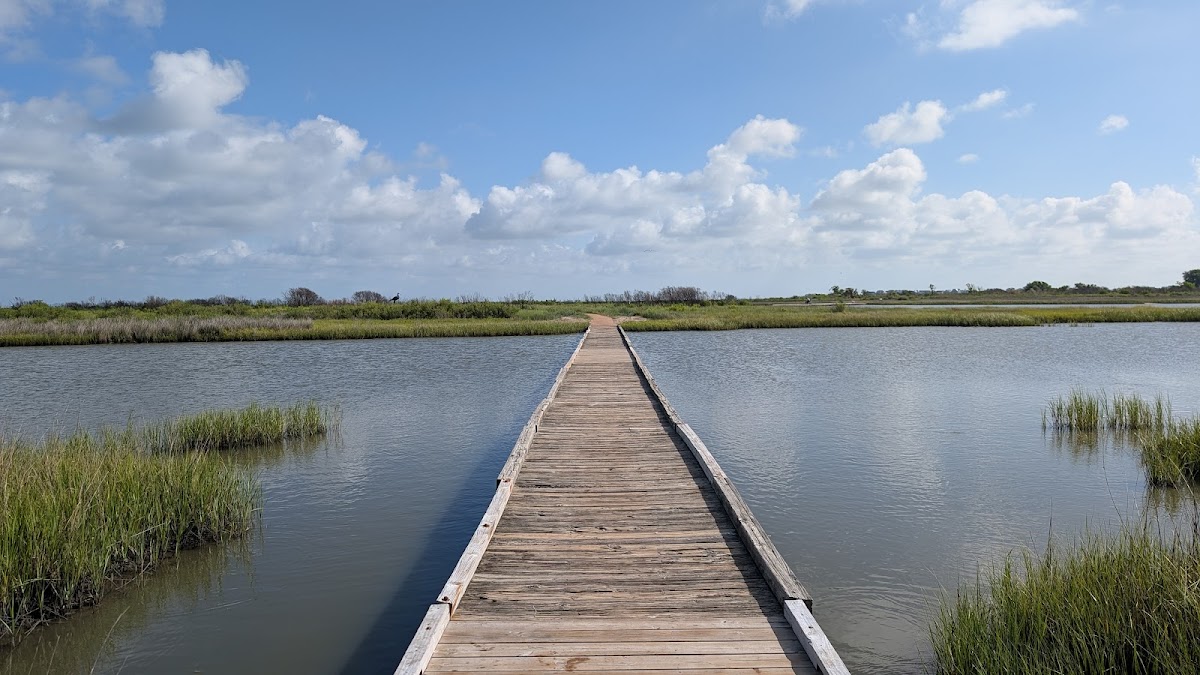
The drive down FM 3005 tells you immediately that this will not be a typical Galveston wedding. You leave behind the seawall crowds, the Victorian mansions on Broadway, the rows of beach houses shoulder-to-shoulder against the Gulf. The road narrows. The beach opens up. And then, about ten miles past the last condo development, Galveston Island State Park unfolds on both sides of the highway — 2,000 acres of what this island looked like before anyone decided to build on it. On one side, the Gulf stretches silver and infinite. On the other, salt marshes shimmer with tidal creeks, and coastal prairie grasses bend in waves that mimic the ocean beyond. This is the wild end of Galveston Island, where roseate spoonbills wade through wetlands, ghost crabs skitter across the sand, and the only sounds are wind, waves, and the occasional cry of a laughing gull. For couples who want their wedding to feel less like an event and more like a return to something elemental — sand between your toes, salt air in your lungs, the Gulf Coast in its most unadorned state — this park offers a rare gift: a blank canvas that is also, somehow, already perfect.
About Galveston Island State Park
Galveston Island State Park occupies the quieter western end of Galveston Island, where the land belongs to the herons and the wind more than it belongs to anyone with a property deed. Established in 1975, the park protects a remarkable diversity of coastal ecosystems — sandy beaches facing the Gulf of Mexico, salt marshes and tidal flats on the bay side, and rare coastal prairie habitat that once covered millions of acres along the Texas coast but now exists in fragmented pockets. The 2,000-acre park is threaded with boardwalk trails that traverse the dunes and marshes, observation platforms for birdwatching (over 300 species have been recorded here), and miles of undeveloped shoreline where you are more likely to encounter a sand dollar than a beach umbrella.
This is not a traditional wedding venue in any conventional sense. There is no events coordinator in a blazer with a clipboard, no preferred caterers list, no chandeliers or bridal suite or Instagram-ready staircase. What the park offers instead is space, simplicity, and a setting so naturally beautiful that it requires very little embellishment. The primary rental facility is the Group Pavilion — a covered structure in the day-use area that seats up to 50 people, equipped with picnic tables, electricity, and nearby water access. For ceremonies, couples gravitate toward the open beach on the Gulf side, where the sand is soft and the horizon is unbroken. There are also two lodges on the property — the Stewart House Lodge (sleeps eight) and the Ranch House Lodge (currently closed for renovations, sleeps six) — which can be rented for wedding party accommodations or intimate rehearsal dinners overlooking the park’s interior lake.
The park operates under Texas Parks & Wildlife regulations, which means that any event must respect the conservation mission of the property. You cannot drive vehicles onto the beach. Large setups involving chairs, tents, roped-off areas, or amplified sound require special permits through the City of Galveston or Galveston County. What you can do — and what works beautifully for the right couple — is host a small, thoughtful, low-impact ceremony and celebration that honors the landscape rather than attempting to transform it. This is a place for couples who want their wedding to feel organic, unhurried, and deeply connected to the natural world.
From a logistical standpoint for Poppy, the park is roughly an hour’s drive from our Houston studio, making it entirely feasible for delivery and setup. Load-in is straightforward — the Group Pavilion is a short walk from the parking area, and hand-pulled carts are permitted for transporting gear. Because the park often reaches capacity, especially on weekends, we always advise couples to reserve day passes for themselves and their vendors well in advance. The park can be called at (409) 737-1222 or emailed at GalvestonIslandSP@tpwd.texas.gov for specific questions about permits, insurance requirements, and event policies. As a Galveston wedding florist, we have learned that the key to a successful state park wedding is embracing simplicity and working with the environment rather than against it.
Event Spaces & Floral Opportunities
Beach Ceremony Area
Capacity: Varies (best suited for intimate gatherings under 50 guests; no fixed seating permitted without special permits)
Setting: The Gulf-side beach is the park’s most dramatic and most popular ceremony location. Unlike the groomed, raked beaches closer to town, this stretch of sand is natural and unmanicured, scattered with shells and driftwood, bordered by dunes covered in sea oats that rattle in the salt breeze. The Gulf of Mexico provides an ever-changing backdrop — calm and glassy on some mornings, churning and gray on others, always moving, always alive. There are no lifeguards, no beach bars, no jet skis buzzing past. Just sand, surf, and sky. The beach is fully accessible from the day-use parking area, and because it is part of a state park, it remains refreshingly free of the commercial development that defines much of Galveston’s shoreline.
Floral approach: Beach ceremonies require a fundamentally different approach than indoor or even garden weddings. Wind is your constant companion here — sometimes a gentle breeze, sometimes a sustained gust that can topple anything not properly anchored. For Galveston Island State Park wedding flowers, we prioritize durability and simplicity. A driftwood ceremony arch is the most practical focal point — substantial enough to withstand wind, organic enough to feel like it grew out of the sand. We adorn it asymmetrically with clusters of hardy, salt-tolerant blooms: spray roses (Allegra, Sweet Avalanche), craspedia (billy buttons), strawflowers, sea holly, and ornamental grasses like pampas or fountain grass. These flowers can handle sun, wind, and humidity without wilting in the first ten minutes. We avoid top-heavy arrangements and anything that requires water tubes, which heat up quickly in direct sun. For the aisle, if there is one, we use simple markers — perhaps driftwood stakes wrapped with raffia and a single stem of kangaroo paw or a cluster of dried grasses. Elaborate aisle runners blow away. Ground arrangements sink into the sand. The rule is: less is more, and what you do use must be secured. Personal flowers — bouquets, boutonnieres, hair flowers — are where you can incorporate more variety, because they are held or worn rather than installed. Think café au lait dahlias, peach-toned roses (Juliet, Romantic Antike), succulent accents, and plenty of textural greenery like eucalyptus and ruscus that can withstand the elements. This is not the venue for garden roses that bruise if you look at them sideways. This is the venue for flowers with backbone.
Group Pavilion (Main Rental)
Capacity: 50 seated
Setting: The Group Pavilion is the most practical and versatile space the park offers for receptions or covered ceremonies. It is a simple, open-air structure with a roof, picnic tables, electricity, water access nearby, and waist-high grills. The pavilion sits in the day-use area, a short walk from both the beach and the parking lot, surrounded by live oaks and coastal prairie grasses. The setting is decidedly casual — this is a picnic pavilion, not a ballroom — but with the right approach, it transforms beautifully into an intimate reception space. The roof provides shade and shelter, which is critical during the hot, humid Gulf Coast summers, and the electricity allows for string lights, fans, or even a small sound system.
Floral approach: The Group Pavilion is where we get to exercise a bit more creativity, because the covered structure protects florals from direct sun and wind. Long wooden farm tables can be dressed with runners of smilax and seeded eucalyptus interspersed with low clusters of wildflowers — Indian blanket, black-eyed Susans, yarrow, zinnias — in mismatched vintage bottles or galvanized tin buckets. The effect should feel abundant but unfussy, like flowers gathered from a meadow and arranged on the spot. For a more elevated look, we use compote vessels in matte white or terra cotta, filled with garden-style arrangements of roses (Patience, Quicksand, Toffee), ranunculus, lisianthus, and herbs like rosemary and lavender for fragrance. Overhead, the pavilion’s structure allows for hanging installations — mason jars wrapped in twine and suspended at varying heights, each holding a single stem or a small posy of wildflowers. String lights woven with greenery garlands create a canopy of light and texture that softens the utilitarian bones of the pavilion. At the entrance, we place a large statement arrangement — a galvanized wash tub or wooden crate overflowing with sunflowers, coneflowers, ornamental grasses, and trailing jasmine vine — to signal the transition from park to celebration. The key is to make the space feel curated and intentional without losing the relaxed, outdoor vibe that drew the couple to the park in the first place.
Stewart House Lodge
Capacity: Sleeps 8 (suitable for small intimate dinners or getting-ready space)
Setting: The Stewart House Lodge is a three-bedroom, three-and-a-half-bathroom retreat tucked away from the main park areas, overlooking an interior lake. It features a large screened porch with chairs, ceiling fans, and lights — perfect for morning coffee or evening cocktails. Inside, the lodge is comfortably furnished with a full kitchen, central air conditioning, two fireplaces, and a living area that feels more like a lake house than a park facility. The windows frame views of water and marsh grasses, and the overall atmosphere is peaceful and private. For weddings, the lodge functions primarily as accommodations for the wedding party or a space for small gatherings like a rehearsal dinner or post-wedding brunch.
Floral approach: Because the Stewart House Lodge is an indoor, residential-style space, we approach it more like home décor than event florals. A single large arrangement on the dining table — loose and organic, with a mix of local wildflowers, garden roses, and foraged greenery in a low wooden bowl or ceramic vessel — anchors the room without overwhelming it. On the kitchen counter or mantelpiece, we place smaller arrangements in bud vases or mason jars, keeping the scale intimate and the style relaxed. The screened porch is ideal for hanging baskets of ferns or trailing pothos mixed with string lights, creating a cozy, garden-room feel. If the lodge is being used for getting ready, we deliver the bridal bouquet and any personal flowers here in the morning, along with a small arrangement for the bathroom counter or vanity — something fragrant and uplifting, like garden roses, sweet peas, and stock. The goal is to make the space feel warm, welcoming, and thoughtfully appointed without creating a formal event environment.
Additional First-Come Pavilions
Capacity: Varies (smaller groups, no advance reservations)
Setting: Scattered throughout the day-use area, these additional shaded pavilions offer flexible, first-come, first-served gathering spots for smaller groups. They are more basic than the reservable Group Pavilion — simple picnic shelters with tables — but they provide shade and a place to gather, which can be valuable for overflow seating, kids’ areas, or stations for lawn games and refreshments.
Floral approach: Because these pavilions cannot be reserved in advance, floral installations here should be minimal and easily movable. Small potted succulents or wildflowers in mason jars at each picnic table add a touch of celebration without requiring significant setup. If you know you will have access to one of these pavilions on the day of your event, you can bring simple arrangements that take seconds to place — think single-stem bud vases or small herb pots tied with twine and a handwritten tag. The approach here is flexible, low-fuss, and adaptable to whatever space you end up with.
Bay-side Wetlands & Boardwalk Trails
Capacity: Not designed for events, but ideal for photos and intimate moments
Setting: The bay side of the park is a different world from the Gulf beach — quieter, more intricate, full of tidal rhythms and birdlife. Elevated boardwalks wind through the salt marshes, over tidal creeks, and past observation platforms where you can watch roseate spoonbills, egrets, and herons fishing in the shallows. The landscape is all horizontal lines — flat water, low grasses, distant treelines — punctuated by the vertical accents of posts and pilings. It is an extraordinarily photogenic setting, especially in the soft light of early morning or late afternoon when the water glows pink and gold.
Floral approach: The boardwalks and wetlands are not practical locations for installed florals — they are protected natural areas, and any decorations would be inappropriate and likely prohibited. What they do offer is a stunning backdrop for personal flowers. A bridal bouquet photographed against the marsh grasses and still water becomes part of the landscape. Boutonnieres pinned to linen jackets look particularly striking here, where the natural palette is muted greens, browns, and silvers. For couples who want to incorporate this area into their day, we suggest scheduling a “first look” or portrait session on the boardwalks, where the flowers you are already carrying become part of the scenery. No installations needed — just the beauty of the park and the flowers in your hands.
Wedding Flower Ideas for Galveston Island State Park
Gulf Coast Wildflower
This design concept leans fully into the Texas coastal prairie ecosystem that defines the park. The palette is warm and saturated — sunflower yellow, Indian blanket orange and red, black-eyed Susan gold, purple coneflower, and pops of hot pink from standing cypress. We use native and naturalized wildflowers wherever possible, supplemented with garden varieties that have a wildflower aesthetic: zinnias, cosmos, yarrow, and celosia. Foliage includes ornamental grasses like little bluestem and Gulf muhly, which echo the prairie grasses visible throughout the park. Arrangements are loose and unstructured, gathered in galvanized buckets, enamelware pitchers, or wooden crates. The bouquet is a hand-tied bundle that looks like it was picked from the meadow five minutes before the ceremony, wrapped in burlap or cotton twine. This design works beautifully at the Group Pavilion, where the rustic setting supports the wildflower aesthetic, and on the beach, where the vibrant colors stand out against the neutral sand and surf. It is joyful, unpretentious, and unmistakably Texan.
Tropical Breeze
For couples who want to emphasize the island, beach-vacation side of a Gulf Coast wedding, this concept brings in tropical and subtropical blooms that thrive in heat and humidity. The palette is bright and bold — coral, fuchsia, orange, and lime green — with flowers like ginger, heliconia, birds of paradise, anthurium, and phalaenopsis orchids. We soften the intensity with peachy roses (Free Spirit, Peach Avalanche), white dendrobium orchids, and plenty of lush tropical foliage: monstera leaves, palm fronds, ti leaves, and banana leaves. Arrangements are architectural and dramatic, placed in ceramic vessels or woven baskets. The bridal bouquet is a statement piece — a cascading tropical arrangement that feels lush and exotic. This design is particularly striking against the beach backdrop, where the vivid colors pop against the sand and water, and it works well in the Group Pavilion, where the overhead structure can support hanging elements like strands of orchids or suspended palm fronds. It is bold, festive, and undeniably tropical.
Soft Coastal
Not every beach wedding needs to shout “beach.” This concept takes a quieter, more romantic approach, using a palette inspired by the subtle colors of the Gulf Coast at dawn — blush pink, pale peach, soft lavender, cream, and the silvery green of driftwood and sea oats. Flowers include garden roses (Keira, Quicksand, Patience), ranunculus, anemones, lisianthus, and sweet peas, mixed with textural elements like dusty miller, eucalyptus, olive branches, and dried grasses. Arrangements are soft and organic, with a garden-picked feel, placed in matte ceramic vessels, driftwood containers, or vintage glass. The bridal bouquet is lush and romantic, slightly loose and unstructured, with trailing silk ribbon in a tonal shade. This design works beautifully for sunset or early morning ceremonies on the beach, where the soft colors harmonize with the natural light, and it translates elegantly to the Group Pavilion, where the muted palette feels sophisticated and intentional. It is understated, romantic, and quietly beautiful.
Seasonal Considerations
Galveston Island experiences a humid subtropical climate with hot, humid summers and mild, occasionally breezy winters. Understanding the seasonal rhythms is essential for planning both your event and your flowers.
Spring (March through May) is the ideal season for a Galveston Island State Park wedding. Temperatures are moderate, ranging from the mid-70s to mid-80s, and humidity is manageable. This is wildflower season on the coastal prairie — Indian blanket, bluebonnets (typically peaking in late March and early April), black-eyed Susans, and coneflowers blanket the meadows in color. For florals, nearly everything is available and thriving: garden roses, ranunculus, anemones, sweet peas, and an abundance of locally grown wildflowers and flowering branches. The light is beautiful — clear and golden — and the park is at its most photogenic. If you are planning a spring wedding, book early. The park and the entire Galveston area see peak visitation during this window. Insect activity is generally low in early spring but increases as temperatures rise, so consider providing bug spray for guests at outdoor ceremonies.
Summer (June through August) is challenging. Temperatures routinely exceed 90°F, and with humidity factored in, heat indices can climb above 105°F. Afternoon thunderstorms are common, and while they are usually brief, they can be intense. This is also hurricane season, which runs officially from June 1 through November 30, with peak activity in August and September. For florals, the heat limits what will hold up: tropical flowers (ginger, heliconia, anthurium), sunflowers, zinnias, celosia, and sturdy foliage like ti leaves and palm fronds are the best choices. Garden roses and delicate blooms will struggle. Ceremonies should be scheduled for early morning or late afternoon to avoid the worst heat, and the Group Pavilion becomes essential for providing shade during receptions. Hydration stations, fans, and parasols are not optional — they are necessary. If you are committed to a summer wedding, embrace the tropical aesthetic and plan for heat management at every stage.
Fall (September through November) offers a reprieve from the summer heat, with temperatures dropping back into the 70s and 80s and humidity easing. September is still technically hurricane season, so keep an eye on the forecast and have a contingency plan. October and November are beautiful months on the island — the coastal prairie grasses turn golden, the migratory birds return to the wetlands, and the Gulf takes on a deeper blue-green hue. Florals in fall are abundant: dahlias, roses, marigolds, celosia, sunflowers, and chrysanthemums are all in season, along with beautiful autumn foliage and dried grasses. The light is softer and warmer, ideal for photography. Fall is the second-best season for a park wedding, with fewer crowds than spring and more comfortable conditions than summer.
Winter (December through February) is mild by most standards — daytime temperatures typically range from the 50s to 60s — but the Gulf Coast wind can make it feel cooler, especially on the beach. Winter is also the dry season, with less rainfall and more consistent weather. The coastal prairie goes dormant, turning golden brown, and the park takes on a quieter, more introspective quality. For florals, you will rely more on hothouse and imported blooms: roses, ranunculus, anemones, hellebores, and amaryllis are all available, along with evergreen foliage, magnolia branches, and winter berries. A winter wedding at the park is intimate and unconventional — you might have the beach nearly to yourself, and the muted landscape creates a beautiful, minimalist backdrop. Just plan for the possibility of wind and have warm layers available for guests.
Poppy’s Expert Take
Plan around the tides and the light. The Gulf of Mexico experiences tides, and while they are not as extreme as Atlantic or Pacific tides, they do affect how much beach you have to work with. Check the tide schedule when planning your ceremony time. Low tide gives you more sand and a wider, more dramatic beach. High tide brings the water closer, which can be beautiful but limits your setup area. For photography, the golden hour — roughly an hour before sunset — is unbeatable on the Gulf Coast. The light is warm, flattering, and gorgeous. Schedule your ceremony or portraits to take advantage of it.
Prepare for heat and humidity. Even in spring and fall, the Texas Gulf Coast can be warm and sticky. Flowers that wilt quickly in heat — like hydrangeas, tulips, and delicate garden roses — are risky choices unless you are setting them up at the very last minute and keeping them in a cooler until then. Hardier blooms like spray roses, callas, orchids, and tropicals perform better. For guests, provide fans, cold drinks, and shaded seating whenever possible. For the flowers, we condition everything in a cool environment, hydrate thoroughly, and use floral sealants to help blooms retain moisture.
Budget for rental basics. Because the Group Pavilion has picnic tables and little else, you will likely need to bring in rentals: chairs for the ceremony (if not on the beach), linens, glassware, flatware, serving pieces, and possibly additional tables or lounge furniture. These costs add up quickly and can exceed the cost of florals. When planning your overall budget, allocate funds for rentals first, then see what remains for flowers. We can work within almost any budget, but we need to know what that number is before we start designing.
Coordinate with the park well in advance. Call (409) 737-1222 or email GalvestonIslandSP@tpwd.texas.gov to discuss your plans, confirm rental availability, and understand any permitting requirements. If you plan to have chairs or a tent on the beach, or if you want amplified sound, you will need a special event permit from the City of Galveston or Galveston County, which can take weeks to process. The park also requires a Certificate of Insurance from all vendors, which must be submitted to the Park Superintendent before setup. Make sure your florist (and all other vendors) can provide this. Poppy maintains comprehensive liability insurance and is accustomed to working with state parks and public lands.
Lean into the natural beauty. The single biggest mistake couples make at naturally beautiful venues is over-decorating. You do not need to “transform” Galveston Island State Park. It is already stunning. The flowers should enhance, complement, and draw the eye to the best features — the sweep of the coastline, the texture of the grasses, the quality of the light. Think of your florals as punctuation marks in a sentence that is already well-written, not as the entire narrative. A simple driftwood arch with a few well-placed blooms will be more striking and more memorable than an elaborate installation that looks like it was airlifted in from a ballroom.
What Poppy Couples Spend on Flowers Here
Because Galveston Island State Park is a DIY-friendly, natural setting rather than a traditional wedding venue, and because we do not yet have booking data here, we are drawing on comparable park and beach weddings in the Houston and Galveston markets to offer realistic budget guidance.
$800 - $1,500 | The Essentials
This tier covers personal flowers and minimal ceremony décor for an intimate gathering of 20 to 40 guests. You receive a bridal bouquet (loose, organic, hand-tied style with garden roses, wildflowers, and textural greenery), two to three bridesmaid bouquets, boutonnieres for the groom and groomsmen, and corsages for mothers and grandmothers. For the ceremony, we provide a simple driftwood or reclaimed wood arch installation with greenery (smilax, eucalyptus, ruscus) and clusters of blooms at one corner or asymmetrically arranged. If you are hosting a reception at the Group Pavilion, this budget can stretch to include small bud vases or mason jars with wildflowers for four to six tables. The look is natural, unfussy, and appropriate for the park setting. This tier works beautifully for couples who want their flowers to feel integrated with the landscape rather than standing apart from it.
$1,500 - $3,000 | The Full Picture
At this level, we are designing a more complete floral story. Personal flowers are elevated — larger, more lush bridal bouquet, fuller bridesmaid bouquets, additional boutonnieres and corsages. The ceremony includes a substantial driftwood or iron arch installation adorned with garden-style arrangements, flowing greenery, and perhaps some dried grasses or pampas plumes for texture. We add aisle markers — six to eight stakes or shepherd’s hooks with small posies or greenery clusters. At the Group Pavilion, we provide centerpieces for eight to ten tables (low wildflower arrangements in galvanized buckets or ceramic vessels), a statement arrangement for the entrance, and possibly a small arrangement for the cake table or bar. We can also create hanging installations — mason jars or lanterns with floral accents suspended from the pavilion structure. This tier gives you cohesive design across both ceremony and reception spaces, with enough visual impact to feel curated and abundant.
$3,000 - $5,000+ | The Full Experience
This tier is for couples who want every detail thoughtfully designed, even in a natural park setting. Personal flowers are generous and luxurious — a show-stopping bridal bouquet, full bridesmaids’ bouquets, all boutonnieres and corsages, plus flower crowns or hair flowers if desired. The ceremony installation is dramatic: a large driftwood or iron arbor structure with cascading greenery garlands (smilax, jasmine vine, Italian ruscus), abundant seasonal blooms (garden roses, dahlias, ranunculus, whatever is most beautiful), and sculptural elements like pampas grass or branches. Aisle markers are elevated — perhaps ten to twelve installations, or continuous low arrangements lining the aisle if the ceremony is at the pavilion. At the reception, every table receives a lush centerpiece, the entrance is marked with large-scale statement urns or arrangements, the bar gets floral styling, and we add hanging installations or garlands that run the length of the pavilion. If you are using the Stewart House Lodge for getting ready or a rehearsal dinner, we include arrangements for those spaces as well. This budget allows for abundant, editorial-quality florals that feel both natural and intentional, turning the park into a fully realized floral environment without overwhelming its inherent beauty.