
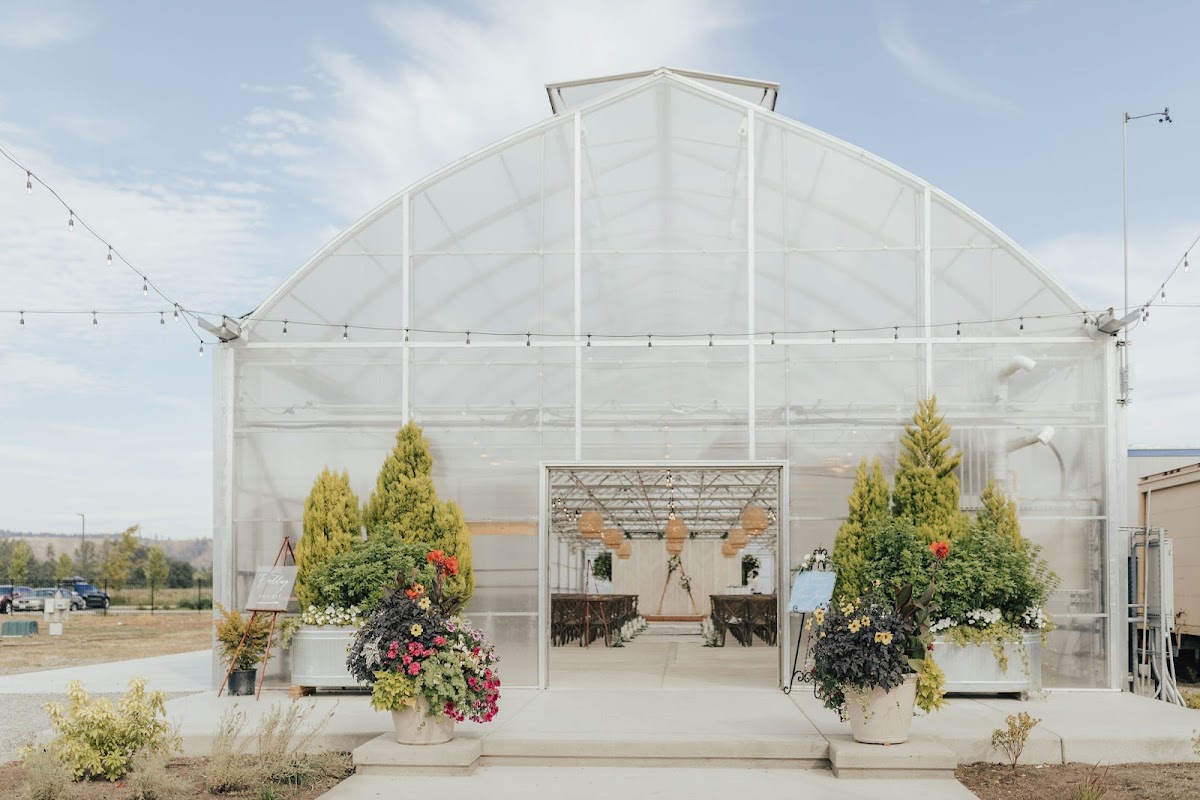
The drive from Seattle or Tacoma doesn’t prepare you for what comes next. You take State Route 162 through Puyallup’s commercial sprawl — strip centers and coffee stands — and then you turn onto 8th Avenue Southeast and everything shifts. The road narrows. The light changes. You pass fields where tulips once grew in precise, painted rows, and then Farm 12 reveals itself: six acres of restored farmland tucked against the Puyallup Valley floor, with Mount Rainier rising behind it all like an impossibly large backdrop someone wheeled into place. The Event Hall appears first, all stone and timber and modern lines that somehow feel both brand-new and a century old. Then you notice the greenhouse — that glass box catching the afternoon sun, its floor-to-ceiling windows reflecting sky and mountain and the lavender fields that border the property. And if you arrive in the evening, you see the Festival Barn Courtyard strung with hundreds of fairy lights, twinkling like something out of a dream. This is not the typical Washington barn venue with a few hay bales and Edison bulbs. This is a venue that took a working tulip farm and turned it into something rare: a place that honors its agricultural roots while offering the kind of polished, modern spaces Seattle couples expect. Poppy has designed Farm 12 Events wedding flowers for 1 celebration here so far, and we’ve been waiting for more couples to discover what we already know — this place is worth the drive to Puyallup.
About Farm 12 Events
Farm 12 Events sits on what was once a thriving tulip farm in the Puyallup Valley, that fertile stretch of land between Sumner and Orting where the glacial soil runs deep and the growing season runs long. The property comprises six acres, though it feels more expansive than that — the way good design opens up space, the way sight lines to Mount Rainier stretch your sense of scale. The restoration work here was thoughtful. The original barn structure was reimagined as the Festival Barn Courtyard. The greenhouse that once sheltered tulip starts now houses wedding ceremonies with 4,400 square feet of glass-walled, light-filled space. And the Event Hall was built from the ground up to be what it is: a modern barn that doesn’t apologize for being modern, with industrial-chic design elements, soaring ceilings, and that show-stopping winding staircase that serves as both architectural focal point and Instagram magnet.
The property maintains its farm identity in more than just aesthetics. Lavender fields bloom along the perimeter in summer. The venue partners with local farms for its in-house catering program, which is exclusively handled by Farm 12’s culinary team. This isn’t a farm-themed venue; it’s a working farm that happens to host exceptional weddings. That distinction matters when you’re thinking about flowers. The land itself suggests a certain approach — seasonal, locally-sourced when possible, respectful of the agricultural heritage that built this place. A palette of hothouse roses flown in from Ecuador won’t feel wrong here, exactly, but it won’t feel quite right either. This is a venue that rewards florists who think about where flowers come from.
Location-wise, Farm 12 sits about 31 minutes south of SeaTac Airport and 23 minutes from Tacoma, making it accessible for Seattle-area couples and their out-of-town guests without feeling suburban. The Puyallup Valley has a different character than the San Juan Islands or the Cascade foothills — it’s flatter, more agricultural, more honest in its presentation. On a clear day, Mount Rainier dominates the eastern view with the kind of presence that makes guests stop mid-sentence. On a cloudy day, which is most days from October through May, the property has a moody, romantic quality that photographs beautifully in that soft Pacific Northwest light.
For Poppy’s logistics, the venue provides excellent access for load-in and setup. Farm 12 operates as a full-service venue with an on-site events team that handles setup, cleanup, tables, chairs, and linens. They provide in-house bar service (no outside alcohol permitted) and exclusive catering through their culinary team, though outside vendors are welcomed for florals, photography, and other creative services. The venue requires a minimum of 75 guests and offers 12 hours of access, which gives us ample time for installation — particularly important for more elaborate designs like staircase garlands or suspended greenhouse installations. The events team is communicative and experienced, and the property itself has the kind of well-maintained infrastructure (good lighting, climate control, proper electrical access) that makes ambitious floral work feasible.
Event Spaces & Floral Opportunities
The Event Hall
Capacity: 300 seated
Setting: The Event Hall is Farm 12’s signature space, and the one that surprises couples most when they walk in. From the outside, it reads as barn — board-and-batten siding, a gabled roofline. Inside, it’s something else entirely: a soaring, light-filled room with high ceilings, exposed beams painted in soft white, and a modern aesthetic that splits the difference between industrial and elegant. The grand winding staircase curves along one wall, its dark wood and metal railings providing a dramatic focal point. Oversized chandeliers hang from the ceiling, their geometric metalwork catching light and casting intricate shadows. Two terraces flank the space, opening to the outdoors for cocktail hour circulation. The color palette is neutral — whites, creams, warm grays — which means the space serves as a clean canvas for whatever design direction you bring to it.
Floral approach: That winding staircase is begging for a garland installation, and we’ve yet to design one here that didn’t become the centerpiece of the couple’s Instagram feed. We favor a deconstructed approach: smilax or Italian ruscus as the base layer, woven loosely rather than tightly, with clusters of blooms integrated at intervals rather than distributed evenly. Think Juliet garden roses, white ranunculus, blush Quicksand roses, and trailing jasmine vine, secured with floral wire and tucked into the greenery so they appear to be growing organically from the garland itself. The staircase landing offers an opportunity for a larger installation — a substantial urn overflowing with seasonal branches (flowering quince in spring, Japanese maple in fall) and textured foliage. For guest tables, the high ceilings allow for tall centerpieces without overwhelming the space, though we generally recommend a mix of heights: some tables with elevated arrangements on clear glass risers (lifting blooms above sightlines to maintain conversation flow) and others with low, lush designs in wooden boxes or stone vessels that echo the venue’s materiality. The chandeliers are statement pieces on their own, so we typically leave them unadorned unless a couple specifically requests greenery integration, in which case we add minimal eucalyptus or ruscus without obscuring the metalwork. The terraces benefit from potted arrangements or standing installations — tall urns with cascading greenery flanking the doorways, or clusters of potted ferns and flowering plants that blur the indoor-outdoor boundary.
Loveland Greenhouse (North Greenhouse)
Capacity: Varies by setup, suitable for ceremonies and intimate gatherings
Setting: The Loveland Greenhouse is 4,400 square feet of glass and light and sky. Floor-to-ceiling windows wrap the entire structure, creating a transparent box that feels both sheltered and open-air. The views are the main event: Mount Rainier to the east, farmland rolling toward the valley floor, lavender fields in summer. The architecture is minimal and modern — white-painted steel frames, polished concrete floors, no decorative details to compete with the landscape beyond the glass. Natural light floods the space from every angle, shifting throughout the day from cool morning blue to warm afternoon gold. The greenhouse functions as an all-weather ceremony space (crucial in the Pacific Northwest, where even summer weddings carry the threat of rain), but it also works beautifully for cocktail hours, intimate dinners, or as a separate space for family-style brunches the morning after.
Floral approach: The cardinal rule in the greenhouse is the same as in any glass structure with exceptional views: don’t block the windows. Ceremony installations should frame Mount Rainier rather than obscure it. We favor a deconstructed arch or asymmetrical installation positioned to one side of the ceremonial focal point, allowing the mountain to remain visible in the background. Think a corner installation of textured greenery — olive branches, Italian ruscus, seeded eucalyptus — with clusters of white and cream blooms (Patience garden roses, ranunculus, hellebores in winter, Japanese anemones in fall) that create a visual anchor without forming a solid wall. For aisle markers, low arrangements or single-stem bud vases in clear glass vessels maintain sightlines and allow the clean lines of the greenhouse to shine. The concrete floor can feel cold, so we often recommend potted plants or ferns clustered at the base of installations to soften the space and add warmth. The natural light in this room makes floral colors appear more vibrant than they will in darker venues, so we adjust our palette accordingly — softer tones that might feel washed out in low light will glow here. If the greenhouse is being used for cocktails rather than ceremony, we love creating hanging installations suspended from the ceiling beams — simple greenery chandeliers or orbs of ruscus and jasmine vine that appear to float in midair and can be viewed from both inside and outside through the glass walls.
Festival Barn Courtyard
Capacity: 300 seated
Setting: The Festival Barn Courtyard is Farm 12’s outdoor space, open to the sky with the barn structure forming one side and fairy lights strung overhead in crisscrossing lines that transform the space after dark. A grand gazebo sits at one end, white-painted wood with a peaked roof, positioned to face the lavender fields and, beyond them, the mountain. The courtyard floor is a mix of pavers and gravel, giving it a rustic, farmyard feel that’s been elevated with landscape lighting and carefully placed planters. This is the space for couples who want an alfresco celebration — ceremony under open sky, dinner under the stars, dancing beneath those twinkling lights. It’s also the most weather-dependent space on the property, though the venue has protocols for rain contingencies and the Loveland Greenhouse serves as a natural backup.
Floral approach: The gazebo is a natural focal point and an obvious location for a substantial floral installation. We approach gazebo florals in one of two ways: either a full arch that wraps the structure in greenery and blooms, or a corner installation that adorns one side while leaving the architectural lines visible. For full coverage, we build out a base of silver dollar eucalyptus, Italian ruscus, and olive branches, then layer in blooms with varied textures and sizes — Cafe au Lait dahlias, Quicksand and Sahara roses, white lisianthus, scabiosa, and trailing amaranthus for movement. The key is to make it look wild and organic, not manicured, to match the agricultural setting. For a more minimal approach, a corner installation of the same materials creates asymmetry and visual interest without overwhelming the gazebo itself. Aisle markers should be low enough not to compete with the gazebo installation — we favor lanterns with floral accents (small clusters of spray roses, rosemary sprigs, or lavender bundles wired to the lantern handles), or simple arrangements in low wooden boxes or galvanized buckets that reinforce the farm aesthetic. The fairy lights overhead provide a golden glow after sunset, and warm-toned flowers (peach, blush, cream, apricot) photograph beautifully under that light. If the reception is also in the courtyard, consider bringing in potted trees or large-scale greenery installations to define different zones within the open space — a lounge area bordered by potted ferns or boxwood creates intimacy within the larger courtyard. Cocktail tables benefit from low arrangements in rustic vessels (wooden boxes, ceramic pots, vintage tins) that won’t blow over in the breeze, always a consideration for outdoor setups in Western Washington.
Wedding Flower Ideas for Farm 12 Events
Valley Abundance
This design concept honors Farm 12’s agricultural roots with an abundant, farm-fresh palette that looks like you raided a flower farm at peak season. The color story runs from soft peach to deep coral, with cream and sage green as grounding tones. Key blooms include Juliet and Patience garden roses, peach stock, coral ranunculus, white majolica spray roses, scabiosa in both bud and bloom stages, and Queen Anne’s lace for airy texture. Foliage gets just as much attention: silver dollar eucalyptus, dusty miller, olive branches, and jasmine vine trailing from every arrangement. Vessels are intentionally humble — weathered wooden crates, galvanized buckets, ceramic pitchers in cream and gray. The overall aesthetic is “just-picked abundance,” as if you walked through a cutting garden and brought back armfuls of whatever was blooming. This concept works beautifully throughout all three spaces: lush, overflowing centerpieces in the Event Hall; a wild, organic gazebo installation in the Festival Barn Courtyard; and airy, low arrangements in the Loveland Greenhouse that feel like they grew there. For the staircase garland, we’d create a base of smilax and olive branches studded with coral ranunculus and cream roses at irregular intervals, trailing down the steps in an organic, unstructured way.
Mountain Shadow
This concept takes its cues from Mount Rainier itself — the cool palette of glacial blues, silver-grays, and crisp whites, warmed with touches of lavender and sage green. The floral roster includes white Patience and Polar Star roses, blue thistle, lavender (fresh or dried, depending on season), silver brunia, white anemones, pale blue delphinium, and white lisianthus. Foliage leans textural and silvery: dusty miller, eucalyptus in several varieties (silver dollar, seeded, baby blue), and Italian ruscus. Vessels are modern and minimal — concrete cylinders, white ceramic, frosted glass, brushed silver compotes. The effect is cool, sophisticated, and ethereal, like the mountain at dawn when it’s reflecting in perfect still water. This palette particularly shines in the Loveland Greenhouse, where the natural light enhances the silvery tones and the mountain views become part of the design. For the Event Hall, we’d create tall arrangements on clear glass risers that seem to float above the tables, all whites and silvers with just hints of lavender for warmth. In the courtyard, a gazebo installation using this palette would be striking — architectural rather than wild, with clean lines and defined clusters of blooms rather than deconstructed abundance. The cool tones photograph exceptionally well under the fairy lights, taking on a romantic glow after sunset.
Tulip Heritage
Since Farm 12 sits on a restored tulip farm, this concept pays direct homage to that history with a tulip-forward design (best for April and May weddings when tulips are at peak availability). The palette is rich and saturated: deep burgundy, coral, blush pink, cream, and butter yellow. We’d use French tulips in multiple varieties — Rococo parrot tulips with their ruffled edges, elegant French tulips in solid colors, and striped Rembrandt-style tulips for visual interest. These are supported by garden roses (Keira for that deep wine color, Romantic Antike for apricot tones), ranunculus in complementary shades, and hellebores for texture. Foliage is lush and garden-like: Italian ruscus, variegated pittosporum, and jasmine vine. Vessels reference the farm’s heritage: vintage wooden tulip crates (which we source and distress ourselves), ceramic Dutch-style pottery in cream and blue, and galvanized watering cans. The effect is colorful, joyful, and historically grounded. For the Event Hall staircase, we’d create a garland heavy with tulips at their various stages — some tight buds, some fully open, some beginning to droop in that elegant way tulips have — for a dynamic, living installation that changes throughout the evening. In the greenhouse, low arrangements of tulips in vintage pottery would feel right at home, while the courtyard gazebo could support a more abundant installation with tulips cascading in loose, organic clusters. This concept works best in spring and requires close coordination on timing since tulips have a shorter vase life than many wedding florals, but the payoff is a design that’s completely unique to this venue and its history.
Seasonal Considerations
The Puyallup Valley sits in the Puget Sound lowlands, which means it shares the Pacific Northwest’s marine climate: mild, wet winters; cool springs with unpredictable rain; warm, dry summers; and foggy, drizzly autumns. Farm 12’s mix of indoor and outdoor spaces requires seasonal strategy, and the changing landscape around the property — from spring tulip fields to summer lavender to fall foliage — offers different natural backdrops throughout the year.
Spring (March–May): Spring in Puyallup is a study in contrasts. Some days feel like the rebirth of the world — sun breaking through clouds, tulips and daffodils blooming in the fields, Mount Rainier impossibly clear against blue sky. Other days it’s 50 degrees and drizzling. Plan for rain. The Loveland Greenhouse becomes essential for ceremony backup, and having both indoor and outdoor options keeps your timeline flexible. Floral availability is outstanding in spring — tulips, of course, but also ranunculus, anemones, hellebores, flowering branches (cherry, quince, apple), and the first garden roses arriving from California. Local farmers’ markets begin offering field-grown daffodils and early peonies. April and May are peak tulip season, making those months ideal for tulip-heavy designs. Spring color palettes work beautifully here: soft pastels, buttery yellows, blush pinks. Be aware that spring weather can be cool even when it’s not raining, so if you’re using the Festival Barn Courtyard for a ceremony, consider providing blankets for guests or moving the ceremony to late afternoon when temperatures rise. The property itself is stunning in spring, with everything leafing out and blooming.
Summer (June–August): Summer is Farm 12’s prime season for a reason. June through August offers the most reliable weather — warm (70s to low 80s most days), dry, with long daylight hours that stretch well past 9 PM. This is the season for the Festival Barn Courtyard to shine, with ceremony and reception both outdoors under those fairy lights. The lavender fields bloom in July, adding purple waves to the landscape and offering photo opportunities guests will use. Summer floral availability includes dahlias (in every size and color imaginable), garden roses at their peak, zinnias, sunflowers, lisianthus, and locally grown sweet peas. Many Washington flower farms reach full production in summer, making this the ideal season for sourcing locally if that’s a priority. Hydrangeas — both the traditional mopheads and the more interesting varieties like Limelight and Annabelle — are abundant and affordable. Summer heat is rarely extreme in Puyallup (unlike Eastern Washington), but it can still stress delicate blooms like sweet peas or garden roses, so we take precautions with timing and storage. July and August occasionally bring wildfire smoke from Eastern Washington or British Columbia, which can create hazy conditions and affect photos; this is unpredictable and beyond anyone’s control, but worth being aware of. The property’s views are at their best on clear summer days, and evening light in August has that particular golden quality that makes everything look like it’s been dipped in honey.
Fall (September–November): Fall weddings at Farm 12 carry a romantic, moody quality that some couples love and others find nerve-wracking. September often extends summer’s good weather with warm, dry days well into the month. By October, rain becomes more frequent, and November is solidly into the wet season. The landscape shifts from green to gold to rust, and Mount Rainier begins getting its early-season snow, creating a striking backdrop. Fall floral availability is excellent: dahlias continue through October (and even November in mild years), Japanese anemones bloom, fall roses are abundant, and we can source beautiful foliage — oak leaves, maple branches, crabapple with tiny fruits still attached. This is the season for richer color palettes — burgundy, rust, deep coral, burnt orange, plum. Marigolds, celosia, and fall berries add texture. Pumpkins and gourds can be incorporated as design elements if you want to lean into harvest season, though Farm 12’s elegant aesthetic means we keep it sophisticated rather than overtly autumnal. The weather gamble is real in fall — if you’re planning on using the Festival Barn Courtyard, have a solid backup plan and make peace with the possibility of moving indoors. The Loveland Greenhouse and Event Hall are both excellent rain options, and honestly, some of the most atmospheric weddings we’ve designed have been fall celebrations with rain on the greenhouse windows and warm light inside.
Winter (December–February): Winter weddings at Farm 12 are rare but magical. The weather is reliably wet and cool (40s to low 50s), which means outdoor spaces aren’t practical. But the Event Hall and Loveland Greenhouse both shine in winter — the former with its chandeliers glowing against dark windows, the latter with rain streaming down the glass and the mountain appearing and disappearing in the clouds. Winter floral availability is more limited than other seasons but includes some spectacular options: amaryllis, hellebores, anemones, ranunculus, tulips (imported from Holland), evergreen branches, and winter berries. Hothouse roses are reliable year-round. We favor winter palettes that feel cozy rather than cold: deep reds and burgundies, cream and ivory, rich greenery, touches of gold or copper. Evergreen garlands with white roses and holly berries work beautifully for holiday-season weddings without veering into Christmas-decor territory. The staircase garland in winter can incorporate evergreen branches (cedar, pine, or fir), creating a fragrant installation that fills the Event Hall with scent. Winter weddings benefit from maximizing candlelight — the venue’s neutral palette and modern aesthetic pair beautifully with simple pillar candles in varying heights. The intimate, cozy quality of a winter celebration works well with Farm 12’s scale.
Poppy’s Expert Take
The staircase installation is non-negotiable. If you book the Event Hall and don’t put florals on that winding staircase, you’re missing the single most impactful design opportunity in the venue. Every guest will walk past it. Every photographer will shoot it. Every Instagram story will feature it. We recommend allocating 15-20% of your floral budget to a garland installation here — it’s the piece that makes the room feel designed rather than just decorated. Request a smilax or ruscus base rather than tightly wired greenery; the loose, organic texture photographs better and feels more romantic. And don’t skip the landing — a large urn with statement blooms at the staircase landing creates a natural stopping point for photos and completes the installation.
Respect Mount Rainier in the greenhouse. The mountain is the main event through those glass walls, and your ceremony florals should complement it, not compete with it. We’ve seen couples install massive ceremony arches in the Loveland Greenhouse that completely blocked the view, and it’s a mistake every time. Opt for asymmetrical installations positioned to one side, or low altar arrangements that frame the couple without creating a visual barrier. If the mountain is out (which is what Washingtonians say when Rainier is visible — “the mountain is out today”), your guests will want to see it. On cloudy days when the mountain isn’t visible, a more substantial installation works fine, but plan for best-case scenario since you can’t control the weather.
Embrace the fairy lights in the courtyard. Those overhead string lights in the Festival Barn Courtyard create the most romantic evening ambiance, but only if your floral palette works with them. Warm-toned flowers (peach, coral, apricot, cream) glow beautifully under the golden light. Cool-toned flowers (lavender, blue, pure white) can look washed out or greenish in photos after dark. If you’re planning a courtyard reception that will extend past sunset, work with your florist to choose a palette that photographs well under both natural daylight and the warm glow of string lights. Also consider how your table arrangements will look from above — guests will be photographing their tables with the lights visible above, so low, lush centerpieces that look good from a bird’s-eye view photograph better than tall, dramatic arrangements that block the lights.
The neutral backdrop is a gift, not a problem. Some couples worry that the Event Hall is “too plain” or needs major decorating. Wrong. The neutral palette — whites, creams, warm grays — is a clean canvas that allows your florals to be the stars. Lean into it rather than fighting it. Choose vessels and arrangements that complement the existing finishes rather than trying to transform the space into something it’s not. Stone vessels, wooden boxes, and ceramic pots in natural tones blend beautifully with the room’s aesthetic. Overly ornate gold candelabras or brightly colored linens will look out of place. The venue’s modern-barn aesthetic rewards restraint and thoughtfulness over maximalist decor.
Plan for the terraces. The two outdoor terraces flanking the Event Hall are natural cocktail spaces, and they need floral attention. Bare terraces look unfinished. We recommend at least a few potted arrangements or standing installations to define the space and create visual interest. Tall urns with cascading greenery at the doorways signal the transition from indoor to outdoor. Cocktail tables benefit from low arrangements that won’t blow over in the breeze. If budget is tight, prioritize the terrace that will be used for cocktail hour and let the other one remain minimal. The terraces are also excellent for bar displays — a lush floral arrangement on or near the bar creates a focal point and photographs beautifully.
Coordinate with in-house catering on centerpiece heights. Farm 12 provides in-house catering with a specific service style, and your floral centerpieces need to work with their table settings and service flow. Tall centerpieces on risers work well because they lift blooms above the table plane, allowing servers to access plates and glassware easily. Very low, sprawling arrangements can interfere with service if they’re not properly sized. Discuss your centerpiece plans with both your florist and Farm 12’s catering team so everyone is on the same page about table layout, place settings, and service style. This coordination prevents last-minute adjustments when centerpieces arrive and don’t fit the table as planned.
Budget for installation time with the staircase garland. Installing a professional staircase garland takes time — typically 2-3 hours for a proper installation that wraps the railing, includes floral clusters, and is securely anchored at multiple points. This isn’t something we can rush through in 20 minutes. The 12-hour venue access Farm 12 provides is generous, but if you’re adding complex installations like staircase garlands, suspended greenhouse pieces, or elaborate gazebo florals, make sure your florist has allocated sufficient installation time. We typically arrive 6-8 hours before guest arrival for Farm 12 weddings with substantial floral work, which requires coordinating with other vendors and the venue’s setup schedule.
What Poppy Couples Spend on Flowers Here
Farm 12’s multi-space layout means couples often invest in more floral installations than they might at a single-room venue, since each space — Event Hall, Loveland Greenhouse, Festival Barn Courtyard — offers distinct design opportunities. While we’ve only completed one Poppy wedding here so far (at $3,130), our experience with similar barn and greenhouse venues in the Seattle market gives us a clear sense of what works at different budget levels.
$2,500 - $4,000 | The Essentials
This range covers a focused floral program that hits the high-impact moments without trying to do everything. We’d recommend: a ceremony installation in the Loveland Greenhouse (asymmetrical arrangement with greenery and blooms for one side of the ceremony space, plus low arrangements flanking the couple), centerpieces for guest tables in the Event Hall (alternating low lush designs in wooden boxes with simple bud vase clusters), bridal bouquet and three bridesmaid bouquets, five boutonnieres, and two small arrangements for the cocktail terraces. The staircase garland would be abbreviated — perhaps covering just the lower portion or the landing area rather than the full sweep. This budget prioritizes ceremony and reception florals while keeping installations manageable. Centerpieces might be compact garden-style designs in 6-inch wooden boxes with garden roses, spray roses, and eucalyptus, or simple clusters of bud vases (three per table) with single-variety stems. If your reception is in the Festival Barn Courtyard instead of the Event Hall, this budget would cover a moderate gazebo installation plus centerpieces, skipping the staircase garland entirely since you’re not using that space.
$4,000 - $6,500 | The Full Picture
This mid-tier budget