
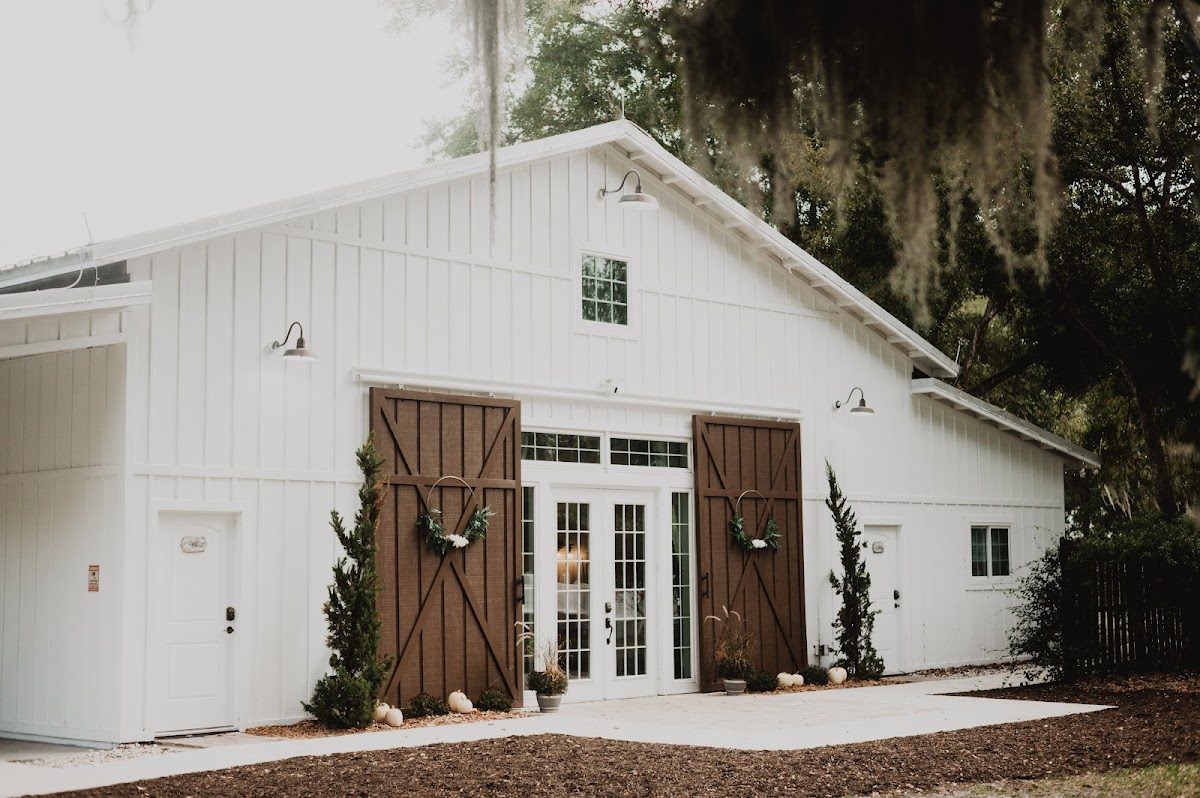
You leave behind the usual strip of Florida tourist traffic — the chain restaurants and gas stations clustering along Route 17 — and turn onto Sisco Road, where the landscape shifts from commerce to countryside in a matter of minutes. The asphalt narrows. Spanish moss drapes from longleaf pines like lace curtains hung by some patient hand. And then the vineyard rows appear, unexpected in this part of North Florida, green vines running in tidy parallels against a sky that seems bigger out here, wider somehow, the way skies do when there’s nothing tall to interrupt them. Ever After Farms Vineyard announces itself not with fanfare but with a weathered sign and a long drive that winds past the vines toward a white barn that glows in the afternoon sun. But it’s the oak tree you notice first — a 200-year-old giant spreading its limbs like an invitation, its canopy so vast it could shelter an entire ceremony and still have shade to spare. This is Old Florida, the version that predates theme parks and condo towers, where land still matters and weddings happen under trees that have stood watch for two centuries. Poppy has received 23 leads for Ever After Farms Vineyard wedding flowers, and though we have not yet designed here, we understand what draws couples to this place: the romance of vines and vintage cars, the promise of a celebration that feels like stepping into someone’s beautiful, private dream.
About Ever After Farms Vineyard
Ever After Farms Vineyard sits on the outskirts of Pomona Park in Putnam County, a stretch of North Central Florida where the land rolls gently toward the St. Johns River and Lake George, and where the air still carries the faint mineral scent of Florida’s interior waters. This is not the Florida of postcards — no beach, no palms — but rather the version that locals know: farmland and moss-draped oaks, cattle egrets picking through pastures, and a particular quality of light that turns everything amber just before sunset. The property encompasses a working grape vineyard, an unusual sight in a state better known for citrus, and the vines themselves — muscadine and hybrid varieties bred to withstand Florida’s humidity — give the venue a visual identity that sets it apart from the coastal barn venues and tropical garden estates more common to the region.
The centerpiece of the property is the white barn reception space, a modern structure with clean lines and climate-controlled comfort, illuminated by chandeliers and strands of white market lights that cast a warm, romantic glow over the interior. The barn can accommodate up to 200 guests for a seated dinner, and its all-white palette functions as a blank canvas, allowing any floral palette to shine without competing against strong architectural colors. Adjacent to the barn is a covered cocktail patio where guests can gather during the transition from ceremony to reception, and two distinct ceremony sites: one beneath the ancient oak tree, complete with a pergola and paver aisle, and another surrounded by vineyard rows with signature archways framing the vows.
One of the more charming touches is the 1957 Silver Cloud Rolls Royce — a pristine white vintage vehicle available for photo opportunities. It’s the kind of detail that turns a venue from merely pretty into memorable, the sort of thing that shows up in every guest’s Instagram feed and makes a wedding feel like a destination experience even for locals. The venue also offers separate getting-ready suites for the wedding party: a bridal suite with natural light and bathroom access for hair and makeup, and a groom’s suite outfitted with a pool table, big-screen TV, and PlayStation 5 — a thoughtful acknowledgment that not everyone wants to spend the pre-ceremony hours in anxious silence.
From a logistical standpoint, Ever After Farms is roughly 60 miles south of Jacksonville, 90 minutes from St. Augustine, and accessible from Orlando, Gainesville, and Ocala within a two-hour drive. For Poppy’s delivery teams working from our Tampa-area studio, the drive to Pomona Park is approximately 2.5 to 3 hours depending on traffic, making this a feasible but not frequent delivery route. The venue operates with an open vendor policy, meaning couples can bring in their own florist without restriction — a significant advantage for Pompy Flowers couples who prefer our design approach over venue-provided arrangements. That said, Ever After Farms includes extensive decorations, centerpieces, and floral arrangements as part of their all-inclusive package, which can offset overall wedding costs. For couples working with Poppy, we recommend clarifying which floral elements are included in the venue package and where our custom designs can supplement or replace those offerings to create a cohesive, elevated look.
Event Spaces & Floral Opportunities
Indoor Reception Area
Capacity: 200 seated
Setting: The white barn reception hall is the workhorse of this venue — a bright, airy, climate-controlled space where chandeliers and white market lights hang from the ceiling like constellations, casting soft illumination across tables and guests. The walls are white shiplap, the floor is polished concrete, and the overall effect is modern farmhouse without veering into rustic cliché. There’s a dedicated dance floor with gobo lighting and a projector screen for those inevitable slideshow moments, a bar area equipped with commercial refrigeration and a three-bay sink, and a special wood table reserved for the bride and groom that sits on a slight riser, making it a natural focal point. The barn also includes farmhouse tables or round tables with chairs as part of the rental, along with buffet tables, a cake table, and even a remembrance table — basically, everything you need is already here.
Floral approach: The all-white backdrop is a florist’s dream and a florist’s challenge. On one hand, any color palette you choose will pop beautifully against the clean canvas. On the other hand, there’s nothing to hide behind — every arrangement needs to earn its place. We recommend focusing floral investment on the head table and guest centerpieces. For the bride and groom’s special wood table, consider a lush, low runner of garden roses (Keira, Patience, or O’Hara in blush and peach tones), spray roses, ranunculus, and eucalyptus that trails the length of the table, punctuated with pillar candles in varying heights. For guest tables, the choice between tall and low depends on the vibe: tall arrangements on gold stands (with hydrangeas, snapdragons, larkspur, and trailing amaranthus) create drama and draw the eye upward toward those beautiful market lights, while low, lush compote arrangements (with garden roses, lisianthus, stock, and scabiosa in ceramic or concrete vessels) allow for easy conversation. Because Ever After Farms includes centerpieces in their package, clarify early whether you’re supplementing or replacing. If supplementing, we often add statement florals to the bar area — a large arrangement flanking each end of the bar with bold blooms like protea, king protea, and tropical foliage for Florida flair. The entrance to the barn, with its grand reveal barn doors, deserves a pair of substantial arrangements on pedestals or in tall urns to frame guests as they step from cocktail hour into the reception.
Bridal Suite
Setting: This is where the getting-ready magic happens — a private suite with a bathroom attached so the bride and her crew aren’t trekking down hallways mid-makeup application. The space is designed with ample natural light, crucial for those detail shots and getting-ready photos that fill the first half of every wedding album. There’s room for hair and makeup stations, dress hanging, and the kind of champagne-fueled laughter that marks the morning of a wedding day.
Floral approach: Bridal suite florals should be intimate and personal, not large-scale. A small arrangement on a side table — perhaps a loose, organic gathering of sweet peas, garden roses (Juliet or Keira), ranunculus, and hellebores in a vintage brass vessel — adds romance without overwhelming the space. We also love providing individual bud vases for each bridesmaid with a single bloom (a Quicksand rose, a white lisianthus, a stem of tweedia) as a small, thoughtful gift that doubles as a photo prop. If the bride is carrying a particularly special bouquet, having a coordinating arrangement in the suite creates visual continuity for detail shots. Keep stems on the shorter side to avoid wilting in Florida humidity, and deliver these arrangements the morning of with hydration in mind.
Groom Suite
Setting: While the bride’s side is all soft lighting and mirrors, the groom’s suite leans into leisure: pool table, PlayStation 5, big-screen TV, and enough space for the groomsmen to actually relax instead of standing around nervously adjusting bow ties. It’s a smart design choice — giving the guys a place to decompress takes the pressure off the morning and makes for better, more natural photos.
Floral approach: Florals in the groom’s suite should feel intentional but not fussy. A single architectural arrangement — think calla lilies, succulents, protea, or agonis foliage in a concrete or matte black vessel — on a side table or bar cart adds a masculine, modern touch. Alternatively, skip the arrangement entirely and focus on killer boutonnieres. For a Florida vineyard wedding, we love textural boutonnieres with scabiosa pods, dusty miller, olive branch, and a single focal bloom like a burgundy dahlia or a plum-toned lisianthus, finished with raffia or leather cord instead of ribbon.
Oak Tree Ceremony Site
Capacity: 200 seated
Setting: The 200-year-old oak is the undisputed monarch of this property, its limbs spreading in gnarled, graceful arcs that create a natural cathedral. The trunk is massive — the kind that takes three people linking hands to encircle — and the canopy provides dappled shade that shifts throughout the day as the sun moves overhead. A white pergola sits beneath the tree, serving as the altar structure, with a unity table beside it and a paver aisle running from the barn’s grand reveal doors to the ceremony site. Stadium-style seating means every guest has a clear view, and the Spanish moss draping from the branches adds an unmistakable Old Florida romance.
Floral approach: This is a case where less is genuinely more. The oak tree is a living sculpture, two centuries in the making, and any floral installation should honor rather than compete with its presence. The pergola can be dressed with light garlands of smilax or Italian ruscus, woven loosely through the beams and punctuated with clusters of garden roses, spray roses, and jasmine vine. Avoid heavy draping or dense arrangements that obscure the structure — the goal is to soften the pergola, not suffocate it. The unity table is an ideal spot for a low, lush arrangement in a shallow compote — something with garden roses (Patience, Keira), lisianthus, scabiosa, astilbe, and eucalyptus that guests can see over but that still registers in photos. For the aisle, consider simple markers every other row: shepherds’ hooks with hanging glass orbs filled with floating candles and a single bloom, or posies of seasonal flowers tied with silk ribbon to the end chairs. The paver aisle is neutral enough that petals won’t stain, so a petal toss by the flower girl is a sweet, traditional touch. If the couple wants more visual impact, flank the pergola with two large urns on the ground, filled with a wild, organic mix of garden roses, hydrangeas, larkspur, amaranthus, and seasonal branches (flowering quince in spring, magnolia in summer, oak leaves in fall). The key is to remember that the tree is doing most of the work — your job as a florist is to frame the couple, not the tree.
Vineyard Ceremony Site
Capacity: 200 seated
Setting: The alternative ceremony location places the couple among the vines themselves, with vineyard rows stretching out on either side and a pair of signature white archways framing the ceremony space. The paver aisle runs between the vine rows, and the visual effect is both romantic and agricultural — there’s no pretending this isn’t a working vineyard, and that authenticity is part of the charm. The site has an openness to it, less enclosed than the oak tree site, which means more sky, more light, and depending on the time of day, more sun.
Floral approach: The archways are the floral focal point here, and they can handle substantial installations without looking overwrought. We recommend starting with a base of greenery garland — seeded eucalyptus, silver dollar eucalyptus, or Italian ruscus — wired securely to the arch frame, then layering in floral clusters at the corners and apex. For a romantic, garden-style look, use garden roses (Mayra’s Rose, Baronesse, Romantic Antike), lisianthus, stock, and ranunculus in soft peach, blush, and cream tones. For something with more Florida personality, incorporate tropical elements like anthurium, ginger, or even bird of paradise for a bold statement. The key is asymmetry — the florals should look like they’ve grown naturally up and around the arch, not like they were glued on in perfect intervals. Because the vineyard provides such a strong visual backdrop, keep aisle florals minimal. Simple petals or lanterns along the aisle are sufficient. If the couple wants more, consider low arrangements on shepherds’ hooks or wine barrels (if available from the venue) flanking the archway. And here’s a pro tip: if the wedding is in summer or early fall, the grape vines themselves will have foliage and possibly fruit, which adds its own natural “floral” element. Design with that in mind — you don’t need to replicate what nature is already providing.
Covered Cocktail Patio
Setting: The patio serves as the transition zone between ceremony and reception, a covered outdoor space where guests can sip signature cocktails, nibble appetizers, and enjoy the Florida evening without full sun exposure. The venue provides cocktail tables and benches, and the space has a casual, convivial energy — this is where guests relax, kick off their heels, and start the celebratory part of the evening.
Floral approach: Cocktail hour florals should be fun, fresh, and abundant without being precious. We love clustered bud vases on cocktail tables — three or five small vases in varying heights, each with a different bloom (a zinnia, a dahlia, a spray rose, a stem of blue delphinium, a bit of fern) creates a collected, organic look that feels intentional but not matchy-matchy. Alternatively, small compote arrangements in bright, punchy colors — sunflowers, gerbera daisies, zinnias, celosia — bring energy and personality. If the venue allows, hanging baskets of ferns or trailing ivy from the covered structure adds a layer of greenery overhead. This is also a great space to incorporate non-floral elements like citrus (lemons, limes, oranges) in glass cylinders with floating candles, which nods to Florida’s citrus heritage and adds a refreshing visual element. Keep arrangements low enough that they don’t interfere with drinks and plates, and choose blooms that can handle a bit of humidity and warmth since the patio, while covered, is still outdoors.
Wedding Flower Ideas for Ever After Farms Vineyard
Southern Vineyard Romance
This palette draws from the property’s dual identity as both a working vineyard and a Southern estate. Think soft, dusty tones — blush, mauve, sage green, and cream — with textures that feel lush and slightly overgrown in the best possible way. Centerpieces feature garden roses (Keira, Quicksand, Patience), white and blush lisianthus, cafe au lait dahlias, scabiosa, astilbe, and eucalyptus in antique brass or ceramic compotes. The bridal bouquet is a loose, organic gathering of the same blooms with trailing jasmine vine and silk ribbon in a muted taupe. The pergola at the oak tree ceremony is dressed with smilax garland and clusters of blush roses and white lisianthus. The archways at the vineyard site receive a similar treatment but with the addition of mauve dahlias and scabiosa for depth. Cocktail tables feature bud vases with individual blooms. This design works beautifully in the white barn reception space, where the soft palette glows under the chandeliers and market lights, and the overall effect is timeless, romantic, and effortlessly elegant.
Tropical Florida Vineyard
Not every vineyard wedding needs to look like it could be in Napa. This is Florida, and this design concept leans into that unapologetically. The palette is vibrant — coral, fuchsia, mango, and lime green — with bold tropical blooms and lush foliage. Centerpieces feature anthuriums, ginger, protea, birds of paradise, and gloriosa lilies mixed with more traditional roses and orchids in bright ceramic or painted vessels. The bridal bouquet is a riot of color and texture: sunset-hued roses (Free Spirit, High & Magic), orange ranunculus, pink ginger, protea, and monstera leaves, wrapped in woven rattan or tied with bright silk ribbon. The vineyard ceremony archways are dressed with ti leaves, monstera, and palm fronds as the base, then layered with vibrant florals. For the reception, consider adding pineapples, coconuts, or other tropical fruit as part of the centerpiece design. This approach works especially well for summer weddings when the Florida sun is high and the mood is festive. The white barn provides the perfect neutral backdrop to let these saturated colors sing, and the overall vibe is celebration, sunshine, and serious personality.
Classic White and Greenery
For couples who want elegance without fuss, this pared-down palette is sophisticated and endlessly versatile. The focus is on white blooms and varied greenery textures, allowing the natural beauty of the venue to remain the star. Centerpieces are low and lush: white hydrangeas, white roses (Patience, Polo, Vendela), white lisianthus, and white ranunculus in silver julep cups or white ceramic compotes, surrounded by seeded eucalyptus, Italian ruscus, and fern. The bridal bouquet is all white with touches of green — garden roses, ranunculus, sweet peas, and hellebores with trailing smilax. For the oak tree pergola, simple garlands of eucalyptus and smilax with minimal floral accents keep the focus on the tree itself. The vineyard archways receive white floral clusters at the corners, leaving the structure and vines visible. In the white barn, this palette creates a fresh, airy feeling — the white-on-white is modern and clean, and the greenery adds just enough texture to keep it from feeling stark. This is a foolproof choice for any season, any time of day, and any couple who values understated elegance.
Seasonal Considerations
Ever After Farms Vineyard sits in North Central Florida, which means a humid subtropical climate with hot, wet summers and mild, dry winters. Understanding the seasonal shifts is critical for selecting blooms that will not only look beautiful but survive the conditions.
Spring (March - May): Spring is one of the most forgiving seasons for weddings at Ever After Farms. Temperatures range from the mid-70s to low 80s, humidity is moderate, and afternoon thunderstorms are less frequent than in summer. This is peak season for many beloved wedding flowers: peonies (though expensive and imported in Florida), garden roses, ranunculus, anemones, sweet peas, tulips, and hellebores are all available and thriving. Local wildflowers like lupine and black-eyed Susans begin appearing in late spring. The vineyard itself is lush and green, the oak tree is fully leafed out, and the natural landscape is at its most photogenic. For outdoor ceremonies, spring offers the best weather reliability. Pro tip: early May can start feeling summery, so if you’re planning a midday outdoor ceremony, consider heat-tolerant blooms and plenty of hydration for arrangements.
Fall (September - November): Fall is the most popular wedding season in Florida, and for good reason. By late September, temperatures begin to drop into the 70s and 80s, humidity decreases, and the weather becomes more predictable. This is the season for dahlias, marigolds, chrysanthemums, sunflowers, zinnias, celosia, and the return of some imported favorites like garden roses and ranunculus. The vineyard’s grape harvest typically happens in late summer to early fall, and depending on timing, couples may catch the tail end of harvest season, with the added romance of wine production happening on-site. By November, the Florida landscape begins to shift — the oak tree’s leaves thin slightly, and the light takes on a cooler, golden quality. Fall is an excellent time for rich, saturated color palettes: burgundy, burnt orange, goldenrod, and deep plum. The mild weather means outdoor ceremonies are comfortable, and florals are less stressed by heat.
Winter (December - February): Winter in Pomona Park is mild and dry, with daytime temperatures in the 60s and 70s and cooler evenings that might dip into the 40s. This is the off-season for many venues, but it’s a lovely time for a wedding if your guests don’t mind cooler temperatures. Winter is the season for camellias, gardenias, hellebores, anemones, ranunculus, and imported tulips and hyacinths. Evergreen foliage like magnolia, holly, and pine are abundant, making this an ideal time for lush greenery installations. The vineyard is dormant, which gives it a more stark, sculptural appearance, and the oak tree is less leafy but still majestic. Winter weddings can embrace deeper, moodier palettes or classic holiday-inspired whites, greens, and metallics. Because of the cooler temperatures, florals last longer, and there’s less concern about heat wilting. Just be prepared for the possibility of a chilly evening — have pashminas or a fire pit available for guests during cocktail hour.
Poppy’s Expert Take
Clarify the included florals early. Ever After Farms includes centerpieces and floral arrangements as part of their all-inclusive package, which is fantastic for couples on a budget but can create confusion if you’re also hiring a florist. Before designing anything, ask the venue coordinator exactly what florals are included, what they look like, and whether substitutions are allowed. Some couples opt to use the venue’s included centerpieces for cocktail tables or less prominent areas and invest in custom Poppy arrangements for guest tables and ceremony installations. Others replace the venue florals entirely. Either approach works, but clarity upfront prevents duplication of effort and wasted budget.
The oak tree needs very little help, and that’s a good thing. It’s tempting to go big with ceremony florals, especially when you’re emotionally invested in creating a “wow” moment. But at the oak tree site, restraint is your friend. Over-floraling this space actually diminishes its impact — guests came to see the tree, not a floral installation that happens to have a tree behind it. A lightly dressed pergola, a beautiful unity table arrangement, and simple aisle markers are plenty. Save your floral budget for the reception, where the blank canvas of the white barn gives you more freedom to create impact.
The white barn is a lighting dream for photographers. Those chandeliers and market lights create a soft, flattering glow that makes everyone look good and every floral arrangement photograph beautifully. When designing centerpieces, think about how they’ll look under warm, ambient lighting rather than harsh overhead fluorescents. Blush, peach, and cream tones will glow. Deep burgundy and navy will read darker and moodier. Whites will stay crisp and bright. Consider this when presenting color palettes to couples — what looks good in daylight may look different under the barn’s evening lighting.
Logistics matter: load-in and setup space. Ever After Farms is a working venue with a well-organized events team, but like any venue, coordination is key. Confirm your load-in time with the venue coordinator, and build in extra time for setup — the distance from the barn to the ceremony sites (especially the vineyard site) means you’ll be making multiple trips. Bring a wagon or cart for transporting arrangements, and factor in Florida weather. If it’s raining, you’ll need tarps or umbrellas to protect florals during transport. Plan for at least two hours of setup time for a full-service wedding (ceremony, cocktail, and reception florals), and bring a helper.
The Rolls Royce is a floral opportunity if the couple wants it. That 1957 Silver Cloud is stunning on its own, but it can also serve as a photo backdrop enhanced with florals. A small arrangement tucked into the door handle, a garland draped over the hood, or a bridal bouquet arranged artfully on the running board makes for gorgeous detail shots. Just coordinate with the venue first — they’ll want to make sure anything placed on the car won’t damage the finish. This is a small, high-impact detail that can elevate the overall floral story.
Don’t overlook the cocktail patio as a design opportunity. Couples often focus floral budget on ceremony and reception and forget about cocktail hour, but this is a mistake. The covered patio is where guests spend 45 minutes to an hour, and it’s a prime opportunity to set the tone for the evening. Small, colorful arrangements on cocktail tables are relatively inexpensive and have a big visual impact. This is also a great place to use secondary blooms or “filler” flowers as the stars — zinnias, gerbera daisies, and sunflowers that might play supporting roles in centerpieces can shine on cocktail tables.
What Poppy Couples Spend on Flowers Here
Since we have not yet designed a wedding at Ever After Farms Vineyard, we don’t have specific spending data for this property, but we can extrapolate from similar venues in the Tampa and North Florida markets, taking into account the venue’s included floral package and the typical scope of a 150- to 200-guest vineyard wedding.
$2,500 - $3,500 | The Essentials
This budget covers personal flowers and select ceremony enhancements, working in tandem with the venue’s included centerpieces and decor. You’d receive a bridal bouquet, four to six bridesmaid bouquets, boutonnieres for the groom and groomsmen, and corsages for mothers and grandmothers. For the ceremony, choose one site (oak tree or vineyard) and invest in floral accents for the existing structures: light garlands and floral clusters for the pergola or archways, a unity table arrangement, and simple aisle markers (shepherds’ hooks with posies or petals). For the reception, supplement the venue’s included centerpieces with upgraded arrangements for the head table — perhaps a lush floral runner or a pair of statement arrangements — and small bud vases for cocktail tables. This tier works well for couples who appreciate the value of the venue’s inclusive package and want to add Poppy’s design touch to key moments without duplicating efforts.
$3,500 - $5,500 | The Full Picture
This range allows for custom centerpieces, fuller ceremony installations, and enhanced cocktail hour florals. Personal flowers remain the same, but you’re now replacing the venue’s included centerpieces