
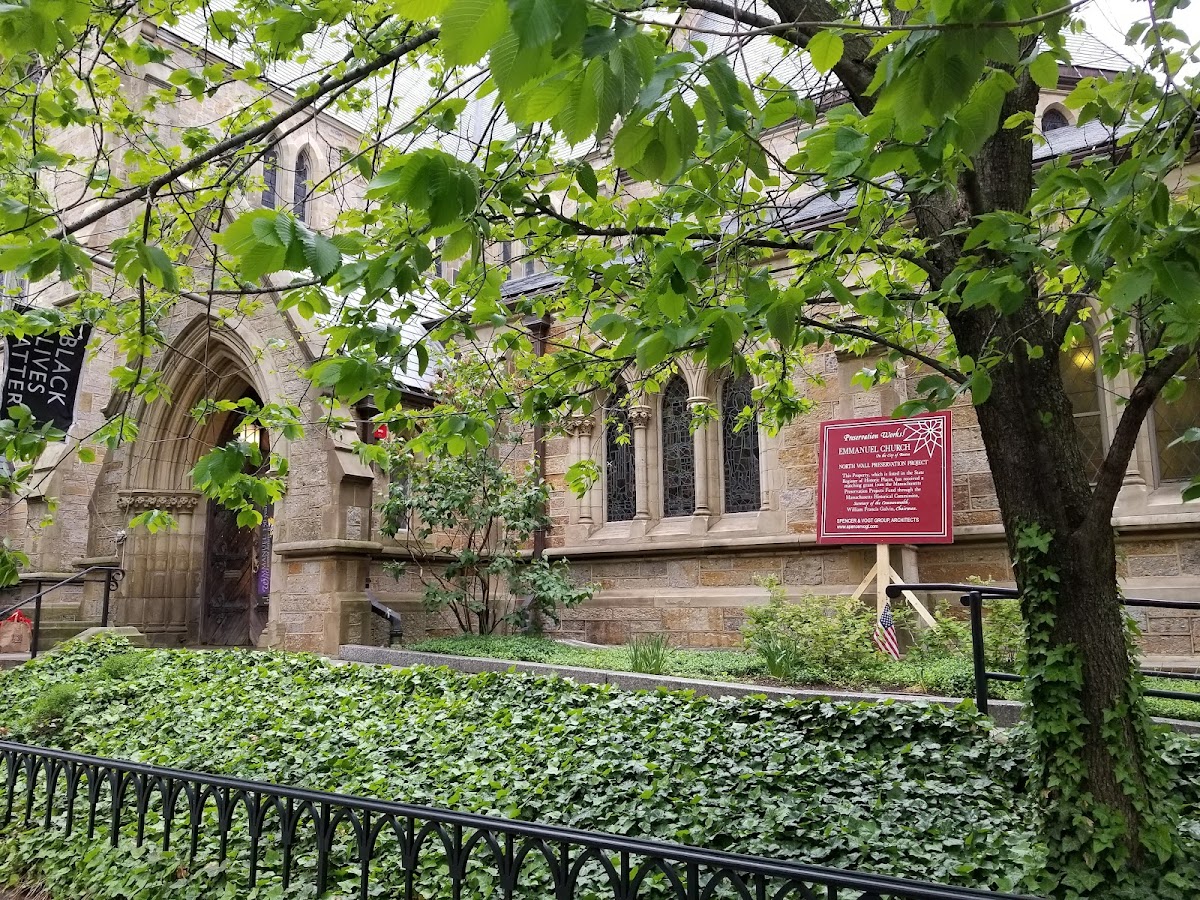
Emmanuel Episcopal Church of Boston is not a space for timid floral design. The heavy stone masonry and soaring Gothic arches of this Back Bay landmark provide a dramatic, monochromatic canvas that will visually swallow small or sparse arrangements. To succeed here, floral design must lean into the venue’s verticality and the specific, brilliant color stories told by its world-renowned stained glass.
The Spaces
Main Sanctuary
The Main Sanctuary is a cathedral-scaled environment defined by arched stone ceilings and a traditional long aisle. The architecture provides a built-in sense of occasion, but the sheer volume of the room means that florals must be concentrated at key points of impact—specifically the altar and the aisle entrance—to avoid feeling lost in the stone.
- What works: Large-scale ground installations that flank the altar or the base of the pulpit. Use tall pedestals to lift arrangements into the mid-line of the space, ensuring they are visible against the dark wood of the pews.
- Skip: Small, delicate bud vases or low-profile aisle markers that disappear against the floor.
- Watch out: The lighting is primarily artificial and can be quite dim; choose flower colors that remain vibrant in low light, such as whites, creams, or high-saturation jewel tones.
- Budget hero move: Focus your entire ceremony budget on two massive, asymmetrical ground installations at the altar. These frame the couple and provide the necessary scale without needing to decorate the entire 650-seat room.
Lindsey Chapel
Described as an architectural jewel, Lindsey Chapel offers a more intimate experience. The stone tracery and the windows by Sir Ninian Comper are the primary design elements. Because guests are closer to the altar and the walls, the “finish” of your floral work matters more here than in the Main Sanctuary.
- What works: Low, lush arrangements for the altar that don’t block the view of the reredos. Aisle-end markers that utilize the existing pew structure can guide the eye toward the front.
- Skip: Massive, sprawling installations that might feel claustrophobic in the narrower footprint of the chapel.
- Watch out: The stone surfaces are historic; all floral mechanics must be strictly non-invasive—no tape or nails on the masonry.
Main Entrance
The Newbury Street entrance is a significant opportunity for a “statement” moment. The stone archway is deeply recessed, providing some shelter from the elements and a perfect frame for photography.
- What works: Utilizing the existing metal bar above the entrance for a hanging floral header. This creates a lush “portal” effect that transitions guests from the busy Back Bay sidewalk into the serene church environment.
- Skip: Free-standing pedestals on the sidewalk, which can be easily bumped by pedestrians or affected by wind.
- Watch out: This is a public-facing entrance; ensure any installations are securely rigged and do not obstruct the required ADA-accessible pathways.
What Works at Emmanuel Episcopal Church
Design for the light, not just the room. Because the sanctuary relies heavily on artificial light and the filtered glow of stained glass, pastel palettes (like very pale blush or lavender) can often look grey or muddy. Opt for “clear” colors—crisp whites, true yellows, or deep burgundies—that hold their pigment under incandescent bulbs.
Respect the stained glass palette. The windows here are not just decor; they are the room’s color soul. Before finalizing a floral palette, study the specific blues, reds, and golds in the Comper windows. Your flowers should either strictly coordinate with these tones or provide a clean, neutral contrast (like all-white and green) to let the glass shine.
Embrace verticality. The ceiling height is one of the venue’s most impressive features. Tall, branch-heavy arrangements (think flowering quince, cherry blossoms, or tall maple foliage) can bridge the gap between the human-scale floor and the soaring arches above.
The “Metal Bar” advantage. Unlike many historic churches that forbid hanging decor, the metal bar at the main entrance is a gift to florists. It allows for a lush, overhead installation that would otherwise require expensive rigging or heavy-duty stands. Use it to create a high-impact first impression.
Pew markers as transition tools. In a room this large, pew markers serve a functional purpose beyond decor. They define the “active” part of the sanctuary if you aren’t filling every row. Use substantial clusters of greenery and ribbon to make the space feel full and intentional.
Budget Guide
| Tier | Investment | Floral Strategy |
|---|---|---|
| Essentials | $1,750 - $3,000 | Focus exclusively on the altar and personals. Two large altar arrangements and high-impact bouquets for the wedding party. |
| Sweet Spot | $3,000 - $5,500 | Adds substantial aisle-end markers and a focal installation at the Main Entrance archway to welcome guests. |
| Full Experience | $5,500 - $8,500 | Includes large-scale altar installations, a full floral header at the entrance, and lush decor for the Parish Hall or Garden. |
| Statement | $8,500+ | Floor-to-ceiling verticality. Incorporates tall branch installations, full-aisle ground meadows, and custom rigging in the Sanctuary. |
This venue demands a level of architectural respect; your floral budget should prioritize a few high-impact moments over many small, scattered ones.
Tips
Confirm your load-in window early. Being a central Back Bay church on Newbury Street, logistics can be tight; ensure your floral team has a clear plan for parking and unloading.
Repurpose with a plan. If you are moving ceremony flowers to a separate reception venue, ensure the arrangements are designed in vessels that are easily transportable down the narrow church aisles.
Incorporate “living” elements in the Garden. If using the memorial garden, use potted elements or very organic, “grown-in” styles to complement the church’s existing horticultural history.
Test your colors against the stone. The grey-toned stone of the interior can be a “cool” background; warm-toned flowers (creams, peaches, corals) often provide a more inviting contrast than cool-toned ones.
Non-invasive mechanics are mandatory. Always use felt bottoms on any arrangements sitting on stone or wood ledges to prevent scratching and moisture damage.