
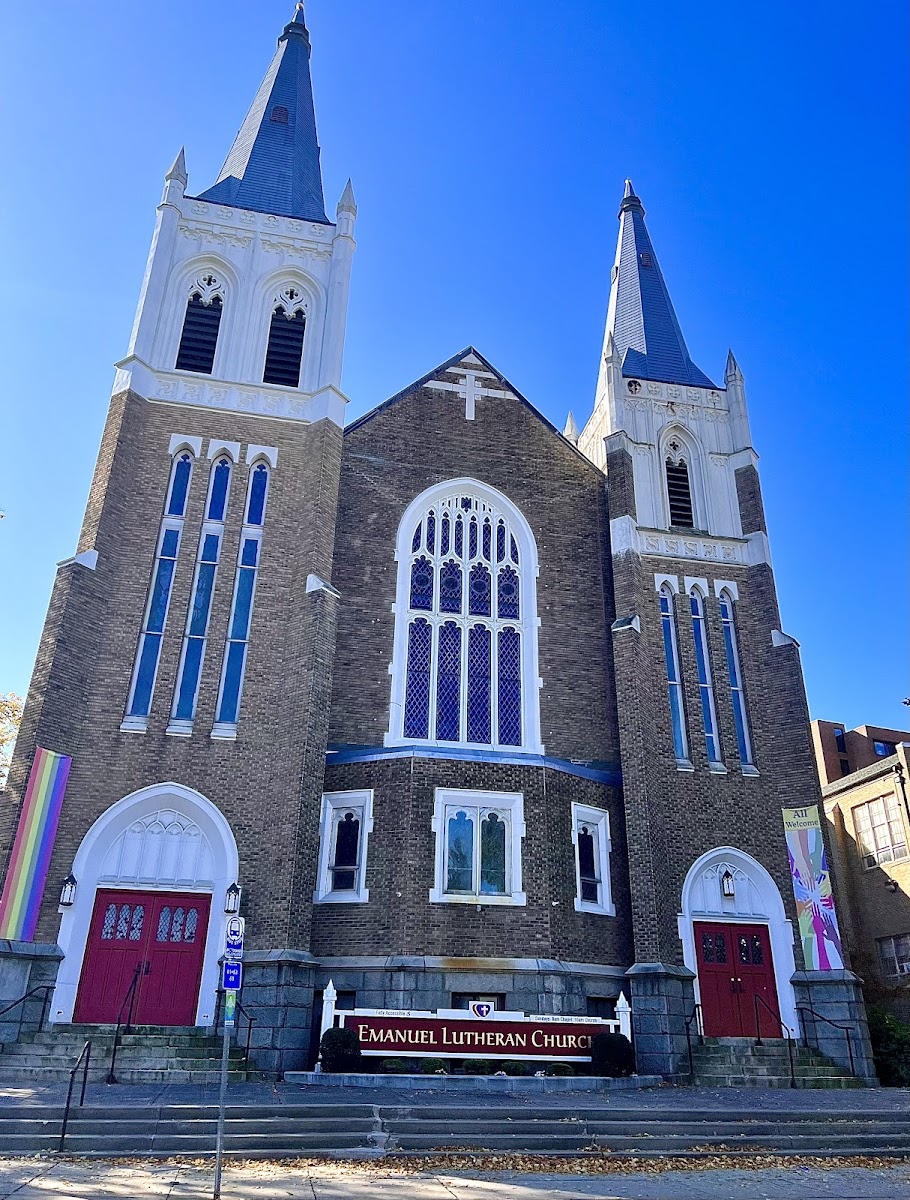
Emanuel Lutheran Church is an exercise in scale and contrast. The historic architecture, characterized by deep-toned woodwork and soaring Gothic Revival lines, demands floral designs that are both structurally significant and tonally bright to avoid being lost in the shadows.
Designing for a space this grand requires an understanding of how light interacts with aged oak and stone. Because the interior can be dim, even on bright Hartford afternoons, the floral designer’s primary job is to bring luminosity to the altar and the aisle.
The Spaces
Sanctuary
The Sanctuary is the heart of the venue, featuring a long, traditional aisle flanked by dark wooden pews and leading to a raised altar. The architecture provides a built-in sense of formality and tradition that serves as a powerful backdrop for a ceremony.
- What works: Large-scale flanking arrangements on the raised altar area. These should be tall enough to be seen from the back of the room and wide enough to frame the couple. Aisle markers attached to the pew ends create a beautiful rhythm and draw the eye toward the front.
- Skip: Tiny, delicate bud vases or low-profile arrangements. The volume of the room will swallow anything that lacks significant mass.
- Watch out: The limited natural light in certain corners. Avoid muddy or very dark color palettes (like deep burgundies without highlights) as they will disappear into the woodwork.
- Budget hero move: Focus all floral weight on two massive “altar meadows” placed at the base of the steps. They create a lush, grounded look that feels modern yet respectful of the setting.
Luther Hall
This fellowship space is typically used for gatherings and receptions. It is more functional than the Sanctuary, which means flowers have a bigger job to do in terms of setting the mood.
- What works: Elevated centerpieces. By lifting the flowers off the table, you fill the vertical void of the hall and create a more intimate atmosphere for seated guests.
- Skip: Minimalist greenery runners. Without a significant floral presence, the room can feel like a standard hall rather than a curated reception space.
- Watch out: Table layouts. Ensure the floral scale matches the table size, especially if using long banquet-style seating.
- Budget hero move: Repurpose the large altar arrangements from the ceremony to the entrance of Luther Hall or flanking the head table.
Narthex
The entryway is the first impression for guests. It is a transitional space that sets the tone for the ceremony to follow.
- What works: A lush welcome arrangement on a pedestal or the existing entry table. This is a great place to introduce your color palette in a concentrated way.
- Skip: Floor installations that might impede the flow of guests moving into the Sanctuary.
- Watch out: This area is often busy during guest arrival; keep arrangements secure and out of the main foot traffic path.
What Works at Emanuel Lutheran Church
High-Contrast Palettes. To combat the dark wood and moderate lighting, we recommend palettes featuring whites, creams, pale yellows, or soft blushes. These tones “pop” against the oak and ensure the flowers are visible in photography. If you want color, go for saturated, bright hues rather than muted, dusty tones.
Altar Framing. The raised platform is the focal point. Use the height to your advantage with pedestals or tall, airy installations. The goal is to create a visual “frame” for the couple that stands out against the organ pipes and ornate pulpit.
Pew End Rhythms. The long aisle is one of the church’s best features. Small clusters of blooms or lush greenery markers on every second or third pew create a sense of abundance and direct the energy toward the altar.
Structural Scale. Because the ceilings are so high, horizontal arrangements often feel “squashed.” We prefer designs with vertical movement—using branches, tall delphinium, or snapdragons—to bridge the gap between the floor and the soaring arches.
Textural Foliage. Use greens with a natural sheen, like camellia or ruscus, which catch and reflect light better than matte foliages like eucalyptus. This adds a layer of richness and depth to the arrangements.
Budget Guide
| Tier | Price Range | Floral Impact |
|---|---|---|
| Essentials | $1,750 - $3,500 | Focuses on personal flowers (bouquets/boutonnieres) and a pair of impactful altar arrangements to anchor the ceremony. |
| Sweet Spot | $3,500 - $6,000 | Includes personals, altar arrangements, and a curated selection of aisle markers or a significant entry piece for the Narthex. |
| Full Experience | $6,000 - $10,000 | Covers the ceremony in full and adds centerpieces for Luther Hall, ensuring a cohesive look from the first guest arrival to the final toast. |
| Statement | $10,000+ | Large-scale installations, such as a floral arch at the Sanctuary entrance, lush meadows lining the entire aisle, and premium reception designs. |
The historic character of Emanuel Lutheran Church provides a foundation of “free decor” that allows even a modest budget to feel substantial when spent on the right focal points.
Tips
Plan for the Hungerford Street lot. For load-in and guest parking, the lot behind the church is the most reliable option, but vendors should coordinate timing to avoid Sunday service overlaps.
Repurpose with intention. Moving large altar pieces to Luther Hall is a smart move, but ensure you have a dedicated person (or your florist) to handle the transition while guests are at cocktail hour.
Embrace the organ. The organ is a stunning architectural feature; don’t try to hide it. Instead, use florals that complement its vertical lines.
Monitor the light. If your ceremony is late in the day, the interior light will drop significantly. Ensure your floral colors are bright enough to be seen in low-light conditions.
Respect the woodwork. This is a historic building. All floral installations must be self-supporting or use non-damaging attachments (like padded pew clips) to protect the 19th-century oak.