
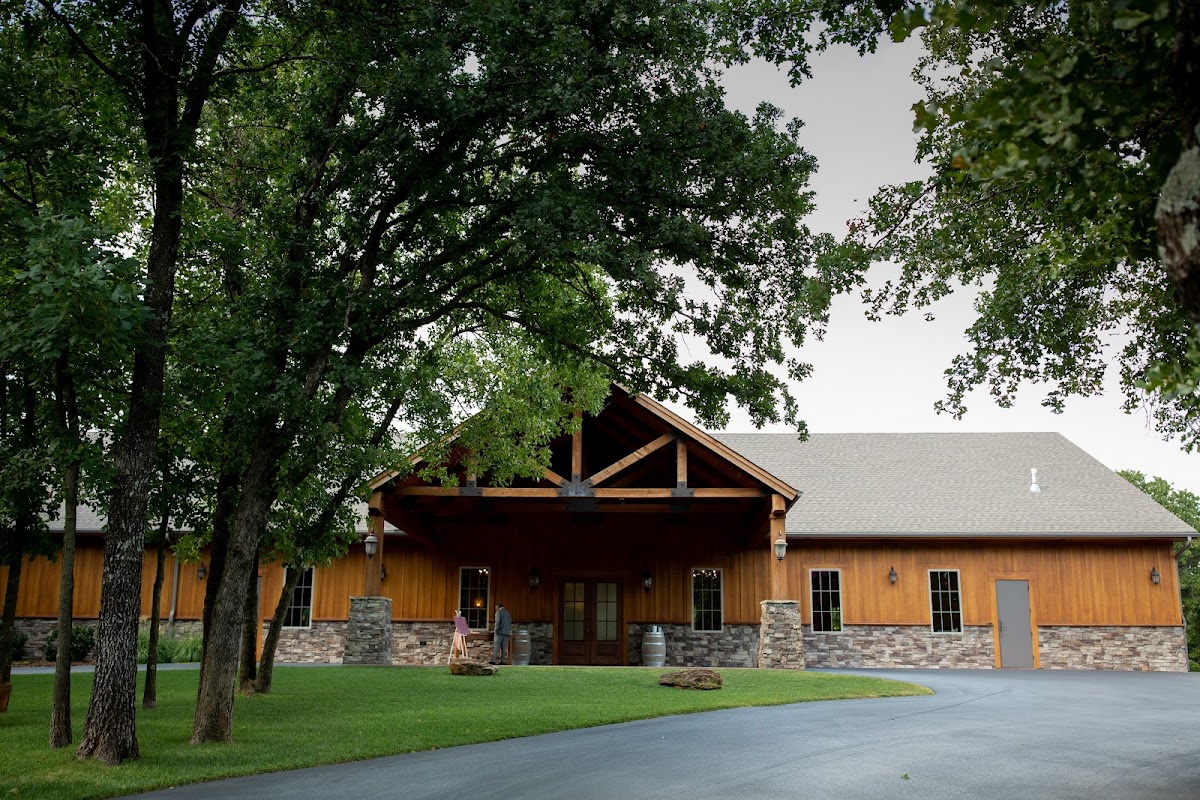
The turn off Route 66 happens quickly. One moment you’re on the historic corridor with its gas stations and grain silos, and the next you’re on Diagonal Road, watching the landscape open up into the kind of Oklahoma countryside that exists in the collective memory before most people have actually seen it. Tall trees — more than eleven, despite the name — line the property in irregular rows, their canopy creating pools of dappled shade across the rolling acreage. The pavement stays smooth all the way to the circle drive, where the covered porch announces itself with farmhouse columns and enough space to unload a florist van without blocking the entrance. Then the building reveals its scale: 9,500 square feet of reception hall that somehow manages to feel both expansive and intimate, rustic and polished, like someone built a luxury barn and furnished it with intention. This is Eleven Oaks Ranch Events, just twenty minutes from Edmond and thirty from downtown Oklahoma City, but feeling like it belongs to a different century entirely. Poppy hasn’t yet delivered Eleven Oaks Ranch Events wedding flowers here, but we’ve been studying the space through the twelve couples who have reached out, and what we see is a venue that gives Oklahoma couples something rare: the aesthetic of a destination ranch wedding without requiring anyone to book a hotel.
About Eleven Oaks Ranch Events
Eleven Oaks Ranch Events sits on rolling property in Luther, Oklahoma — northeast Oklahoma City metro territory, where suburban sprawl gives way to working ranches and the land remembers what it looked like before the oil boom. The venue is a relatively recent addition to the OKC wedding scene, purpose-built to provide the kind of all-inclusive ranch experience that previously required couples to drive to Texas or head west toward the Wichita Mountains. The property spans enough acreage to feel genuinely rural, with mature trees creating natural windbreaks and shade, but the infrastructure is thoroughly modern. Paved roads lead directly to the venue with no dusty farm tracks to navigate in heels or dress shoes. The circle drive and covered porch mean load-in happens in comfort regardless of weather — a detail that matters enormously when you’re a Luther wedding florist arriving at 7 a.m. with a van full of hydrangeas in July.
The Main Reception Hall is the centerpiece, and its 9,500 square feet make it one of the larger single-room ranch venues in the Oklahoma City metro area. The design aesthetic leans into “rustic elegance,” that careful balance where reclaimed wood and industrial beams meet climate control and modern lighting. A grand staircase anchors one end of the hall — not a small accent feature but a genuine architectural statement, the kind of staircase that exists to be descended in a wedding gown while a photographer positions themselves at the bottom with a wide-angle lens. At the opposite end, an indoor fireplace provides a cozy focal point, particularly valuable for fall and winter weddings when the temperature outside drops but couples still want that ranch ambiance without freezing their guests.
The outdoor spaces include an elevated gazebo set among the trees, ideal for ceremonies when the weather cooperates. Oklahoma weather being what it is — prone to sudden afternoon thunderstorms from March through October, and unpredictable cold snaps even in spring — the gazebo functions best as a first-choice ceremony site with the covered porch or indoor space as a graceful backup. The recently installed rustic swing offers the kind of photo opportunity that will appear in every couple’s engagement and wedding galleries, that Instagrammable moment that helps a venue market itself. The tree canopy throughout the property creates natural shade and a textured backdrop that reduces the need for excessive floral installations; the landscape does half the design work before a florist ever arrives.
Logistically, Eleven Oaks Ranch Events includes an unusual amount in their venue package: tables, chairs, linens, centerpieces, and day-of coordination. For a florist, this means the couple may already have basic centerpiece vessels provided, which can either simplify or complicate the floral plan depending on whether those vessels suit the design vision. The venue requires a security guard when alcohol is served, which they arrange directly, and they maintain a separate service entrance and prep kitchen that keeps vendor activity invisible to guests. This kind of behind-the-scenes infrastructure matters enormously for floral setup — we need space to stage arrangements, access to water, and the ability to move in and out without disrupting the getting-ready process. The huge separate bridal and groom suites, each with private restrooms and ample mirrors, mean bouquet delivery happens in spacious, well-lit rooms designed for photography, not cramped hotel bathrooms.
The location puts Eleven Oaks Ranch about twenty minutes from Edmond, thirty from downtown OKC, and roughly forty-five minutes from Norman, making it accessible to the metro area’s entire wedding guest population without requiring overnight accommodations. That said, the rural setting and the venue’s generous twelve-hour rental window encourage couples to treat the day as an event rather than a rushed timeline, which benefits everyone including the florist who appreciates not being rushed through setup.
Event Spaces & Floral Opportunities
Main Reception Hall
Capacity: 300 seated with dance floor
Setting: The Main Reception Hall is where the ranch’s rustic-elegant identity comes into full focus. At 9,500 square feet, this single room can accommodate up to 300 guests for a seated dinner and still leave space for a proper dance floor, lounge areas, and the kind of breathing room that keeps a large wedding from feeling crowded. The grand staircase dominates one end — a sweeping statement in wood and iron that rises from the main floor and creates an instant focal point. The indoor fireplace anchors the opposite end, surrounded by stone and framed with a substantial mantel. Between these two architectural bookends, the hall features exposed beams, warm wood tones, and enough neutral palette to let florals and lighting define the color story. The space includes air conditioning and heating, which means florals won’t wilt in summer heat or freeze in winter cold, a practical advantage that matters more than couples often realize when planning Eleven Oaks Ranch Events wedding flowers.
Floral approach: The grand staircase is the single most important floral opportunity in this venue. A lush garland installation running the length of the railing transforms the staircase from architectural feature to floral showpiece. We recommend a 20- to 25-foot garland using a base of seeded eucalyptus or Italian ruscus for structure, then layering in clusters of focal blooms — Juliet garden roses, Quicksand roses for a neutral palette, or Café au Lait dahlias for fall weddings — with trailing jasmine vine or smilax to create movement and visual interest as the garland descends the stairs. This installation photographs beautifully from below during the bridal entrance and from above during reception candids. The fireplace mantel deserves an asymmetric arrangement that mirrors the organic style of the staircase garland. For fall and winter weddings, incorporate seasonal branches (curly willow, red twig dogwood), burgundy dahlias, and eucalyptus with berries. For spring and summer, consider a lighter palette with white peonies, blush ranunculus, and trailing greenery that spills over the mantel edges. Guest table centerpieces should be low and lush to maintain sightlines in this large hall — we favor 12-inch-tall arrangements in wood or copper vessels that echo the rustic aesthetic without reading as country kitsch. Mounded garden roses (Patience, Romantic Antike, Keira), spray roses, ranunculus, and textured greenery create the organic garden-style that suits this venue. For taller arrangements, use elevated stands that lift florals to 24 inches or higher, above eye level, clustered on select tables to create visual variety without blocking conversation.
Outdoor Gazebo
Capacity: 100+ for ceremony seating
Setting: The outdoor gazebo sits nestled among mature trees on the property, providing a naturally shaded ceremony site that feels integrated into the landscape rather than plopped onto it. The structure itself is simple — a classic wood gazebo with a peaked roof and open sides — which means it doesn’t compete with floral installations but also doesn’t provide much inherent visual interest without some design intervention. The tree canopy overhead filters light beautifully during golden hour, and the surrounding lawn accommodates rows of seating with ease. For couples planning an outdoor ceremony at Eleven Oaks Ranch, the gazebo is the obvious choice during Oklahoma’s more temperate months, though the covered porch provides a solid backup when weather threatens.
Floral approach: The gazebo structure itself should be treated as a frame, not a focal point. Rather than covering the entire gazebo in florals — which reads as excessive and hides the architecture — we recommend an asymmetric floral installation on one side of the structure, creating a visual anchor without overwhelming the natural setting. Use a base of lush greenery (smilax, Italian ruscus, myrtle) secured to the gazebo posts and beams, then cluster focal blooms asymmetrically: garden roses, lisianthus, and spray roses in your chosen palette, with trailing elements like amaranthus or jasmine vine to create movement. This approach photographs as intentional and organic rather than overly styled. For the ceremony aisle, skip heavy florals and instead use simple aisle markers — wood or metal shepherds hooks with small greenery clusters and a single statement bloom, or lanterns with greenery collars. The goal is to guide guests’ eyes toward the couple under the gazebo without creating a floral runway that competes with the couple themselves. If the ceremony is scheduled during late afternoon or early evening, consider how the natural light filtering through the trees will interact with your floral palette — jewel tones can appear muddy in dappled shade, while lighter palettes (whites, blushes, soft peaches) glow.
Indoor Fireplace
Location: Main Reception Hall
Setting: The indoor fireplace is a substantial stone-surround feature with a wide mantel and enough visual presence to function as a focal point for lounge seating or as a backdrop for the sweetheart table. During fall and winter weddings, the fireplace provides literal warmth and ambiance; during spring and summer, it remains an architectural feature that anchors one end of the reception hall. The stone surrounding the fireplace is neutral gray with warm undertones, which means it pairs well with nearly any floral palette.
Floral approach: The fireplace mantel is ideal for a large-scale horizontal arrangement that spans the full width of the mantel and spills generously over the edges. Unlike a dining table centerpiece, which must be low and contained, a mantel arrangement can be tall, dramatic, and asymmetric. Start with a base layer of mixed greenery — eucalyptus, olive branches, and myrtle — to create depth and texture, then add focal blooms in clusters rather than evenly spaced: garden roses (Patience, Juliet, Romantic Antike), dahlias (Café au Lait for fall, soft peach varieties for summer), and ranunculus in complementary tones. Incorporate trailing elements like amaranthus or jasmine vine that drape over the mantel edge and create visual movement. For winter weddings, add seasonal accents like seeded eucalyptus with berries, privet berries, or even subtle pinecone clusters. The key is to make the arrangement feel abundant and organic, not stiff or symmetrical. If the couple is using the fireplace area as a backdrop for their sweetheart table, keep the mantel arrangement slightly lower (18-24 inches at the tallest point) so it doesn’t overwhelm the couple in photos.
Rustic Swing
Location: Outdoor grounds under tall trees
Setting: The rustic swing is exactly what it sounds like — a large wood swing suspended from a substantial tree branch, designed specifically as a photo opportunity. The surrounding area is shaded and peaceful, with the natural tree canopy creating a romantic backdrop. This feature exists primarily for engagement photos and wedding day portraits, so any floral treatment should enhance rather than dominate the scene.
Floral approach: Less is more on the rustic swing. A simple floral garland draped across the top beam of the swing or trailing from one side creates visual interest without looking forced. Use a loose, organic style: smilax or jasmine vine as the base, with small clusters of blooms (spray roses, mini carnations, wax flower) woven in at irregular intervals. Avoid anything too large or structured — this should feel like the florals naturally grew there, not like they were installed for a photo shoot. Alternatively, instead of adorning the swing itself, provide the couple with a small loose bouquet or floral crown to hold or wear during swing photos, letting the natural setting do the heavy lifting. For photographers, the swing photos work best in early morning or late afternoon light when the tree canopy filters the sun into that dreamy, dappled glow.
Bridal & Groom Suites
Location: Separate wings of the Main Reception Hall
Setting: Both the bridal and groom suites are described as “huge,” each with private restrooms, mirrors, and ample electrical outlets for hair and makeup. These are true getting-ready spaces, not afterthought rooms, which means they’re designed to be photographed. Natural light, space for the wedding party to spread out, and enough room for photographers to work without everyone being on top of each other.
Floral approach: The bridal suite should receive a small bud vase arrangement or a loose gathering of stems in a simple vessel — nothing elaborate, but something beautiful enough to appear in getting-ready photos. Think three to five stems of the same blooms used in the bridal bouquet, arranged casually in a clear glass vase or vintage bottle. This creates visual continuity between the getting-ready photos and the ceremony/reception florals. The groom’s suite can receive a simpler treatment: a single potted succulent or a small arrangement of greenery and one or two blooms in a masculine vessel (copper, dark ceramic, or even a small wooden box). The bridal bouquet should be delivered to the bridal suite, ideally in a vessel with water to keep it fresh until it’s time for photos. Communicate with the photographer about timing — if they’re shooting getting-ready details, the bouquet should be in the room and styled on a surface (windowsill, vintage chair, draped over a mirror) before the bride is fully dressed.
Covered Porch with Circle Drive
Location: Main entrance
Setting: The covered porch spans the front of the Main Reception Hall, supported by farmhouse-style columns and providing shelter from weather during guest arrival and vendor load-in. The circle drive allows vehicles to pull up directly to the porch, making entry and exit seamless. This space functions as both a practical loading zone and a potential ceremony backup location if severe weather makes the outdoor gazebo unusable.
Floral approach: The covered porch deserves a welcome arrangement that signals the transition from arrival to celebration. Place a large-scale arrangement on a pedestal or vintage table near the entrance — something substantial enough to be visible from the circle drive but not so large it blocks foot traffic. Use a tall vessel (urn, wooden stand, or elevated compote) and create an asymmetric arrangement with height and movement: delphinium or foxglove for vertical interest, garden roses and dahlias for focal weight, and trailing greenery (smilax, jasmine vine) that spills generously over the vessel edges. This arrangement serves double duty by also appearing in many arrival and departure photos. If the porch is being used as a ceremony backup location, treat it like a simplified version of the gazebo ceremony: focus floral investment on a ceremony arch or backdrop, keep aisle markers simple, and use the porch columns as natural framing elements that can be dressed with minimal greenery garlands if desired.
Wedding Flower Ideas for Eleven Oaks Ranch Events
Oklahoma Wildflower Meadow
This concept embraces the native landscape with a palette inspired by the wildflowers that bloom across Oklahoma’s prairies from April through June. Indian blanket flowers (Gaillardia) in their characteristic red-and-yellow gradient, black-eyed Susans, purple coneflowers, and goldenrod create the color story, supplemented with cultivated blooms that echo the wildflower aesthetic: zinnias in coral and yellow, celosia in burnt orange, and scabiosa in burgundy. The greenery base uses native grasses — little bluestem, switchgrass — combined with more readily available ruscus and eucalyptus. Arrangements sit in galvanized metal buckets, wood boxes, or simple mason jars for an unpretentious, meadow-gathered feel. This palette works beautifully in the Main Reception Hall where the rustic wood tones support the organic, just-picked aesthetic, and on the outdoor gazebo where the wildflower palette blends seamlessly with the natural landscape. For couples marrying between April and early June, this design celebrates the brief, glorious moment when Oklahoma’s prairies explode with color.
Burgundy & Copper Harvest
This concept draws from the warmth of an Oklahoma autumn — the burnished light, the turning leaves, the richness of harvest season. The palette centers on deep burgundy (Burgundy dahlias like Karma Choc, Black Satin dahlias, burgundy carnations), burnt orange (Free Spirit roses, orange ranunculus, celosia), and touches of gold (craspedia, solidago). The greenery includes seeded eucalyptus with rust-colored seed pods, olive branches, and myrtle, all in those gray-green tones that complement rather than compete with the warm florals. Vessels are copper compotes, aged brass urns, and wood boxes stained in dark walnut. This palette is ideal for September through November weddings and looks particularly stunning on the fireplace mantel where the stone surround and the potential for actual firelight amplify the cozy, harvest ambiance. The grand staircase garland in this palette — with trailing burgundy amaranthus and clusters of dahlias nestled into eucalyptus and olive branches — photographs like something from a European autumn estate.
Garden Romance
This concept takes the “rustic elegance” mandate seriously, creating arrangements that feel lush, abundant, and slightly unstructured — like someone raided an English cottage garden at peak bloom and brought armfuls of stems inside. The palette is soft and romantic: blush and ivory as the foundation (Quicksand roses, Patience garden roses, Romantic Antike garden roses, white ranunculus, ivory lisianthus), with touches of mauve and dusty rose (Amnesia roses, quicksand roses, mauve stock) and champagne tones (Cappuccino roses, taupe carnations). The greenery is equally abundant: Italian ruscus, seeded eucalyptus, myrtle, and jasmine vine trailing generously from every arrangement. Vessels are a mix of vintage brass compotes, ceramic urns in cream and sage green, and wood boxes painted in soft white with distressing. This palette suits spring and summer weddings (April through September) and works across all the venue spaces — it’s romantic enough for the bridal suite, elegant enough for the fireplace mantel, and organic enough for the outdoor gazebo. The key to this design is abundance; each arrangement should look generous, slightly overfilled, as though you added just a few more stems than strictly necessary.
Seasonal Considerations
Oklahoma’s weather patterns are notoriously unpredictable, with each season bringing its own advantages and challenges for couples planning Eleven Oaks Ranch Events wedding flowers and outdoor elements. Understanding these patterns helps couples make informed decisions about ceremony locations, floral choices, and backup plans.
Spring (March-May): Oklahoma spring is a study in contrasts — gloriously mild days with temperatures in the 70s, interrupted by sudden cold snaps and frequent thunderstorms. Tornado season peaks in May, which means outdoor ceremonies require solid backup plans and weather monitoring on the wedding day. That said, spring brings some of the year’s most beautiful weather and the best availability of certain blooms. Peonies are at their peak in late April and May, tulips and ranunculus are abundant and affordable in March and April, and the native wildflowers begin blooming across the prairies. For spring weddings at Eleven Oaks Ranch, plan ceremonies for the covered porch or have a seamless transition plan to move indoors if weather threatens. Avoid top-heavy ceremony arch installations that can’t withstand wind, and choose sturdy blooms (garden roses, ranunculus, lisianthus) over delicate varieties that bruise easily (sweet peas, anemones). The tree canopy on the property will just be leafing out in March and early April, so the shade won’t be as dense as it will be by summer — factor this into outdoor ceremony timing to avoid harsh midday sun.
Summer (June-August): Oklahoma summer is hot, humid, and unforgiving to both people and flowers. Daytime temperatures regularly exceed 95°F with high humidity, and afternoon thunderstorms roll through with little warning. For summer weddings, the climate-controlled Main Reception Hall becomes essential for both ceremony and reception. If couples insist on an outdoor gazebo ceremony, schedule it for early evening (6 p.m. or later) when temperatures drop slightly, provide guests with fans or parasols, and keep the ceremony short. Floral choices must account for heat stress: avoid hydrangeas (they wilt in minutes), anemones (too delicate), and anything with thin petals. Instead, choose heat-tolerant blooms like roses (especially spray roses, which are more resilient than garden roses), carnations (underrated for their durability), zinnias, celosia, and sunflowers. Succulents can be incorporated as textural elements that won’t wilt. All florals should be kept in water and shade until the last possible moment, and ceremony installations should be set up as close to start time as feasible. Summer is not the season for an elaborate outdoor ceremony arch unless you’re prepared for blooms to look stressed within an hour. Best months for summer weddings are June and September, which bookend the most extreme heat and offer slightly more moderate temperatures.
Fall (September-November): Fall is Oklahoma’s glory season for weddings, with September and October offering warm days, cool evenings, and generally stable weather. November can bring cold snaps and even early ice, but the risk is worth it for many couples who want fall foliage and harvest aesthetics. The tree-lined property at Eleven Oaks Ranch looks particularly beautiful in October when the leaves turn gold and amber. Fall brings the best availability for dahlias (Café au Lait, Karma Choc, peach and burgundy varieties), chocolate cosmos, and deep-toned roses. The outdoor gazebo is viable through October, though always have a backup plan. The indoor fireplace becomes a major asset for November weddings, both aesthetically and functionally. Incorporate seasonal elements like seeded eucalyptus with berries, privet berries, oak leaves, and even ornamental grasses into arrangements. Fall florals tend to be slightly more expensive than summer due to dahlia pricing, but the visual impact and the favorable weather make this season worth the investment. Best months are late September through mid-October for the most reliable weather and the peak of fall color.
Winter (December-February): Oklahoma winter is unpredictable — you might have a 60-degree day in January or an ice storm in early December. For winter weddings, the climate-controlled Main Reception Hall and the indoor fireplace are your greatest assets. Lean into the season with a cozy, intimate aesthetic: evergreen garlands (cedar, pine, fir) mixed with floral clusters rather than full floral garlands, which are less practical in winter when many blooms are more expensive. Amaryllis, paperwhites, and winter jasmine are in season and relatively affordable. Roses, carnations, and mums are available year-round. Consider incorporating non-floral elements like pinecones, bare branches (curly willow, birch, red twig dogwood), and berries (hypericum, privet, ilex) to add texture and volume without relying entirely on expensive out-of-season blooms. Winter is an ideal time to use candles, string lights, and other non-floral lighting elements that create warmth and ambiance. The grand staircase garland can be primarily evergreen with floral clusters rather than fully floral, which creates impact while managing budget. Best months are late February and early March when weather is transitioning toward spring but winter rates may still apply for venue booking.
Poppy’s Expert Take
Plan for the staircase first, then work backward. The grand staircase in the Main Reception Hall is the single most photographed element at Eleven Oaks Ranch Events, and it deserves to be your first floral priority, not an afterthought. A substantial garland installation here — 20 to 25 feet of lush greenery with clustered blooms — will appear in more of your wedding photos than any centerpiece arrangement. Budget $800-1,200 for a properly executed staircase garland that uses high-quality greenery (Italian ruscus or seeded eucalyptus, not basic filler), substantial focal blooms, and professional installation that secures the garland safely to the railing without damaging the venue’s property. This installation takes 3-4 hours to design and install properly, so factor that into your florist’s timeline. Once you’ve allocated budget for the staircase, you’ll have a clearer sense of what’s left for centerpieces, ceremony florals, and other installations.
The covered porch is your ceremony insurance policy. Oklahoma weather is unpredictable in every season except perhaps October. Even if you’re planning an outdoor gazebo ceremony, design and budget for a covered porch ceremony as your backup. The good news is that the covered porch makes a lovely ceremony location in its own right — it has the architectural columns, the natural light, and enough space for substantial guest seating. If you design your ceremony arch or backdrop to be portable, your florist can set it up on the porch instead of the gazebo with minimal adjustment. Communicate this plan with your florist early so they can design installations that work in both locations. And remember: making the call to move indoors or to the covered porch four hours before the ceremony is not a failure; it’s smart planning that keeps your guests comfortable and your florals looking fresh.
Low centerpieces are non-negotiable in the Main Reception Hall. The 9,500-square-foot Main Reception Hall can accommodate 300 guests, which means tables will be spread across a large area. Tall centerpieces that block sightlines are the fastest way to make a large reception feel disconnected and impersonal. Stick to 12-14 inch tall arrangements in lush, mounded designs that allow guests to see across and between tables. If you want height variation, use elevated stands (18-24 inches tall with clear or metallic bases) on select tables, positioned strategically so they don’t block key sightlines to the dance floor, head table, or staircase. A good rule is one tall arrangement for every three low arrangements, and always place tall arrangements on perimeter tables, not in the center of the room.
Coordinate with the venue’s included centerpiece vessels. Eleven Oaks Ranch Events includes centerpieces in their venue package, which likely means they provide basic vessels (glass cylinders, mason jars, or similar). Ask your venue coordinator what vessels are included and request photos. If the provided vessels suit your aesthetic, you can save money by having your florist design arrangements for those vessels rather than sourcing separate containers. If the venue’s vessels don’t match your vision, you’ll need to budget for rental vessels through your florist or a rental company. Either way, clarify this detail early in the planning process so there’s no confusion on wedding day about what vessels are being used and who is providing them.
Time your ceremony for light, not just temperature. The tree-lined property at Eleven Oaks Ranch creates beautiful dappled light, but it also means the quality of light changes dramatically throughout the day. For outdoor gazebo ceremonies, the best light happens in late afternoon (between 4:30 and 6:30 p.m. depending on season) when the sun is lower and filtering through the tree canopy rather than directly overhead. Overhead midday sun creates harsh shadows and makes guests squint in photos. If you’re marrying in summer and trying to avoid peak heat, aim for a 6 p.m. or later ceremony start when temperatures drop slightly and the light turns golden. Work with your photographer to determine the optimal ceremony time based on season and desired light quality.
Load-in logistics are better here than most ranch venues. The paved access all the way to the covered porch and the circle drive make vendor load-in significantly easier than at many rural venues. For your florist, this means arrangements arrive in better condition (no dusty farm roads jostling stems) and setup is faster (vehicles can park immediately adjacent to the entrance). That said, communicate with your florist about setup timing and access. If your ceremony is scheduled for 5 p.m., your florist will likely need access by 1 p.m. or earlier to complete setup, particularly if you’re doing a substantial staircase installation. Confirm with the venue what time vendors can access the space and ensure your florist is on the same timeline.
What Poppy Couples Spend on Flowers Here
Because Poppy hasn’t yet designed flowers for a wedding at Eleven Oaks Ranch Events, the spending tiers below are based on our experience with similar large-capacity ranch venues in the Oklahoma City metro area and adjusted for the specific floral opportunities at this property — particularly the grand staircase and fireplace installations that deserve special attention.
$3,500 - $5,000 | The Elevated Essentials
This tier covers personal flowers for the wedding party (bridal bouquet, three bridesmaid bouquets, four boutonnieres, two mother’s corsages), a medium-scale ceremony installation, and centerpieces for up to 20 guest tables. For the ceremony, you might choose a lush arch installation for the outdoor gazebo (or covered porch backup) with greenery base and clustered blooms, plus simple aisle markers. For the Main Reception Hall, focus on low, garden-style centerpieces in rustic vessels that complement the space’s aesthetic, and allocate budget for one statement installation — either a fireplace mantel arrangement or the beginning of a staircase garland (perhaps 10-12 feet rather than the full 20-25 feet). This tier works well for couples prioritizing the essentials while adding one or two elevated touches that make the space feel intentionally designed. If you’re working within this budget, have an honest conversation with your florist about which single installation will