
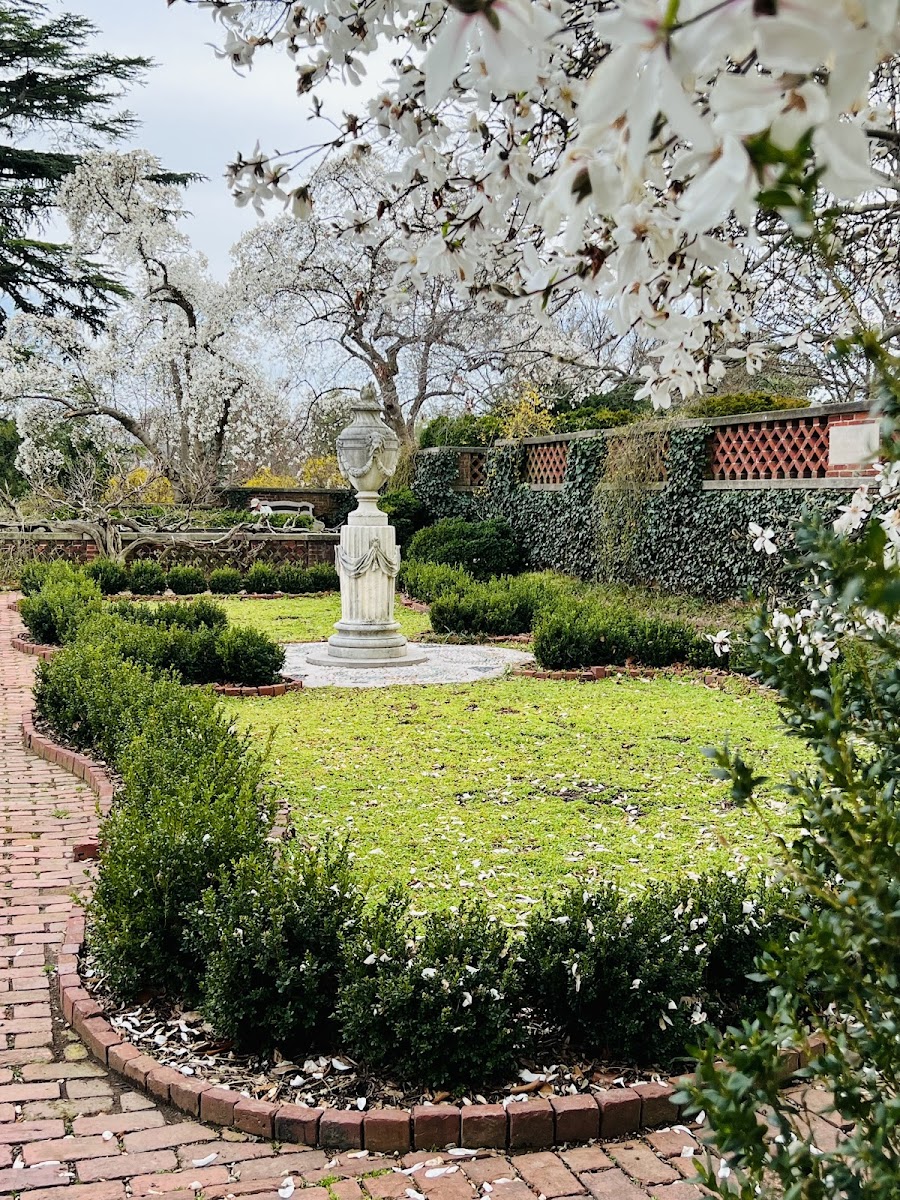
Dumbarton House is a study in Federal-period restraint and manicured garden geometry. We know this venue well from our work here, and the primary floral opportunity lies in enhancing its “jewel box” quality rather than attempting to overwhelm the historic architecture. Successful designs here respect the scale of the interior rooms while leaning into the textural warmth of the garden’s brickwork.
The Spaces
Historic Interior Rooms
The interior of Dumbarton House is defined by architectural density. Between the ornate moldings and the period-specific wallpaper, the rooms are visually “full” before a single guest enters. These spaces are intimate, meaning every floral detail is subject to close-up inspection.
- What works: Low-profile centerpieces that allow guests to see the historic details of the room. Focus on sophisticated color palettes that either tonally match or intentionally contrast with the specific wallpaper in your assigned room.
- Skip: Tall, sprawling arrangements. The standard ceiling heights and small room footprints make large-scale elevated designs feel claustrophobic and out of place.
- Watch out: The wallpaper is historic and delicate. Floral installations must be entirely self-supporting; leaning anything against the walls or using tape is strictly prohibited. Budget hero move: Prioritize a lush, asymmetrical mantel installation. In these rooms, the fireplace is the natural focal point and provides the most impact for your photography.
North Garden & Pavilion
The North Garden offers a transition from the structured house to a more expansive, multi-level outdoor setting. The brick pavilion acts as a permanent architectural anchor for ceremonies.
- What works: Ground-level “growing” installations that flank the pavilion or the aisle. These designs feel more integrated into the garden than a rigid, freestanding arch.
- Skip: Hanging installations. There are no rigging points in the pavilion, and attempting to mount florals to the structure is often restricted by museum preservation rules.
- Watch out: Wind exposure on the upper levels of the garden can be significant. All ceremony structures and aisle markers must be heavily weighted. Budget hero move: Focus the entire outdoor budget on a high-impact ceremony focal point at the pavilion. The surrounding greenery provides enough of a backdrop that you don’t need to “fill” the rest of the garden with decor.
Lower Terrace
The Lower Terrace is typically utilized for cocktail hour or smaller receptions. It is a hardscape environment dominated by brick and stone, which can feel stark without floral intervention.
- What works: Textural, herb-heavy arrangements or small clusters of bud vases on bistro tables. Using greenery with movement helps soften the rigid lines of the brickwork.
- Skip: Oversized arrangements that eat up valuable standing room. This space gets tight quickly once guests arrive.
- Watch out: The transition from the house to the terrace involves stairs and narrow paths. Ensure your floral team has a clear load-in plan that respects the museum’s accessibility constraints.
What Works at Dumbarton House
Wallpaper-conscious color palettes. The interior rooms feature bold, historic patterns. Your floral palette should be a deliberate response to these colors—either a monochrome extension of the room’s hue or a crisp, neutral contrast that pops against the pattern.
Mantel-first design strategy. Because the rooms are small, floor space is at a premium. Utilizing the mantels for floral statements keeps the floor clear for guest movement while placing the flowers at eye level for maximum impact.
Ground-up garden installations. The North Garden is beautifully manicured. Floral designs that look like they are emerging from the brickwork or the lawn feel more “at home” in this historic setting than traditional, top-heavy floral arches.
Textural greenery over massed blooms. To compete with the visual interest of the Federal architecture, use greenery with high texture—ferns, jasmine vine, or eucalyptus—to create depth and movement in your arrangements.
Low-profile reception tables. In a venue this intimate, the goal is conversation. Low, lush arrangements allow guests to engage with each other and the historic surroundings without visual obstruction.
Budget Guide
| Tier | Investment | Floral Strategy |
|---|---|---|
| Essentials | $1,750 - $3,000 | Focus on personal flowers and one primary statement piece, such as a lush mantel installation in the main dining room. |
| Sweet Spot | $3,500 - $5,500 | Includes personals, a ground-level ceremony installation at the pavilion, and a mix of low centerpieces and bud vases for the interior rooms. |
| Full Experience | $6,000 - $9,000 | Expands to include multiple mantel designs, a more substantial pavilion installation, and floral accents for the grand staircase. |
| Statement | $10,000+ | A fully immersive approach with lush garden-style florals throughout the North Garden, multiple interior statements, and premium, high-density blooms. |
Dumbarton House rewards couples who choose quality over sheer volume, as the venue’s own historic character provides a significant portion of the visual experience.
Tips
Prioritize the North Garden for your ceremony. The architectural lines of the pavilion and the mature trees provide a level of built-in ambiance that reduces the need for “filler” floral decor.
Avoid tall centerpieces in the historic rooms. The scale of the Federal-period architecture is best complemented by low, sophisticated designs that don’t compete with the ceiling height.
Use heavy mechanics for the terrace. The Georgetown wind can be unpredictable; ensure all outdoor arrangements are properly weighted to prevent tipping on the brick surfaces.
Coordinate with the museum’s color story. Each room has a distinct identity; ask for photos of the specific rooms you will be using to ensure your floral palette doesn’t clash with the historic finishes.
Plan for a “jewel box” load-in. The interior spaces are tight and the surfaces are historic; choose a florist experienced in navigating museum environments where “leave no trace” is the standard.