
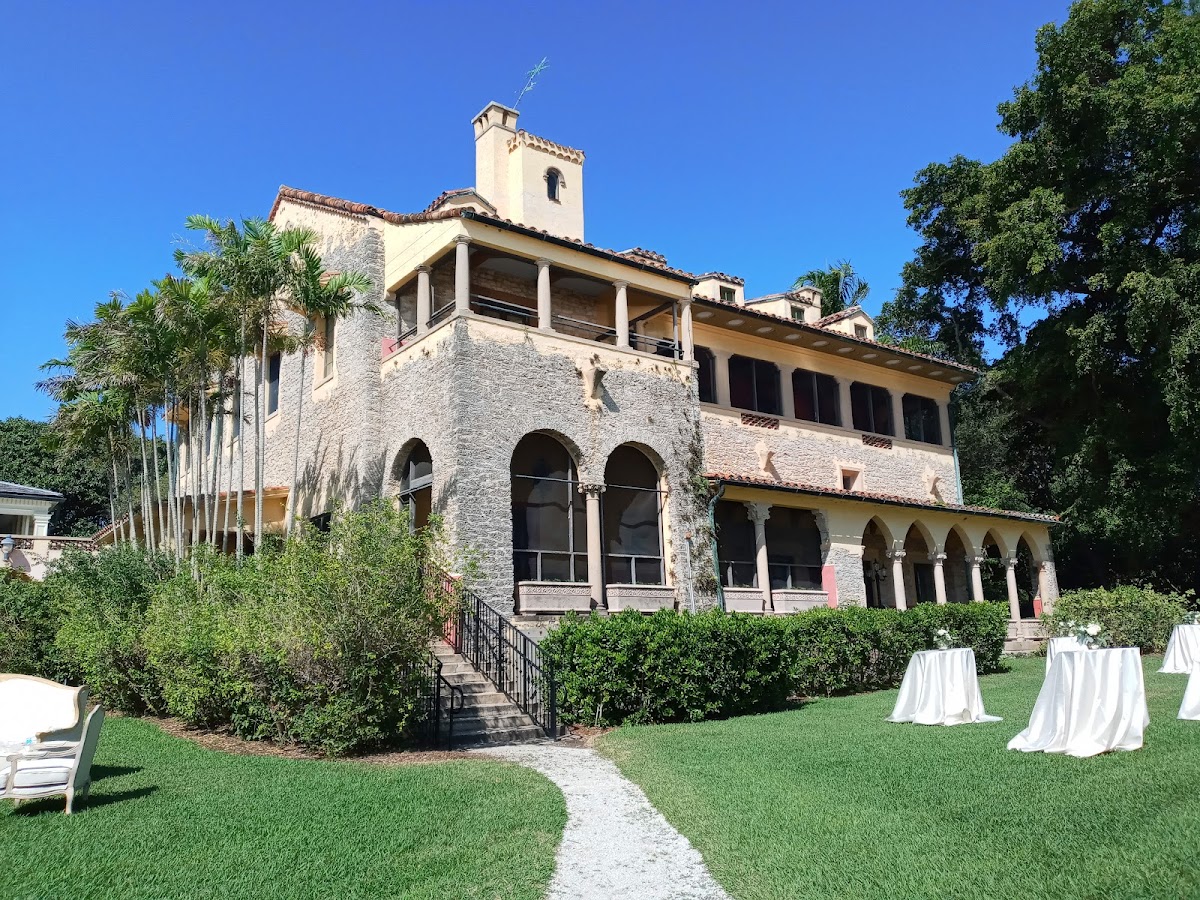
Designing at Deering Estate is an exercise in scale and stamina. The property is immense, and the visual competition from the Atlantic Ocean and the historic stone architecture requires a designer who understands how to anchor a space without obstructing the view. We know this venue intimately and prioritize structural integrity—because the bay breeze that feels wonderful to guests is a relentless adversary for top-heavy floral pedestals.
The Spaces
Waterfront Lawn
This is the estate’s most dramatic stage, offering a completely unobstructed view of Biscayne Bay. It is a vast, open space that can easily swallow average-sized arrangements. To make an impact here, you need volume and height, but you must also account for the wind coming off the water.
- What works: Low, heavy “floral nests” that appear to grow directly from the grass. These provide maximum wind resistance while framing the couple. Large-scale, four-post chuppahs or arbors also work well if they are professionally weighted with sandbags or steel plates hidden by floral “hedges” at the base.
- Skip: Tall, thin Harlow stands or lightweight pedestals. They will tip, and the thin lines disappear against the horizon.
- Watch out: There are no rigging points. Everything must be ground-supported.
- Budget hero move: Focus your entire ceremony budget on two massive, wide-reaching ground installations at the altar rather than a full arch. The width mimics the horizon line and feels more intentional in this landscape.
The Courtyard
Tucked between the historic houses, the Courtyard offers a more sheltered, intimate atmosphere. The “fairy” Oak trees and bistro lighting provide a ready-made ceiling, making this the preferred spot for receptions that want to feel connected to the architecture.
- What works: Lush, textural centerpieces that lean into the “secret garden” vibe. Compote-style arrangements with trailing vines complement the organic shapes of the surrounding trees.
- Skip: Hyper-modern, geometric glass structures that clash with the weathered stone and organic greenery.
- Watch out: The ground is uneven in places due to the historic nature of the site; ensure all table arrangements are stable.
- Budget hero move: Add greenery “climbing” up the trunks of the existing Oak trees to draw the eye upward to the bistro lights.
Stone House Grand Hall
For intimate indoor events, the Stone House is a masterclass in early 20th-century elegance. The architecture is the star here, so florals should act as an accent rather than a distraction.
- What works: A sprawling mantle installation on the historic fireplace. This creates a focal point for the room and makes for excellent photography during toasts.
- Skip: Overly tall centerpieces that interfere with the view of the coffered ceilings and historic built-ins.
- Watch out: This is a museum-grade space. Water management is critical; no leaking vessels or damp mechanics can touch the historic surfaces.
- Budget hero move: A single, high-impact mantle piece and petite, high-quality “bud clusters” on the dining tables.
What Works at Deering Estate
Ground-anchored installations. Because of the wind, we recommend “growing” meadows or heavy-based floral pillars. These provide the most security and look the most natural in a 444-acre preserve.
Monochromatic white or high-saturation palettes. The grey stone of the houses and the deep blue of the bay provide a neutral canvas. Soft pastels can sometimes look washed out in the bright Miami sun; crisp whites or bold, tropical-leaning corals and yellows pop significantly better.
Tent rigging. Most large receptions at Deering take place under a tent on the lawn. This is your only opportunity for hanging installations. Rigging greenery or floral chandeliers to the tent’s internal frame is the best way to make a temporary structure feel like a permanent ballroom.
Architectural framing. Use the Stone House’s doorways and staircases. Floral “crawls” up the stone stairs or framing the main entrance creates a sense of arrival that matches the grandeur of the estate.
Coastal-resilient varieties. Use flowers that can handle the humidity and salt air. Anthuriums, orchids, reflexed roses, and tropical foliage like Monstera or Palms will hold their turgidity much better than delicate field flowers like sweet peas or hydrangeas.
Budget Guide
| Tier | Investment | Floral Strategy |
|---|---|---|
| Essentials | $1,750 - $3,500 | High-impact personal flowers and a focused ceremony statement. Repurpose ceremony “nests” to the sweetheart table or bar. |
| Sweet Spot | $4,000 - $8,000 | Full ceremony coverage (arch or large meadows), cocktail hour accents, and a mix of low and medium-scale centerpieces for the reception. |
| Full Experience | $8,500 - $15,000 | Large-scale ceremony installation, mantle florals in the Stone House, and elevated centerpieces in the tent to draw the eye upward. |
| Statement | $15,000+ | Full-scale tent rigging with hanging greenery, floral-wrapped Oak trees in the courtyard, and lush “floor-to-ceiling” floral moments across the property. |
The Deering Estate is a venue of significant historical weight; your floral budget should prioritize a few large, architectural moments rather than many small, scattered ones.
Tips
Plan for a long load-in. This is a massive property. We use carts and a larger-than-normal team to move flowers from the Visitor Center parking to the Waterfront Lawn.
Weight everything. If it isn’t staked or sandbagged, the Atlantic wind will claim it. We don’t use lightweight plastic containers here.
Repurpose with a plan. Moving flowers from the Waterfront Lawn to a tented reception is a long walk. Ensure your floral team has the logistics planned to move large pieces quickly.
Respect the museum. Deering is a historic preserve. We adhere to strict “leave no trace” policies, ensuring no floral debris or water damages the protected grounds or buildings.
Embrace the palms. Don’t try to compete with the verticality of the Royal Palm Grove. Use wide, horizontal arrangements at the ground level to create a balanced “T” shape with the trees.