
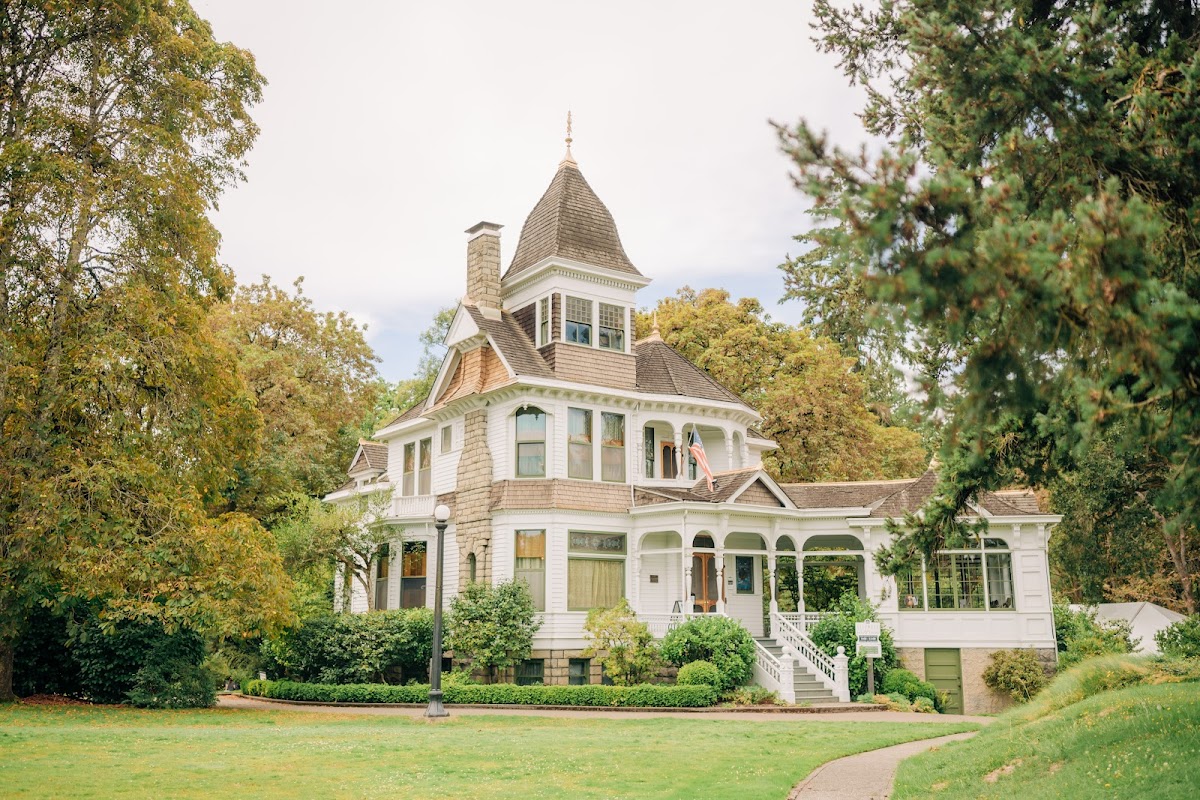
You turn off Mission Street, and the city drops away. The entrance to Deepwood Museum & Gardens announces itself quietly — no grand gates, no ostentatious signage — just a tree-lined drive that curves past a weathered Victorian home the color of old ivory and moss. The 1894 Queen Anne rises from the landscape like something remembered from a dream, all turrets and gingerbread trim, bay windows catching the diffused Pacific Northwest light. But it’s when you step beyond the house that Deepwood reveals its true nature. Five acres of formal gardens unfold in layers: symmetrical boxwood hedges defining green rooms, ivy cascading over wrought-iron arbors, brick pathways leading to hidden corners where a 1905 metal gazebo stands sentinel among the roses. Beyond the manicured beds, nature trails disappear into woodland, and the air smells of wet earth, blooming jasmine, and the particular green sweetness of Oregon in spring. This is not a venue that shouts. It whispers. And for couples who want their wedding to feel like stepping into a living garden rather than decorating an empty room, Deepwood is a rare gift. We have received 5 inquiries for Deepwood Museum & Gardens wedding flowers, and every conversation begins the same way: “The gardens are already so beautiful — how much do we really need?”
About Deepwood Museum & Gardens
Deepwood Museum & Gardens occupies a special place in Salem’s cultural landscape. The estate was built in 1894 for Dr. Luke A. Port and his family, designed in the Queen Anne style that was fashionable among prosperous families in the Pacific Northwest at the turn of the century. The home changed hands several times before Alice and John Simmons purchased it in 1925, and it was Alice Brown Simmons — an avid gardener and landscape designer — who transformed the property into the horticultural showcase it is today. Working through the 1930s and 40s, she designed the formal gardens in the English and Colonial Revival styles, creating the structured hedges, symmetrical planting beds, and ornamental features that define the estate. The gardens were her canvas, and she painted with perennials, roses, and native Oregon flora. In 1973, the property was gifted to the city of Salem with the stipulation that it remain a museum and gardens open to the public. Today, it operates as both a historic house museum and a popular event venue, with the gardens maintained by staff and volunteers who honor Alice’s original vision.
The architecture is classic Queen Anne: asymmetrical facade, multiple gables, ornamental spindle work, and a wraparound porch that invites lingering. Inside, the home is furnished with period pieces, rotating museum exhibits, and rooms that feel lived-in rather than roped-off. The front and back parlors retain their original fireplaces and millwork. The dining room still has its built-in china cabinet. The 1920s solarium — a glass-enclosed addition — floods with light and offers views directly into the gardens. For weddings, the house serves primarily as a dressing area and photo location, though it can accommodate intimate ceremonies or dinners for up to 24 guests.
The gardens themselves are divided into several distinct areas. The Tea House Garden features formal flower beds with seasonal blooms — tulips and daffodils in spring, dahlias and asters in summer and fall. The Great Room garden, where the 1905 gazebo sits, is defined by symmetrical hedges and offers an elegant ceremony site with built-in architectural framing. Ivy-covered arbors create natural archways throughout the property, and brick and gravel pathways wind between beds of hydrangeas, roses, peonies, and native ferns. Beyond the formal areas, nature trails meander through wooded sections where Douglas firs, maples, and Oregon grape provide a wilder, more organic backdrop for photography.
Logistically, Deepwood is located in Salem’s historic Bush Park neighborhood, about 50 miles south of Portland — an easy hour’s drive down I-5. For Poppy’s Portland-based team, the venue is accessible for day-of delivery and setup, though we typically factor in extra travel time for the route. The estate provides on-site staff assistance for setup and breakdown, which is a considerable advantage. There’s a 9-hour rental window for Friday through Sunday weddings (6 hours for weekday events), and couples have access to the entire property, including the house for dressing and the Covered Court for receptions. Deepwood operates on a BYO model for both catering and alcohol, and florists are not restricted to a preferred vendor list, giving us flexibility in design and sourcing. The venue provides tables, chairs, and an iron trellis arch for ceremony use, and there’s ample parking on-site for vendors and guests. The staff is communicative and accustomed to working with wedding professionals, which makes our setup seamless.
Event Spaces & Floral Opportunities
Formal Gardens - Outdoor Ceremony
Capacity: 250 seated
Setting: This is what couples picture when they imagine a garden wedding. Multiple formal garden spaces spread across the property, each with its own character. The Great Room garden, anchored by the historic 1905 metal gazebo, features symmetrical boxwood hedges that create a natural amphitheater effect. The ivy-covered arbors — draped in mature English ivy that’s been growing for decades — form romantic archways along the pathways. Wrought-iron fencing and gates add Victorian detail, and the brick and gravel pathways provide clean sightlines for processionals. Depending on guest count and desired intimacy, ceremonies can be staged at the gazebo, beneath one of the arbors, or in the more open Tea House Garden area. The gardens are meticulously maintained, with seasonal blooms providing a constantly changing backdrop — in May, you’re surrounded by peonies and roses; by September, dahlias and asters dominate.
Floral approach: The single most important piece of advice for Deepwood ceremony florals: edit ruthlessly. These gardens are already in full bloom from April through October, and your job as a couple is to complement, not compete. At the gazebo, we typically recommend a garland treatment — a loose, organic garland of Italian ruscus, olive branches, and locally foraged sword fern woven with garden roses (Keira, Patience, or Romantic Antike for that blowsy, old-rose look) and trailing jasmine vine. The garland drapes along the metal framework without obscuring its beautiful vintage structure. For the arbor ceremonies, consider enhancing just one side of the arch with an asymmetrical installation — foxglove, delphinium, hellebores, and clematis vine clustered on one side create a sense of abundance without blocking the ivy. Aisle markers should be low and minimal: posies of seasonal blooms in vintage glass bottles staked every third or fourth row. If you’re marrying in the Tea House Garden, where the existing flower beds are dense and colorful, forgo aisle décor entirely and invest instead in a stunning bridal bouquet that echoes the garden’s palette. The iron trellis arch provided by the venue can be dressed with greenery and a single focal cluster of blooms at the apex rather than covering it entirely.
Covered Court
Capacity: 275 seated
Setting: The Covered Court is Deepwood’s answer to the Pacific Northwest’s unpredictable weather. This is a tented structure built over what was once a tennis court, providing a large, open-air reception space with a roof overhead and sides that can be opened or closed depending on conditions. The structure itself is utilitarian — white tent poles, a high peaked ceiling, and a concrete floor — which means it’s a true blank canvas. The benefit is weather protection for both guests and florals; the trade-off is that you’re creating atmosphere from scratch. The space opens directly onto the gardens, so there’s visual and physical connection to the landscape, and the covered structure means you can host an evening reception without worrying about a sudden September downpour or the dewy chill of a spring evening.
Floral approach: This is where you can go big. Without the distraction of competing architectural details or existing garden blooms, the Covered Court rewards bold floral gestures. We love suspended installations here — picture a 30-foot garland of smilax, bay laurel, and eucalyptus running the length of the tent peak, with clusters of white hydrangeas, quicksand roses, and amaranthus dripping down at intervals. The garland appears to float above the tables, drawing the eye upward and softening the tent’s industrial bones. For centerpieces, we recommend a mix of heights: half the tables with low, lush arrangements in aged terracotta or ceramic vessels (garden roses, ranunculus, hellebores, spirea, and fern, mounded and overflowing), and half with tall, elevated arrangements on clear acrylic risers that lift blooms above sightlines. A dramatic installation at the entrance — a pair of large urns overflowing with seasonal branches, flowering currant, peonies, and trailing ivy — signals the transition from gardens to reception. If the sides of the tent are open, consider lining the perimeter with potted olive trees or fiddle-leaf figs to blur the boundary between indoors and out. For a more budget-conscious approach, focus your floral investment on the head table and entrance, and keep guest tables simple with single-variety centerpieces: all white hydrangeas, all blush roses, or all café au lait dahlias in mismatched vintage bottles.
Victorian House - Indoor
Capacity: 24 seated
Setting: The Queen Anne Victorian home is available for intimate ceremonies, rehearsal dinners, or simply as a dressing and photo location. The front and back parlors feature original woodwork, fireplaces, and period furnishings that transport you directly to 1894. The dining room, with its built-in cabinetry and warm wood tones, can host a seated dinner for up to 24. The 1920s solarium is the jewel of the house — a glass-enclosed room with windows on three sides, flooded with natural light and offering direct views into the gardens. The rooms are small and intimate, with low ceilings and cozy proportions that feel more like a home than an event space. Museum exhibits rotate periodically, so there may be display cases or framed art throughout, adding to the historical atmosphere.
Floral approach: Inside the Victorian House, think delicate, romantic, and appropriately scaled. These rooms cannot handle the same volume of florals that work in the Covered Court or gardens. Instead, focus on a few well-chosen arrangements that honor the home’s historical character. In the solarium, a bridal bouquet displayed in a vintage crystal vase on the side table creates a stunning photo moment with the garden backdrop visible through the windows. For the parlors, small arrangements of garden roses (Juliet, Patience, or Edith), sweet peas, ranunculus, and ferns in antique silver compotes or milk glass vessels complement the Victorian aesthetic without overwhelming the space. If you’re hosting a seated dinner in the dining room, a single low centerpiece of lush, scented garden roses, hellebores, and trailing ivy in a tarnished silver bowl is perfect — romantic, intimate, and evocative of a Victorian garden party. Avoid modern floral mechanics or visible foam; use chicken wire or natural stems arranged loosely for a hand-gathered look. The solarium is an ideal place to display your ceremony flowers after the ceremony ends — repurpose the altar arrangement on the credenza for cocktail hour.
Tea House Garden
Capacity: Unlimited (standing/photos)
Setting: The Tea House Garden is less of an event space and more of an experience — a formal garden room with intricate brick walkways, abundant flower beds, and hidden corners perfect for photos. The beds are planted with a rotating selection of perennials and annuals depending on the season: tulips and bleeding hearts in spring, roses and delphiniums in summer, dahlias and Japanese anemones in fall. The layout is intimate and maze-like, with pathways that encourage wandering. This is where couples escape for portraits during golden hour, where guests drift during cocktail hour, and where children inevitably end up chasing each other between the hedges.
Floral approach: Do not add florals to the Tea House Garden. This is the hill we will die on. The existing blooms are abundant, beautifully maintained, and provide all the color and texture you could want. Your floral energy is better spent elsewhere. What you can do is use the Tea House Garden as design inspiration: pull colors from the blooms currently in season and echo them in your bridal bouquet and reception arrangements. If the garden is awash in coral charm peonies and white bleeding hearts in May, let that palette inform your ceremony arch. If it’s September and the dahlias are in full blush-and-burgundy glory, carry that into your centerpieces. The garden gives you a roadmap; follow it. The one exception: if you’re doing a cocktail hour in or adjacent to the Tea House Garden, small drink stations can be dressed with simple bud vases echoing the garden palette, but even then, less is more.
Wedding Flower Ideas for Deepwood Museum & Gardens
Heirloom Garden
This design concept leans into Deepwood’s identity as a historic estate garden maintained in the English and Colonial Revival styles. The palette is soft and romantic: blush garden roses (Keira, Romantic Antike, Juliet), ivory ranunculus, pale pink sweet peas, white peonies (when in season), and hellebores in dusty mauve. Texture comes from ferns, bay laurel, jasmine vine, and trailing scented geranium. Arrangements sit in vintage vessels — tarnished silver compotes, aged terracotta pots, milk glass vases, or hand-thrown ceramic bowls in muted tones. The effect is timeless and understated, as if these flowers were clipped from the garden that morning and arranged by a Victorian-era bride. This palette works beautifully in the Victorian House, complements the existing garden blooms without competing, and photographs like a dream in the soft, diffused Pacific Northwest light. For the ceremony, an asymmetrical garland on the gazebo with these same blooms feels organic and romantic. For the Covered Court, low, lush centerpieces in varying vintage vessels create an elegant, garden-party atmosphere.
Pacific Northwest Native
This concept celebrates Oregon’s native flora with a palette drawn directly from the surrounding woodland and Willamette Valley landscapes. Think sword fern, Oregon grape foliage, salal, flowering currant branches, hellebores, white anemones, and scabiosa in soft whites, greens, and muted purples. Add in locally grown dahlias (café au lait, Quicksand), garden roses in cream and peach tones, and wild clematis vine for softness. Vessels are natural and organic: wooden boxes, birch bark-wrapped containers, or simple glass cylinders that disappear. The effect is unstructured, wild, and deeply connected to place. This palette works especially well for couples marrying in late summer or fall when dahlias are at their peak and the native plants are showing their full glory. In the Covered Court, this approach can be elevated with suspended installations of sword fern and flowering branches, punctuated by clusters of café au lait dahlias. For the ceremony, minimal florals work best — let the surrounding trees and native plants do the work, and add just a touch of structured beauty at the gazebo.
Victorian Romance
This is Deepwood at its most formal and elegant, honoring the Queen Anne architecture with a palette inspired by Victorian-era floral language and the opulent arrangements of that period. Deep jewel tones dominate: burgundy dahlias (Arabian Night, Black Satin), plum-toned ranunculus, wine-colored garden roses (Tess, Darcey), aubergine hellebores, and amaranthus in deep red. Lighten the palette with dusty pink roses (Quicksand, Cappuccino), blush astilbe, and touches of ivory. Foliage includes dark, dramatic elements like burgundy-toned eucalyptus, smokebush, and deep green bay laurel. Arrangements are dense and luxurious, sitting in polished brass urns, mercury glass compotes, or ornate vintage vessels. This palette is particularly stunning for fall and winter weddings, when the gardens have quieted and you’re creating atmosphere from scratch. In the Covered Court, tall, elevated arrangements with cascading amaranthus and trailing ivy create Victorian grandeur. For the gazebo, a lush, symmetrical installation in these deep tones provides dramatic contrast against the metal structure and surrounding greenery.
Seasonal Considerations
Deepwood Museum & Gardens sits in Oregon’s Willamette Valley, where the climate is marine-influenced with wet, mild winters and warm, dry summers. Understanding the seasonal rhythms of both weather and bloom availability is essential for planning your Deepwood wedding flowers.
Spring (March-May): Spring in Salem is gloriously unpredictable. March can bring sudden rain showers, but by April and May, the gardens explode with color — tulips, daffodils, bleeding hearts, and peonies create a floral tapestry that rivals any professional installation. For florists, spring offers abundant local availability: ranunculus, anemones, hellebores, sweet peas, and peonies are all at their peak and can be sourced from Oregon growers. The challenge is weather — have a rain plan for outdoor ceremonies, and be prepared for cool temperatures (50s-60s) that may require guests to layer. Spring florals hold beautifully in the cool air, and the diffused light creates dreamy, romantic photos. Best months: Late April and May, when the risk of rain decreases and the gardens are in full bloom.
Summer (June-September): Summer is peak wedding season at Deepwood, with warm, dry weather (70s-80s) and long daylight hours that stretch into evening. The gardens transition from spring ephemerals to summer perennials: roses, dahlias, delphiniums, and asters dominate. Locally grown dahlias are particularly spectacular from July through September, offering an incredible range of colors and forms at reasonable prices. The heat can be a challenge for delicate blooms — sweet peas and tulips are out of season entirely, and even garden roses may struggle in direct sun. Focus on hardy varieties: dahlias, zinnias, hydrangeas, and foliage that can tolerate warmth. Setup should happen in the morning or late afternoon to protect both florals and installers from midday heat. Best months: June and September, when temperatures are moderate and the gardens are lush but not overgrown.
Fall (October-November): Fall in the Willamette Valley is often underrated but spectacular. The deciduous trees throughout Deepwood turn shades of gold, amber, and crimson, creating a natural backdrop that requires minimal additional florals. October still offers warm days (60s) and relatively little rain, while November sees the return of Pacific Northwest drizzle. Dahlias remain available through October, and fall foliage — maple branches, oak leaves, smokebush — adds dramatic texture. This is the season for jewel tones and moody palettes that complement the changing landscape. Rain becomes more likely as you move into November, so the Covered Court becomes essential rather than optional. Best month: October, when you get fall color without the worst of the rain.
Winter (December-February): Winter at Deepwood is quiet and contemplative. The gardens are dormant, the trees bare, and the color palette narrows to evergreen, brown, and gray. But there’s a particular magic to a winter wedding here — the Victorian House glows from within, the bare branches create architectural silhouettes, and the intimacy of the season suits the property’s scale. For florals, look to evergreens (fir, cedar, pine), winter berries (holly, privet, ilex), hellebores, amaryllis, and imported blooms like ranunculus and anemones. The cool temperatures mean flowers last beautifully, and the Covered Court provides essential weather protection. This is the season for candlelight, rich textures, and intimate gatherings. Best month: December, when the holiday spirit adds warmth and you can incorporate seasonal greenery.
Poppy’s Expert Take
Let the gardens do the talking. The single biggest mistake we see at Deepwood is over-floraling. Couples see photos of garden weddings with floral arches dripping in blooms and assume they need the same. But those weddings are often at venues with minimal existing landscaping. Deepwood already has abundant, mature, professionally maintained gardens. Your ceremony needs far less than you think — a simple garland on the gazebo, low aisle markers, and a stunning bridal bouquet will photograph beautifully without competing with the peonies, roses, and ivy already in bloom. Save your floral budget for the Covered Court, where you’re starting with a blank canvas.
Visit during bloom season. Deepwood’s gardens change dramatically throughout the year. If you’re marrying in May, visit in May of the previous year to see exactly what will be blooming. If you’re marrying in September, visit in September. The Tea House Garden that’s awash in coral peonies in May will look completely different in September when dahlias dominate. Your floral palette should complement what’s naturally blooming, and the only way to know is to see it in person. Schedule your venue tour during the same month as your wedding date.
Embrace the Covered Court as your blank canvas. While the gardens are stunning, the Covered Court is where you’ll spend the most time and where your guests will remember the experience. This is the space that rewards investment. We typically recommend allocating 60-70% of your floral budget to the reception space, 20-30% to ceremony, and 10% to personal flowers. A dramatic suspended installation in the Covered Court creates atmosphere and wow factor, while simple, low centerpieces keep costs reasonable without sacrificing beauty.
Time your ceremony for light, not logistics. The Pacific Northwest light at Deepwood is soft, diffused, and utterly romantic — especially during golden hour. If your priority is photography, schedule your ceremony for late afternoon (5-6 PM in summer, 3-4 PM in fall/spring) when the light is magic. The gardens glow, the Victorian House looks painterly, and your florals will photograph with depth and dimension. Morning ceremonies have lovely light too, but evening ceremonies create an atmosphere that’s hard to replicate.
Use the solarium for more than getting ready. The 1920s solarium is one of Deepwood’s hidden gems, and it’s criminally underutilized. This glass-enclosed room with garden views is perfect for displaying your bridal bouquet before the ceremony, hosting an intimate first look, signing your marriage license, or even holding a small ceremony for family. Ask your photographer to prioritize solarium portraits — the natural light is unbeatable, and the vintage architectural details create magazine-worthy images.
Repurpose everything. With a 9-hour rental window, you have time to repurpose ceremony flowers for the reception. The altar arrangement can move to the Covered Court entrance. Aisle arrangements can become cocktail table florals. The garland from the gazebo can be repositioned along the bar. Coordinate this with your florist in advance — we build repurposing into our setup timeline and logistics. It maximizes your budget and ensures no floral installation goes to waste.
Budget for the nature trails. While they’re not official event spaces, the wooded nature trails at Deepwood offer some of the most stunning, organic photo opportunities. The dappled light through the Douglas firs, the wild ferns, and the sense of seclusion make for editorial-worthy images. Consider carrying a simple, loose bouquet or wearing a floral crown specifically for trail portraits. Your photographer will thank you, and you’ll have images that feel completely different from the formal garden shots.
What Poppy Couples Spend on Flowers Here
While Poppy hasn’t yet designed flowers for a completed wedding at Deepwood Museum & Gardens, our experience with similar garden venues in the Portland market and the inquiries we’ve received give us a clear picture of what couples typically invest. The unique aspect of Deepwood is that the gardens themselves reduce the need for extensive ceremony florals, allowing couples to allocate their budget more strategically.
$2,500 - $4,500 | Garden Essentials
This range covers the fundamentals while respecting Deepwood’s existing beauty. For the ceremony in the Formal Gardens, a minimal approach: a simple garland on the gazebo or iron trellis arch using seasonal greenery (sword fern, Italian ruscus, bay laurel) with clusters of garden roses and seasonal blooms woven through. Skip elaborate aisle markers and instead use every-third-row posies in vintage glass bottles — white hydrangeas or seasonal blooms that complement the garden palette. Bridal bouquet and 3-4 bridesmaid bouquets in a garden-gathered style. For the Covered Court reception (assuming 75-100 guests), low centerpieces on every table using a single flower variety in mismatched vintage vessels — all café au lait dahlias, all white hydrangeas, or all blush garden roses keeps costs down while looking intentional and elegant. Add a statement arrangement at the entrance and simple greenery on the bar, and you’ve created a beautiful, cohesive design that honors Deepwood’s garden aesthetic without breaking the budget.
$4,500 - $7,500 | The Full Garden Experience
This mid-tier range allows for more elaborate installations while still editing thoughtfully. Ceremony florals expand to include a lush, organic garland on the gazebo with premium blooms (garden roses, ranunculus, hellebores, sweet peas in season), plus low aisle arrangements every other row and a petaled aisle. Bridal party flowers include bouquets for 5-6 attendants, boutonnieres, and corsages. For the Covered Court reception (100-150 guests), you can introduce varied centerpiece heights — half the tables with low, lush arrangements, half with elevated designs on clear risers. Add a suspended greenery installation running 20-30 feet along the tent peak with clustered floral accents, a dramatic bar installation, and florals for the cake table. This budget also allows for repurposing ceremony flowers to the reception, maximizing every bloom. Consider adding small arrangements for the Victorian House parlors if you’re using the space for getting ready or portraits — this level of investment creates a cohesive floral story throughout the entire property.
$7,500+ | Editorial Garden Romance
At this level, you’re creating a fully immersive floral experience that transforms even the blank-canvas Covered Court into something extraordinary. Ceremony florals become showstoppers: a dramatic, asymmetrical installation on the gazebo with premium seasonal blooms (peonies, garden roses in rare varieties, hellebores, flowering branches), a completely petaled aisle, and substantial aisle arrangements every row. For larger weddings (150-275 guests) in the Covered Court, invest in a major suspended installation — a 40-50 foot garland of mixed greenery with substantial floral clusters running the length of the tent, supplemented by tall elevated centerpieces and lush low arrangements in a varied mix. Add large-scale installations at both entrances to the Covered Court, a living greenery wall behind the head table or sweetheart table, elaborate bar florals, and arrangements throughout the Victorian House including the solarium and parlors. This budget allows for rare and premium blooms, unique vessels, and the kind of floral abundance that feels like the gardens themselves have spilled indoors. It’s garden romance at its most elevated, where every corner of Deepwood becomes part of the floral story.